
Fabric API is a crucial utility for Minecraft modders using the Fabric mod loader. It acts as a bridge, enabling seamless interaction between different mods and significantly enhancing the modding experience. While not a standalone application, its role is pivotal in ensuring compatibility and stability within the Fabric ecosystem. This article will explore its functionalities, benefits, drawbacks, and place within the broader Minecraft modding landscape.
Understanding Fabric API and its Role in Minecraft Modding
The Fabric API isn’t a mod in itself; it’s a core library—an Application Programming Interface (API)—that provides essential functions and hooks for other Fabric mods to utilize. This means that while you need the Fabric mod loader to run mods, many mods require the Fabric API to function correctly. Think of it as the underlying infrastructure that connects and allows various mods to communicate and operate within the Minecraft environment. Without it, many mods would be incompatible, leading to conflicts and instability.
The Fabric project itself is a lightweight and efficient modding platform designed for speed and ease of updates, contrasting with heavier alternatives like Minecraft Forge. This lightness extends to the Fabric API, which keeps the game’s performance relatively unburdened, unlike some more resource-intensive modding environments. This makes it ideal for mods that don’t require the extensive modification capabilities offered by larger platforms.
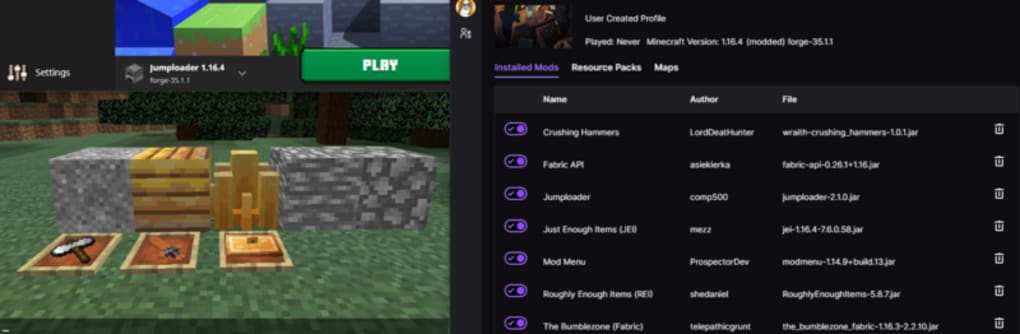
The Fabric API’s primary function is to expose various internal functionalities within Minecraft that are otherwise inaccessible to standard mods. This allows mod developers to create powerful and complex modifications without needing to directly tamper with the game’s core code. This access grants significant control over different aspects of the game, enhancing customization possibilities.
Furthermore, the Fabric API facilitates registry synchronization. Minecraft uses registries to track various game elements, such as items, blocks, and entities. The API ensures that these registries are consistently updated across different mods, preventing conflicts and ensuring that mods interact appropriately. This is especially important in complex modpacks where numerous mods contribute different game elements.
Key Features and Capabilities of Fabric API
The Fabric API offers a range of features designed to improve mod compatibility, performance, and functionality:
- Mod Interaction: Its primary function is to allow mods to interact with each other without conflicts. This is achieved through a structured system of hooks and events, allowing mods to communicate and share data efficiently. This prevents the instability frequently caused by competing mods trying to modify the same game aspects.
-
Exposure of Internal Functionalities: The API exposes hidden functionalities within Minecraft, offering mod developers unparalleled control and customization options. This access extends to areas typically difficult to modify directly, enabling innovations that otherwise wouldn’t be possible.
-
Registry Synchronization: The robust registry synchronization mechanism is crucial for maintaining consistency and preventing conflicts between different mods. This ensures all mods acknowledge and utilize the same game data, preventing crashes and unexpected behavior.
-
Advanced Rendering API: For modders focused on visuals, the Fabric API provides an advanced rendering API. This allows for compatibility with and integration of optimization mods and those that overhaul the game’s graphics. This feature facilitates the development of high-quality visual mods without compromising game performance.
-
Lightweight Design: The API is deliberately lightweight and optimized for performance. This design choice is consistent with Fabric’s overall philosophy of efficiency, ensuring the modding environment remains responsive and doesn’t negatively impact the game’s speed.
Benefits of Using Fabric API
Several compelling advantages make the Fabric API a valuable tool for Minecraft modders:
-
Improved Mod Compatibility: By providing a standard interface for mods, the Fabric API greatly increases compatibility. This minimizes the risk of conflicts and crashes that often arise when mods try to directly manipulate the same game components.
-
Enhanced Performance: Its lightweight design ensures that the API doesn’t place undue strain on the game’s resources. This contrasts with heavier platforms that can significantly impact performance, especially when running multiple mods.
-
Easier Mod Development: The API simplifies the mod development process by providing readily available functions and hooks. This reduces the workload for mod creators, allowing them to focus on the unique features of their mods rather than dealing with low-level technicalities.
-
Active Community Support: The Fabric community is known for its active support and comprehensive documentation. This makes it easier for both experienced and novice modders to find answers to their questions and get assistance when needed.
-
Faster Updates: The Fabric modding platform is renowned for its rapid update cycles. This means that mods using the Fabric API can be updated more quickly, ensuring compatibility with the latest Minecraft versions.
Drawbacks and Considerations
While Fabric API offers significant advantages, it also has some limitations:
-
Separate Download: The API requires a separate download from the Fabric mod loader. This may seem like a minor inconvenience, but it can be frustrating for those expecting everything to be packaged together.
-
Steeper Learning Curve: Compared to simpler modding solutions, Fabric API has a steeper learning curve for beginners. Understanding its functionalities and effectively using its tools requires a more technical approach.
-
Limited Customization (Compared to Forge): While offering extensive features, the Fabric API’s design philosophy prioritizes lightweight and efficient functionality. As a result, it might not provide the same level of low-level control over Minecraft’s inner workings compared to platforms such as Minecraft Forge. This means certain highly customized mods might be more easily created on different platforms.
-
Documentation Dependence: While extensive documentation is available, beginners might find it challenging to navigate initially. A strong grasp of coding concepts and API documentation is essential for effective use.
Fabric API vs. Other Modding Platforms
Fabric API is intrinsically linked to the Fabric mod loader and stands in contrast to other modding platforms, most notably Minecraft Forge. While both allow modding, they differ significantly in their approach:
-
Lightweight vs. Heavyweight: Fabric prioritizes a lightweight and efficient approach, whereas Forge often accommodates more extensive and resource-intensive mods.
-
Ease of Use: Fabric can have a steeper initial learning curve, particularly for those unfamiliar with modding concepts. Forge, with its longer history, boasts a wider array of tutorials and resources, potentially making it easier for beginners.
-
Mod Availability: The number of available mods for each platform is a key consideration. While both offer substantial libraries, the relative popularity and longevity of Forge often lead to a larger selection of mods.
Conclusion
The Fabric API is an indispensable tool for Minecraft modders utilizing the Fabric mod loader. Its role in enabling seamless interaction between mods, enhancing performance, and simplifying the development process cannot be overstated. Although it has a steeper learning curve and requires a separate download, the benefits of improved mod compatibility, enhanced performance, and access to powerful features generally outweigh the drawbacks. For modders valuing a lightweight, efficient, and rapidly evolving modding environment, Fabric API is a compelling choice. The active community and extensive documentation further contribute to its value, making it a vital component of the modern Minecraft modding landscape.
File Information
- License: “Free”
- Latest update: “May 24, 2023”
- Platform: “Windows”
- OS: “Windows 8.1”
- Language: “English”
- Downloads: “6.1K”
- Size: “1.47 MB”


