
Farming Simulator 2013, a title in the long-running agricultural simulation series, offers players the chance to step into the boots of a virtual farmer, managing their land, crops, and livestock in a detailed, albeit sometimes flawed, open-world environment. While building upon the foundations laid by its predecessors, Farming Simulator 2013 falls short of significant innovation, leaving a mixed impression on both seasoned players and newcomers alike. This review delves into the game’s strengths and weaknesses, exploring its gameplay mechanics, graphics, and overall experience.
Gameplay Mechanics: A Familiar Plow Through the Fields
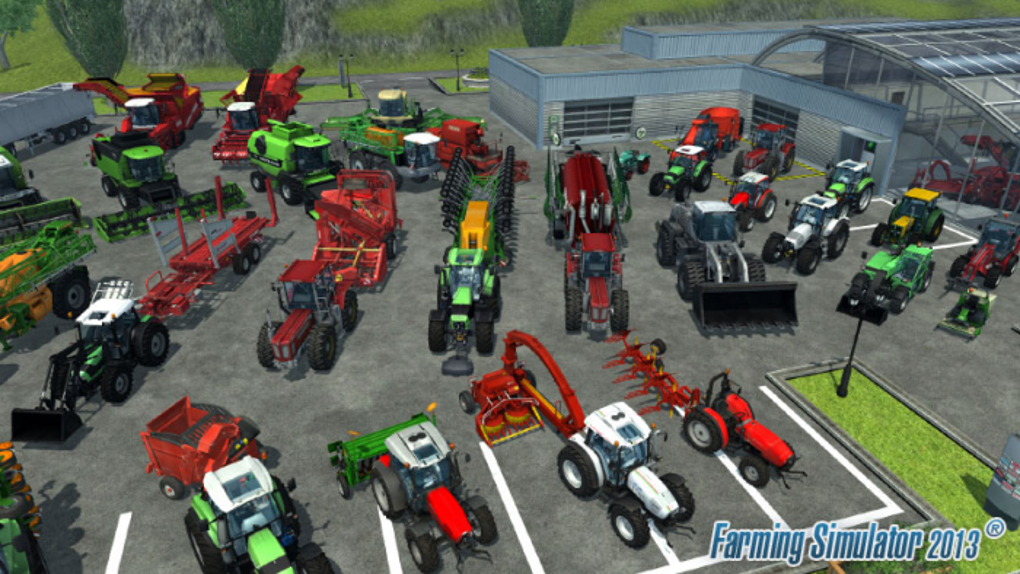
The core gameplay loop of Farming Simulator 2013 remains largely consistent with previous installments. Players begin with a modest farm and a limited amount of capital, tasked with gradually expanding their operations through diligent farming practices. This involves planting and harvesting crops, tending to livestock (including cows, sheep, and chickens), and managing finances. The game provides a wide array of licensed farming equipment from renowned manufacturers such as Case IH, Deutz-Fahr, Lamborghini, Same, Horsch, and Amazone, each meticulously modeled (though not necessarily realistically).
The process of farming involves carefully selecting the appropriate machinery for each task, from plowing and sowing to harvesting and transporting goods to the market. Players must navigate the open world environment, carefully maneuvering their vehicles to avoid collisions and efficiently complete their work. This attention to detail, while appreciated by simulation enthusiasts, can sometimes become tedious for casual players, demanding precision and patience. The overall pacing of the game, dictated by the realistic speeds of agricultural machinery, can feel slow at times, potentially impacting player engagement.
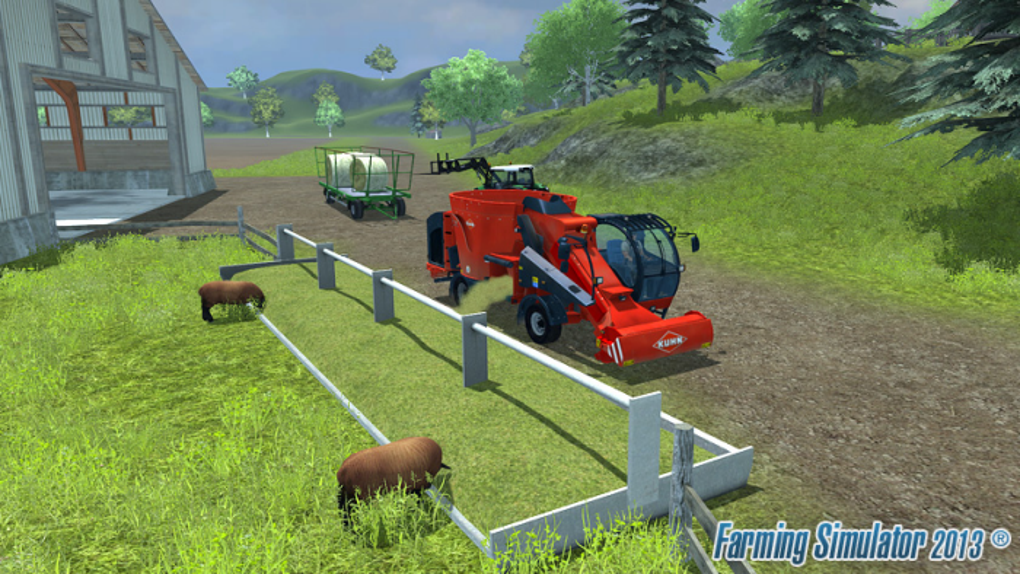
One significant shortcoming identified in Farming Simulator 2013 is the unrealistic physics engine governing the vehicles. While the game boasts licensed equipment, their behavior often deviates from real-world dynamics. For instance, tractors can collide with barns and other structures without sustaining any damage, and the impact of tires on the ground lacks the detail one might expect from a simulation aiming for realism. These inconsistencies detract from the overall immersive experience, disrupting the intended level of realism.
Graphics and Environmental Design: A Dated Landscape
The visual presentation of Farming Simulator 2013 remains a point of contention. While the game showcases an improvement over its predecessors, the graphics still appear dated, lacking the visual fidelity and detail found in more modern agricultural simulations. The environments feel somewhat static and lifeless, with limited dynamic elements to enhance the sense of immersion. The game’s open world, while expansive, could benefit from more vibrant and reactive elements to reflect the dynamism inherent in farming.
The lack of significant visual feedback further compounds the issue. For example, the traces left by vehicles on the ground are limited to situations such as plowing, failing to accurately represent the effects of tires on different terrains. This visual under-representation reinforces the feeling of a disconnect between the virtual world and the real-world experience of farming. More detailed environmental interactions, such as realistic weather effects and their impact on crops and soil conditions, would contribute significantly to enhancing the sense of realism and engagement. The current visual representation of the environment fails to convey the challenges and rewards that define real-world farming, leaving players feeling largely detached from the process.
The overall aesthetic of the game lacks the charm and character needed to truly captivate players. While functional, the visuals remain largely utilitarian, failing to evoke the beauty and inherent drama of the agricultural landscape. A more detailed and dynamic environment, coupled with improved visual effects and weather simulations, could have significantly enhanced the player’s immersion in the game’s world.
Economic System and Progression: A Slow but Steady Grind
Farming Simulator 2013 presents a moderately complex economic system. Players must carefully manage their finances, balancing expenses on equipment, seeds, fertilizers, and animal feed against the income generated from selling crops and livestock. This element adds a layer of strategic depth to the gameplay, requiring players to make thoughtful decisions regarding their investments and resource allocation.
The progression system, however, can feel rather slow and gradual. Expanding one’s farm and acquiring new equipment necessitates consistent and often repetitive tasks, requiring significant time investment. While this aspect reflects the long-term commitment associated with real-world farming, it might discourage players seeking a more immediate sense of accomplishment. The game could benefit from additional gameplay elements, or perhaps accelerated progression options, to maintain player engagement throughout the lengthy process of building a profitable farming empire.
Sound Design and User Interface: A Functional but Unremarkable Experience
The sound design in Farming Simulator 2013 provides a relatively immersive auditory experience. The sounds of tractors, harvesting machinery, and livestock contribute to the game’s atmosphere. However, the soundscapes lack depth and dynamism; there’s a lack of environmental sounds and atmospheric subtleties that could further enhance the sense of immersion. More ambient sounds of nature – birdsong, wind rustling through crops, the distant murmur of a nearby town – would elevate the auditory experience, creating a more realistic and immersive farmscape.
The user interface (UI) is functional, providing players with the necessary information regarding their finances, equipment, and farming progress. However, the interface isn’t particularly intuitive or visually appealing, which detracts from the overall user experience. A more user-friendly and visually polished interface could significantly enhance the game’s accessibility and enjoyment. Improvements in menu navigation, clearer presentation of information, and a more visually appealing design would contribute to a smoother and more enjoyable gaming experience.
Overall Assessment: A Solid but Uninspired Simulation
Farming Simulator 2013 offers a solid foundation for agricultural simulation, but ultimately falls short of delivering a truly captivating and memorable experience. While the game provides the core elements of farming simulation, its dated graphics, unrealistic vehicle physics, and somewhat repetitive gameplay loop prevent it from standing out amongst its contemporaries or appealing to a wider audience. The game’s slow pace and lack of dynamism, both visually and in gameplay mechanics, might deter casual players, while seasoned players might find the experience somewhat underwhelming.
While loyal fans of the series might find familiar comfort in Farming Simulator 2013, the game’s limitations prevent it from reaching its full potential. The core mechanics are functional, but the lack of significant innovation and the dated visual presentation leave much to be desired. Improvements in graphics, a more dynamic and responsive environment, refined vehicle physics, and a more engaging progression system would be crucial for future installments to truly capture the excitement and challenges of modern farming. In its current state, Farming Simulator 2013 remains a decent but ultimately uninspired entry in a series with the potential for far greater innovation and realism.
File Information
- License: “Trial version”
- Version: “1.0.0.1”
- Latest update: “January 31, 2023”
- Platform: “Windows”
- OS: “Windows 7”
- Language: “English”
- Downloads: “1.2M”


