The Fast & Furious franchise has carved out a unique niche in popular culture, synonymous with high-octane action, gravity-defying stunts, and, of course, a deep love affair with fast cars. When “Fast & Furious 6” hit cinemas, it was only natural that a companion game would follow, aiming to capture the adrenaline-pumping essence of the film. “Fast & Furious 6: The Game,” developed by Kabam, arrived on Windows platforms (and other mobile devices) not as a traditional circuit-based racer, but as a meticulously crafted drag and drift experience. This title sought to immerse players directly into the underground racing scene depicted in the movie, challenging them with precision timing and strategic execution rather than open-world exploration or intricate track navigation.
At its core, “Fast & Furious 6: The Game” represents a significant departure from what many might expect from a driving game bearing such a prominent cinematic license. Instead of letting players freely steer through sprawling urban environments, the game funnels their competitive spirit into focused, intense sprints and cornering challenges. It’s a game built around the art of the perfect launch, the seamless gear shift, and the controlled slide, transforming the raw power of exotic and classic cars into a test of rhythmic input and anticipatory skill. Released during a period when mobile gaming was rapidly evolving, it aimed to deliver a premium racing experience that felt both familiar to fans of drag racing titles and fresh within the context of the Fast & Furious universe. This extensive review delves deep into what made “Fast & Furious 6: The Game” a noteworthy, albeit sometimes polarizing, entry in the racing genre, exploring its unique gameplay mechanics, impressive visual fidelity, progression systems, and the overall player experience, all while acknowledging its eventual unavailability for download.
A Departure from Traditional Racing: The Drag and Drift Mechanics
Unlike the sprawling, free-roaming environments or circuit races often found in titles like “Need for Speed” or “Asphalt,” “Fast & Furious 6: The Game” forged its own path, drawing heavy inspiration from the popular “Drag Racing” and “StreetDrag 3D” subgenres. This design choice immediately sets it apart, focusing the player’s attention not on steering a vehicle through complex turns, but on mastering a sequence of perfectly timed inputs. Each race is a focused sprint from point A to point B, where victory hinges entirely on precision, reaction time, and an understanding of your car’s power band. This minimalist approach to control doesn’t equate to a lack of depth; rather, it shifts the challenge from spatial awareness to rhythmic execution.
The core gameplay loop revolves around two primary modes: drag racing and drift challenges. In drag races, the objective is deceptively simple: accelerate faster than your opponent or beat the clock. However, achieving this requires a sophisticated dance between the throttle and gear shifts. Players must hit the accelerator at the precise moment indicated on the launch meter for an optimal start – too early, and you’ll spin your wheels; too late, and you’ll lag behind. Following the launch, the game becomes a rhythm-based challenge, demanding gear changes exactly when the rev counter enters the ‘green’ zone. A ‘perfect shift’ provides a crucial speed boost, accumulating momentum that can make or break a race. This system fosters an addictive pursuit of perfection, where every millisecond matters, and a single mistimed shift can spell disaster against a formidable opponent.
The game isn’t just about raw speed; it’s about strategy within its constrained framework. Players can participate in a story mode, where they race against familiar characters from the movie, weaving a narrative thread through the intense competitions. Beyond the story, individual drag and drift challenges offer quick bursts of action and opportunities to hone skills. For the truly competitive, pitting oneself against others on the global drag and drift leaderboards adds a layer of persistent motivation. While this style of play might not appeal to everyone, particularly those who prefer the high-octane freedom of a traditional driving sim, it undeniably offers a unique and engaging experience for fans of timing-based racers. One frequent point of frustration, however, was the fuel system; players often had to wait for their fuel levels to replenish before competing again, a common free-to-play mechanic that could be bypassed through in-app purchases to refill or expand the gas tank. This aspect, while economically sound for the developers, occasionally interrupted the flow of intense racing action.
Mastering the Art of the Launch and Gear Shift
The adrenaline-pumping thrill of “Fast & Furious 6: The Game” begins at the starting line. Unlike conventional racing games where players might feather the throttle or engage in complex starting procedures, this title distills the launch into a critical moment of pure timing. A digital ‘Launch’ button appears, and the player’s task is to tap it precisely as the countdown finishes and the ‘GO!’ signal flashes, aiming to land the needle squarely in the green zone of a meter. This isn’t merely about hitting a button; it’s about anticipating the moment, feeling the rhythm, and executing with split-second accuracy. A perfectly timed launch provides an immediate burst of speed, giving a distinct advantage, while an imperfect one can leave you eating your rival’s dust from the outset. This initial burst of speed is paramount in a race that is often over in mere seconds.
Once the car is in motion, the focus shifts to gear shifting. The game provides a clear visual indicator on the dashboard – a rev counter that moves rapidly, with a specific green section highlighting the optimal point for a gear change. The player’s task is to ‘flip up the stick shift’ (or tap a designated button) precisely when the revs hit this sweet spot. This mechanic is more nuanced than it appears. Each perfect shift not only smoothly transitions to the next gear but also grants a temporary speed boost, a ‘perfect shift bonus,’ which accumulates throughout the race. Chaining together multiple perfect shifts is the key to maintaining blistering speeds and outmaneuvering competitors. Conversely, mistimed shifts, whether too early or too late, result in a loss of momentum, a noticeable dip in speed, and often, a lost race. The developers crafted this system to be unforgiving, creating a steep but rewarding learning curve where practice truly makes perfect. Players learn to anticipate the revs, listening to the engine’s roar and watching the needle, turning the act of shifting gears into a core skill that defines their success. While the car drives automatically once the launch is successful, the player’s continuous, precise input for shifting transforms a seemingly simple task into a demanding test of reflexes and timing.
The Precision of Drift Challenges
Beyond the straight-line intensity of drag racing, “Fast & Furious 6: The Game” introduces drift challenges, offering a different flavor of precision-based driving. These challenges require players to execute controlled slides through corners, accumulating points based on the angle, duration, and proximity to the corner’s edge. Here, the steering wheel is still automated for general progression, but the player’s intervention comes in the form of a dedicated ‘drift’ button. As the car approaches a corner, visual cues appear, indicating the optimal ‘drift entry’ and ‘drift exit’ points, usually through clear on-screen markings.
The mechanic is straightforward in concept: hit and hold down the drift button as you enter the corner, maintaining the slide, and then release it precisely as you exit the corner, ideally lining up for the next straight. However, its execution demands meticulous timing and a keen sense of observation. Initiating the drift too early can lead to an uncontrolled spin or a loss of speed, while drifting too late might cause the car to simply understeer, failing to register a proper drift. The duration and angle of the drift contribute to the score, pushing players to hold the slide for as long as possible without losing control or hitting barriers. Releasing the button too soon cuts short the point accumulation, while holding it too long can send the car veering off course.
These drift challenges add a layer of variety to the gameplay, demanding a different kind of finesse than the raw power of drag races. They test a player’s ability to react to visual cues and execute a sustained action, rewarding smooth transitions and controlled aggression. Success in drifting not only requires practice but also a deep understanding of each car’s handling characteristics, as some vehicles are naturally more suited to sustained slides than others. The game provides helpful hints and pointers, such as initial gear change warnings and marked drift points, to aid players. Still, “lots of practice is required to get it right,” which greatly contributes to the “long-term appeal” of “Fast & Furious 6: The Game” for those who enjoy mastering intricate mechanics. Together, the drag and drift mechanics form the twin pillars of “Fast & Furious 6: The Game’s” unique gameplay, providing a challenging and rewarding experience for those willing to master its intricacies.
Visual Fidelity and Performance: London’s Streets Rendered in Detail
One of the undeniable strengths of “Fast & Furious 6: The Game” lies in its graphical presentation. For a mobile-first title released during its time, the game pushed boundaries, delivering a level of visual fidelity that was often described as “polished 3D graphics.” The developers invested heavily in crafting an immersive experience, particularly evident in the detailed rendering of both the vehicles and the environments, which are predominantly set against the iconic backdrop of London. This commitment to visual quality played a crucial role in bringing the cinematic aesthetic of the Fast & Furious franchise to the palm of players’ hands.
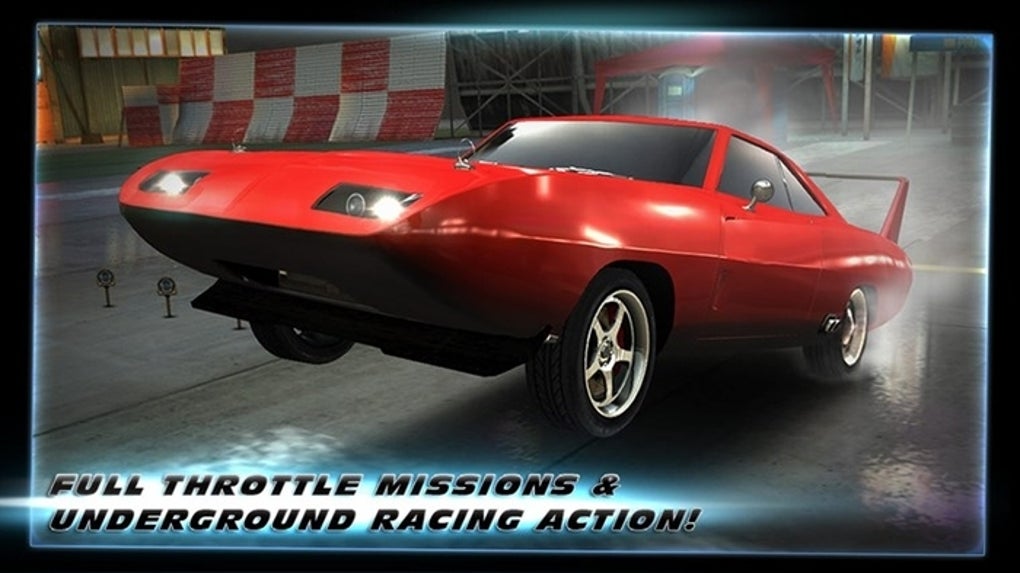
The cars themselves are arguably the stars of the show, and “Fast & Furious 6: The Game” pays them due respect. From classic muscle cars like the iconic 1970 Dodge Charger, synonymous with Dominic Toretto, to sleek, modern supercars, each vehicle is meticulously modeled with an impressive level of detail. The textures, reflections, and lighting effects are expertly applied, making the cars look “very true to life.” Players can appreciate the gleam of polished chrome, the contours of aerodynamic bodywork, and the subtle glint off the windshields. This attention to detail extends beyond just static appearances; during races, the animations for acceleration, gear changes, and drifts are fluid and convincing, contributing significantly to the sense of speed and power. Seeing your customized ride perfectly rendered as it blazes down the track is a satisfying experience that enhances the overall immersion.
Immersive Environments and Authentic Car Models
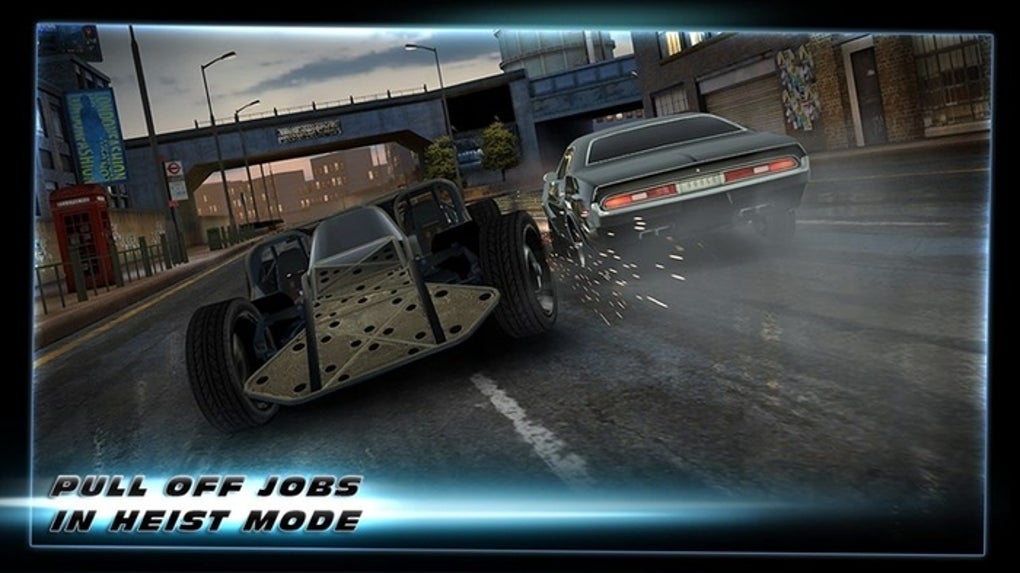
The game’s setting, primarily London, serves as a dynamic and richly detailed backdrop to the racing action. While the gameplay doesn’t involve free-roaming through the city, the specific race locations are designed to evoke the essence of the British capital. Players will race past recognizable landmarks and through atmospheric streetscapes, which, despite being static elements, are rendered with impressive detail. The buildings, street furniture, lighting, and general urban sprawl contribute significantly to the game’s aesthetic appeal without becoming a distraction from the core racing mechanics. This balance is critical; the environments are rich enough to provide a sense of place and atmosphere but not so cluttered as to obscure the critical visual cues for gear shifts or drift points. The choice of London also ties directly into the movie’s narrative, enhancing the sense of authenticity for fans of the franchise.
The combination of authentic car models and detailed environments creates a cohesive and visually appealing package. The game runs smoothly on compatible devices, maintaining a consistent frame rate that is vital for a timing-based racer where every millisecond counts. The visual cues for perfect shifts and drift entry/exit points are clear and easily discernible against the backgrounds, ensuring that graphical flair never compromises gameplay clarity. This visual polish not only makes the game more enjoyable to look at but also reinforces the high-stakes, cinematic feel that the Fast & Furious brand demands. For many players, the opportunity to race and upgrade beautifully rendered versions of their favorite movie cars through a stylish urban landscape was a significant draw, demonstrating how effective mobile graphics had become in creating engaging experiences. This level of detail, dubbed “Hot wheels” in the original review, positioned “Fast & Furious 6: The Game” as “arguably the most polished drag racing game for mobile devices” at its release, setting a high bar for its contemporaries.
The Online Connection and Its Implications
While the visual aspects of “Fast & Furious 6: The Game” were generally praised, one particular technical requirement often stood out as a point of contention for players: the necessity of an internet connection. The game requires an internet connection not just for initial download and updates, but also periodically during gameplay to download data and function correctly. This was a common design choice for many free-to-play mobile games of the era, enabling features like in-app purchases, online leaderboards, and preventing piracy, but it came with its own set of drawbacks.
For players primarily accessing the game while on the go, this requirement meant using precious mobile data, which could be “irritating if you don’t want to use precious megabytes from your data plan while you’re playing outside.” In an age where data plans could be limited and costly, this was a significant hurdle for many, restricting where and when they could fully enjoy the game without incurring additional charges or seeking Wi-Fi hotspots. It also meant that areas with poor or no internet connectivity rendered the game unplayable, which was a frustrating limitation for a title designed for portable entertainment.
However, the online connection wasn’t without its benefits. On the positive side, it allowed “Fast & Furious 6: The Game” to fully leverage its competitive features. Players could seamlessly keep an eye on “multiple leaderboards,” providing a constant stream of motivation to climb the ranks in both drag and drift categories. More notably, it powered the “Race Wars” mode, where players could see their opponents’ “add-ons,” essentially allowing them to view the upgrades and customization applied to rival cars. This fostered a sense of community and rivalry, allowing players to scope out their competition and strategize their own upgrades. The online connection also facilitated the in-app purchase system, which allowed players to quickly refill or expand their in-game ‘gas-tank,’ a critical element of the game’s free-to-play economy. So, while the internet requirement presented a practical inconvenience, it was intrinsically linked to the social and monetization aspects that defined a significant part of the game’s operational model.
Unlocking and Upgrading Your Dream Garage
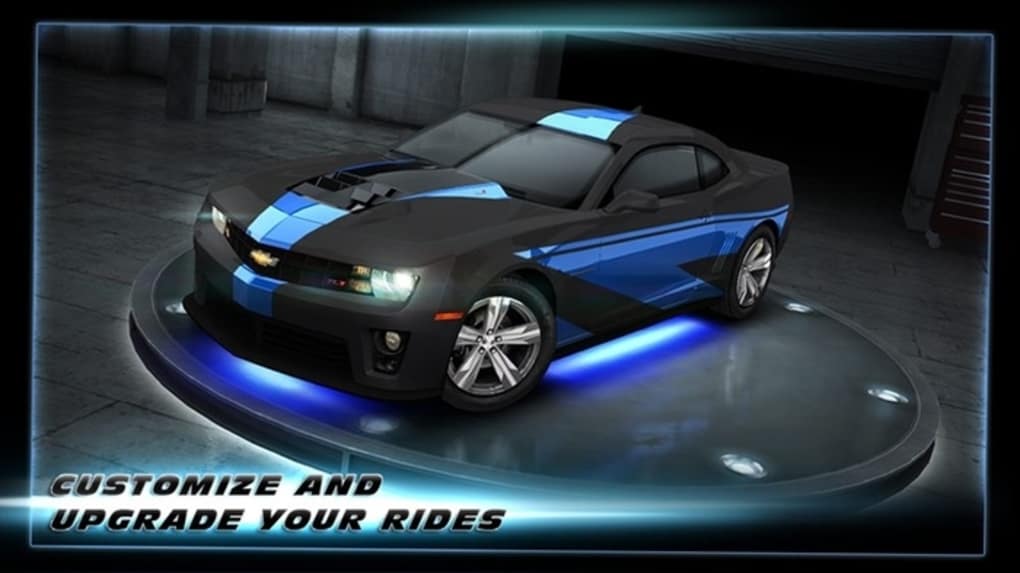
At the heart of any compelling racing game lies a robust system for acquiring and enhancing vehicles, and “Fast & Furious 6: The Game” delivers on this front with a satisfying progression model. The game provides a diverse “good range of upgradeable vehicles,” allowing players to build a formidable garage filled with cars spanning different eras and performance tiers, each offering its own characteristics and potential for improvement. This system not only provides a clear sense of progression but also directly ties into the gameplay, as strategic upgrades become essential for overcoming increasingly challenging opponents and achieving higher scores on the leaderboards.
The roster of available cars is a clear nod to the Fast & Furious legacy, featuring iconic vehicles beloved by fans alongside cutting-edge modern supercars. Players can start with more modest machines and gradually work their way up to high-performance beasts. The presence of the “1970 Dodge Charger,” a vehicle synonymous with the franchise and its protagonist Dominic Toretto, is a definite highlight, allowing players to feel like they’re stepping into the shoes of their favorite characters. Beyond the direct movie tie-ins, the inclusion of various supercars ensures that there’s always a new, faster, and more visually striking vehicle to aspire to. Each car feels distinct, not just aesthetically but also in terms of its base performance metrics, influencing how players might approach different types of races. A heavy muscle car might excel in pure drag power, while a lighter, more agile sportscar could be a better choice for high-scoring drift challenges. This variety encourages experimentation and strategic car selection for different challenge types.
Once a vehicle is acquired, the true customization begins through the game’s upgrade system. “Each one is upgradeable through game currency which can be earned or purchased.” This two-tiered approach to currency acquisition is characteristic of free-to-play mobile titles. Players can earn currency by winning races, completing story mode missions, and participating in daily challenges. This organic accumulation allows dedicated players to progress without spending real money, rewarding skill and perseverance. This aspect contributes to the “long-term appeal” by providing a continuous goal to work towards. However, for those eager to accelerate their progress, instantly unlock top-tier cars, or gain an immediate edge in competitive races, the option to purchase in-game currency with real money is readily available, offering a faster path to a fully tuned garage.
The upgrade path typically involves several key components, each impacting specific performance metrics: engine, turbo, tires, nitrous, and body. Investing in engine upgrades boosts raw horsepower and acceleration, providing more grunt for straight-line speed. A better turbocharger provides more significant and sustained power delivery, crucial for maintaining momentum. Improved tires enhance grip, which is paramount for achieving perfect launches and maintaining control during high-speed drifts. Nitrous oxide, a franchise staple, offers a temporary but potent speed boost, requiring strategic deployment during races for maximum impact – a well-timed nitrous burst can snatch victory from the jaws of defeat. Body upgrades often improve aerodynamics and weight distribution, contributing to overall handling and subtle speed advantages. As players invest in these upgrades, their cars not only perform better but often also display visual enhancements, such as new body kits, spoilers, or paint jobs, providing a satisfying sense of transformation and personal ownership. The strategic decision of what to upgrade and when becomes a mini-game in itself, requiring players to balance their resources and tailor their vehicles to specific racing challenges and their preferred playstyle, ensuring the game remains engaging beyond just the racing itself.
The Verdict: A Skill-Based Racer with Unique Appeal
“Fast & Furious 6: The Game” arrived on the scene with a clear vision: to translate the raw energy of the movie franchise into a focused, skill-based mobile racing experience. Its reception, while generally positive for its core mechanics and presentation, was also met with a degree of nuanced feedback, particularly concerning its free-to-play monetization model and its departure from traditional racing sim conventions. Ultimately, the game carved out its own niche, offering an enjoyable, albeit demanding, experience for a specific segment of racing game enthusiasts.
One of the primary points of contention for some players was the game’s fundamental design choice: “Some will be disappointed that Fast & Furious 6: The Game isn’t a straight driving sim.” Fans accustomed to the open-world exploration and free-steering dynamics of titles like “Forza Horizon” or the intricate track layouts of classic “Gran Turismo” might have found the drag and drift-centric gameplay too restrictive or repetitive. The game’s automated steering and focus on timing rather than manual control fundamentally altered the player’s role, shifting it from a driver to a precision input operator. This meant that while it excelled within its chosen subgenre, it inevitably alienated players looking for a more conventional racing sim experience, proving it “might not appeal to fans of traditional racing sims.”
Another significant hurdle, often a hallmark of free-to-play titles, was the in-game economy and resource management. “Others will moan the waiting around/purchasing that’s needed to keep playing through the game.” The “fuel levels” system, which depleted with each race and required waiting for regeneration or an in-app purchase to replenish, was a frequent source of frustration. This mechanic, designed to encourage either patience or monetary investment, could interrupt the flow of gameplay and create artificial barriers to continuous enjoyment. While common in the mobile gaming landscape, it undoubtedly detracted from the experience for those who wanted to play uninterrupted without spending money. The alternative – waiting – broke immersion and the adrenaline rush the game aimed to provide.
Despite these criticisms, “Fast & Furious 6: The Game” offered substantial merits that appealed to a dedicated audience. Its “intricate, challenging gameplay” demanded a high level of skill and practice to master. The unforgiving nature of the timing mechanics, where “if you mistime just one thing it can ruin your whole race,” ensured that victories felt genuinely earned. This steep learning curve, rather than being a deterrent, contributed significantly to the “long-term appeal” for players who enjoyed perfecting their craft. The satisfaction of chaining perfect shifts or nailing a flawless drift became a powerful motivator, encouraging repeated play sessions to improve times and ascend leaderboards.
The “polished 3D graphics” were a significant draw, elevating the mobile racing experience with “true to life” car models and detailed “London” backdrops. This visual fidelity, combined with a “good range of upgradeable vehicles,” allowed players to indulge in the fantasy of customizing and racing powerful machines. The “story mode featuring characters from the movie” provided a narrative hook for franchise fans, grounding the competitive action within the familiar Fast & Furious universe. Furthermore, the inclusion of “online leaderboards” fostered a competitive environment, driving players to constantly improve their times and challenge rivals globally. While a “no head-to-head multiplayer” was a missed opportunity, the leaderboard system still provided a robust sense of competition and global comparison.
In conclusion, if players were “prepared to put these issues aside” – namely, the non-traditional racing format and the free-to-play monetization mechanics – “Fast & Furious 6: The Game” revealed itself to be “actually an enjoyable racing game that requires plenty of skill to master.” It wasn’t a universal crowd-pleaser, nor did it attempt to be. Instead, it delivered a highly focused, visually impressive, and intensely challenging drag and drift racing experience tailored for mobile devices. It excelled at what it set out to do, providing a niche but deeply engaging experience for those who appreciated its unique brand of high-stakes, timing-based competition. Although the program can no longer be downloaded from platforms like PhanMemFree, its legacy remains as a testament to a period when mobile games were experimenting with complex mechanics and sophisticated graphics, carving out a distinct identity within the competitive racing genre.
File Information
- License: “Free”
- Latest update: “May 22, 2015”
- Platform: “Windows”
- OS: “Windows 8”
- Language: “English”
- Downloads: “93.7K”


