
EA Sports’ FIFA 14, released as a mobile application, aimed to bring the thrill of the world’s most popular sport to smartphones and tablets. While no longer available on app stores, its legacy provides a fascinating glimpse into the evolution of mobile gaming and the attempt to replicate the complexities of a console-level soccer game on a smaller screen. This review explores the game’s strengths and weaknesses, analyzing its gameplay mechanics, features, and overall impact on the mobile sports gaming landscape.
Gameplay and Game Modes: A Blend of Realism and Accessibility
FIFA 14 for mobile attempted to faithfully recreate the core gameplay of its console counterparts. It utilized a control system adapted for touchscreens, allowing players to manage their team’s movements, passes, and shots using intuitive gestures. While the controls were designed for simplicity, mastering them required practice and patience, a common challenge in adapting console controls for touch interfaces. The learning curve, steep for some, presented a hurdle for casual players, contrasting with the immediacy often expected from mobile games.
The game boasted a variety of game modes, designed to appeal to different player preferences. Ultimate Team, a staple of the FIFA franchise, allowed users to build and manage their dream squads, participating in auctions and competitions to enhance their team’s performance. This aspect of the game fostered a sense of community and competition, encouraging players to engage with the game beyond individual matches. Other modes included Games of the Week, mirroring real-world fixtures, offering a connection to current sporting events. Support Your Club allowed players to align themselves with specific teams and follow their progress throughout the season, integrating a level of real-world relevance within the virtual experience. Penalty Shootouts offered a more casual, quick-play option, while online modes facilitated head-to-head competition against other players around the globe.
Graphics and Presentation: Striking a Balance Between Detail and Performance
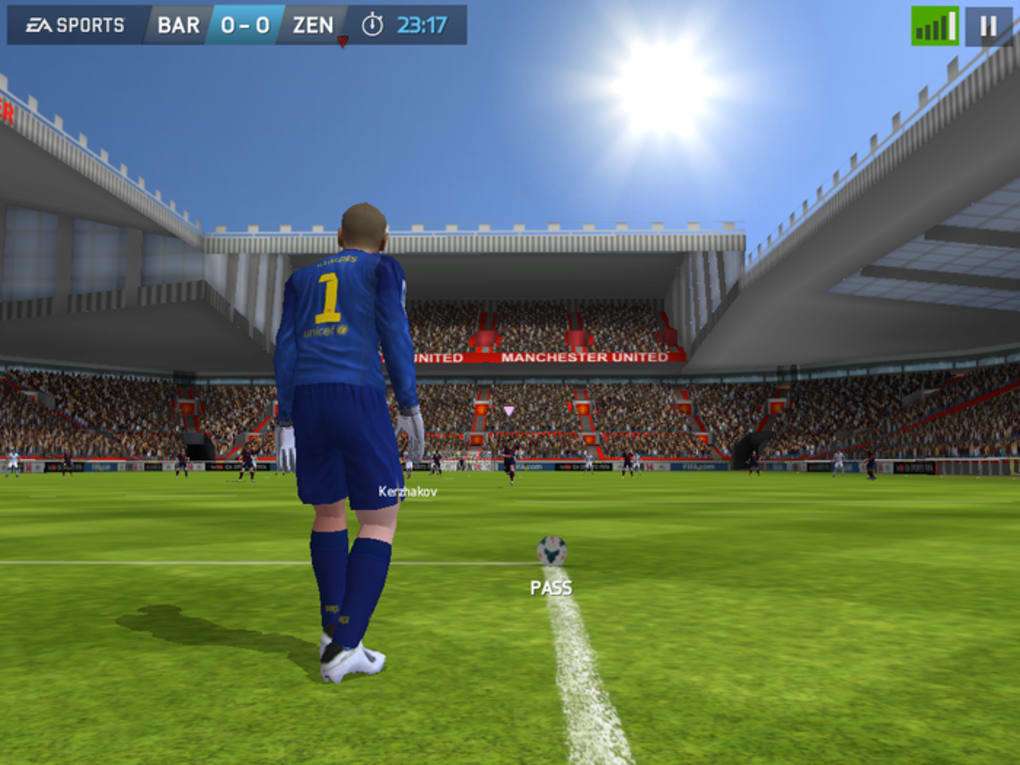
Given the technological limitations of mobile devices at the time of its release, FIFA 14’s graphics were a noteworthy achievement. The game employed detailed 3D player models and animations, striving for a level of realism that surpassed many mobile sports titles of the era. The player animations, though not as fluid as those seen on consoles, successfully conveyed the dynamism and energy of a soccer match. The presentation incorporated realistic stadium environments, adding to the immersion and visual appeal. However, the trade-off between visual fidelity and performance on older devices was noticeable, with occasional frame rate drops experienced depending on the device’s processing power. The visual quality ultimately reflected the balance between the ambition to provide a high-quality graphical experience and the need to maintain reasonable performance across the range of mobile devices available during the game’s lifespan.
Features and Social Integration: Connecting Players to the Global Football Community
Beyond the core gameplay, FIFA 14 featured several additional features designed to enhance the overall gaming experience. The inclusion of real-time updates provided a link to the real-world football landscape, keeping players informed about team news, injuries, and lineup changes. This feature deepened the level of engagement, providing a sense of realism beyond the virtual matches. The game also included robust social features, enabling players to share their successes, team compositions, and in-game achievements with friends and other members of the gaming community. This integration allowed players to build a social network around the game, fostering a sense of community and shared experience. This emphasis on social interaction was a key aspect of the app’s design, pushing the boundaries of what was possible for a mobile game in its era. In addition, the ability to create and manage virtual teams, participate in auctions, and even the simple act of sharing victories on social media, created a more engaging and dynamic experience than simple offline matches.

User Experience and Accessibility: Navigating the Complexities of Mobile FIFA
Despite its strengths, FIFA 14’s user experience presented some challenges, primarily for new players. The sheer number of game modes and options, combined with the need to learn the touchscreen controls, could be overwhelming for those unfamiliar with the FIFA franchise. The learning curve was somewhat steep; while the game included tutorials, mastering the controls and navigating the numerous game modes required dedicated time and effort. This was a significant contrast to many mobile games that focused on immediate gratification and simplicity. For newcomers, the sheer depth and complexity of options were potentially daunting, possibly deterring casual players who sought a more effortless gaming experience.
Legacy and Impact: A Stepping Stone in Mobile Soccer Gaming
FIFA 14 represented a significant step forward in mobile sports gaming. Its attempt to replicate the console experience on a mobile platform demonstrated EA Sports’ ambition to bring high-quality sports titles to a wider audience. While the game’s removal from app stores signals the march of technological progress and the availability of newer, more polished titles, its legacy remains important. It played a role in establishing the expectations for mobile sports games and helped pave the way for the more refined and accessible mobile soccer games that followed. The game’s challenges, particularly regarding the user experience and learning curve, highlighted the complexities of adapting a console title to a mobile platform. Subsequent titles learned from these lessons, focusing on streamlined user interfaces and simplified controls, while still aiming for a high-quality gaming experience. The inclusion of social features and real-time updates demonstrated an understanding of how to increase engagement and foster community, aspects which have become standard in modern mobile sports games. In essence, while FIFA 14 might no longer be available, its contribution to the landscape of mobile soccer gaming is undeniable.
Comparison to Subsequent Titles: Evolution of the Mobile FIFA Experience

Comparing FIFA 14 to its successors reveals a clear trajectory of improvement in mobile soccer gaming. Later FIFA mobile titles benefited from advancements in mobile hardware and software, resulting in smoother gameplay, enhanced graphics, and more intuitive control schemes. EA also streamlined the user interface, making it easier for new players to navigate the game’s various features and modes. The complexity remained, but accessibility improved dramatically. Later titles also benefited from improved online infrastructure, enabling smoother multiplayer experiences with reduced lag and improved stability. These improvements demonstrate the significant advancements in mobile gaming technology and design since the release of FIFA 14.
Conclusion: A Landmark Title in Mobile Gaming History
FIFA 14, despite its limitations, holds a significant place in the history of mobile gaming. Its ambition to bring a console-quality soccer experience to smartphones and tablets, though challenging in its implementation, helped shape the future of mobile sports titles. While its removal from app stores marks the end of its availability, its influence on the genre remains, underscoring its impact on how mobile sports games are developed and perceived today. The balance struck between realism and accessibility, while imperfect, established a benchmark for future attempts at bringing the intense world of soccer to mobile platforms. The game serves as a reminder of the continuous evolution of mobile gaming technology and its ongoing effort to provide increasingly immersive and accessible experiences to a global audience.
File Information
- License: “Free”
- Latest update: “August 23, 2024”
- Platform: “Android”
- OS: “Android 13.0”
- Downloads: “1.1M”
- Download Options: “Google Play”


