
FIFA Football 2003, a trial version PC game released by Electronic Arts in 2003, marked a significant iteration in the long-running FIFA franchise. While boasting a notable shift in gameplay mechanics and graphical enhancements, it also faced criticism for its artificial intelligence and control scheme changes. This in-depth review delves into the game’s strengths and weaknesses, based on contemporary user reviews and the broader context of its release.
Gameplay Revolution and AI Controversy
The most prominent feature of FIFA Football 2003 was its overhauled gameplay. Reviewers frequently contrasted it with previous iterations, noting a noticeable shift towards a more arcade-style feel, drawing comparisons to the popular Pro Evolution Soccer (ISS Pro) series. This change, while praised by some for its enhanced responsiveness and dynamism, sparked considerable debate. Many users expressed disappointment with the perceived loss of realism in the artificial intelligence (AI). Players were criticized for exhibiting less intelligent decision-making on the field, a departure from the more nuanced AI of earlier FIFA titles. One user commented, “The gameplay changed, but at what cost? The almost real AI, impressive graphics and players, and an excellent game mode are gone.” This sentiment highlights a central tension in the game’s design: the trade-off between arcade-style action and realistic simulation. The developers clearly prioritized responsiveness and a faster pace, but at the expense of the AI depth appreciated by simulation-focused players.
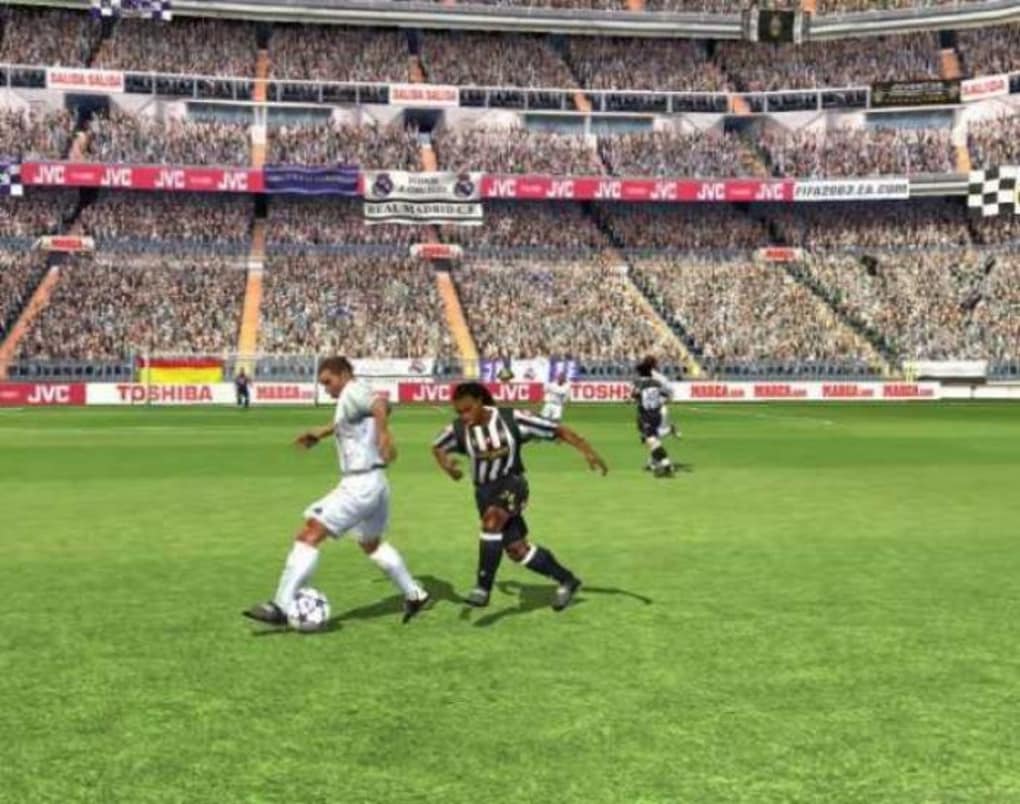
Another user succinctly summarized the conflicting opinions: “The graphics are impressive (although the demo leaves much to be desired), and it looks like a real match, no doubt; but in terms of gameplay, I stick with ISS, which is much more realistic in that aspect. I think FIFA is getting closer to what we all want, and I’m sure it will achieve it. For now, I continue enjoying ISS, a game that doesn’t have the rights to sponsors or players, but which is much more realistic in the most important aspect: gameplay.” This review directly addresses the core dilemma: the improved graphics and presentation versus the less-refined AI and arguably less realistic gameplay. It showcases the division amongst players regarding the direction the game took.
The shift in control schemes also provoked considerable frustration. Users reported significant changes to key bindings, requiring a period of readjustment. One reviewer stated, “It seems EA has opted for gameplay, but everything is debatable, because sometimes it still does some things that… In another order of things, man, EA thinks that for each FIFA they’re going to change the damn keys or what. Now it turns out that running is no longer W, but E, and God knows what the rest of the keys are, because to vary, it surely won’t be customizable.” This highlights a common complaint among long-time FIFA players: the inconsistency in control schemes across different versions, forcing players to relearn the controls with each release.
Graphical Advancements and Technical Issues
Despite the controversial AI and gameplay changes, FIFA Football 2003 was lauded for its improved graphics. Reviewers praised the enhanced visual fidelity and the realistic portrayal of stadiums and atmospheres. One user noted, “The stadiums, the atmosphere, everything that surrounds it, etc…”. This suggests that, while the core gameplay mechanics were a point of contention, the visual enhancements were generally well-received. However, the demo version, often the first experience for many potential players, apparently suffered from some graphical limitations. Multiple users reported technical problems, such as color distortion, specifically mentioning an error message (“bad artist no cookies”) accompanied by rainbow-colored player kits. One user wrote, “A problem with the colors. Does anyone else get a red screen that says ‘bad artist no cookies’? On top of that, the players come out with rainbow-colored shirts. If anyone else has this problem and knows how to fix it, tell me because there’s no way to tell Raúl from Henry.” These technical glitches in the demo highlight a common problem with early releases, where optimization and bug fixing are often still in progress.
The minimum system requirements were also a factor. A user reported that the game would not run on their system (750 MHz CPU, 128 MB RAM, TNT2 32 MB graphics card), indicating that even at the time of release, the game had certain hardware demands. This underlines the evolution of gaming technology, with the increasing complexity of games requiring more powerful hardware to run smoothly.
Comparison to ISS Pro and the Competitive Landscape
The comparison to ISS Pro (later known as Pro Evolution Soccer) was pervasive throughout user reviews. Many users expressed a preference for ISS Pro’s more realistic gameplay and AI, suggesting that FIFA Football 2003, while graphically impressive, had lost some of the fidelity that characterized the earlier FIFA games. This reflects the competitive landscape of the football game market at the time, where ISS Pro provided a viable alternative for players who valued simulation over arcade-style action. The intense rivalry between the two franchises fueled many of the discussions and opinions surrounding FIFA Football 2003, shaping how players viewed its innovations and shortcomings.
Legacy and Impact
FIFA Football 2003, despite its mixed reception, played a significant role in the evolution of the FIFA series. The attempts to modernize the gameplay, even if controversial, laid the groundwork for future iterations. The graphical advancements, albeit hampered by technical issues in the demo, demonstrated EA’s continued commitment to improving the visual presentation of their football titles. The game’s reception, highlighting both its triumphs and failings, provided valuable feedback for subsequent releases, influencing the development decisions that shaped the franchise’s later trajectory.
The experience of FIFA Football 2003 underscores the intricate balance between innovation and maintaining the core appeal of a long-standing franchise. The game’s ambitious overhaul of gameplay, while aimed at enhancing the overall experience, alienated some long-term fans who preferred a more simulation-focused approach. The graphical improvements, although significant, were marred by technical glitches in the demo version. The game’s legacy ultimately lies in its contribution to the ongoing evolution of the FIFA series, learning from both successes and shortcomings in pursuit of a more satisfying and engaging gaming experience. It represents a pivotal moment in the franchise’s history, a stepping stone towards the more refined and polished titles that followed.


