
In the dynamic and demanding world of screenwriting and stagecraft, the tools used by creators can significantly impact their ability to bring stories to life. For decades, one name has consistently stood out as the undisputed industry standard: Final Draft. More than just a word processor, Final Draft is a highly specialized application meticulously crafted to meet the unique needs of writers for film, television, and theatre. It is a powerful, self-contained solution that integrates robust word processing capabilities with sophisticated, professional script formatting, empowering writers to dedicate their creative energy to crafting compelling narratives without the distraction of technicalities.
The journey from a blank page to a finished script is arduous, filled with creative breakthroughs, challenging revisions, and the meticulous adherence to presentation standards that can make or break a submission. Final Draft removes the burden of formatting, automatically conforming scripts to the precise industry standards required by studios, production companies, and theatrical institutions worldwide. This crucial feature not only saves invaluable time but also ensures that every script produced is perceived with the professionalism it deserves, allowing the writer’s voice and vision to shine through unobstructed.
Whether you’re an aspiring screenwriter penning your first feature, a seasoned television writer developing episodic content, or a playwright constructing a theatrical masterpiece, Final Draft offers an unparalleled environment designed for efficiency, clarity, and creative freedom. Its enduring legacy and continuous evolution underscore its commitment to supporting the very foundation of visual storytelling.
The Unmatched Value Proposition of Final Draft
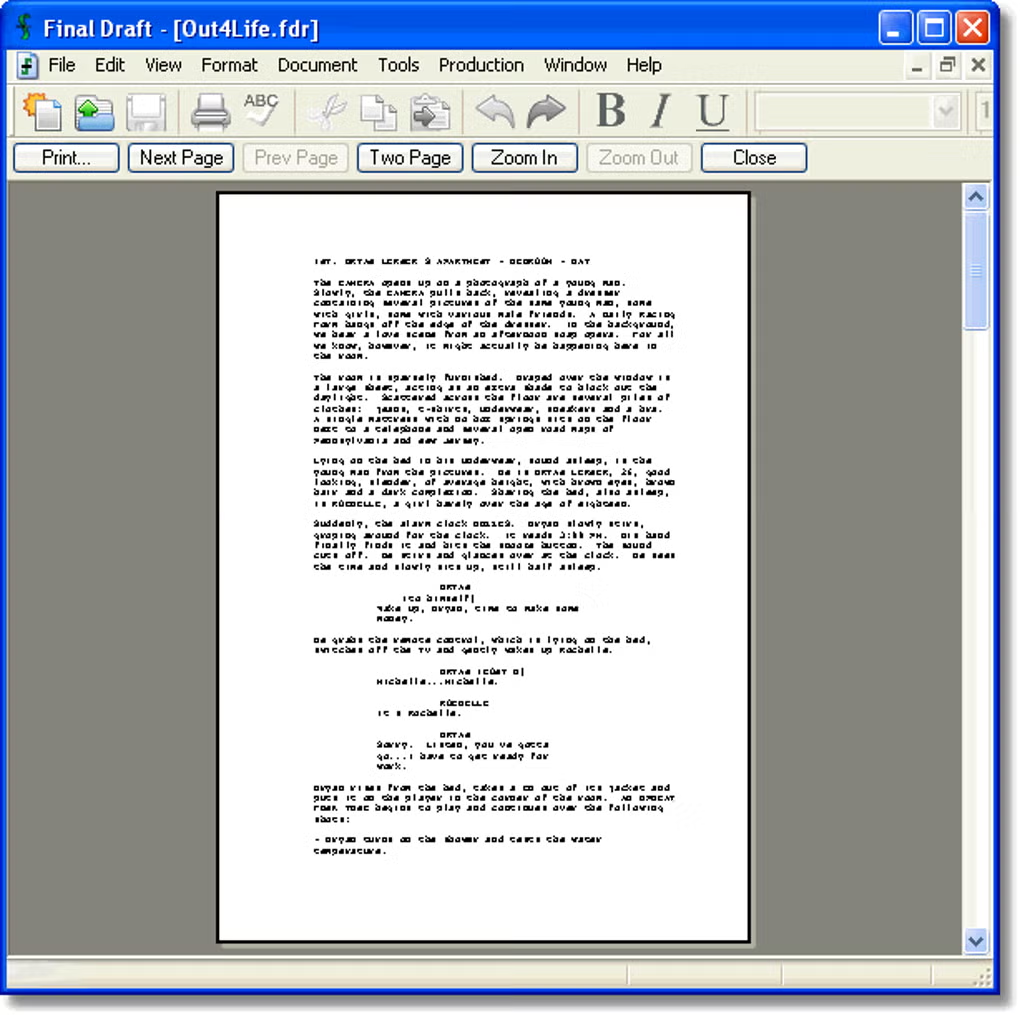
At its core, Final Draft is built upon a simple yet revolutionary premise: let the software handle the technicalities so the writer can focus on the art of storytelling. This principle manifests in a suite of features that address the specific challenges of scriptwriting, differentiating it significantly from general word processing applications. The value proposition of Final Draft extends beyond mere functionality; it encapsulates a promise of professionalism, efficiency, and a streamlined path from concept to a production-ready script.
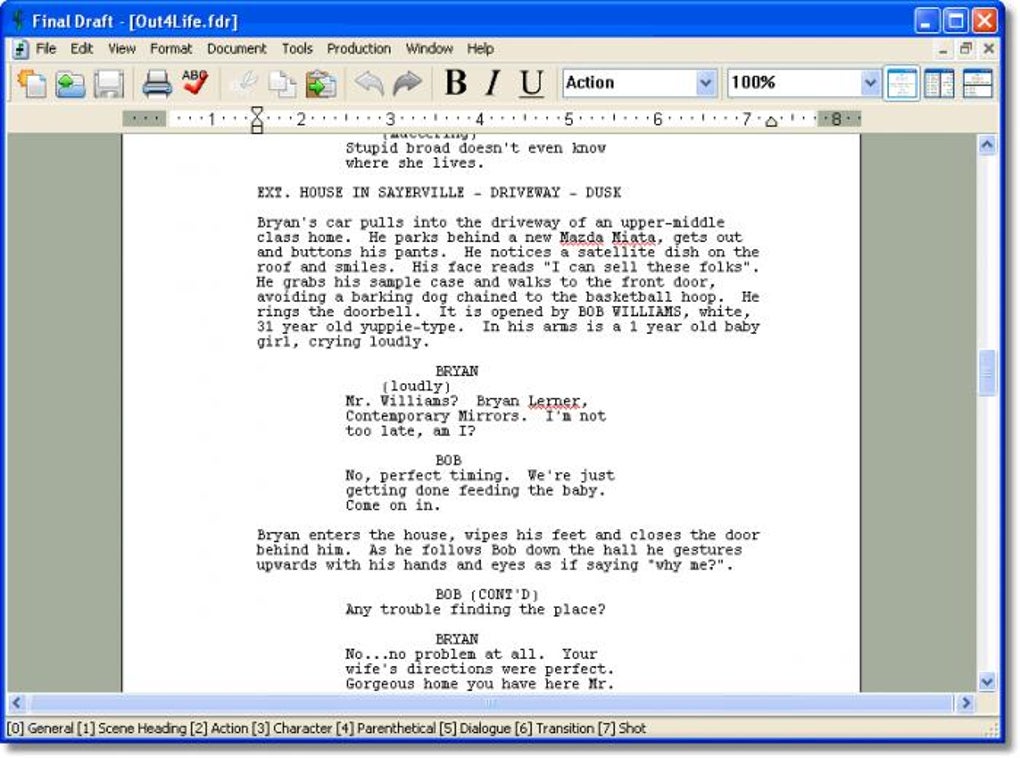
One of the most significant advantages Final Draft offers is its automatic formatting engine. Script formats are notoriously complex, with precise requirements for character names, dialogue, scene headings, action descriptions, transitions, and parentheticals. Deviating from these standards can lead to scripts being overlooked or dismissed by industry professionals. Final Draft eliminates this learning curve and the potential for costly errors. As a writer types, the software intelligently applies the correct formatting, paginates the script according to industry conventions, and even manages page breaks to prevent awkward splits in dialogue or action. This “write as you go” formatting not only saves countless hours of manual adjustment but also instills confidence that the final output will meet the exacting standards of Hollywood and beyond.
Beyond formatting, Final Draft serves as a comprehensive ecosystem for script development. It’s not just about typing; it’s about organizing, outlining, revising, and collaborating. The program is designed to be intuitive, ensuring that even users new to dedicated scriptwriting software can quickly become proficient. This ease of use, combined with its profound capabilities, solidifies its position as an indispensable tool for both novices and veterans in the creative industries. The integration with powerful writing project management tools further enhances its utility, turning a potentially fragmented workflow into a cohesive creative journey.
Core Features and Enhancements for Modern Scriptwriting
The evolution of Final Draft has been marked by a consistent effort to refine its core functionalities and introduce features that cater to the evolving demands of modern storytelling. The latest version, V13.2.13.3, released on December 4, 2024, continues this tradition of improvement, building upon a robust foundation while incorporating strategic enhancements. While some long-time users might note that updates often focus on refinement rather than revolutionary overhauls, this approach ensures stability and preserves the familiar workflow that professionals rely on daily.
One of the most praised aspects of Final Draft is its ability to let writers concentrate on writing. This is achieved by abstracting away the complexities of formatting. Writers can switch between elements like “Scene Heading,” “Action,” “Character,” “Dialogue,” and “Parenthetical” with simple key commands, and Final Draft automatically adjusts the indentation, capitalization, and spacing. This seamless transition between script elements keeps the writer’s focus squarely on the narrative, maintaining the creative flow without interruption.
A significant enhancement in recent versions is the integration with Scrivener. Scrivener is widely lauded as a comprehensive project management tool for writers, enabling detailed outlining, research organization, and manuscript development. By allowing writers to manage their time and project components within Scrivener and then seamlessly transfer their work to Final Draft for final script development and formatting, this integration offers a powerful one-two punch for productivity. This means a writer can brainstorm and structure their story in Scrivener’s flexible environment, then bring it into Final Draft to automatically transform it into a perfectly formatted, industry-standard screenplay, teleplay, or stage play. This synergy streamlines the entire creative process from initial concept to polished draft.
Furthermore, Final Draft offers a suite of smart tools that enhance the writing experience:
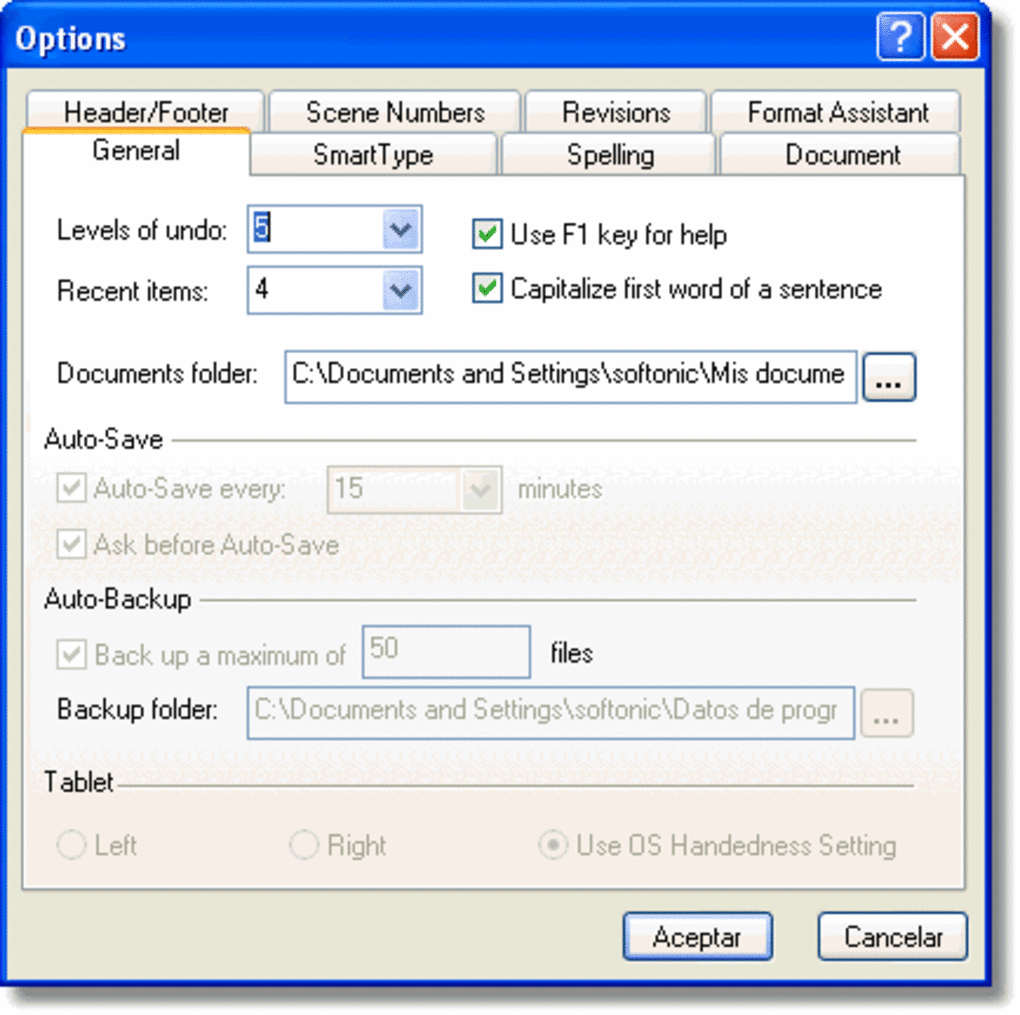
- SmartType: This feature auto-completes frequently used names for characters, scenes, and locations, speeding up the typing process and reducing errors. As you type a character’s name, for instance, Final Draft suggests it after the first few letters, allowing for quick selection.
- Tab Key Navigation: The intuitive use of the Tab key to cycle through script elements (e.g., from character to dialogue, or from dialogue to action) further enhances the speed and efficiency of writing, making the keyboard the primary interface for rapid content creation.
- Revision Mode: While not explicitly mentioned in the snippet for current versions, professional scriptwriting necessitates robust revision tracking. Final Draft typically includes features like color-coded revisions, locked pages (to prevent further changes to specific scenes once production begins), and comparing drafts, all crucial for collaborative projects and production pipelines.
- Reporting Tools: For production teams, Final Draft’s ability to generate detailed reports (e.g., scene reports, character reports, location reports, prop lists) is invaluable. These reports can be quickly generated to aid in budgeting, scheduling, casting, and breaking down a script for production.
The program’s commitment to industry standards is unwavering. It supports various formats, including the standard Hollywood screenplay format, as well as specific formats for sitcoms, hour-long dramas, and stage plays. This adaptability ensures that no matter the medium, the script will always be presented in the expected professional manner. The program’s stability, despite some historical feedback about older versions, has generally improved with each iteration, making it a reliable workhorse for daily scriptwriting tasks.
Streamlining the Creative Workflow and Production Pipeline
The true genius of Final Draft lies not just in its individual features but in how they coalesce to streamline the entire creative workflow, from the solitary act of writing to the collaborative demands of a production pipeline. It’s a tool that understands the iterative nature of storytelling and the practicalities of bringing a script to fruition.
For the writer, the initial draft is often about getting ideas down without self-censorship. Final Draft supports this by removing formatting concerns, allowing for rapid ideation and output. The ability to quickly add and rearrange scenes, characters, and dialogue elements without disrupting the overall script structure is invaluable during the development phase. The visual clarity of a correctly formatted script from the outset also aids the writer in assessing pacing, dialogue flow, and overall impact, almost as if reading a finished product even in its nascent stages.
Beyond the solitary writer, Final Draft plays a pivotal role in the collaborative aspects of filmmaking and theatre. When a script moves into pre-production, it becomes a blueprint for countless professionals: directors, producers, actors, cinematographers, production designers, and more. The universal adoption of Final Draft means that scripts can be seamlessly shared and understood across different departments. Actors receive character-specific lines, directors get blocking notes, and production teams can generate essential reports for budgeting and scheduling—all from the same Final Draft file. This standardization drastically reduces miscommunication and ensures everyone is literally on the same page.
Furthermore, the software’s capability to handle revisions gracefully is critical. In any production, scripts undergo multiple rewrites, often necessitating page additions or deletions. Final Draft’s robust revision management features, such as inserting “A” pages (e.g., page 2A, 2B) to maintain original page numbering while integrating new content, or color-coding different drafts, are indispensable. This allows for clear tracking of changes and ensures that all collaborators are working with the most current version of the script, preventing costly mistakes on set or in rehearsal. This granular control over revisions, combined with the ability to export to various formats (including PDF, which is often the preferred method for sharing final drafts), underpins its status as a professional workhorse.
Even for independent writers or those working on lower-budget projects, the ability to produce a script that looks and feels “professional” can significantly impact its reception. A polished, industry-standard script speaks volumes about the writer’s dedication and understanding of the craft. Final Draft democratizes this professionalism, providing every user with the means to present their work at the highest standard, irrespective of their industry connections or previous experience with intricate formatting rules.
Final Draft in the Contemporary Industry Landscape and Its Alternatives
In an ecosystem increasingly populated by diverse software solutions, Final Draft has maintained its dominant position as the industry standard for scriptwriting. This status is not accidental; it’s a testament to its singular focus, robust feature set, and deep integration into the workflows of studios and production houses worldwide. While many alternatives exist, each offering its own unique blend of features, Final Draft’s ubiquity and specialized design keep it at the forefront.
Among its competitors, we find a range of options, from free tools to comprehensive suites:
- Celtx: Often lauded for its comprehensive production planning features beyond just scriptwriting, including budgeting and scheduling tools. It’s a strong contender for those seeking an all-in-one pre-production platform, but its scriptwriting interface might not feel as streamlined as Final Draft for pure writing.
- Scrivener: As previously mentioned, Scrivener excels as a project management and long-form writing tool. While it can be used for scriptwriting, its formatting capabilities require more manual setup compared to Final Draft’s automatic adherence to industry standards. Its strength lies in organization and research, making its integration with Final Draft particularly valuable.
- Storybook, Trelby, KIT Scenarist, yWriter, FocusWriter: These tools often offer either simpler, free alternatives for basic scriptwriting or focus on specific aspects like plot organization or distraction-free writing. They can be excellent starting points for beginners or for personal projects, but they typically lack the advanced formatting precision, collaboration tools, and industry-specific features that define Final Draft.
What sets Final Draft apart is its uncompromising dedication to the script itself. It’s not trying to be a full production suite or a general-purpose word processor. Instead, it hones in on delivering the best possible environment for writing and formatting screenplays and stage plays to the exact specifications required by professionals. This singular focus ensures that every feature and design choice serves the primary goal: making a writer’s script ready for production.
The program’s continuous, albeit often subtle, updates reflect a mature software product that prioritizes stability and user experience. While older reviews, particularly those referencing versions like 7 or 8, might have mentioned a perceived lack of “revolutionary” changes or occasional instability, the current iterations, such as V13.2.13.3, demonstrate a commitment to incremental improvements, bug fixes, and performance enhancements. In the world of professional tools, reliability and a consistent, predictable workflow are often valued more highly than disruptive, drastic changes. The developer, Finaldraft, understands that professionals need tools they can depend on day in and day out.
Furthermore, the widespread adoption of Final Draft creates a significant network effect. When virtually every studio, agent, and production company expects scripts in a Final Draft-compatible format, it becomes a self-fulfilling prophecy of necessity. For anyone serious about pursuing a career in screenwriting or playwriting, mastering Final Draft is not merely an option; it is often a prerequisite for seamless entry into the professional landscape.
Conclusion: The Enduring Legacy of Final Draft
Final Draft stands as a testament to the power of specialized software designed with a deep understanding of its users’ needs. It transcends the definition of a mere word processor, positioning itself as an essential partner in the creative journey of scriptwriters worldwide. By diligently handling the intricate demands of industry-standard formatting, Final Draft liberates writers from technical distractions, allowing them to fully immerse themselves in the crucial task of crafting compelling narratives.
From its intuitive interface and intelligent formatting engine to its seamless integration with project management tools like Scrivener, Final Draft offers a comprehensive and efficient environment for developing screenplays, teleplays, and stage plays. Its enduring status as the industry standard underscores its reliability, its precision, and its profound impact on the collaborative process of bringing stories from concept to screen or stage.
For aspiring and established writers alike, investing in Final Draft is more than acquiring software; it’s adopting a professional mindset and equipping oneself with the tool that defines excellence in script presentation. As V13.2.13.3 continues to refine its capabilities, Final Draft remains not just a choice, but a necessity for anyone committed to the craft of professional scriptwriting, ensuring that their creative vision is always presented in the best possible light. Discover more about Final Draft and other productivity tools on PhanMemFree, or explore related topics for scriptwriting and development on Phanmemfree.org.
File Information
- License: “Trial version”
- Latest update: “December 4, 2024”
- Platform: “Windows”
- OS: “Windows XP”
- Language: “English”
- Downloads: “99.9K”
- Size: “87.15 MB”


