
Flash Video Downloader was a once-popular application designed to simplify the process of downloading videos from various online sources. While no longer available for download due to factors that may include discontinuation, security concerns, or other unforeseen circumstances, its existence highlights the evolution of video downloading technology and the challenges faced by such software in a constantly shifting digital landscape. This article will explore the functionalities, strengths, and limitations of Flash Video Downloader, and examine why similar tools have ultimately superseded it.
Functionality and User Interface
Flash Video Downloader, as its name suggests, focused on retrieving Flash videos – a format prevalent during the early to mid-2000s. The program aimed to provide a streamlined user experience, characterized by a straightforward interface and a purportedly simple, one-click download process. Users could access videos through the application’s built-in browser, locate the desired video, and initiate the download with a single button press. This ease of use was a significant selling point, targeting users who desired a hassle-free solution to obtaining online video content. The simplicity extended to the lack of extensive configuration options. While this minimalist approach might have appealed to less tech-savvy users, it also limited customization and control over the download process. There were no settings to adjust download speed, manage bandwidth usage, or alter the destination folder.
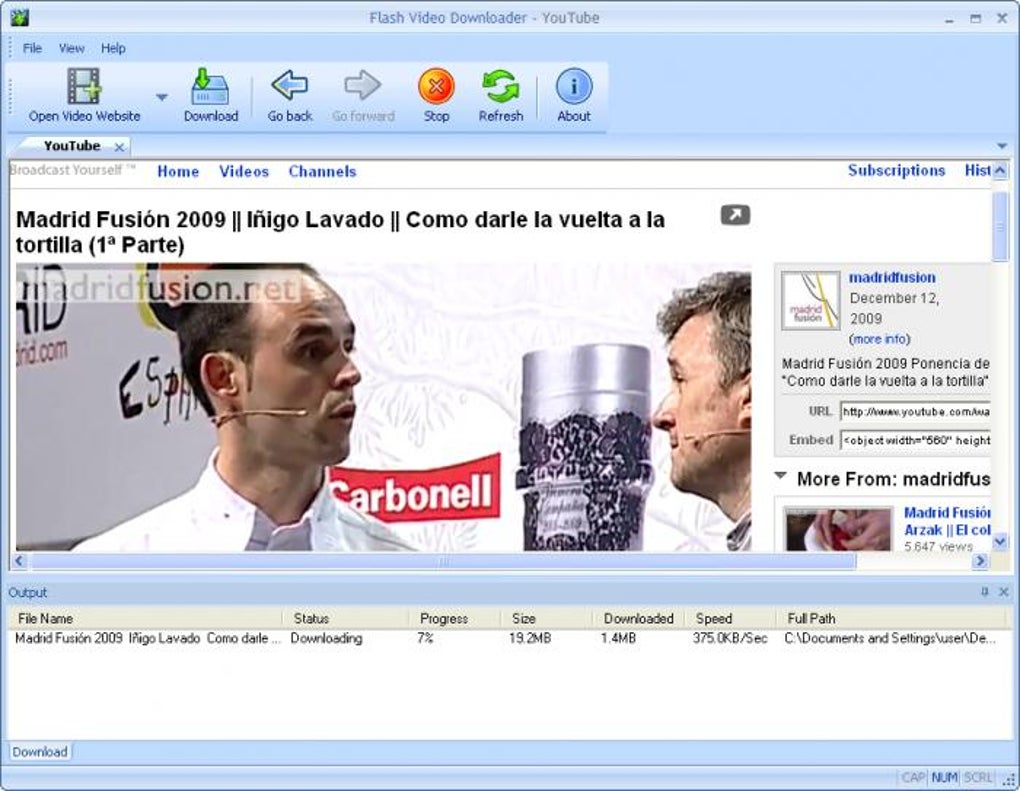
The program’s core functionality revolved around its supported websites list. This list included a variety of video-hosting platforms, but its contents were fixed and could not be modified by the user. This inflexibility presented a significant drawback, especially as the landscape of online video platforms shifted and new services emerged. The inability to add or remove sites limited the application’s utility over time, rendering it incompatible with newer video sources.
Furthermore, the application’s reliance on its internal browser meant that users couldn’t utilize external download managers or accelerators. This often resulted in slower download speeds compared to using alternative methods that could leverage these enhancements. The absence of features such as pausing downloads or directly grabbing URLs added further limitations. Users were confined to the application’s internal workflow, hindering flexibility and efficiency.

Strengths and Weaknesses
While Flash Video Downloader offered a visually appealing and intuitive interface, its lack of flexibility and potential issues with compatibility ultimately outweighed its advantages. The simplicity was a double-edged sword; while it made the program accessible to novice users, it also severely limited its functionality and adaptability. The fixed list of supported websites was a particularly glaring limitation, restricting its usefulness over time as new video platforms and formats gained popularity.
The program’s one-click download function, while convenient in theory, often failed to live up to expectations. Reports surfaced about download failures from certain listed sites, further hindering the application’s reliability. The lack of control over download speeds and the inability to utilize external download accelerators were also cited as shortcomings. These shortcomings, combined with the inability to pause downloads or input a URL directly, hampered the user experience and made Flash Video Downloader less efficient compared to alternative solutions.
Security and Privacy Concerns
Software of this nature, especially those focusing on downloading media from a range of sources, often raises concerns about security and privacy. While no specific vulnerabilities or malicious activity were explicitly documented for Flash Video Downloader, the risk always existed. Downloading software from unofficial or less reputable sources increases the likelihood of encountering malware or other unwanted programs. Furthermore, the inclusion of adult content websites in the supported list raised concerns about the appropriateness of the software for certain users, particularly families with children. The lack of clear transparency regarding data collection practices also added to these concerns.
The Decline of Flash Video Downloader and the Rise of Alternatives
The primary reasons behind the demise of Flash Video Downloader are multifaceted. The phasing out of Adobe Flash Player, the technology upon which it was based, significantly impacted its functionality and rendered it obsolete for many video sources. Furthermore, the rise of more versatile and feature-rich download managers offered considerable advantages. These alternatives often supported a broader range of video platforms and formats, including newer technologies beyond Flash. They also provided significantly more control over the download process, with features such as download speed management, pausing and resuming downloads, and the ability to handle multiple downloads simultaneously. Many modern download managers also offer better integration with web browsers and improved download acceleration capabilities, addressing some of Flash Video Downloader’s key limitations.
The increasing emphasis on security and privacy also played a role in the decline. Users became more aware of the potential risks involved in downloading software from unknown sources and the importance of transparency in data handling. More established and reputable software developers provided more robust security measures and clear privacy policies, increasing user confidence and trust.
Conclusion
Flash Video Downloader represented a specific point in the evolution of video downloading tools. Its simplicity and intended ease of use appealed to a segment of users, but its limited functionality, inflexibility, and lack of crucial features ultimately led to its obsolescence. The shift towards more advanced download managers, improved security practices, and the demise of Flash technology combined to make Flash Video Downloader redundant. Its legacy serves as a reminder of the rapid pace of technological change and the necessity for software developers to adapt and innovate to remain relevant in a dynamic digital environment. The limitations and eventual decline of Flash Video Downloader highlight the importance of comprehensive features, robust security measures, and continuous adaptation in the development of successful software applications. Modern video downloaders, with their diverse functionality and user-friendly interfaces, offer users superior performance and reliability, addressing the shortcomings of earlier programs like Flash Video Downloader.
File Information
- License: “Free”
- Version: “2.4.1.0”
- Latest update: “September 21, 2021”
- Platform: “Windows”
- OS: “Windows NT”
- Language: “English”
- Downloads: “255.1K”
- Size: “3.56 MB”


