
In an era where digital entertainment often provides a temporary escape from reality, Foldit stands out as a profound exception. More than just a game, Foldit is a groundbreaking initiative that bridges the gap between casual gaming and serious scientific research, empowering players worldwide to contribute meaningfully to medical breakthroughs. Developed by researchers at the University of Washington, Foldit harnesses the collective intelligence and problem-solving skills of a global community to tackle one of biology’s most complex challenges: protein folding. Through an engaging puzzle format, players manipulate virtual protein structures, and their optimized designs are then rigorously tested by real scientists, potentially paving the way for new treatments for diseases like Alzheimer’s, AIDS, and even various cancers.
The concept behind Foldit is as audacious as it is brilliant. Proteins are the workhorses of life, responsible for nearly every function within our bodies, from catalyzing metabolic reactions to replicating DNA and transporting molecules. Their ability to perform these diverse tasks hinges critically on their unique three-dimensional structures. A protein begins as a linear chain of amino acids, but to become functional, it must “fold” into a precise, intricate shape. Predicting this final folded shape from its amino acid sequence is an immensely difficult computational problem, often too complex even for the most powerful supercomputers. This is where Foldit players come in. By transforming this scientific conundrum into an interactive puzzle, Foldit taps into humanity’s innate spatial reasoning and pattern recognition abilities, turning complex biochemical principles into an accessible and rewarding experience.
The Intersection of Gaming and Scientific Discovery
The core premise of Foldit is not merely to entertain but to enlist the public in a vital scientific endeavor. Proteins are central to virtually all biological processes, and understanding their structures is fundamental to understanding their functions. When proteins misfold, they can lead to devastating consequences, being implicated in a wide array of diseases. For instance, the accumulation of misfolded proteins is a hallmark of neurodegenerative disorders like Alzheimer’s and Parkinson’s. Similarly, the ability of viruses like HIV to replicate and infect cells often depends on the specific folding patterns of their proteins. By helping researchers predict and design optimal protein structures, Foldit players directly contribute to efforts to understand disease mechanisms, identify potential drug targets, and design new therapeutic molecules.
The traditional approach to protein structure prediction involves computationally intensive algorithms that can take weeks or even months to run, often yielding suboptimal results. Human intuition, however, possesses a unique capacity for visualizing complex three-dimensional objects and identifying potential solutions that might elude algorithmic brute force. Foldit leverages this human advantage by gamifying the process. Players manipulate virtual models of proteins, attempting to fold them into the most stable and energy-efficient configurations. The game provides real-time feedback on the stability and quality of their designs, guiding them towards scientifically sound solutions. This blend of intuitive interaction and scientific accuracy transforms what was once an arcane academic pursuit into a form of citizen science accessible to anyone with an internet connection and a desire to make a difference.
The impact of this citizen science model extends beyond mere data collection. It fosters a deeper public understanding of scientific research, demystifying complex biological concepts and showcasing the collaborative nature of discovery. For many players, Foldit offers their first direct engagement with the scientific process, demonstrating that anyone, regardless of formal training, can contribute to significant advancements. This collective intelligence has proven remarkably effective, with players often discovering optimal protein configurations that surpass those predicted by advanced algorithms, thereby accelerating research timelines and opening new avenues of inquiry that might otherwise remain unexplored.
Unraveling the Mechanics of Protein Folding
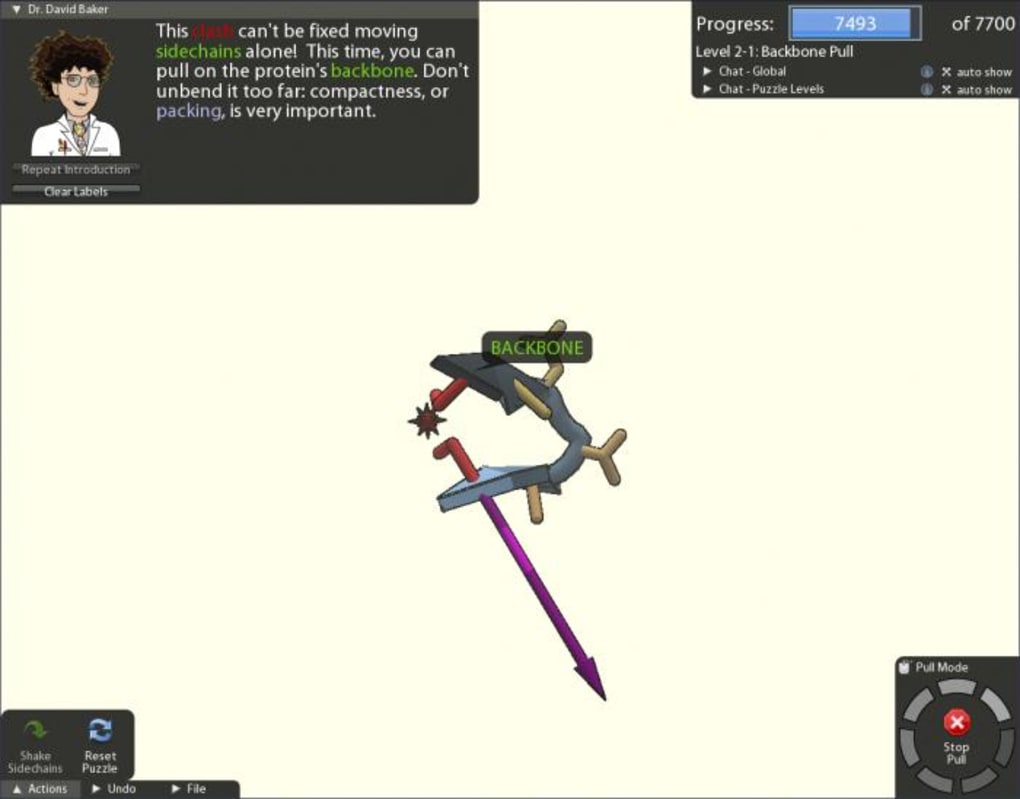
At its heart, Foldit operates as a highly sophisticated puzzle game where players are tasked with the intricate challenge of protein manipulation. The game’s interface is designed to translate the complex chemical and physical forces governing protein folding into intuitive visual and interactive tools. Players are presented with a ribbon-like representation of a protein’s amino acid chain, which they can twist, bend, and rotate in three-dimensional space. The objective is to guide this chain into a compact, stable, and energetically favorable configuration, often by maximizing the number of hydrogen bonds and minimizing steric clashes. The game provides a score reflecting the “goodness” of the current fold, essentially acting as a real-time scientific validator, encouraging players to iterate and refine their designs.
From Practice Puzzles to Real-World Proteins
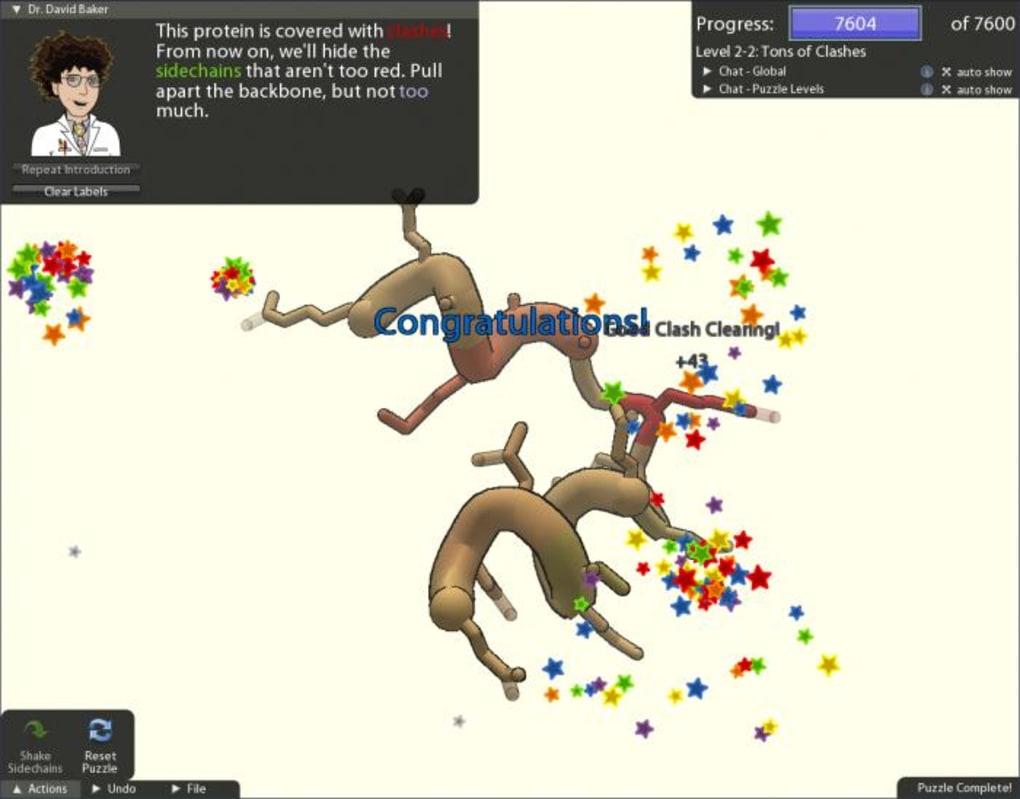
Foldit employs a clever pedagogical approach, guiding new players through a series of practice levels that gradually introduce the fundamental principles of protein folding. These initial puzzles are designed to teach the basics: how different amino acids interact, the importance of hydrogen bonds, the concept of hydrophobic and hydrophilic residues, and the general rules governing protein stability. Players learn to identify stable motifs like alpha-helices and beta-sheets, and how to pack them efficiently. This progressive learning curve ensures that even individuals with no prior biology background can grasp the core concepts necessary to make meaningful contributions.
Once players have mastered the basics in these introductory challenges, they are invited to tackle “research puzzles” featuring real proteins from nature. Initially, these puzzles often involve proteins whose three-dimensional structures have already been solved by traditional experimental methods like X-ray crystallography or NMR spectroscopy. This allows the game developers to validate player-generated solutions against known structures, further refining the scoring algorithms and providing players with immediate feedback on the accuracy of their folds. The ultimate goal, however, is for players to tackle “unsolved” protein structures – those whose shapes scientists have yet to determine. The developers have consistently expressed plans to integrate more and more of these truly novel challenges, placing players at the cutting edge of biological discovery. It is in these unsolved puzzles that the collective intuition of the Foldit community has the potential for the greatest scientific impact, discovering structures that could unlock new biological insights or lead to novel therapeutic designs.
The Scientific Impact of Player Solutions
The ingenuity of Foldit lies not just in its gameplay, but in the seamless integration of player efforts into the scientific research pipeline. Once players submit their best protein designs for a given puzzle, these solutions are not simply stored away. Instead, the most promising configurations are rigorously evaluated by the research team at the University of Washington’s Institute for Protein Design. These scientists often use advanced computational methods to further refine the player-generated models and, crucially, select the most viable candidates for physical synthesis and experimental testing in the laboratory.
This experimental validation is the ultimate test of a Foldit solution. Proteins designed by players are actually synthesized in the lab, purified, and then their real-world structures and functions are determined. If a player-designed protein folds into the predicted shape and exhibits desired properties, it represents a significant breakthrough. In one notable instance, Foldit players successfully deciphered the crystal structure of an AIDS-related retroviral protease in just three weeks, a problem that had stumped traditional computational methods for over a decade. This particular puzzle, “M-PMV retroviral protease,” demonstrated the immense power of human pattern recognition and creativity when applied to complex scientific challenges. These validated structures can then be used by researchers to develop new drugs, understand viral mechanisms, or engineer novel proteins with specific functions. This direct feedback loop – from game to lab to potential medical application – is what truly elevates Foldit beyond mere entertainment, transforming it into a powerful tool for accelerating the pace of biological discovery.
Who Can Play? The Broad Appeal of Foldit
One of Foldit’s most commendable aspects is its broad appeal and accessibility, designed not just for seasoned scientists but for anyone intrigued by the mysteries of molecular biology. The game actively encourages participation from a diverse demographic, challenging the traditional notion that scientific research is exclusive to those with advanced degrees.
While the game certainly appeals to and benefits from the expertise of scientists and science students, who might find its intricate puzzles a stimulating application of their knowledge, Foldit is carefully structured to onboard beginners. The initial practice levels serve as an excellent, interactive introduction to cell creation and protein dynamics. Rather than overwhelming new players with complex terminology and abstract concepts, the game immerses them in a visual, tactile learning experience. They learn by doing, seeing immediate feedback on their actions within the game’s molecular playground. This hands-on approach makes abstract biological principles concrete and understandable.
For a beginner, Foldit can serve as a fascinating gateway into the world of molecular science. It introduces fundamental concepts like protein structure, amino acid interactions, and thermodynamic stability in a low-stakes, engaging environment. The game effectively gamifies learning, transforming what could otherwise be dry textbook material into an exciting problem-solving challenge. This democratic approach to scientific engagement means that a high school student, a retiree, or a professional in an unrelated field can contribute alongside a Ph.D. biochemist. The only prerequisites are curiosity, a willingness to learn, and the spatial reasoning skills that many puzzle games cultivate. By fostering such a diverse community of contributors, Foldit not only garners a wider pool of problem-solvers but also cultivates a greater appreciation for scientific research among the general public.
Beyond the Screen: Real-World Benefits and Challenges
Foldit represents a paradigm shift in how scientific research can be conducted, offering both significant advantages and unique challenges. Its innovative model demonstrates the untapped potential of crowdsourced intellectual capital, but it also highlights the inherent difficulties in simplifying highly complex scientific problems for a general audience.
Advantages for Science and Education
The “Pros” section in the original description succinctly captures Foldit’s most compelling attributes. Foremost among these is its original concept: no other game so directly and effectively translates complex scientific challenges into an interactive, globally accessible format with such immediate, tangible impact. This novelty alone has garnered significant attention and participation, proving that serious science can be genuinely fun.
Secondly, Foldit allows players to learn about molecular protein structures in an intuitive and immersive way. Traditional educational methods often struggle to convey the three-dimensional complexity of proteins. Foldit, however, provides a dynamic, interactive model that allows players to physically manipulate these structures, developing an intuitive understanding of their geometry, stability, and the forces that govern their folding. This makes it an invaluable educational tool, suitable for classrooms from high school to university level, capable of fostering a deeper appreciation and comprehension of biochemistry.
Perhaps the most significant advantage is Foldit’s capacity to help towards real-life medical research. The game has already demonstrated its utility in solving problems that stumped even advanced algorithms, directly contributing to our understanding of diseases and accelerating drug discovery efforts. Each optimized protein structure derived from player input brings scientists closer to developing new diagnostics, vaccines, and therapeutic interventions for critical global health challenges. This direct contribution to alleviating human suffering provides a powerful motivational factor for players and validates the entire citizen science model.
Navigating the Learning Curve
Despite its many advantages, Foldit is not without its difficulties, as noted by the “Cons” section: it can be “difficult to get to grips with.” This challenge stems from several factors. Firstly, protein folding, even when gamified, remains an inherently complex scientific problem. While the game does an excellent job of simplifying the interface and providing tutorials, the underlying principles require a certain level of abstract thinking and spatial reasoning. For players completely new to scientific concepts or complex puzzle games, the initial learning curve can feel steep.
One PhanMemFree.org user review from October 1, 2010, articulated this sentiment clearly: “I am not used to playing ANY games on the computer since I am 66 and learned to use a computer when I was about 50 years old. So for me, just figuring out the mechanics of the computer itself to make it do what I want is a major hurdle….and I did not quite understand how to do it. A sample of what the thing is supposed to look like when done would help in the beginning.” This feedback highlights that while the game is designed for broad appeal, the novelty of its mechanics, combined with the inherent complexity of its subject matter, can be a barrier for some, particularly those less accustomed to modern digital interfaces or the abstract nature of the puzzles.
However, the game’s developers and community have actively addressed this. Extensive tutorials, both in-game and online, walk players through the basics. The Foldit community forums often serve as a resource for new players seeking guidance, fostering a collaborative learning environment. While the initial hurdle might require patience, the rewarding nature of contributing to real science often provides the motivation to overcome it. The satisfaction of seeing one’s virtual efforts contribute to tangible scientific progress is a powerful incentive that helps players navigate the learning curve.
Technical Specifications and Community Feedback
For those considering diving into the world of Foldit, understanding its technical footprint and the sentiment of its user base is helpful. The game, as listed on PhanMemFree, operates on Windows (specifically Windows XP and later versions were supported at the time of the listed update). It is also available on other platforms, notably Mac, expanding its reach to a broader audience. The version mentioned, V03.7, last updated on February 12, 2019, indicates a continuous development and refinement process by the University of Washington team. With a modest download size of 50.47 MB, it’s easily accessible even on older systems or those with limited bandwidth, ensuring that the barrier to entry remains low. The game is free, reinforcing its mission of democratic scientific participation.
Voices from the Community
Community feedback is vital for any software, and for a game with a scientific mission like Foldit, it offers insights into its practical usability and impact. The user review cited on PhanMemFree, despite being from 2010, provides a window into the initial experiences of players. The 66-year-old reviewer’s honest appraisal (“I liked it and will go back to it. The only problem I can talk about is that I am not used to playing ANY games on the computer…”) encapsulates the accessibility challenge for some demographics. This highlights that while the concept is universally appealing, the execution of complex 3D manipulation can be a hurdle for those less familiar with modern computing interfaces or gaming conventions. The suggestion for “A sample of what the thing is supposed to look like when done” is an excellent piece of feedback, pointing to the need for clear visual goals, especially in early levels, to help players orient their problem-solving efforts.
Despite these challenges, the overarching sentiment from the community has generally been positive, often driven by the unique satisfaction of contributing to meaningful research. Players frequently praise the innovative concept and the intellectual stimulation the puzzles provide. The competitive aspect, where players vie to submit the best protein folds, also fosters a strong sense of community and friendly rivalry, encouraging continuous engagement and improvement. The ongoing participation and contributions of thousands of players over more than a decade since its launch are testament to Foldit’s enduring appeal and its successful model of citizen science. This consistent engagement proves that the allure of intellectual challenge combined with real-world impact is a powerful motivator, drawing in a dedicated user base eager to unravel the mysteries of life, one protein fold at a time.
In conclusion, Foldit stands as a monumental achievement at the crossroads of gaming, education, and scientific research. It has masterfully transformed the daunting challenge of protein folding into an accessible, engaging, and profoundly impactful puzzle game. By inviting a global community of players to contribute their innate problem-solving abilities, Foldit has not only accelerated the pace of biological discovery, leading to tangible breakthroughs in understanding and combating diseases, but has also democratized science, demonstrating that anyone can be a part of vital research. Despite its learning curve, the game’s unique value proposition—the chance to learn, compete, and make a genuine difference in the world—ensures its continued relevance as a pioneering example of citizen science. As technology advances and biological challenges grow, the model pioneered by Foldit promises an exciting future where play and purpose converge for the greater good.
File Information
- License: “Free”
- Latest update: “February 12, 2019”
- Platform: “Windows”
- OS: “Windows XP”
- Language: “English”
- Downloads: “17.7K”
- Size: “50.47 MB”


