
In an increasingly connected world, the way we consume media has undergone a dramatic transformation. The traditional model of scheduled programming delivered via cable or satellite subscriptions is steadily being challenged by the advent of on-demand content and an ever-expanding universe of free online streaming options. Among the pioneers attempting to bridge the gap between traditional television and the digital frontier is “Free Online TV,” a program designed to offer users a gateway to live television streams from across the globe, all without the financial commitment of a monthly subscription. This article delves into the promise, functionality, and inherent challenges of such a platform, examining its place within the broader ecosystem of digital entertainment.
The allure of free, globally accessible television is undeniable. For many, the escalating costs of cable packages, often bundled with channels they rarely watch, have become a significant deterrent. The internet, with its boundless capacity for information and entertainment, presents an attractive alternative. Free Online TV emerges as an application that capitalizes on this desire, providing a database of live video streams of television channels sourced from various corners of the world. While it doesn’t aim to replace local broadcast programming – a niche typically filled by over-the-air antennas or specific regional streaming services – its primary value proposition lies in its ability to unlock a vast library of international content. Imagine being able to tune into news channels from Europe, cultural broadcasts from Asia, or entertainment programs from South America, all at the click of a button and without a subscription fee. This global reach is, arguably, its most compelling feature, appealing to expatriates, language learners, cultural enthusiasts, or simply those curious to see what the rest of the world is watching.
The premise is straightforward: aggregate publicly available live streams and present them to the user in a consolidated application. This approach reflects a growing trend where users seek curated access to fragmented online content, simplifying the discovery process and enhancing convenience. However, the execution of such a vision, especially when dealing with the inherently dynamic and often volatile nature of online streams, is where the complexities begin to manifest. PhanMemFree, for example, notes that while the concept is sound, the user experience can be quite varied, underscoring the technical hurdles involved in maintaining a consistently functional platform for free, global live TV.
Navigating the World of Free Online TV: Features and Functionality
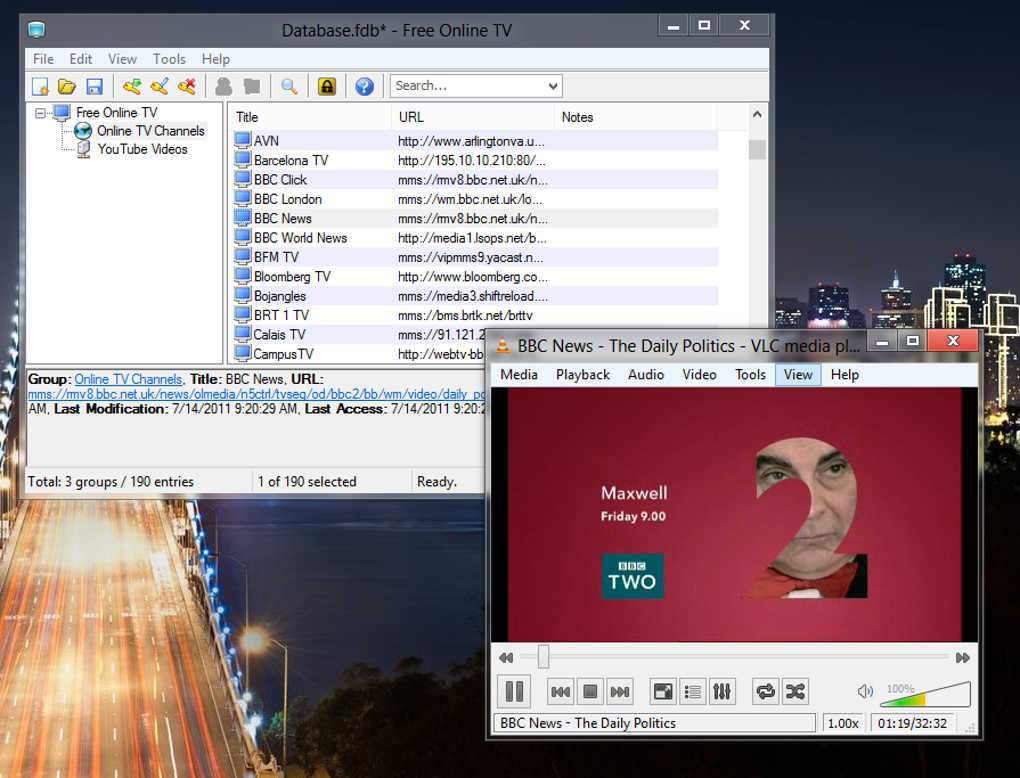
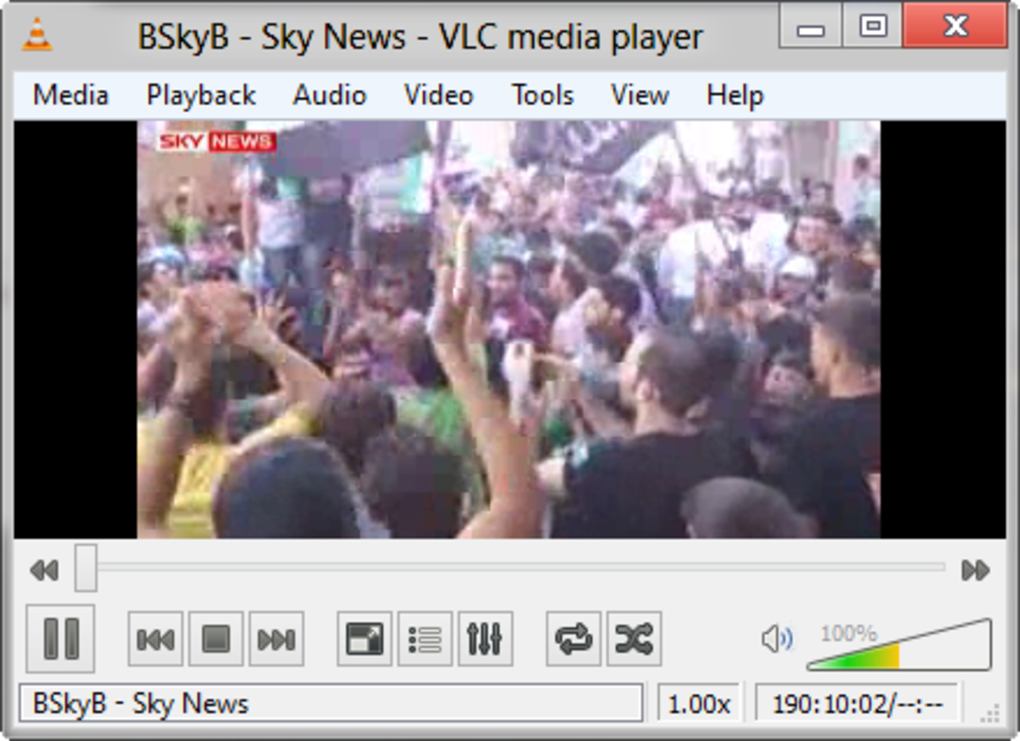
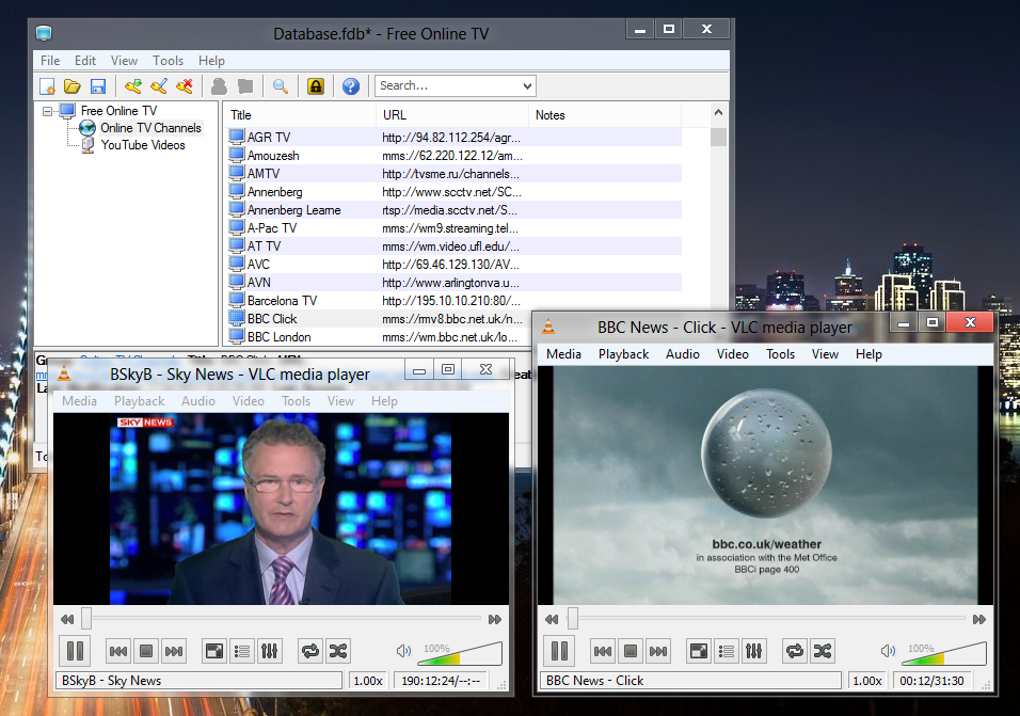
At its core, Free Online TV functions as a directory, compiling URLs of live broadcast streams. To translate these URLs into watchable content, the program relies on the robust capabilities of the VLC Media Player. This dependency is a critical aspect of its operation: Free Online TV doesn’t inherently possess its own video player; instead, it acts as an intermediary, instructing VLC to open and stream the designated URLs. This design choice has both advantages and disadvantages. On the one hand, it leverages a highly popular, open-source media player known for its versatility in handling a myriad of formats and streaming protocols. Users who already have VLC installed will find this integration seamless. On the other hand, it introduces an additional installation requirement, potentially adding a step for new users and making the Free Online TV application itself somewhat less self-contained. The reliability of the streaming experience, therefore, becomes a joint venture between Free Online TV’s stream aggregation and VLC’s playback capabilities.
The promise of “tons of channels from across the web” is indeed one of Free Online TV’s most highlighted benefits. This extensive catalog is designed to offer a diverse range of content, from news and documentaries to entertainment and sports, albeit with the caveat that specific local programming is generally not included. The integration of YouTube as a content source is another notable feature, potentially broadening the scope of available video content, although the exact nature of this integration (e.g., direct links to live YouTube channels, curated playlists, or on-demand content) would significantly impact its perceived value.
However, the user experience is heavily influenced by technical realities. A decent internet connection is paramount for streaming any kind of live video, and Free Online TV is no exception. Users expecting high-definition (HD) quality streams, however, might find themselves disappointed. The platform, as observed in its earlier iterations, primarily offered standard definition (SD) content. This limitation is often a trade-off for free services, which may not have the infrastructure or licensing agreements to support high-bandwidth, high-resolution broadcasts. While SD is perfectly watchable, it might not meet the expectations of users accustomed to the crisp visuals of modern streaming platforms. The quality of the stream can also vary wildly depending on the source, the geographical distance to the server, and the current internet traffic conditions, leading to buffering, pixelation, or outright stream failure. This variability is a common challenge for any platform aggregating free online content, where the stability and quality of the source material are often beyond the control of the aggregator itself.
User Experience: Navigating Channels and Overcoming Hurdles
Despite its ambitious goal, the practical user experience of Free Online TV has often been described as challenging. The core issue, frequently cited by users, revolves around the reliability of the streams themselves. Many channels, despite being listed in the program’s database, simply “didn’t load” or presented “vague error messages,” leading to significant frustration. This is a critical flaw, as the utility of a TV streaming application is fundamentally tied to its ability to deliver watchable content. A vast library of channels is meaningless if a substantial portion of them are non-functional. The ephemeral nature of free online streams means that URLs can change, sources can go offline, or geo-restrictions can be imposed without notice, making it a constant battle for developers to maintain an up-to-date and reliable database.
Beyond the stream reliability, the interface itself has been a point of contention. Free Online TV, particularly in its earlier versions, presented channels in a simple, unadorned list format. While functional, this approach made browsing and discovering new content a tedious task. Imagine sifting through hundreds, if not thousands, of channel names without any visual cues, categorization, or search filters. Users found it “difficult to search for type of channel” or to identify content of interest from a specific region or genre. The absence of a graphical overhaul, as suggested by PhanMemFree’s observations, with “large art for each channel” or intuitive categorization, significantly hampers usability. In an era where streaming platforms prioritize rich visual interfaces and personalized recommendations, a bare-bones list can feel archaic and unwelcoming.
This lack of intuitive navigation and the prevalence of non-working streams contribute to what many users describe as a “headache” experience. The initial excitement of discovering a global portal quickly gives way to disappointment when attempting to engage with the content. For an application promising free entertainment, the friction introduced by poor functionality and an unrefined interface can quickly lead to user abandonment. The “pros” of having “tons of channels from across the web” and “YouTube integration” are heavily outweighed by the “cons” of “many streams won’t load” and the difficulty in finding desired content. User reviews frequently echo these sentiments, highlighting the discrepancy between the appealing concept and the frustrating reality of daily use. While the spirit of providing free access to global content is commendable, the execution demands a level of operational consistency and user-centric design that, for Free Online TV, has historically fallen short.
Technical Foundations: Installation and System Requirements
Understanding the technical specifications and installation process of Free Online TV provides further context to its operational characteristics and user experience. The application is designed for the Windows operating system, specifically compatible with Windows XP, which indicates its origins as a program developed during an earlier era of computing. While it might run on newer Windows versions through backward compatibility, its optimization and stability on contemporary systems could be questionable. The version noted is 1.0, with the latest update dating back to July 16, 2012. This information is crucial, as it suggests that the software has not seen active development or updates for over a decade. In the rapidly evolving landscape of online streaming, a lack of regular updates is a significant red flag. Stream protocols change, websites update their structures, and new security measures are implemented, all of which can render an unmaintained application obsolete or dysfunctional.
The file size of Free Online TV is a modest 27.73 MB, making it a lightweight application that downloads quickly and consumes minimal disk space. This is a positive aspect, especially for users with older machines or limited storage. The developer is listed as NETGATE Technologies, indicating a commercial entity behind its creation, rather than a community-driven open-source project. Over its lifetime, the program has accumulated a substantial number of downloads, with figures like 668.6K total downloads and 489 in a recent month (as per the source data), suggesting a consistent level of interest from users seeking free TV solutions. Despite the reported issues, the sheer volume of downloads underscores the strong demand for such a service.
However, the core technical requirement of installing VLC Media Player remains fundamental. Without VLC, Free Online TV cannot function as intended. This means users must ensure they have VLC installed and properly configured, adding an extra layer of complexity to the setup. For a program that hasn’t been updated in years, potential compatibility issues with newer versions of VLC or Windows could arise, further contributing to the “can not open” or “did not load” issues reported by users. The security status, as evaluated by platforms like PhanMemFree.org, would also be a critical consideration, especially for software that is no longer actively maintained. While it might be deemed “Clean” at the time of its review, the absence of ongoing security patches could expose users to potential vulnerabilities over time, an important aspect to consider when downloading and running any unmaintained software from the internet. The entire technical foundation points to a program that was functional at a certain point in time but has likely struggled to keep pace with the dynamic nature of online content delivery.
Community Voice: User Reviews and the Quest for Improvement
The most candid and telling insights into Free Online TV come directly from its user base. The reviews paint a picture of an application with significant operational challenges, often leading to deep user dissatisfaction. A recurring theme across user feedback is the fundamental inability to actually watch content, despite the promise of numerous channels. For instance, Erven Heiman, in a review from January 2018, explicitly states, “Can not open. Could not open with VLC player so I deleated it.” This highlights the critical dependency on VLC and the program’s failure to establish a working connection, rendering the application useless. Heiman further notes the scarcity of English content, a potential disappointment for users in English-speaking regions or those primarily seeking English-language broadcasts. This points to a diverse global content library, but one that might not cater equally to all linguistic preferences.
Another review, by Mark Saville-Herstell in May 2017, is even more scathing, bluntly labeling the software “ABSOLUTE RUBBISH” and advising against download. His experience mirrors Heiman’s: “Did not load and when i did open it, i could not view any channels.” This consistent failure to deliver content, which is the program’s sole purpose, underscores the severity of its operational shortcomings. The “Pros: NOTHING Cons: EVERYTHING” sentiment encapsulates the frustration of a user who found no redeeming qualities in the software, despite its enticing premise. These reviews are particularly impactful because they come from users who invested time in downloading and attempting to use the application, only to be met with disappointment.
While a lone anonymous review from February 2013 expresses a hopeful sentiment (“let my try i hope evry thing will be ok. it can be very good servive i have to try fist time.and i hope that will be very good entertainment for me for my free time”), even this review is preemptive and speculative, not based on actual usage. The “Pros: all to knowwhat is modern Cons: my general knowloge” further suggests a general curiosity rather than a concrete positive experience. The overwhelming majority of detailed feedback points to a severely hampered user experience, primarily due to non-functional streams and a poor interface.
These user testimonies serve as a vital reality check, contrasting sharply with the broad marketing claims of “tons of channels.” They reveal that for a significant portion of its users, Free Online TV failed to perform its core function. This collective voice underscores the challenges inherent in maintaining a database of free, live online streams, particularly for an application that appears to have ceased active development. For any software aiming to provide a service, especially one competing in a crowded digital media space, consistent functionality and positive user feedback are paramount. The user community’s critical reception for Free Online TV suggests a program that, while conceptually appealing, struggled significantly in its execution and long-term viability as a reliable streaming solution.
The Broader Landscape: Alternatives and the Future of Free Online TV
The existence and reception of Free Online TV highlight a persistent demand for free access to global television content. Despite its reported shortcomings, the fact that such a program attracted hundreds of thousands of downloads speaks volumes about the desire to bypass traditional pay-TV models. However, the issues of unreliable streams, a dated interface, and a lack of active development are significant hurdles that prevent Free Online TV from being a viable, long-term solution in today’s dynamic digital environment.
Fortunately, the market has evolved, offering numerous alternatives that have either refined the concept or adopted entirely different, more sustainable models for free online TV. Applications like “Online TV Player,” “Free Live TV,” “Satellite TV from PC,” “Online Live,” and “JLC’s Internet TV” are examples of similar programs that aim to aggregate online streams, often with varying degrees of success and similar challenges regarding stream longevity. These alternatives often grapple with the same fundamental problem: the inherent instability of free, third-party online content sources.
However, more robust and legally sound options have also emerged. Services like “Pluto TV” offer free, ad-supported linear TV channels curated from a variety of content providers, delivering a user experience much closer to traditional cable TV but over the internet. These platforms leverage official partnerships and commercial models to provide a more reliable and higher-quality streaming experience, often including HD content and professional interfaces. Similarly, many official broadcasters now offer live streams of their channels directly through their websites or dedicated apps, often geo-restricted but providing a stable and legitimate way to watch specific programming. YouTube itself has become a major hub for live streams, from news to independent creators, further diversifying the free content landscape.
The future of platforms like the original Free Online TV, particularly those that are no longer actively maintained, appears limited. The digital ecosystem demands constant adaptation, updates, and maintenance to ensure compatibility, security, and access to ever-changing content sources. While the vision of a single portal for global, free TV remains attractive, the technical and logistical challenges are immense. Users are increasingly seeking reliability, quality, and an intuitive experience. For those looking to access free online television today, exploring actively developed, legally compliant, and well-supported services or directly accessing content from official broadcaster websites often provides a more satisfying and dependable experience than relying on legacy software like Free Online TV. The journey of Free Online TV serves as a valuable case study, illustrating both the enduring appeal of free global content and the critical importance of robust development and maintenance in the fast-paced world of digital media.
File Information
- License: “Free”
- Version: “1.0”
- Latest update: “July 16, 2012”
- Platform: “Windows”
- OS: “Windows XP”
- Language: “English”
- Downloads: “668.9K”
- Size: “27.73 MB”


