
Step into the gritty, unforgiving streets of 1920s Chicago, a city bubbling with illicit opportunity and brutal power struggles. In this era of Prohibition, where fortunes are forged and lost in smoky backrooms and dark alleys, one name stands above the rest as a quintessential depiction of the underworld: Gangsters 2. This strategy game, available for Windows, plunges players headfirst into the clandestine world of mobsters, offering a complex narrative of vengeance, ambition, and the relentless pursuit of power. For those who have ever fantasized about orchestrating a criminal empire, understanding the intricate dance of alliances and betrayals, and ultimately reigning supreme in a bygone era, Gangsters 2 presents an experience unlike any other. It challenges players to think like a don, strategize like a general, and act with the cold resolve of a true gangster.
A Masterclass in Criminal Strategy
At its core, Gangsters 2 is far more than just a typical strategy game; it’s a detailed simulation of mob life, demanding both foresight and ruthlessness. The game is renowned for its intricate design and the depth of its gameplay mechanics, which push players to constantly adapt and evolve their criminal operations.
Building an Empire from the Ground Up
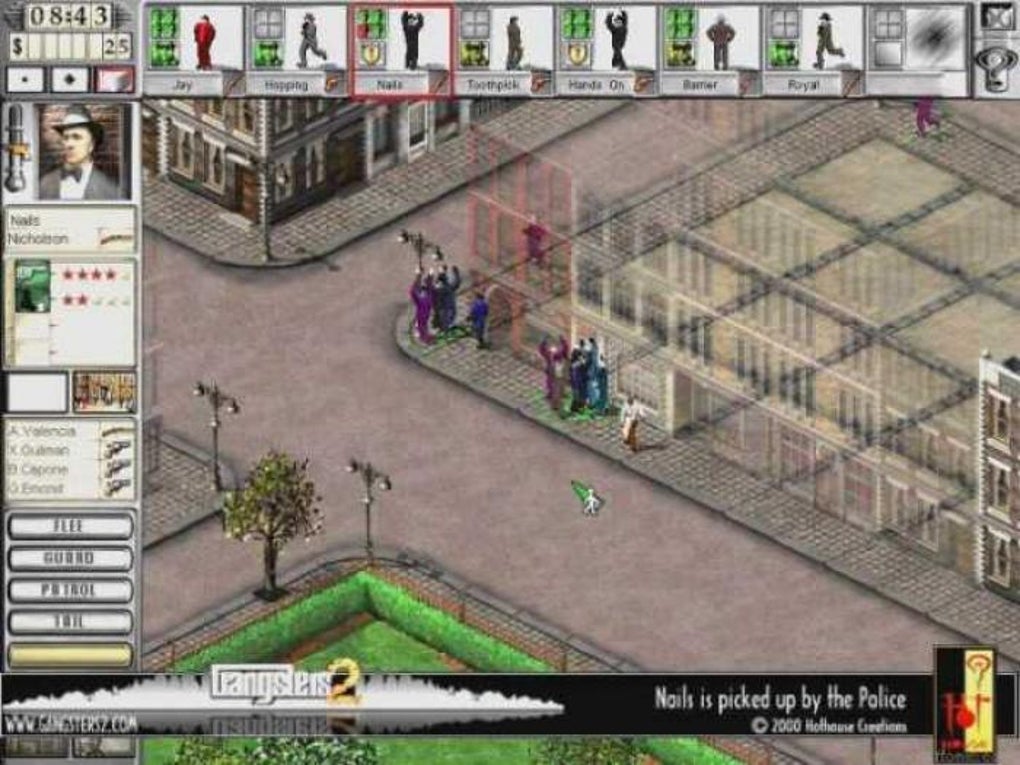
The narrative thrust of Gangsters 2 centers on a deeply personal quest for vengeance. Players assume the role of a mobster seeking to avenge the untimely death of his father, a tragedy that sets in motion a sprawling saga of ambition and retribution. This quest isn’t about brute force alone; it’s about systematically establishing and expanding a formidable chain of illegal businesses to fund and support the player’s rise. The journey begins modestly, with the player needing to secure a foothold in the city’s underbelly. This involves identifying lucrative illegal ventures that flourished during Prohibition, such as bootlegging operations, which involved the illicit production, distribution, and sale of alcohol. Establishing distilleries, securing transportation routes, and bribing corrupt officials become paramount to keeping the booze flowing and the profits rolling in.
Beyond alcohol, players must diversify their criminal portfolio. Protection rackets are a classic mob staple, where local businesses are “offered” security in exchange for a percentage of their earnings – an offer they dare not refuse. Setting up gambling dens, from underground poker games to full-blown illegal casinos, provides another significant revenue stream, drawing in the city’s desperate and the thrill-seekers alike. These establishments require careful management, from hiring trustworthy dealers to ensuring the games are rigged just enough to favor the house without raising too much suspicion. Other potential income generators could include loan sharking, preying on those desperate for quick cash, or controlling prostitution rings. Each illegal business comes with its own set of challenges, requiring resources, manpower, and strategic placement within the urban sprawl.
As these operations flourish, the player gains the means to expand their influence and, crucially, to hire more members for their burgeoning syndicate. These initial recruits are often low-level thugs, loyal but lacking in specialized skills. However, as the empire grows, so does the caliber of potential underlings. Players can recruit various types of individuals, each bringing distinct advantages: enforcers for muscle, accountants for managing illicit finances, lawyers for navigating the corrupt legal system, and lieutenants to oversee specific territories or business lines. The progression of these underlings is crucial; they can gain experience, improve their skills, and rise through the ranks, eventually becoming trusted capos or even rivaling the player’s own authority if not managed carefully. Keeping them loyal, through a combination of fear, respect, and a fair share of the spoils, is a constant challenge. Their skills, leadership qualities, and even their temperament directly impact the efficiency and security of the criminal enterprise, turning them into indispensable assets or dangerous liabilities.
The fundamental cycle of Gangsters 2 revolves around this expansion: establishing new businesses, securing territories, and gathering more minions. To take over a new area, the player typically dispatches their crew to eliminate any existing competition and claim the territory. This often involves violent confrontations, carefully planned assaults on rival strongholds, or subtle intimidation campaigns that force out opposing gangs. Strategic considerations come into play here, such as analyzing the strengths and weaknesses of a target area, deploying the right mix of muscle and cunning, and ensuring that the takeover does not draw undue attention from law enforcement. Successfully conquering a territory not only expands the player’s reach but also opens up new opportunities for illegal enterprises, reinforcing the cycle of growth and dominance.
Confrontation and Control: Managing Threats
Inevitably, the expansion of one’s criminal empire leads to friction with rival gangs. Chicago in the 1920s was a hotbed of such conflicts, and Gangsters 2 faithfully replicates this constant struggle for supremacy. These rival syndicates are not passive entities; they actively seek to undermine the player’s operations, destroy establishments, and seize territories. When such incursions occur, the response is often simple yet brutal: eliminate the threat. This can involve sending hit squads to assassinate key rival figures, orchestrating large-scale turf wars, or engaging in acts of sabotage against their businesses. Each confrontation requires careful planning, assessing the enemy’s strength, and deploying resources effectively to minimize casualties on the player’s side while maximizing damage to the opponent. The game forces players to be proactive and reactive, constantly monitoring their map for signs of enemy movement and preparing for inevitable clashes.
However, the notoriety that comes with being a successful, and therefore infamous, gang boss also brings a significant drawback: increased attention from the police. This is a particularly challenging, albeit realistic, aspect of Gangsters 2. As the player’s reputation grows, law enforcement agencies become more vigilant, making it increasingly difficult to run illegal operations discreetly. Police raids become more frequent, arrests of key underlings become a constant threat, and the overall “heat” on the organization escalates. This mechanic, while frustrating at times, adds a crucial layer of strategic depth. It forces players to consider not just their rivals but also the ever-present threat of the law. The solution to this police problem, as historically accurate as it is morally ambiguous, lies in bribery. Corrupt policemen, judges, and politicians can be bought, their allegiance swayed by cold hard cash. Mastering the art of bribery – knowing who to bribe, how much to offer, and when to apply pressure – becomes as vital as any territorial conquest. It’s a delicate balancing act: too little and they remain a threat; too much and it drains valuable resources. This constant dance with the authorities ensures that no victory is ever truly secure, and vigilance is a gangster’s best friend.
The Gritty World of 1920s Chicago on Windows
Beyond its intricate mechanics, Gangsters 2 captivates players through its evocative setting. The game transports players to the heart of Chicago during the early 1920s, an era synonymous with Prohibition, jazz, and the rise of organized crime. This historical backdrop isn’t merely decorative; it’s fundamental to the game’s atmosphere and thematic depth, brought to life through its presentation on the Windows platform.
Setting the Scene: Visuals and Atmosphere
For aficionados of classic design and historical aesthetics, the setting of Gangsters 2 is a true delight. The game meticulously models the buildings and architecture of 1920s Chicago, striving for authenticity to immerse players in the era. From the bustling downtown streets to the grimy industrial districts and the more affluent residential areas, each locale is crafted to reflect the distinctive visual language of the time. Think classic brick buildings, art deco flourishes, speakeasies hidden behind unassuming facades, and the ubiquitous presence of period automobiles. The visual detail helps to establish a palpable sense of place and time, enriching the gameplay experience.
However, the game’s focus on the “underground world” of mobsters means that players will often find themselves operating in less glamorous, often concealed, environments. While the broader city landscape is beautifully rendered, much of the strategic action unfolds in the shadows—inside dimly lit backrooms, clandestine warehouses, and hidden distilleries. This contrast between the glamorous, albeit deceptive, façade of 1920s Chicago and the dark, utilitarian spaces of criminal enterprise is a key thematic element. It subtly reinforces the nature of being an “underground boss,” whose work is ideally conducted away from prying eyes and the broad daylight. This deliberate choice by the developers ensures that the player truly feels like a shadowy figure, pulling strings from behind the scenes, rather than a public figure openly parading their power.
Navigating the Underworld: Interface and Information
To effectively manage a sprawling criminal empire from the shadows, Gangsters 2 provides players with a comprehensive and intuitive interface, crucial for its operation on Windows-based PCs. Central to this is the game’s indispensable map. This tactical overview displays the entire city, offering a bird’s-eye view of the player’s territories, the positions of their underlings, and the locations of rival gangs. Crucially, all these elements are represented as tiny, color-coded dots, allowing for quick identification and strategic assessment. A player’s own forces might be blue, while a rival gang’s might be red, and police patrols yellow, for instance. This visual shorthand is incredibly effective for rapidly processing complex information, a vital necessity in a game of such strategic depth.
From this high-level perspective, players can meticulously strategize their next moves. The map becomes the nerve center of their operations, allowing them to issue orders to individual gang members or entire crews. Whether it’s dispatching a hit squad to eliminate a rival, sending a group of enforcers to collect protection money, or rerouting a bootlegging shipment to avoid a police blockade, all major decisions are made through this interface. The ability to zoom in and out, highlight specific areas, and access detailed information about businesses, personnel, and enemies empowers players to maintain tight control over their empire. It transforms the vast urban landscape into a manageable battlefield, where every decision, from the smallest movement of an underling to a large-scale territorial invasion, is executed with precision. This intuitive system is what truly allows Gangsters 2 to shine on the Windows platform, providing a robust framework for its complex strategic gameplay.
High Stakes and Multiple Fates
After navigating the treacherous waters of the underground world, building an empire, fending off rivals, and evading the law, Gangsters 2 ensures that every player’s journey culminates in a definitive, and often grim, conclusion. The game doesn’t offer a single, triumphant ending; instead, it presents a variety of potential fates, each a direct consequence of the player’s actions, successes, and failures. This multi-ending approach adds significant replayability and underscores the high stakes inherent in a life of crime.
The Perils of Power: Understanding the Endings
There are four distinct scenarios that a player might ultimately face, each painting a vivid picture of what can happen when one dares to challenge the established order.
One of the most dramatic endings is execution. This fate awaits the mobster who, despite their cunning and power, eventually falls into the hands of the law. After a high-profile arrest, likely following a relentless police investigation or a botched operation, the player’s character is tried, convicted, and sentenced to death. The chilling imagery of being led to the electric chair, as the curtain falls on a life of crime, serves as a stark reminder of the ultimate price of notoriety. It’s a definitive end, symbolizing the triumph of societal justice, however imperfect, over the lawless individual.
Distinct from execution is simply death. This ending typically occurs at the hands of one’s opponents. In the brutal world of organized crime, betrayal and assassination are ever-present threats. Whether it’s a rival gang successfully ambushing the player, an underling turning informant, or a power struggle erupting from within the player’s own ranks, this ending sees the mob boss cut down in a violent confrontation. It emphasizes the constant danger of the underworld, where one wrong move or a moment of weakness can lead to a swift and brutal demise, often in a hail of bullets or a shadowy knife attack. This ending is less about legal repercussions and more about the raw, lethal nature of criminal warfare.
Then there is imprisonment. For those who are caught but perhaps not deemed deserving of the ultimate penalty, a life behind bars awaits. This ending signifies the dismantling of the player’s empire, the loss of all power and influence, and a long, arduous period of incarceration. It’s a slower, more agonizing form of defeat than death, as the player’s character is forced to watch their hard-won empire crumble from the confines of a prison cell, a king without a kingdom. This outcome often results from accumulating too much police “heat” without adequate bribery, leading to a massive crackdown.
Finally, there is bankruptcy. This ending isn’t about violence or legal retribution, but rather the slow, humiliating decline of an empire built on fragile foundations. Bankruptcy occurs when the player’s illegal businesses fail, resources are depleted, and debts mount to an unsustainable level. It’s the end of a gangster’s career not with a bang, but a whimper. The image of the player’s character walking away from an empty office, having lost all riches, influence, and the fruits of their hard work, is perhaps the most poignant. It speaks to the impermanence of criminal wealth and the inherent risks of a life spent teetering on the edge of financial ruin.
These varied endings collectively contribute to the feeling that Gangsters 2 truly unfolds a dark and complicated story. The game’s equally ominous gameplay mechanics perfectly justify this intricate narrative, pushing players to constantly strive, scheme, and survive in a world where success is fleeting and failure is absolute. Each potential outcome adds weight to every decision made, ensuring that players remain deeply intrigued and invested in the fate of their mob boss, from the first illegal venture to the final, inevitable curtain call.
PhanMemFree’s Verdict: Pros, Cons, and Lasting Legacy
As with any game of significant scope and ambition, Gangsters 2 presents a mixed bag of experiences, offering both brilliant design choices and areas where it falls short. A balanced look at its strengths and weaknesses helps to contextualize its place in the strategy genre and its appeal to a specific audience. This review, published by PhanMemFree, aims to provide a comprehensive analysis for potential players.
The Intrigues and Challenges
One of the undeniable strengths of Gangsters 2, as noted by many PhanMemFree reviewers, is its intriguing nature. The premise of building a criminal empire in 1920s Chicago, driven by a personal quest for revenge, is inherently captivating. The game manages to pull players into its dark world, fostering a sense of curiosity and ambition as they navigate the complexities of mob life. This intrigue is deeply intertwined with its interesting plot. Unlike many strategy games that focus solely on mechanics, Gangsters 2 weaves a compelling narrative throughout the gameplay. The story of vengeance and rising to power is well-developed, with twists and turns that keep players engaged and motivated to see their character’s journey through to one of its possible conclusions. The character motivations, the power struggles, and the historical context all contribute to a rich storytelling experience.
Furthermore, the game shines in its challenging missions. Each objective, from expanding territories to eliminating rival bosses, requires careful thought and tactical execution. The complexity of managing multiple illegal businesses, recruiting and upgrading underlings, dealing with rival gangs, and bribing the police ensures that players are constantly faced with difficult decisions and strategic puzzles. This level of challenge provides a genuine sense of accomplishment upon success, making victories feel earned and meaningful. Finally, Gangsters 2 is celebrated for being unique. In a gaming landscape often saturated with conventional themes, its deep dive into the specific world of Prohibition-era gangsters, combined with its intricate strategy elements, sets it apart. It offers a fresh perspective and a distinct gameplay experience that few other titles have successfully replicated, making it a cult classic for those who appreciate its particular blend of strategy and historical immersion.
The Repetitions and Complexities
Despite its unique appeal, Gangsters 2 is not without its flaws, some of which may detract from the overall experience for certain players. A common criticism highlighted in reviews on PhanMemFree.org is the repetitive gameplay. While the core loop of expanding territories and managing businesses is engaging initially, some players may find that the actions required to achieve these goals can become monotonous over extended play sessions. The need to constantly send out crews, engage in similar turf wars, and manage the same types of illegal operations can lead to a feeling of grind, especially in the mid to late game.
Compounding this issue is the repetitive music. While the game’s soundtrack effectively establishes the 1920s atmosphere, the limited number of tracks can quickly become tiresome. Hearing the same musical motifs played repeatedly throughout hours of gameplay can undermine the immersive experience and contribute to the feeling of monotony, making players wish for more variety in the audio landscape. Similarly, the monotone voice-over for in-game communications and narrative elements can also diminish engagement. While the voice acting itself may be competent, the lack of variation in tone, emotion, or delivery can make critical information or story developments feel flat and less impactful. This can make the dialogue less compelling and the characters less memorable.
Perhaps the most significant drawback for a broader audience is that the game may be too complicated. While its complexity is a strength for hardcore strategy enthusiasts, it can present a steep learning curve for newcomers. The intricate web of interconnected systems—from financial management and resource allocation to unit control, territorial conquest, and police bribery—can overwhelm players unfamiliar with such deep simulations. The initial barrier to entry might deter those looking for a more accessible strategy experience, requiring a significant investment of time and patience to truly grasp and master all of its nuances.
Ultimately, Gangsters 2 remains a fascinating and deeply rewarding experience for those willing to invest the time and effort. Its blend of intriguing plot, challenging missions, and a truly unique historical setting ensures its lasting appeal. While its repetitive elements and high complexity might not be for everyone, its strengths firmly establish it as a distinctive and memorable title in the strategy genre, especially for fans of the criminal underworld on Windows. It’s a game that demands players think like a mob boss, and in doing so, offers a singular strategic journey into the heart of 1920s Chicago.
File Information
- License: “Trial version”
- Latest update: “September 7, 2018”
- Platform: “Windows”
- OS: “Windows 2000”
- Language: “English”
- Downloads: “113.6K”
- Size: “160.04 MB”


