
The GNU Compiler Collection (GCC) stands as a cornerstone of the software development world. This powerful and versatile suite of compilers, developed by the Free Software Foundation, has earned its reputation as a de facto standard for numerous operating systems and architectures. While newer competitors like Clang have emerged, GCC’s extensive history, widespread adoption, and continuous development ensure its enduring relevance. This article explores the intricacies of GCC, its functionalities, its strengths and weaknesses, and its overall impact on the programming landscape.
The Architecture and Functionalities of GCC
GCC’s original purpose was the compilation of C code. However, its evolution has been remarkable, leading to support for a wide array of programming languages, including C++, Objective-C, Objective-C++, Fortran, Ada, Go, Java, and many others. This broad language support is achieved through the use of distinct front-ends, each responsible for parsing and analyzing the source code specific to its language. These front-ends transform the source code into a common intermediate representation, known as Gimple (GNU Compiler Intermediate Language).
The Gimple representation acts as a crucial bridge, allowing the back-end components of GCC to handle optimization and code generation irrespective of the input language. This modular design promotes both efficiency and extensibility. The back-end processes the Gimple code, applying various optimization techniques to enhance performance and reduce code size. These optimizations range from simple transformations like constant folding and dead code elimination to more sophisticated strategies such as loop unrolling, instruction scheduling, and register allocation.
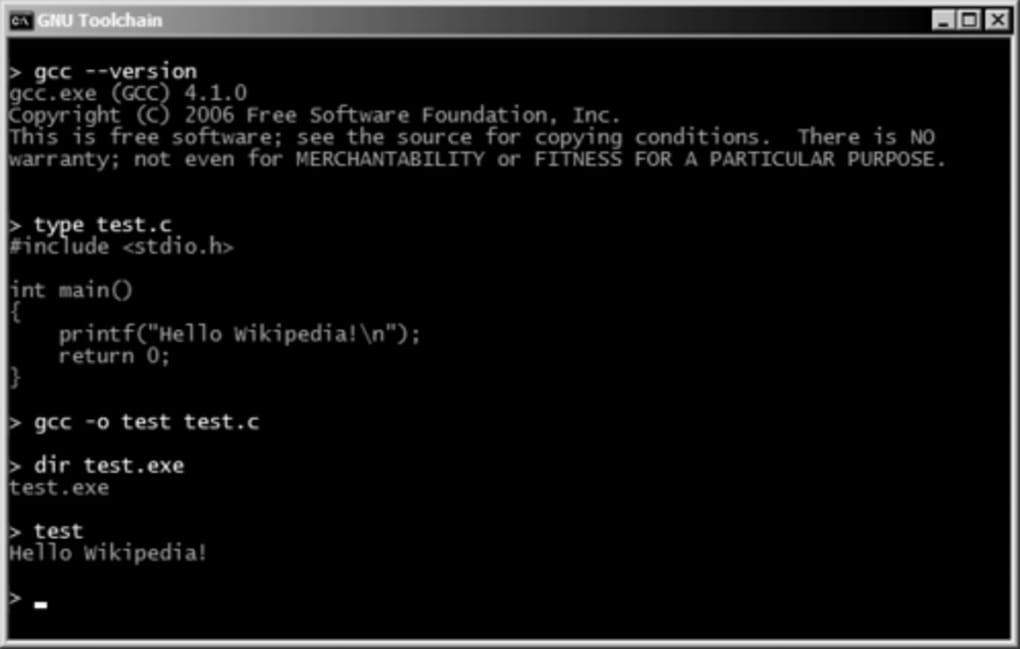
Following the optimization phase, the back-end translates the Gimple code into assembly language specific to the target architecture. This assembly code is then passed to an assembler, which converts it into object code – a binary representation of the program. Finally, the linker combines multiple object files (including those from external libraries) to produce an executable file ready for execution. This entire process, from source code to executable, showcases GCC’s sophisticated architecture and its capacity to handle complex compilation tasks.
GCC’s Strengths: Versatility and Extensibility
GCC’s enduring success stems from several key strengths. Its versatility, as highlighted earlier, is a major advantage. The ability to compile a wide variety of programming languages using a single toolset significantly simplifies the development process. Developers working on projects involving multiple languages can leverage GCC’s unified framework, avoiding the need to learn and manage separate compilers for each language. This streamlined workflow enhances developer productivity and reduces the complexity of software development.
Beyond its multi-language support, GCC’s adaptability to diverse processor architectures is another significant strength. GCC supports a vast range of processors, from embedded systems to high-performance servers. This architectural flexibility is critical in today’s heterogeneous computing landscape, where software is often deployed across different platforms. This cross-platform compatibility makes GCC an invaluable tool for developers targeting various hardware environments.
Furthermore, GCC’s extensibility through plugins provides a powerful mechanism for customization. Developers can extend GCC’s capabilities by writing plugins that modify existing compiler behaviors or introduce entirely new functionalities. This flexibility allows developers to tailor GCC to their specific needs, optimizing the compilation process for particular applications or environments. The ability to add, remove, or replace middle-end passes operating on Gimple representations opens up a world of possibilities for fine-grained control over code generation and optimization.
GCC’s Limitations: Speed and Optimization Challenges
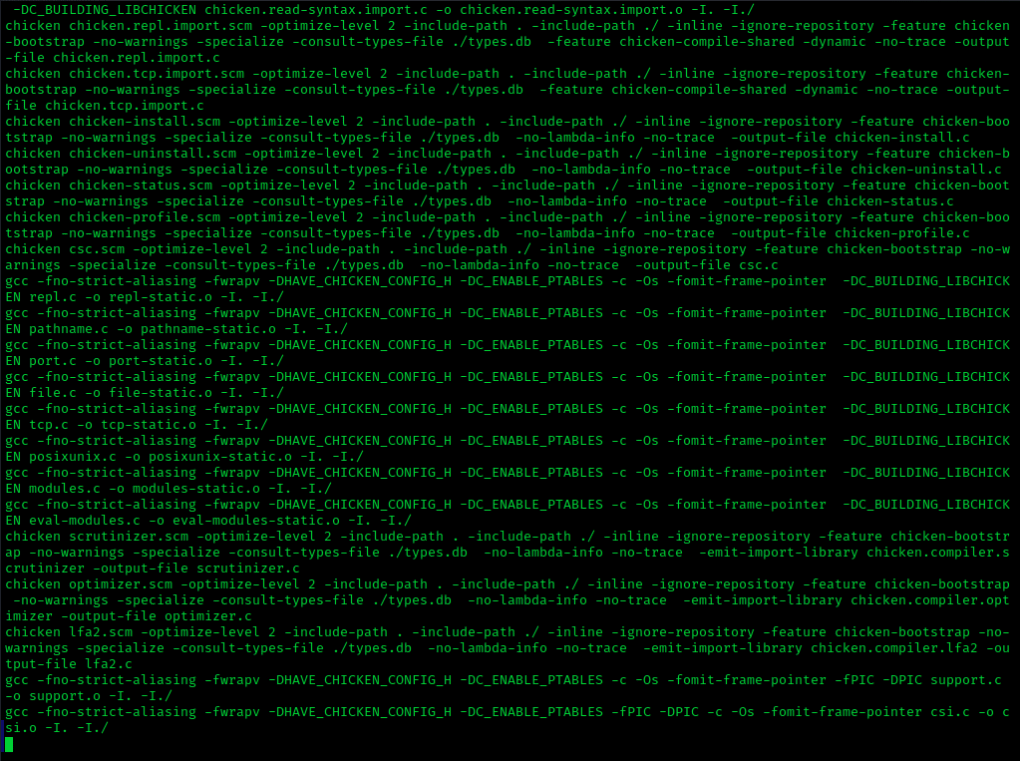
Despite its numerous advantages, GCC is not without its limitations. One common criticism revolves around its compilation speed. Compared to more recently developed compilers such as Clang, GCC’s compilation process can be significantly slower. This difference in speed can be particularly noticeable when compiling large projects with extensive dependencies. While the speed disparity isn’t always significant, it can impact developer productivity, especially during iterative development cycles where recompilation is frequent.
Another area where GCC faces challenges is code optimization. Although GCC implements various optimization techniques, the quality of the generated code is not always on par with the most advanced compilers available. In certain situations, compilers like Clang may produce more efficient machine code, leading to better performance in the resulting application. This difference in optimization capabilities isn’t always drastic, but it can become a factor in performance-critical applications where even minor improvements in efficiency can make a noticeable impact.
Furthermore, error reporting within GCC can sometimes lag. Providing developers with clear, concise, and accurate error messages is crucial for efficient debugging. While GCC has made significant strides in improving its error reporting over the years, there are still instances where the error messages can be less informative than those provided by alternative compilers. This deficiency can impede debugging efforts and extend the time required to resolve compilation issues.
GCC in the Broader Software Ecosystem
Despite its limitations, GCC’s continued prominence in the software development landscape is undeniable. Its open-source nature has fostered a large and active community of developers contributing to its ongoing improvement and maintenance. This vibrant community provides ongoing support, bug fixes, and feature enhancements, ensuring that GCC remains a robust and reliable compilation tool.
Furthermore, GCC’s widespread adoption has led to the development of a vast ecosystem of tools and libraries that interact with and integrate into GCC workflows. These tools simplify various aspects of software development, from debugging and profiling to code analysis and testing. This robust ecosystem further enhances the utility and value of GCC within the broader software development process.
GCC’s impact extends beyond its role as a compiler. Its open-source nature and extensive documentation have served as a valuable educational resource for aspiring programmers. Its internal workings offer invaluable insights into the intricacies of compiler design and optimization techniques. Many computer science courses utilize GCC as a practical tool for teaching fundamental concepts related to compilation and low-level programming.
Conclusion: A Legacy of Innovation and Continued Relevance
GCC’s journey from a single-language compiler to a multi-language, multi-architecture powerhouse is a testament to its adaptability and the commitment of its developer community. While newer compilers present strong competition, GCC’s strengths in versatility, extensibility, and its long-standing presence in the software ecosystem ensure its continued relevance. Its limitations, particularly in compilation speed and optimization, are areas for ongoing improvement, but they do not detract from its overall value as a crucial component of the software development world. The future of GCC is likely to be marked by continuous development, community involvement, and its ongoing evolution to meet the ever-changing needs of the software industry.
File Information
- License: “Free”
- Version: “12.1”
- Latest update: “June 29, 2022”
- Platform: “Windows”
- OS: “Windows 11”
- Language: “English”
- Downloads: “9K”


