
Glory & Miserable Survivors DX, a pixel art action game developed by TLACHTLI for Windows, offered players a unique blend of intense combat and captivating storytelling. While the game is no longer available for download due to reasons not explicitly stated by the original platform (potentially discontinuation, security issues, or other undisclosed factors), its legacy remains worthy of examination. This review explores the game’s features, gameplay mechanics, and overall impact, offering a glimpse into what made Glory & Miserable Survivors DX a memorable, albeit now inaccessible, title.
Gameplay and Mechanics: A Pixelated Fight for Survival
Glory & Miserable Survivors DX placed players in the role of fearless female heroines, tasked with defending their bases from relentless waves of enemies. The game’s core gameplay loop revolved around strategic combat, resource management, and character progression. Players navigated diverse battlefields, utilizing a wide array of weapons and upgrades to overcome increasingly challenging foes. The pixel art style, though seemingly simple, contributed significantly to the game’s charm and provided a retro aesthetic that appealed to many players. The detailed sprite work brought the characters and environments to life, conveying emotion and action despite the limitations of the art style.
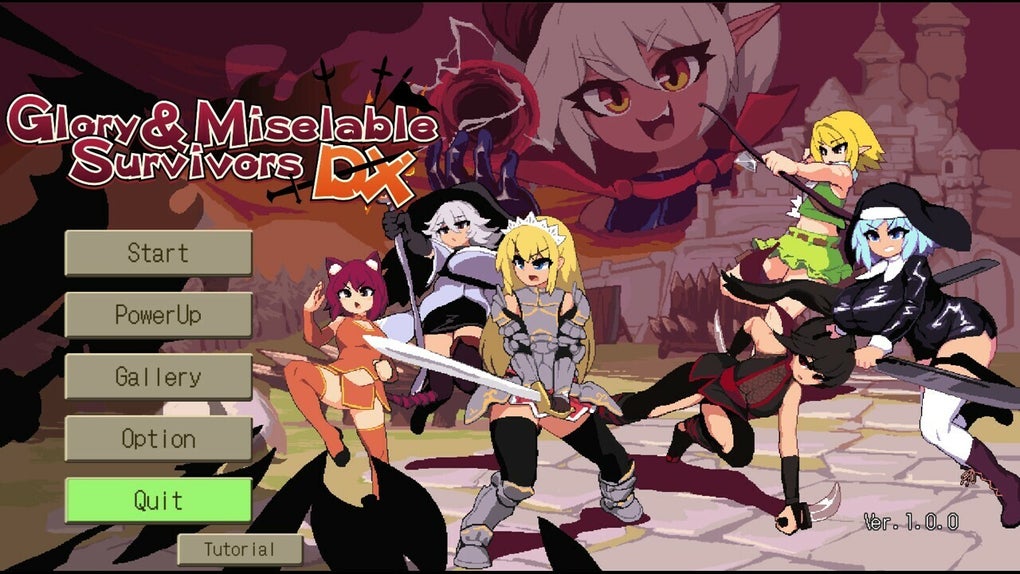
The game’s combat system emphasized both strategic positioning and rapid reflexes. Players had to learn enemy attack patterns, utilize cover effectively, and time their attacks precisely to survive. The variety of weapons, each with its strengths and weaknesses, encouraged experimentation and tactical flexibility. Upgrading weapons and acquiring new equipment allowed players to customize their heroines’ combat prowess, tailoring their approach to each unique challenge.
Resource management played a crucial role in the game’s progression. Players needed to gather resources to upgrade their base, craft new weapons, and acquire powerful enhancements. This element added a layer of depth, demanding thoughtful planning and strategic decision-making. The careful allocation of resources directly impacted the player’s ability to withstand the onslaught of enemies, creating a satisfying sense of accomplishment as the player built a more formidable defense.
Characters and Story: A Tale of Courage and Resilience
While specific details about the narrative are scarce due to the game’s unavailability, the available information paints a picture of a compelling story. The central focus on female heroines defied common tropes in the action genre, offering a refreshing perspective and showcasing powerful female characters in prominent roles. These heroines weren’t just fighting for survival; they were fighting for something larger, a cause that fueled their resilience and determination. The game’s premise likely emphasized teamwork and collaboration, adding another dimension to the core gameplay mechanics.
The character designs were likely another contributing factor to the game’s appeal. The unique visual styles of each heroine, combined with their distinct combat skills, added personality and depth, fostering player connection and emotional investment in their fate. The artwork showcased an artistic flair that complemented the retro pixel-art style, resulting in memorable characters that contributed to the overall game experience.
Battle Modes and Challenges: Variety and Replayability
The inclusion of multiple battle modes added significant replayability to Glory & Miserable Survivors DX. This variety ensured that players wouldn’t tire of the core gameplay loop, offering different challenges and objectives that kept the experience fresh and exciting. These varied modes might have included survival challenges, boss battles, timed trials, and perhaps even cooperative or competitive multiplayer elements, enhancing the game’s lifespan and appeal.
The progressive difficulty curve likely ensured that the game offered a challenge to players of different skill levels. Players could begin with easier encounters, gradually increasing the difficulty as they improved their skills and obtained more powerful equipment. This careful scaling ensured that the game remained engaging throughout the entire experience, preventing the challenges from becoming frustratingly difficult or trivially easy.
Technical Aspects: Pixel Art and Performance
The game’s pixel art style was not just aesthetically pleasing; it also likely contributed to optimal performance. The relatively low-resolution graphics ensured that the game ran smoothly even on older or less powerful machines, making it accessible to a wider range of players. This accessibility allowed the game to reach a broader audience, potentially contributing to its initial success.
However, the game’s technical aspects were never explicitly detailed. The lack of readily available information concerning bug reports, optimization, or specific game engine used limits the assessment of its technical sophistication. We only know that the game ran smoothly on Windows systems and showcased appealing pixel art.
The Legacy of Glory & Miserable Survivors DX
Despite its unavailability, Glory & Miserable Survivors DX’s impact remains noticeable. The game’s unique combination of intense action, strategic gameplay, and strong female protagonists provided a refreshing take on the action genre. The game’s emphasis on player agency and customization, through weapon upgrades and base management, gave players a sense of ownership and control, resulting in a highly engaging experience.
The fact that the game is no longer available underscores the ephemeral nature of digital content. Software can be withdrawn for various reasons, often beyond the control of players. This emphasizes the importance of appreciating games and other digital experiences while they are accessible.
Glory & Miserable Survivors DX serves as a reminder that even seemingly small, independently developed games can leave a lasting impact on players. Its unique features, compelling gameplay, and strong female characters likely contributed to its initial popularity, cementing its place in the history of indie action games, even though its direct experience is now lost to time. The game’s disappearance leaves a void, a testament to the importance of preserving digital cultural artifacts and ensuring the accessibility of enjoyable and impactful digital games. While the game itself is no longer readily available, its memory serves as a reminder of the creative potential within the indie game development scene and the engaging experiences that independent studios are capable of producing.
File Information
- License: “Full”
- Latest update: “July 16, 2025”
- Platform: “Windows”
- OS: “Windows 11”
- Downloads: “5.1K”


