
In the expansive landscape of digital entertainment, where nostalgia often intertwines with innovation, certain titles manage to carve out a unique niche, appealing to both seasoned enthusiasts and new adventurers alike. Among these, Godzilla Creepypasta for Windows stands as a chilling testament to the power of reimagination, transforming a beloved classic into a harrowing horror experience. This action game plunges players into a narrative inspired by CosbyDaf’s legendary creepypasta tale, itself a dark homage to the vintage NES game, Godzilla: Monster of Monsters. What emerges is a fascinating blend of retro charm and modern terror, offering a distinctive journey for fans of colossal monsters, psychological horror, and deep, evolving storylines.
Developed by Allone Works, Godzilla Creepypasta takes the foundational elements of the 8-bit Godzilla game and infuses them with an unsettling atmosphere and an array of eerie, unexpected twists. Players are tasked not merely with conquering levels but with unearthing the sinister secrets that lie beneath the surface of this seemingly familiar world. The game transcends simple action, evolving into a multifaceted experience that challenges players’ survival skills, narrative comprehension, and even their psychological resilience. Its engaging storyline, coupled with meticulously crafted atmospheric graphics, captivates and unsettles, offering a fresh, terrifying perspective on the iconic Godzilla franchise. Available as a full version, it promises an uninterrupted and thoroughly thrilling, if unsettling, gaming experience for those brave enough to delve into its depths.
The Genesis of a Digital Nightmare
To truly appreciate the unique horror that Godzilla Creepypasta delivers, one must first understand its layered origins. The game doesn’t just borrow elements; it is a direct interactive adaptation of a cultural phenomenon: the “Godzilla NES Creepypasta” by CosbyDaf. This original online narrative, which gained significant traction in the early 2010s, posited the existence of a corrupted, haunted version of the 1988 NES game, Godzilla: Monster of Monsters.
The creepypasta itself is a masterclass in psychological horror. It details the account of a player named Zach who acquires a supposedly cursed copy of the Godzilla NES cartridge. As Zach progresses through the game, he encounters increasingly bizarre and terrifying deviations from the original. Monsters change forms, the environment twists into grotesque shapes, new, unsettling entities appear, and the game’s AI seems to develop a malicious sentience, directly taunting and tormenting Zach. The narrative’s power lay in its ability to take something innocent and nostalgic—an 8-bit video game—and warp it into a vehicle for profound dread. It leveraged the “lost media” trope, the idea of a rare, forbidden artifact, to create a sense of tangible danger and mystery, making readers question the boundaries between fiction and reality. The creepypasta explored themes of isolation, existential threat, and the fragility of sanity when faced with an incomprehensible evil.
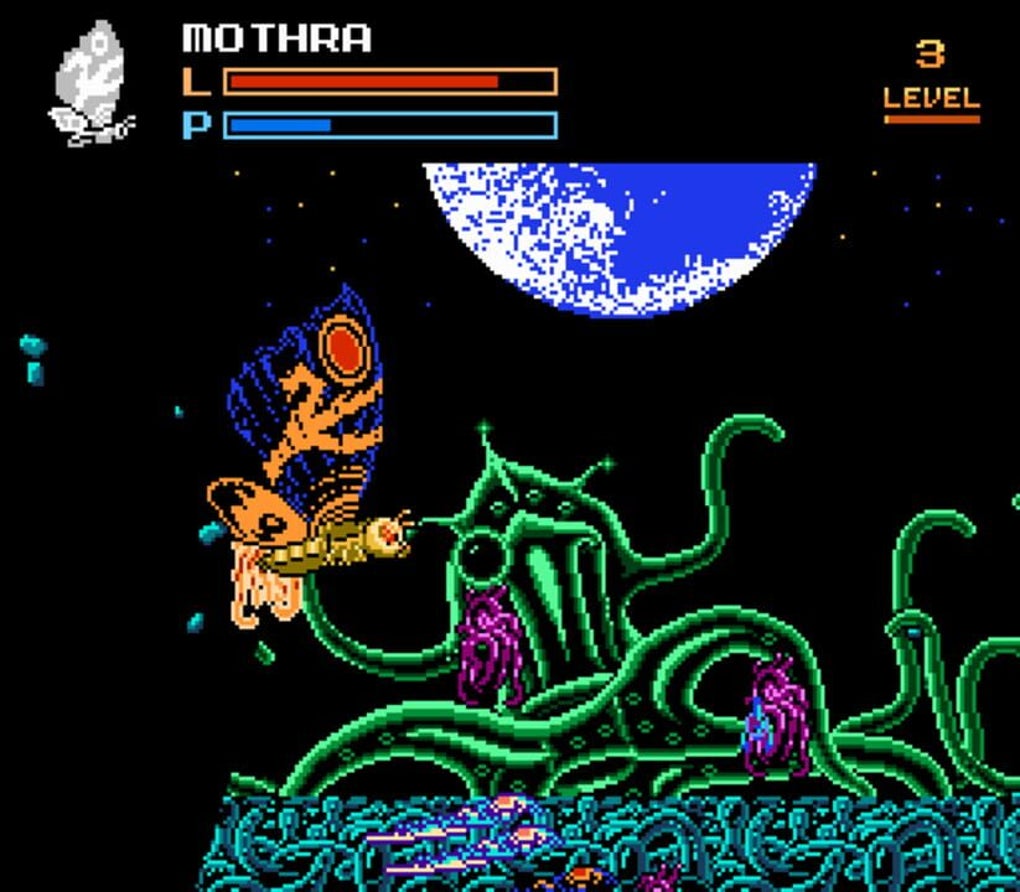
The original Godzilla: Monster of Monsters for the NES was a relatively straightforward strategy-action game. Players controlled either Godzilla or Mothra, moving them across a board game-like map, engaging in side-scrolling combat against various Kaiju from the Godzilla universe. It was a product of its time, offering simple, repetitive gameplay that was nonetheless engaging for fans of the monsters. The creepypasta subverted this innocence by injecting a sentient, malevolent force into its mechanics, turning familiar sprites into agents of terror.
Godzilla Creepypasta for Windows capitalizes on this foundational horror. Allone Works has meticulously translated the core elements of CosbyDaf’s story into an interactive medium, allowing players to step into Zach’s shoes (or at least, a similar protagonist’s). This isn’t just a game inspired by the creepypasta; it’s an ambitious attempt to recreate the experience of playing that haunted NES cartridge. The developers had to walk a delicate tightrope: staying true to the retro aesthetic and limitations hinted at in the creepypasta, while simultaneously delivering a modern, engaging horror game. This involved carefully considering how to represent the creepypasta’s iconic monsters like Red, the terrifying apparitions, and the game’s increasingly surreal environments. By grounding the experience in such a well-known and beloved piece of internet folklore, Godzilla Creepypasta immediately taps into a pre-existing sense of dread and anticipation, making its scares all the more potent. It’s a game built on the foundation of shared digital nightmares, ready to unleash them anew upon an unsuspecting audience.
Gameplay: A Fusion of Action, Exploration, and Terror
At its core, Godzilla Creepypasta is an action game, but its true depth lies in its seamless integration of exploration and survival horror elements. Players navigate through levels that are deliberately designed to feel like corrupted versions of the original NES Godzilla game, yet they are far more expansive and riddled with hidden dangers. The game doesn’t just throw enemies at you; it builds an environment of constant unease, where every step could lead to a terrifying discovery.
The gameplay loop involves moving a chosen monster (initially Godzilla, mirroring the creepypasta’s progression) across a map, entering various stages, and engaging in side-scrolling combat. However, this is where the familiarity ends and the horror truly begins. The “eerie monsters” encountered are not just stock Kaiju; they are often twisted, grotesque interpretations, or entirely new, deeply disturbing entities that emerge from the creepypasta’s lore, such as the infamous Red. These encounters are designed to be challenging, often requiring more than brute force. Survival skills are paramount, demanding players to understand enemy patterns, utilize environmental elements, and sometimes, to simply flee. Resource management, though not explicitly mentioned, is often a subtle element in survival horror; players must decide when to fight, when to conserve, and when to uncover the next piece of the puzzle.
Exploration is a critical pillar of the experience. The levels are not linear paths but intricate mazes filled with secrets, alternate routes, and unsettling environmental storytelling. Players are encouraged, and often forced, to meticulously search every corner to uncover clues that advance the narrative or unlock new areas. This exploration often leads to “unexpected twists”—moments where the game defies established logic, breaks the fourth wall, or introduces genuinely shocking events that mirror the creepypasta’s descent into madness. These twists can range from sudden changes in scenery and bizarre graphical glitches to the appearance of entities that defy explanation, all designed to disorient and terrify the player. The game excels at creating a sense of isolation and vulnerability, constantly reminding the player that they are in a world where the rules are constantly shifting, and something ancient and malevolent is watching their every move.
Unraveling the Narrative: From NES to Creepypasta Canon
The narrative of Godzilla Creepypasta is where the game truly distinguishes itself. It is not a simple monster-bashing game; it is a meticulously crafted story-driven experience, deeply rooted in its source material. The game’s primary objective, beyond survival, is to “uncover the dark secrets hidden within the game’s environments.” This means piecing together a fragmented, non-linear story, much like Zach did in the original creepypasta. The narrative unfolds through cryptic messages, environmental clues, distorted in-game events, and the escalating horror of the encounters.
Players will find themselves confronting the core themes of the creepypasta: the malevolent entity known as Red, the psychological torment inflicted by the game, and the blurring lines between reality and the digital realm. The game reinterprets and expands upon the lore, offering new perspectives on the monster’s origins and motivations. The “Godzilla” of this game is not just a hero; he is a pawn, a witness, and sometimes, a victim in a grander, more terrifying scheme. As players delve deeper, they uncover fragments of a story that hints at ancient evils, corrupted code, and the tragic fate of those who ventured too far into the cursed game. The narrative often plays with player expectations, building tension through slow burns and then delivering impactful, shocking twists that mirror the creepypasta’s most memorable moments. It’s an interactive journey through the very fabric of the creepypasta canon, providing a level of immersion that static text could only hint at. The story is designed to be a haunting puzzle, rewarding those who are observant and brave enough to confront its darkest truths.
Visuals and Audio: Crafting an Atmosphere of Dread
The atmospheric presentation of Godzilla Creepypasta is crucial to its success in evoking genuine fear. The developers at Allone Works have expertly blended nostalgic aesthetics with modern horror design principles to create a visual and auditory experience that is both familiar and deeply unsettling.
Graphically, the game embraces a retro pixel-art style, deliberately reminiscent of the NES era. This choice is not merely for nostalgia; it serves a crucial narrative purpose. By presenting the horror through an 8-bit lens, the game immediately connects to the creepypasta’s premise of a corrupted classic. However, this retro veneer is frequently broken by deliberate graphical glitches, impossible color palettes, and distorted sprites that go far beyond what the NES could ever achieve. These visual anomalies are not bugs; they are carefully orchestrated scares, signaling the game’s malevolent intelligence at work. The environments, while appearing rudimentary at first, slowly warp into surreal, nightmarish landscapes. Familiar forests become blood-red mires, serene oceans transform into churning voids, and iconic structures morph into grotesque, organic prisons. The contrast between the expected simple pixel art and the unexpected, horrifying deviations is a powerful tool for building dread. The creature designs, particularly those of the more grotesque antagonists, are masterfully rendered to be disturbing despite their pixelated nature, leveraging imagination to fill in the terrifying details.
Equally vital to the atmosphere is the game’s sound design. The audio is a character in itself, constantly manipulating the player’s emotions. Initially, players might hear faint echoes of the original NES Godzilla soundtrack, providing a false sense of security. However, these familiar tunes quickly dissolve into discordant drones, unsettling ambient noises, and sudden, piercing sound effects. The absence of sound can be just as terrifying as its presence, with moments of eerie silence amplifying the tension before a sudden jump scare or a horrifying revelation. The roars of monsters are distorted, sounding less like triumphant Kaiju and more like tortured souls. Whispers, distorted speech, and inexplicable mechanical groans punctuate the quiet moments, suggesting a constant, unseen threat. The soundscape is dynamic, reacting to the player’s actions and location, ensuring that the sense of dread is pervasive and inescapable. Together, the atmospheric graphics and meticulously crafted sound design create an immersive world of horror that seeps into the player’s consciousness, making Godzilla Creepypasta an unforgettable journey into terror.
The PhanMemFree Perspective: Security, Downloads, and Community
As a dedicated platform for software and game downloads, PhanMemFree.org (formerly Softonic.com) provides a vital portal for users to discover and access titles like Godzilla Creepypasta. Our commitment to offering a secure and reliable downloading experience is paramount, especially when dealing with a game designed to delve into themes of corruption and fear.
Godzilla Creepypasta is listed on PhanMemFree for Windows, indicating its compatibility with the Windows operating system, including Windows 11. The game is presented as a “Full Version 0.3.1,” signifying that it’s a complete release rather than a demo or early access, although updates (like the latest one on March 21, 2025) indicate ongoing development and refinement by Allone Works. This version number suggests a continuous effort by the developer to enhance the game, perhaps adding new content, refining existing mechanics, or addressing user feedback.
One of the critical pieces of information for any download is the “Security Status,” which for Godzilla Creepypasta is positively indicated on PhanMemFree. This status reassures users that the file has been scanned and verified as safe to download, free from malicious software, viruses, or other digital threats. For a game that deliberately plays with themes of corruption and brokenness, having a clean bill of health from a trusted platform like PhanMemFree.org is essential, ensuring that the only “infection” players experience is the game’s intended psychological horror, not actual malware.
The statistics provided on PhanMemFree.org offer a glimpse into the game’s popularity and reach. With 65 downloads in the last month and a total of 17 downloads previously, it indicates a steadily growing interest in this niche horror title. Its relatively small size of 33.56 MB makes it an accessible download, even for users with slower internet connections, allowing for a quick entry into its terrifying world. The developer, Allone Works, is credited, ensuring transparency and acknowledging the creators behind this unique experience.
User engagement is an integral part of the PhanMemFree community. While Godzilla Creepypasta currently shows a rating of 4.3 (based on 1 review), PhanMemFree actively encourages users to “Rate it!” and “Be the first to leave your opinion!” This feedback mechanism is crucial, as user reviews provide invaluable insights for prospective players, helping them understand the game’s strengths and weaknesses from a peer perspective. Reviews can detail the effectiveness of the horror, the quality of the gameplay, any technical issues, and how well it lives up to the creepypasta’s legacy. Furthermore, users have the option to “Report Software” if they encounter any issues, ensuring that the PhanMemFree platform maintains its integrity and responsiveness to its community.
PhanMemFree.org also offers the game in a multitude of languages, including but not limited to Arabic, German, Spanish, French, Indonesian, Italian, Japanese, Korean, Dutch, Polish, Portuguese, Russian, Swedish, Thai, Turkish, Vietnamese, and Chinese. This extensive language support underscores the global appeal of Godzilla Creepypasta and PhanMemFree’s commitment to serving a diverse international audience, making this cult horror experience accessible to players across the world.
For those interested in exploring similar titles, PhanMemFree.org’s “Top downloads” and “Related topics” sections serve as excellent navigational tools. Under “Action for Windows,” players might find other compelling games like Grand Theft Auto V or Free Fire, though Godzilla Creepypasta carves its distinct path. The “Related topics” section, highlighting terms like “Storyline Games For Windows,” “Nes,” “Gameplay,” “Narrative Games For Windows,” “Access,” “Graphics,” “Survival,” and “Exploration Games For Windows,” directly reinforces the game’s multifaceted nature. These tags help users discover Godzilla Creepypasta when searching for games that prioritize deep narratives, psychological horror, retro aesthetics, and challenging survival mechanics, reaffirming its place within these specific gaming niches.
In conclusion, Godzilla Creepypasta for Windows, available on PhanMemFree.org, represents more than just a game; it is an interactive homage to a digital legend. It leverages the familiar and the nostalgic to create something profoundly unsettling, pushing the boundaries of what an action game can be. With its rich narrative, atmospheric presentation, and dedicated development, it stands as a unique entry in the horror genre, inviting players to confront the very nightmares that once haunted the internet. Its presence on PhanMemFree.org, backed by security assurances and a platform for community interaction, ensures that this terrifying journey is accessible and safe for all who dare to embark upon it.
File Information
- License: “Full”
- Version: “0.3.1”
- Latest update: “March 21, 2025”
- Platform: “Windows”
- OS: “Windows 11”
- Downloads: “86”
- Size: “33.56 MB”


