
Grand Theft Auto: San Andreas – The Definitive Edition, a remastered version of the iconic action-adventure game, promises a revitalized experience for both longtime fans and newcomers. Released in 2021, this reimagining of the 2004 classic aimed to enhance the visuals, controls, and overall gameplay, bringing the sprawling world of San Andreas to a new generation of players. However, the journey to deliver a definitive experience was not without its challenges, as the remaster’s launch was marred by controversies surrounding its technical performance. This review will explore the highs and lows of this ambitious undertaking, examining its successes, failures, and lasting impact on the GTA franchise.
A Return to the Streets of San Andreas: Story and Gameplay
The Definitive Edition faithfully recreates the gripping narrative of the original San Andreas. Players once again step into the shoes of Carl “CJ” Johnson, a former gang member returning to his turbulent hometown after his mother’s murder. The game’s story, set in the early 1990s, unfolds across three major cities – Los Santos, San Fierro, and Las Venturas – each offering distinct environments, cultures, and challenges. CJ navigates a complex web of loyalty, betrayal, and ambition, embroiled in gang wars, drug trafficking, and the constant struggle for power within the criminal underworld.
The core gameplay loop remains largely unchanged from the original. Players progress through a series of story missions, each presenting unique objectives and gameplay mechanics. These missions range from high-speed chases and intense shootouts to stealth operations and elaborate heists, requiring a blend of driving skill, combat prowess, and strategic thinking. The open-world nature of San Andreas allows for extensive exploration beyond the main storyline. Players can freely roam the expansive map, engaging in side activities like stealing cars, participating in street races, or exploring the diverse environments on offer.
The Definitive Edition introduces notable improvements to the control scheme, aiming to modernize the gameplay experience while preserving the spirit of the original. Driving, in particular, has received significant attention, offering a more responsive and intuitive feel. Aiming mechanics have also been tweaked, improving accuracy and responsiveness, particularly beneficial during intense firefights. These enhancements make the gameplay feel more streamlined and accessible to modern players, reducing the frustrations often associated with the original’s somewhat clunky controls.
Enhanced Visuals and Audio: A Mixed Bag
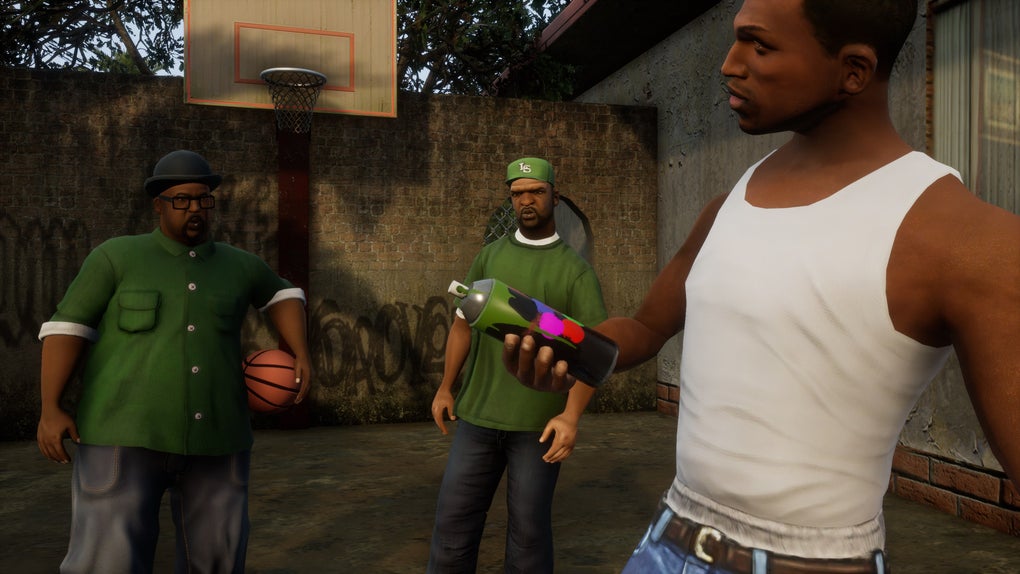
One of the primary focuses of the Definitive Edition was the visual overhaul. The developers aimed to modernize the game’s graphics, employing higher-resolution textures, improved lighting effects, and updated character models. The results, however, are somewhat uneven. While certain aspects, such as the lighting and some environmental textures, show significant improvements, others, like character models and some background assets, retain a noticeably dated aesthetic, resulting in a visual inconsistency that detracts from the overall experience.
Despite the mixed results in the graphical department, the game’s environments retain their charm. The sprawling urban landscapes of Los Santos, the serene coastal beauty of San Fierro, and the glitzy casinos of Las Venturas continue to provide a diverse and immersive backdrop for the game’s narrative. The variety of environments – from bustling city streets to expansive deserts and mountainous regions – ensures that the world never feels stale or repetitive.
The Definitive Edition’s audio is another area that deserves praise. The game’s soundtrack, featuring a mix of iconic 1990s hip-hop, R&B, and rock, perfectly captures the era’s cultural atmosphere. The updated audio is crisp and clear, enhancing the listening experience. The original soundtrack remains mostly intact, providing a wave of nostalgia for returning players while introducing a new generation to the genre-defining music of the era. This musical element greatly enhances the game’s atmosphere and immersion, solidifying its place as one of the most iconic video game soundtracks ever created.
Content and Replayability: A Legacy Preserved
The Definitive Edition doesn’t merely re-release the core game; it expands upon it. The developers incorporated new missions and areas to explore, adding further depth and replayability to an already expansive game. The inclusion of new content isn’t overwhelming; it’s thoughtfully integrated into the existing gameplay, providing both familiar experiences and fresh challenges for veteran players.
Beyond the additions, the core strengths of the original remain intact. The vast open world invites exploration, and the numerous side activities offer endless possibilities. Whether players are focused on completing the main storyline or simply enjoying the freedom of the open world, there’s always something to do in San Andreas. The game’s high replayability stems from its open-ended nature, allowing players to experience the game in diverse ways, shaped by their own choices and playstyles. The expansive map, filled with hidden secrets, collectibles, and countless opportunities for chaos, is a key factor in this enduring appeal. This abundance of content contributes significantly to the game’s longevity, ensuring it remains engaging even after multiple playthroughs.
Technical Issues and Performance: A Persistent Challenge
While the Definitive Edition aimed for a comprehensive upgrade, it unfortunately encountered significant technical issues upon release. Numerous bugs, glitches, and performance problems plagued the initial versions, ranging from minor graphical anomalies to game-breaking crashes. These problems severely impacted the player experience, detracting from the overall enjoyment of the game.
While Rockstar Games did release several patches to address many of these problems, some lingering issues persisted, showcasing the considerable challenges inherent in remastering a game of this scale and age. The inconsistent frame rates, particularly on lower-end hardware, highlight the limitations of the remaster’s engine in efficiently handling the graphical enhancements implemented. These performance issues, while improved with patches, serve as a cautionary tale about the complexities of modernizing older game engines. The initial negative reception significantly impacted the game’s reputation, underscoring the importance of rigorous testing and optimization before launch.
Conclusion: A Nostalgic Trip with Rough Patches
Grand Theft Auto: San Andreas – The Definitive Edition represents a bittersweet remaster. The updated controls and enhanced audio, combined with the core gameplay and compelling narrative, successfully capture the essence of the original, offering a nostalgic yet updated experience. The added content further extends the game’s lifespan and replayability. However, the inconsistent visual quality and the persistent performance issues throughout its early life marred what could have been a triumphant return for one of gaming’s most beloved titles. While the technical problems were largely addressed with post-release patches, the initial negative reception left a lasting impact, highlighting the significant challenges of modernizing older games while preserving their unique character. Ultimately, the Definitive Edition offers a compelling experience for fans of the original, but its imperfections underscore the complexities of effectively remastering a classic. For newcomers, it’s a worthwhile experience, showcasing the enduring appeal of the original’s vast open world and engaging narrative, even with its lingering technical flaws.
File Information
- License: “Full”
- Version: “varies-with-devices”
- Latest update: “July 12, 2024”
- Platform: “Windows”
- OS: “Windows 10”
- Downloads: “112.1K”


