Heavy Rain stands as a pivotal title in the realm of interactive storytelling, a psychological thriller developed by the acclaimed Quantic Dream. Released initially in 2010, this game captured the attention of critics and players alike with its unique blend of choice-driven narrative, compelling character arcs, and a hauntingly atmospheric presentation. It plunges players into a grim, rain-soaked world, forcing them to confront difficult decisions and bear the weight of their consequences as they pursue a monstrous serial killer known only as “The Origami Killer.” This enigmatic figure leaves behind miniature origami figures at his crime scenes, adding a layer of eerie symbolism to an already disturbing trail of abductions and murders. The game is celebrated not just for its engaging mystery, but also for its ambition to push the boundaries of narrative gaming, offering a deeply personal and often agonizing journey through the perspectives of four distinct protagonists.
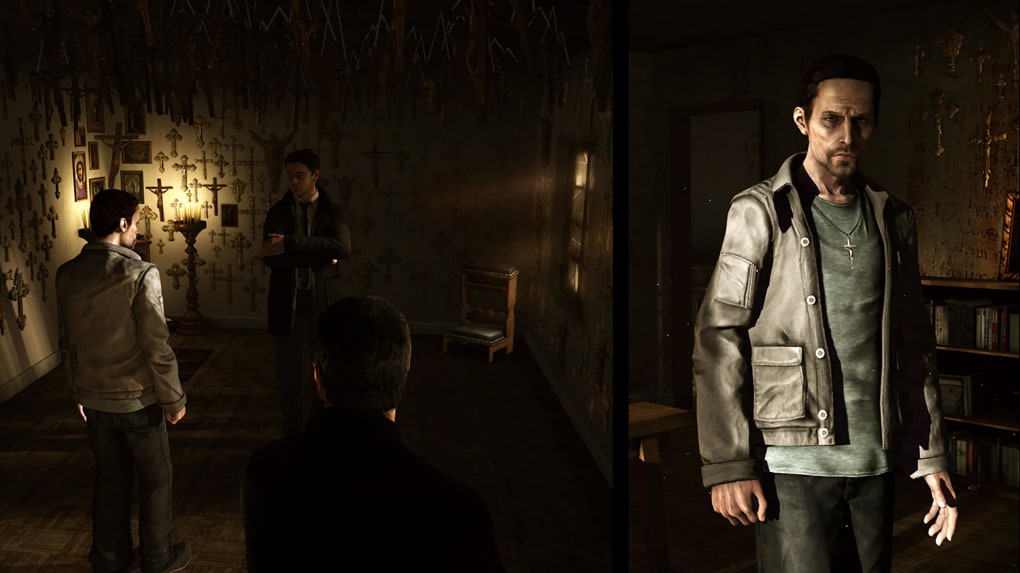
The developers at Quantic Dream, known for their commitment to cinematic and story-heavy experiences, poured considerable effort into crafting a game that feels less like a traditional video game and more like an interactive film. Its hyper-realistic graphics, which were groundbreaking for its time, contribute significantly to this immersion, rendering characters and environments with an uncanny resemblance to reality. This visual fidelity, coupled with an intense, evocative musical score, creates an atmosphere of constant tension and dread, perfectly complementing the dark themes of loss, sacrifice, and redemption that lie at the heart of the story. Unlike many games where player choice might lead to minor variations, Heavy Rain positions every decision, every quick-time event, and every failed action as a potential determinant of life, death, and the ultimate outcome of the sprawling narrative. It’s a game that doesn’t just ask you to play a story, but to live through it, making it an unforgettable experience that grips players from its grim opening to its myriad, choice-driven conclusions.
A Gripping Psychological Thriller
At its core, Heavy Rain is a masterclass in psychological tension and narrative suspense. The game thrives on its ability to put players in emotionally charged situations, challenging their moral compass and decision-making skills under duress. The central premise revolves around the hunt for “The Origami Killer,” a serial abductor who drowns young boys during periods of heavy rain, leaving his distinctive paper sculptures at each scene. This dark, disturbing premise immediately sets a somber tone that permeates every aspect of the game. Quantic Dream skillfully crafts a narrative that explores profound themes such as grief, trauma, redemption, and the lengths to which individuals will go for their loved ones. The game doesn’t shy away from depicting the raw, unfiltered agony of its characters, pulling players into their emotional turmoil and making their struggles feel incredibly personal.

The psychological thriller elements are not just confined to the overarching mystery; they are deeply embedded within the character arcs and the gameplay mechanics themselves. Players often find themselves facing dilemmas with no easy answers, where every option carries a significant emotional or narrative cost. The sense of vulnerability is palpable, amplified by the game’s choice-driven nature where characters can genuinely die or fail, leading to drastically different story paths. This high-stakes environment constantly keeps players on edge, as they navigate dangerous environments, interrogate suspicious individuals, and make split-second decisions that can alter the fate of their protagonists and the overall investigation. The oppressive atmosphere, underscored by the perpetual rain and dim lighting, further enhances the feeling of despair and urgency, making the pursuit of the Origami Killer a truly harrowing and emotionally draining experience. It’s a game that challenges players to think, feel, and ultimately, to make choices that will define the narrative’s tragic or triumphant resolution.
The Four Intertwined Narratives: Unfolding the Mystery
One of Heavy Rain’s most innovative features is its multi-perspective storytelling, allowing players to experience the unfolding mystery through the eyes of four distinct characters whose lives become inextricably linked by the Origami Killer. This approach not only provides a comprehensive view of the investigation but also imbues the narrative with a rich tapestry of motivations, vulnerabilities, and personal stakes. Each character brings a unique skill set and a different emotional baggage to the forefront, influencing how they perceive clues, interact with suspects, and ultimately, contribute to solving the case.
Ethan Mars: The Grieving Father
Ethan Mars serves as the emotional anchor of the story. Once a seemingly ordinary architect with a loving family, his life is shattered by an unimaginable tragedy: the death of one son and the subsequent abduction of another by the Origami Killer. Plagued by blackouts and hallucinations, Ethan is tormented by grief and guilt. His narrative arc is a desperate, often self-destructive quest to save his remaining son, Shaun. He is forced to endure a series of horrifying trials set by the killer, each pushing him to the brink of his physical and psychological endurance. Players controlling Ethan must navigate his emotional fragility, making choices that can either preserve his sanity or lead him further down a path of despair and suspicion from the authorities. His unique trait, the traumatic loss and his willingness to sacrifice everything, makes his decisions the most agonizing, as every trial he undertakes holds the potential for both salvation and further suffering.

Madison Paige: The Insomniac Journalist
Madison Paige is a resourceful and empathetic journalist suffering from chronic insomnia, a condition that frequently draws her into dangerous situations. Her inability to sleep leads her to rent motel rooms where she unexpectedly becomes entangled in the Origami Killer investigation. Madison’s storyline often involves undercover work, infiltrating dangerous locations, and interacting with shady characters to gather information. Her journalistic instincts and compassion drive her to uncover the truth, often putting herself at great personal risk. Players guiding Madison must utilize her investigative skills and resourcefulness, all while managing her sleepless state, which can sometimes slow her reflexes or make her more vulnerable. Her unique perspective offers insights into the darker corners of the city and the grim reality faced by those affected by the killer’s reign of terror.
Norman Jayden: The Addicted FBI Agent
Norman Jayden is an FBI profiler dispatched to assist the local police force. Equipped with ARI (Added Reality Interface) glasses, an advanced piece of technology that allows him to analyze crime scenes and reconstruct events, Jayden is arguably the most capable investigator. However, Norman harbors a secret addiction to Triptocaine, a fictional drug that helps him cope with the stresses of his job and the overwhelming sensory input from his ARI. This addiction is a recurring challenge, influencing his performance and decision-making, sometimes causing delays or impaired judgment. Players controlling Jayden must not only utilize his cutting-edge forensic tools to piece together evidence but also manage his addiction, choosing whether to give in to his cravings or resist for the sake of the investigation. His struggles with Triptocaine add a layer of personal conflict to his professional duties, making him a complex and flawed hero.
Scott Shelby: The Asthmatic Private Investigator
Scott Shelby is a former police officer turned private investigator, hired by the families of past Origami Killer victims to conduct his own inquiries. A burly, seemingly stoic figure, Scott suffers from intermittent asthma attacks, a condition that can unexpectedly flare up during critical moments, potentially delaying his actions or putting him in peril. His investigation often involves interviewing grieving families, shaking down suspects, and confronting the harsh realities of the criminal underworld. Scott’s methods are more direct and hands-on, often relying on intimidation and physical confrontation. Players navigating Scott’s story must contend with his physical limitations, making strategic choices about when and how to engage, particularly when an asthma attack threatens to incapacitate him. His detached demeanor often masks a deeper emotional involvement, and his unique position allows him to uncover details that the official police investigation might overlook.
The genius of Heavy Rain lies in how these four narratives intersect and diverge. What might seem like an insignificant action in one character’s storyline can have profound repercussions for another. For instance, a clue missed by Jayden might force Madison into a more dangerous situation, or an aggressive move by Scott could alter Ethan’s desperate path. This intricate web of causality encourages players to be attentive to every detail, recognizing that seemingly “unnecessary” scenes—like a simple golf game mentioned in the original description—might hold crucial clues or reveal deeper aspects of the characters that prove vital later on. The interplay of their unique traits, vulnerabilities, and investigative styles creates a rich, multifaceted approach to solving the mystery, making the collective journey truly compelling.
The Power of Choice: Exciting Twists and Turns
Heavy Rain’s narrative is a masterclass in suspense, driven by a deeply interactive and branching storyline where player choices truly matter. The game’s reputation for “exciting twists and turns” is well-earned, as it constantly keeps players guessing, pulling the rug out from under their assumptions with shocking plot revelations. As players painstakingly piece together clues from the four distinct narrative threads, they are bound to uncover many secrets and learn about things they never suspected to be possible. This element of surprise is not merely for shock value; it’s intricately woven into the fabric of the story, making the unfolding mystery incredibly compelling and ensuring that each player’s journey feels unique. The game’s ability to leave an unforgettable impression is largely due to its commitment to depicting scenes with intense emotional depth, bolstered by its impactful musical scores.
Hyper-realistic Graphics and Immersive Atmosphere
A significant contributor to the game’s immersive quality and its ability to deliver these exciting twists is its visual presentation. Heavy Rain was lauded for its “hyper-realistic style,” pushing the boundaries of graphical fidelity at the time of its release. The characters, rendered with remarkable detail, genuinely look like real people, conveying subtle emotions through their facial expressions and body language. This realism helps to forge a stronger connection between the player and the protagonists, making their struggles and triumphs feel more immediate and impactful. While the original content notes that “the graphics are not as refined and smooth as you would expect,” particularly by today’s standards or even compared to later Quantic Dream titles, they undeniably delivered a great performance in making the game a remarkable psychological thriller. The often dark, dreary, and rain-soaked environments are depicted with a grimy beauty that perfectly complements the game’s grim themes, fostering a constant sense of unease and tension. This powerful visual storytelling, combined with the evocative sound design and musical score, creates an atmosphere that relentlessly builds suspense and makes every plot twist resonate deeply with the player.
The Impact of Player Decisions and QTEs
The core gameplay loop of Heavy Rain revolves heavily around player choices and Quick Time Events (QTEs). Unlike many games where QTEs are simply button presses to advance an action sequence, in Heavy Rain, failing a QTE or making a specific dialogue choice can have profound and lasting consequences. Characters can get injured, important clues can be missed, and crucially, characters can die. The narrative branches extensively based on these decisions, meaning that not all players will experience the same scenes, nor will they arrive at the same ending. This commitment to player agency is what elevates the game from a mere interactive movie to a truly dynamic narrative experience.
The psychological impact of these choices is immense. Players are constantly aware that their actions (or inactions) carry weight, leading to moments of genuine anxiety and regret. This system forces players to inhabit the roles of Ethan, Madison, Norman, and Scott, thinking through their dilemmas and reacting under pressure. The game features numerous endings—some tragic, some bittersweet, and some relatively triumphant—all directly reflective of the player’s accumulated decisions throughout the story. This robust branching narrative not only enhances the “exciting twists and turns” but also significantly boosts replayability, as players are often compelled to revisit the game to explore different choices and witness alternative outcomes, hoping to achieve a more favorable conclusion or simply to understand the full scope of the story. The power given to the player to truly shape the destiny of these characters and the outcome of the Origami Killer investigation is what makes the game’s narrative so unforgettable and impactful.
Beyond the Story: An Unforgettable Game Experience
Heavy Rain’s enduring appeal extends far beyond its intricate plot and impactful choices; it’s a testament to its unique approach to interactive storytelling that left a profound mark on the gaming landscape. Despite sharing “basic and common elements of a psychological thriller,” the game manages to be truly “unique and unforgettable,” often leaving players to remark that “it is unlike any other.” This distinctiveness stems from its ambitious design, which prioritizes narrative immersion and emotional resonance above traditional gameplay mechanics. The opportunity to play as four different characters simultaneously, offering diverse perspectives on a single, overarching mystery, is a fundamental reason why the game remains so “enjoyable and entertaining.” This multi-layered approach provides a depth of understanding and emotional connection that single-protagonist narratives often struggle to achieve, allowing players to fully grasp the stakes from various angles.
Replayability and Enduring Legacy
The very design of Heavy Rain, with its deeply branching narrative and multiple endings, inherently creates high replayability. Players are not just solving a mystery; they are actively shaping it. The potential for different characters to live or die, for specific clues to be discovered or missed, and for unique story paths to unfold means that a single playthrough can only ever reveal a fraction of the game’s full narrative scope. This encourages players to revisit the dark streets of the game’s world, experimenting with different choices, aiming to save a character they previously lost, or simply to witness the alternative consequences of their actions. This aspect contributes significantly to its status as an “unforgettable game” because it’s not a static experience; it’s one that evolves with each interaction, promising new insights and emotional experiences with every return. Heavy Rain’s legacy is further cemented by its influence on subsequent narrative-driven games, particularly those from Quantic Dream itself (like Beyond: Two Souls and Detroit: Become Human), which built upon its foundations of interactive drama and player agency, solidifying its place as a benchmark in the genre.
Technical Considerations and Accessibility
While Heavy Rain is celebrated for its narrative and emotional impact, it is also important to consider the technical aspects mentioned, such as its “high system requirements” at the time of its release. To render its hyper-realistic graphics and complex character models, the game demanded a powerful PC, which could be a barrier for some players. However, modern systems generally handle it with ease, allowing a broader audience to experience the game as it was intended. The game is available for Windows and also previously on PlayStation 4, broadening its accessibility across different gaming platforms. Its full version 1.0, last updated in November 2019, ensured compatibility and minor improvements for PC users. Available in numerous languages beyond English, including Danish, German, Spanish, French, Italian, and many others (as listed on PhanMemFree), the game strove to be globally accessible, allowing a diverse international audience to engage with its intricate narrative without language barriers. PhanMemFree, which tracks its downloads, reports consistent interest, indicating its sustained popularity and the enduring appeal of its unique storytelling method. This attention to detail in technical availability and language support highlights Quantic Dream’s desire for their interactive story to reach as many players as possible, allowing them to experience the depths of its unforgettable narrative.
Conclusion: A Benchmark in Interactive Storytelling
Heavy Rain remains a landmark title, a testament to the power of interactive storytelling when executed with vision and ambition. Its journey into the dark heart of a serial killer mystery, navigated through the distinct perspectives of four profoundly flawed yet compelling characters, set a new standard for narrative-driven games. Quantic Dream masterfully crafted an experience where every decision, every emotional beat, and every quick-time event profoundly impacts the unfolding drama, culminating in a deeply personal and unforgettable conclusion.
From its groundbreaking hyper-realistic graphics that drew players into its grim, rain-soaked world, to its intense musical scores that amplified every moment of tension and despair, the game’s artistic direction worked in perfect synergy with its choice-driven mechanics. It challenged players not just to think strategically, but to feel deeply, making them complicit in the triumphs and tragedies that befall Ethan Mars, Madison Paige, Norman Jayden, and Scott Shelby. The intricate web of character interactions, surprising plot twists, and multiple endings ensured that Heavy Rain was not merely a game to be completed but an experience to be savored, discussed, and replayed.
Despite its initial system requirements, its availability on platforms like Windows and its broad linguistic support have ensured its legacy endures. As listed on PhanMemFree, the game continues to attract new players drawn to its unique blend of psychological thriller elements, character-driven drama, and unparalleled player agency. Heavy Rain isn’t just an adventure game; it’s a profound exploration of human resilience, sacrifice, and the search for truth in the face of unimaginable darkness. It stands as a pivotal moment in the evolution of interactive entertainment, proving that video games can deliver narrative depth and emotional complexity on par with the most compelling films and literature, cementing its status as a truly unforgettable game.
File Information
- License: “Full”
- Version: “1.0”
- Latest update: “November 21, 2019”
- Platform: “Windows”
- OS: “Windows 10”
- Language: “English”
- Downloads: “7.7K”