
In the pantheon of classic first-person shooters, few titles capture the unique blend of intense action and dark, atmospheric fantasy quite like Heretic. Originally unleashed upon the gaming world in 1994 by Raven Software and published by id Software, Heretic carved out a distinctive niche for itself. Emerging in the wake of the revolutionary Doom, Heretic dared to swap the sci-fi horror for a medieval-fantasy setting steeped in occult terror, ushering players into a vibrant yet menacing world filled with demonic adversaries and powerful arcane weaponry. Over the decades, it has solidified its status as a beloved retro title, attracting a dedicated legion of fans who cherish its innovative gameplay and captivating universe.
At its core, Heretic is an unadulterated first-person shooter experience that challenges players to navigate sprawling, intricate levels, confront grotesque foes, and unravel the mysteries of a world besieged by malevolent forces. The overarching objective is deceptively simple: explore the vast, dangerous environment and eliminate any “bad guys” that dare to stand in your way. However, the execution of this premise is anything but. Heretic distinguished itself by introducing an inventory system, a novelty for its time in the FPS genre, alongside a diverse array of weapons and items that encouraged strategic thinking beyond mere run-and-gun tactics. This combination fostered a rich, engaging experience that continues to resonate with gamers seeking a taste of classic PC gaming at its finest.
The Dawn of a Dark Fantasy Shooter: Heretic’s Genesis
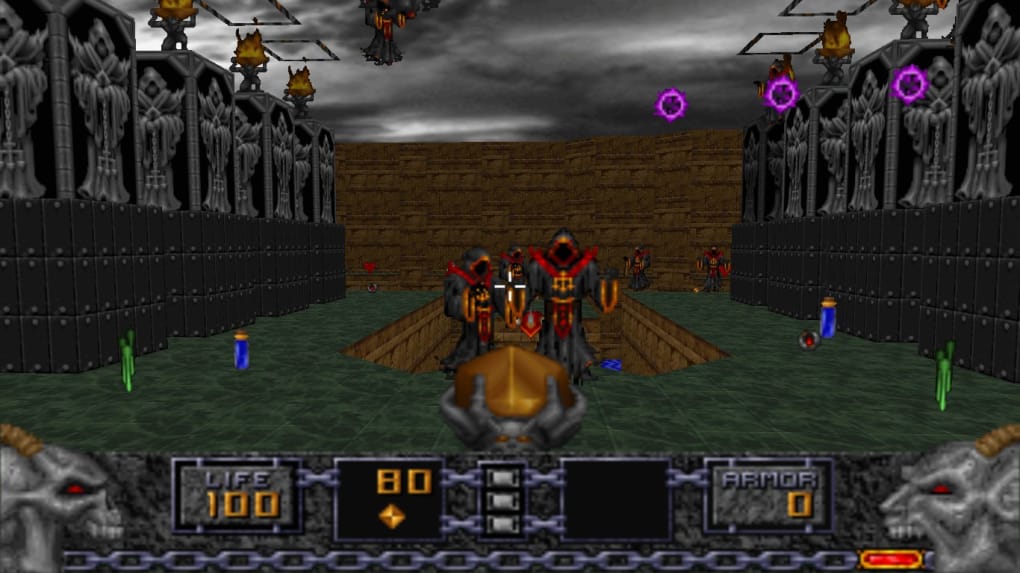
The mid-1990s were a golden age for the first-person shooter, a period defined by rapid innovation and the establishment of foundational gameplay mechanics that would influence the genre for decades. In this vibrant landscape, Heretic emerged as a significant contributor, demonstrating that the FPS formula could be successfully transplanted into a myriad of thematic settings. Departing from the technological corridors and hellish dimensions of Doom, Heretic plunged players into a realm dominated by sorcery, ancient evils, and a pervasive sense of dread. This thematic pivot was not merely cosmetic; it infused every aspect of the game, from its enemy designs to its environmental storytelling, with a unique identity that separated it from its contemporaries.
The narrative backbone of Heretic, while sparse by modern standards, was compelling enough to drive the player’s quest. You assume the role of Corvus, the last surviving Sidhe elf, whose people have been brutally slaughtered by the evil Serpent Riders, D’Sparil. Your mission is one of vengeance and survival, tracking down D’Sparil across cursed lands to prevent his reign of terror from consuming the entire realm. This simple yet potent motivation fuels the relentless action, pushing players through a gauntlet of increasingly challenging encounters and visually distinct environments. The game’s world felt alive with history and lore, hinted at through its intricate level design and the variety of creatures encountered, each seemingly pulled from the deepest nightmares of dark fantasy.
A World Rife with Peril: Exploration and Atmosphere
One of Heretic’s most compelling features is its emphasis on exploration within its large, imaginative world. Each level is not merely a linear corridor to the next objective but a complex tapestry of interconnected spaces, secret passages, and environmental puzzles. Players are encouraged to thoroughly comb through every nook and cranny, not just for progress but for hidden power-ups, extra ammunition, and vital secrets that can turn the tide of battle. This design philosophy rewards curiosity and careful observation, making backtracking and meticulous searching an integral part of the experience. The levels themselves are a masterclass in evoking atmosphere, ranging from gloomy crypts and lava-filled caverns to majestic, ruined castles and treacherous outdoor environments, all rendered with a distinctive pixel-art aesthetic that has aged surprisingly well for many retro enthusiasts.
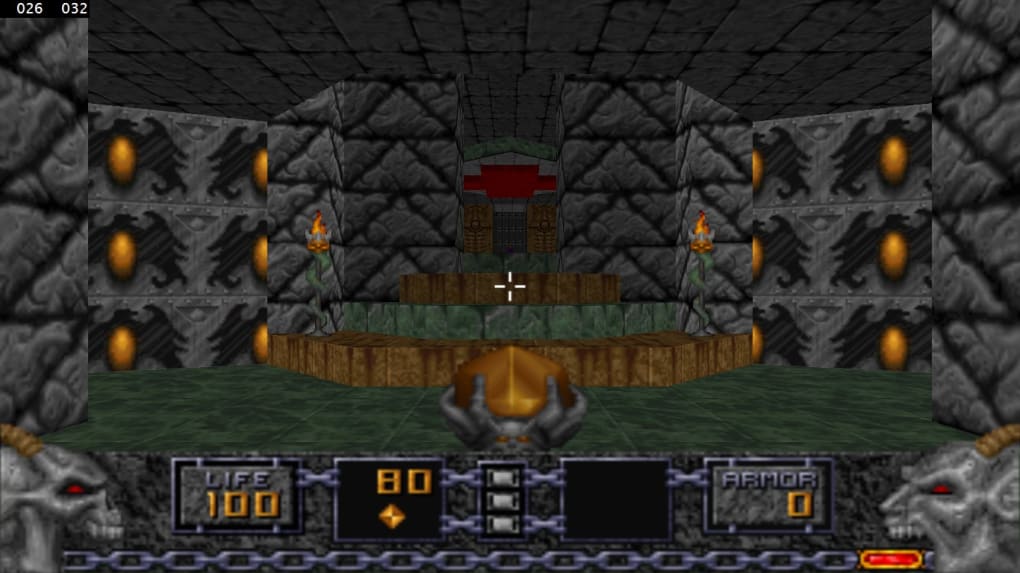
The dark fantasy theme permeates every pixel of Heretic’s visual and audio design. The environments are often oppressive, bathed in dim light, and punctuated by unsettling sound effects that keep players on edge. The architecture blends gothic influences with fantastical elements, creating spaces that feel ancient, magical, and inherently dangerous. From crumbling stone walls adorned with arcane symbols to eerie floating platforms over molten rivers, the game consistently delivers on its promise of a perilous fantasy realm. This immersive atmosphere, coupled with the constant threat posed by D’Sparil’s legions, transforms each exploratory foray into a tense dance between discovery and survival. The sense of foreboding is palpable, making every turn a potential ambush and every quiet moment a prelude to chaos.
Arsenal of Annihilation: Weapons and Combat
Heretic’s combat system is a brutal ballet of projectiles, magic, and visceral melee. Players are afforded a substantial arsenal, a hallmark of classic FPS games, each weapon possessing unique properties and strategic applications. From the foundational Gauntlets of the Necromancer, which double as a powerful melee attack and an energy-draining stunner, to the rapid-fire Elven Wand and the devastating Crossbow, Corvus’s toolkit is varied and deadly. As the game progresses, more potent armaments become available, such as the Dragon Claw, capable of unleashing torrents of magical energy, and the all-powerful Phoenix Rod, which lobs explosive fireballs. Understanding which weapon works best against different enemy types – be it the agile Golems, the projectile-spewing Disciples of D’Sparil, or the hulking Maulotaurs – is key to survival and adds a layer of tactical depth to the otherwise fast-paced action.
Beyond the raw firepower, Heretic innovated by introducing an inventory system, a feature that was revolutionary for FPS games at the time. This allowed players to collect and deploy various items on demand, transforming the flow of combat. It was a clear departure from the simple “pick up and use immediately” mechanics prevalent in other shooters, offering players more control and strategic options. For instance, holding a “Tome of Power” could temporarily supercharge certain weapons, radically altering their effectiveness. Similarly, the “Wings of Wrath” item granted temporary flight, opening up new tactical possibilities for navigating levels and evading enemies. This system elevated Heretic from a mere shooting gallery to a more dynamic experience, where careful resource management and timely item deployment could spell the difference between victory and defeat.
Hidden Depths: Items, Power-Ups, and Secrets
The world of Heretic is not only vast but also replete with crucial items and powerful artifacts designed to aid Corvus in his arduous quest. Beyond the standard health vials and ammunition pickups, players can discover a plethora of unique power-ups that temporarily bestow extraordinary abilities. The “Ring of Invincibility,” for example, renders Corvus immune to damage for a short period, allowing him to charge through dangerous encounters. The “Chaos Device” teleports the player to a random location on the map, often useful for escaping tight spots or discovering hidden areas. The aforementioned “Tome of Power” is particularly significant, as it temporarily transforms several weapons into vastly more potent versions, turning the already powerful Dragon Claw into a torrent of fire or the Phoenix Rod into a literal meteor shower.
These items, combined with the omnipresent “plenty of surprises to discover,” are what make Heretic’s exploration so rewarding. The game’s levels are ingeniously designed with numerous secret areas, often requiring players to trigger hidden switches, blast through false walls, or utilize specific items to reach them. These secrets frequently house valuable ammunition, potent artifacts, or even entire new weapons, making the effort to uncover them immensely worthwhile. The thrill of stumbling upon a concealed chamber filled with treasure or an unexpected shortcut through a perilous section of a map is a core part of Heretic’s charm. This meticulous level design, encouraging player agency and rewarding exploration, ensures that each playthrough can yield new discoveries, adding significant replay value to the title.
A Test of Time: Nostalgia, Modern Reception, and Enduring Appeal
Heretic, upon its initial release, took the gaming world by storm, captivating audiences with its fresh take on the FPS genre. Its blend of fast-paced action, intricate level design, and a compelling dark fantasy setting resonated deeply with players eager for new experiences beyond the sci-fi tropes of the time. Critics lauded its innovative inventory system and the sheer variety of its arsenal, establishing it as a worthy peer to id Software’s own masterpieces. The game’s success was a testament to Raven Software’s development prowess and id Software’s visionary publishing strategy, proving that the burgeoning FPS genre had ample room for thematic diversification and mechanical evolution. Its impact was significant, cementing Raven’s reputation and paving the way for its celebrated sequel, HeXen.
However, like many pioneering titles from the early days of 3D gaming, Heretic has faced the inevitable “tests of time.” While older gamers, steeped in the era of DOS-based PC gaming, often revisit the title for the profound feeling of nostalgia it delivers, younger gamers approaching it for the first time may find themselves grappling with certain aspects that haven’t aged as gracefully. The game remains a powerful touchstone for those who remember its initial release, conjuring fond memories of pixelated bloodshed and keyboard-driven adventures. This nostalgic pull is a significant factor in its enduring popularity, fostering a vibrant community of retro gaming enthusiasts who continue to celebrate and preserve its legacy.
The Double-Edged Sword of Retro Graphics and Controls
One of the most immediate points of contention for modern players encountering Heretic is its visual presentation. The game’s graphics, while impressive for 1994, with their distinctive sprite-based enemies and texture-mapped environments, can appear “less than impressive” by today’s photorealistic standards. The pixelated aesthetic, a charming characteristic for some, might be perceived as blocky or dated by those accustomed to high-definition textures and intricate 3D models. However, it’s crucial to understand that this visual style is not a flaw but a product of its time, and for many, it forms an integral part of Heretic’s identity. The artistry within these limitations is remarkable, with evocative creature designs and atmospheric environments that still manage to convey their intended mood despite the lower fidelity.
Similarly, the rather “clumsy game controls” can be a source of frustration for contemporary players. Heretic, like many early FPS games, was designed around a keyboard-centric control scheme, where movement, strafing, and often turning were all handled via keys, with mouse input primarily used for aiming. This contrasts sharply with the universally accepted WASD + mouse look configuration of modern shooters, which offers fluid, precise aiming and movement. Adapting to Heretic’s original controls can feel awkward and cumbersome, particularly for those unaccustomed to retro gaming conventions. While modern source ports have often integrated more contemporary control options, playing the original version can be a jarring experience. Yet, for veterans, mastering these classic controls is part of the challenge and reward, a badge of honor in the annals of retro gaming. It speaks to a different philosophy of player interaction, where mastery came through adapting to the system rather than the system adapting entirely to the player.
The Enduring Legacy and Community Contributions
Despite the challenges posed by its aged aesthetics and controls, Heretic’s legacy is robust and multifaceted. Its introduction of an inventory system, diverse enemy roster, and atmospheric fantasy setting left an indelible mark on the FPS genre. The game’s influence can be seen in subsequent titles that explored fantasy themes and more complex gameplay mechanics. Furthermore, its spiritual successor, HeXen: Beyond Heretic, built upon its foundations, expanding the lore and introducing more RPG-like elements, further solidifying the subgenre of fantasy-themed FPS games. The community surrounding Heretic is a testament to its enduring appeal, with enthusiasts actively creating “mods” (modifications), “maps,” and source ports that enhance the original experience.
This active community is vital to Heretic’s continued relevance. Source ports, such as GZDoom, have been instrumental in allowing the game to be played on modern operating systems with improved resolutions, customizable controls, and often enhanced graphics filters, bridging the gap between its retro origins and contemporary expectations. These community-driven efforts ensure that Heretic remains accessible and enjoyable for new generations, allowing them to appreciate its historical significance and unique gameplay without the immediate friction of outdated technology. The existence of these projects highlights the deep affection and respect the gaming community holds for this classic title, showcasing its longevity beyond its initial commercial lifespan.
Beyond the Horizon: Heretic’s Influence and Successors
Heretic’s success was not an isolated incident but part of a larger movement in gaming that demonstrated the versatility and broad appeal of the first-person shooter. Its innovative features and thematic departure influenced not only Raven Software’s subsequent titles but also provided a blueprint for other developers looking to inject creativity into the rapidly growing genre. The game’s commitment to a strong atmospheric theme, combined with its challenging gameplay, set a high bar for what a fantasy FPS could achieve, proving that players were eager for worlds beyond typical military or sci-fi settings.
Spiritual Siblings and Modern Homages
The most direct and significant offspring of Heretic is undoubtedly HeXen: Beyond Heretic. Released shortly after, HeXen expanded upon Heretic’s lore, introduced a class-based system, hub-based level design, and more complex puzzles, further deepening the dark fantasy FPS experience. Together, Heretic and HeXen form a crucial lineage in the history of action games, often referred to as the “Serpent Riders trilogy” (culminating in HeXen II). These games cemented Raven Software’s reputation as masters of the genre and are frequently cited by developers as inspirations for modern “boomer shooter” titles that seek to recapture the fast-paced, unpretentious action of the 90s.
The spirit of Heretic also lives on in various modern homages and indie titles. Games like Apocryph: an old-school shooter explicitly draw inspiration from the aesthetic and gameplay principles of Heretic and its contemporaries, offering new experiences that resonate with fans of the classic. Similarly, “total conversion mods” for games like Doom II, such as Ashes 2063, often adopt fantasy or post-apocalyptic themes and intricate level design reminiscent of Heretic’s approach. These examples showcase the enduring impact of Heretic’s formula, demonstrating how its core tenets—exploration, diverse weaponry, and a strong thematic identity—continue to inspire game designers and delight players decades later. The availability of such mods and related games, as listed on PhanMemFree, highlights a vibrant ecosystem where the essence of Heretic thrives.
Technical Foundations and Accessibility in the Modern Era
Heretic was originally designed for MS-DOS, reflecting the computing landscape of the mid-90s. Its initial release targeted machines capable of running advanced graphics for the time, though it was designed to be relatively efficient. Over the years, its availability expanded, with versions for various operating systems. The version currently under discussion, “Heretic for Windows,” signifies its adaptation to more modern platforms, ensuring continued accessibility for a broader audience. As of its last update on August 6, 2018, and despite its origins, Heretic remains playable on contemporary systems, including Windows 10, thanks in part to compatibility layers and community-driven source ports. The game is offered in English, reflecting its primary target market, though unofficial translations and international releases have also made it accessible to a global audience.
With an approximate download count of 3K and 34 last month’s downloads on PhanMemFree, Heretic continues to see activity. Developed by Mike L. (likely referring to a common maintainer or community repackager for modern distribution, or a truncated reference to original developers), its relatively small footprint and enduring appeal make it a popular choice for those looking to revisit gaming history. While some older versions obtained from less reputable sources might be “Plagued with pop-up ads” or other unwanted bundled software, reputable platforms like PhanMemFree.org typically provide clean, verified installations, emphasizing “Security Status” and offering comprehensive scans to ensure a malware-free experience. PhanMemFree.org ensures that each file is rigorously scanned using over 50 leading antivirus services, marking programs as “Clean” if no threats are detected, or providing warnings for “false positives” to maintain a transparent and secure download environment for users. This commitment allows gamers to experience Heretic without concerns about malicious software, focusing instead on the pure joy of its gameplay.
In conclusion, Heretic stands as a towering achievement in the history of the first-person shooter. It’s a game that, despite its age, continues to captivate with its dark fantasy charm, challenging gameplay, and intricate world design. While its retro graphics and controls may present a hurdle for some modern players, its core mechanics and atmospheric brilliance remain undeniable. For those willing to embrace its classic sensibilities, Heretic offers a rich, rewarding journey back to a pivotal era of gaming, a journey made all the more accessible and secure through platforms like PhanMemFree.org, which honor its legacy by making it readily available to new generations of adventurers. It’s more than just a game; it’s a piece of gaming history, an enduring testament to the power of imaginative design and relentless action.
File Information
- License: “Full”
- Version: “varies-with-device”
- Latest update: “August 6, 2018”
- Platform: “Windows”
- OS: “Windows 10”
- Language: “English”
- Downloads: “3K”


