
High School Simulator GirlA is a free-to-play Android game that casts players in the role of a high school girl determined to win the affection of her crush, employing methods that range from charming to…lethal. Inspired by the popular Yandere Simulator, this game plunges players into a world of deception, murder, and the cutthroat competition of the Japanese high school social scene. However, while it borrows heavily from its inspiration in terms of aesthetic, High School Simulator GirlA falls considerably short in terms of gameplay depth and overall experience, leaving a significant gap between its ambitious premise and its actual execution. This review will delve into the game’s strengths and weaknesses, exploring its gameplay mechanics, graphics, and overall user experience.
Gameplay and Mechanics: A Shallow Dive into High School Intrigue
The core gameplay loop of High School Simulator GirlA revolves around the player’s attempts to eliminate rivals and win the heart of their chosen love interest. The player character navigates the school environment, attending classes (which serve primarily as time-fillers), interacting with other students (who exhibit limited AI and responsiveness), and utilizing a variety of weaponry to dispatch their competition. The game attempts to create a sense of strategic planning by incorporating school timetables and student movement patterns. However, the limited AI and predictable behavior of other characters make this element feel less like a complex strategic puzzle and more like a choreographed sequence of events.
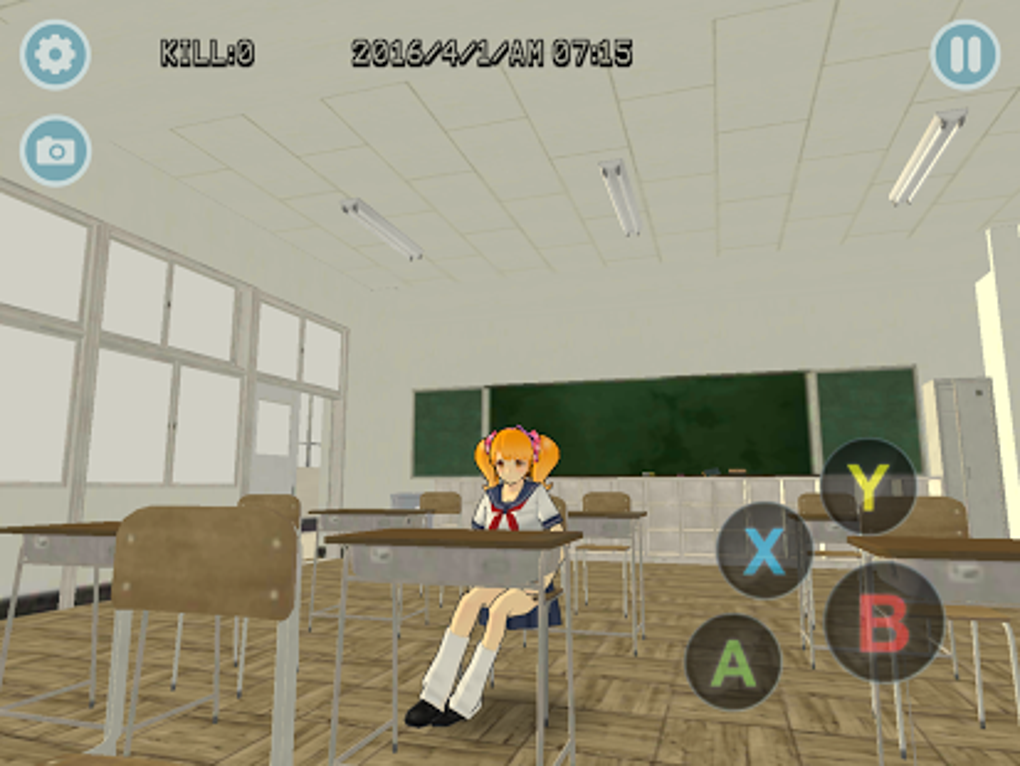
The game’s mechanics are simple and often clunky. Movement feels stiff and unresponsive at times, and the combat system, while functional, lacks depth and finesse. The lack of a robust objective system further diminishes the gameplay experience. While the game presents a seemingly open-ended environment, the player is largely left to their own devices, with little direction or guidance to drive their actions. This lack of clear goals and objectives ultimately leads to a sense of aimlessness, as players struggle to find meaningful engagement beyond simply eliminating rivals.
The game’s reliance on repetitive actions further exacerbates the issue of limited content. The core gameplay loop of attending classes, eliminating rivals, and repeating the process quickly becomes monotonous, lacking the variety and depth needed to maintain player interest over extended periods. The game fails to develop a compelling narrative or engaging characters, resulting in a shallow and unsatisfying experience that pales in comparison to its inspiration. While the concept of a high school simulator with Yandere-esque elements is intriguing, the implementation falls drastically short of realizing its potential.
Graphics and Presentation: A Visual Mimicry with Limited Polish
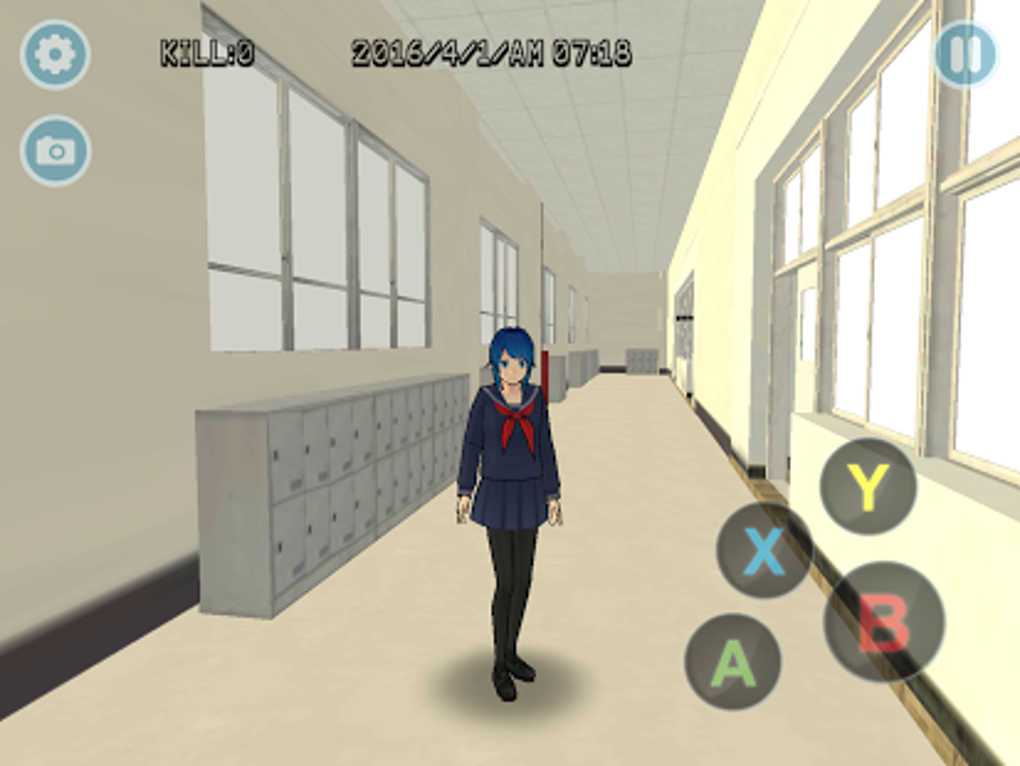
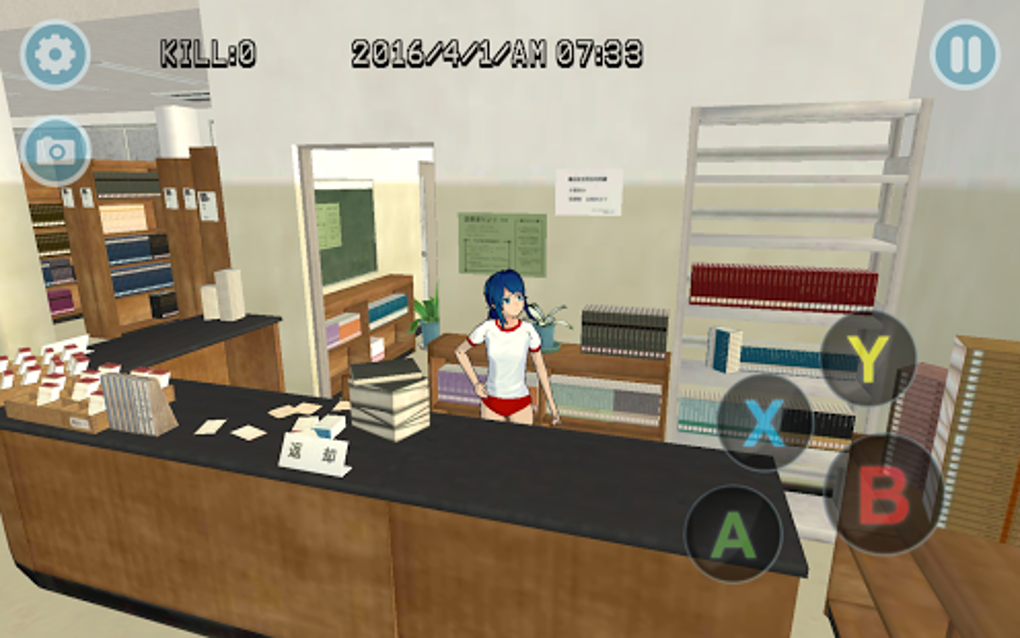
High School Simulator GirlA utilizes open-source 3D models and textures, resulting in a visual style that bears a strong resemblance to its Yandere Simulator inspiration. While the graphics are not inherently poor, they lack polish and refinement. The character models appear somewhat generic and lifeless, lacking the detail and expressiveness needed to create believable and engaging characters. Similarly, the environments, while recognizable as a high school setting, are simplistic and devoid of the richness and detail one might expect from a modern 3D game.
The overall presentation suffers from a lack of attention to detail and a general lack of polish. The animations are often stiff and unnatural, and the game’s user interface is functional but unexciting. While the game successfully mimics the visual style of its inspiration, it fails to capture the charm and personality that make Yandere Simulator, despite its own imperfections, visually engaging. The imitation is clear, but the lack of refinement results in a less polished and less immersive experience.
Monetization and Advertising: An Intrusive Experience
One of the most significant drawbacks of High School Simulator GirlA is its aggressive monetization strategy. The game is plagued by intrusive and frequent advertisements that disrupt the gameplay experience. These advertisements appear at seemingly random intervals, often interrupting crucial moments in the game, and significantly detract from the overall enjoyment. The frequency and intrusiveness of these ads make the game feel less like a free-to-play title and more like a vehicle for delivering advertisements.
The game’s reliance on advertising is particularly problematic given its already limited content and shallow gameplay. The constant interruptions caused by the ads not only break the flow of the game but also serve to highlight the lack of substantial gameplay content. Players are left feeling bombarded by advertisements rather than engaged by the game itself, creating a negative and frustrating experience. The sheer volume of ads outweighs the minimal amount of gameplay offered, significantly impacting the overall value proposition of the game.
Comparison to Yandere Simulator: A Case of Unfulfilled Potential
High School Simulator GirlA clearly draws inspiration from Yandere Simulator, borrowing heavily from its visual style and core gameplay concept. However, while Yandere Simulator, despite its own ongoing development and imperfections, offers a more expansive and engaging experience, High School Simulator GirlA falls significantly short. Yandere Simulator, while also a free-to-play game, features significantly more content, a more refined gameplay loop, and a more developed narrative. The comparison highlights the shortcomings of High School Simulator GirlA, revealing a lack of ambition and innovation in its design and execution. The game simply does not deliver on the promise of its inspiration, resulting in a pale imitation that lacks the depth and charm of its source material.
While both games share a similar aesthetic, the difference in quality and execution is stark. Yandere Simulator, despite its unfinished state, demonstrates a level of design and polish that High School Simulator GirlA fails to achieve. This difference is apparent in the game’s mechanics, its AI, its overall presentation, and, importantly, the level of content offered to the player. High School Simulator GirlA feels rushed, underdeveloped, and ultimately, disappointing in comparison.
Conclusion: A Missed Opportunity
High School Simulator GirlA presents an interesting concept, blending the appeal of high school life simulators with the darker themes of the Yandere genre. However, the game’s execution falls significantly short of its potential. The limited content, intrusive advertising, and clunky gameplay mechanics ultimately result in a deeply unsatisfying experience. While the game’s free-to-play model is appealing, the price paid in terms of reduced quality and frequent interruptions far outweighs any perceived benefit. Unless significant improvements are made to address the game’s shortcomings, High School Simulator GirlA remains a missed opportunity, a pale imitation of its inspiration that offers little to recommend it to players. Its ambitious premise remains unrealized, leaving a game that is both frustrating and ultimately forgettable. The intrusive ads alone are enough to deter many users, even if the core gameplay offered more substance. In short, there are far better alternatives available for players seeking a high school simulation experience.
File Information
- License: “Free”
- Version: “3.3”
- Latest update: “May 24, 2023”
- Platform: “Android”
- OS: “Android 9.0”
- Language: “English”
- Downloads: “11.9K”
- Size: “69.68 MB”
- Download Options: “APK, Google Play”
- Filename: “com.kumagames.girla-3.3.apk”


