
In an increasingly interconnected yet geographically segmented digital world, the ability to access content freely, regardless of one’s physical location, has become a paramount concern for many internet users. Regional restrictions, content blocking by governments, and censorship imposed by Internet Service Providers (ISPs) often create digital barriers that limit access to information, entertainment, and online communities. This is where Virtual Private Networks (VPNs) come into play, offering a solution to bypass these limitations and reclaim a sense of online freedom. Among the myriad VPN services available, Hola VPN stands out due to its distinctive operational model and its promise of free, unrestricted internet access.
Hola VPN is presented as a free-to-use privacy tool designed to empower users to circumvent these regional restrictions and access otherwise blocked online content. Unlike traditional VPNs that route traffic through dedicated, centralized servers, Hola VPN employs a unique peer-to-peer (P2P) network architecture. This model essentially routes a user’s internet traffic through other users’ devices within the Hola network, making it appear as though the user is accessing the internet from the location of the exit node – which is another Hola user’s device. This innovative, albeit controversial, approach allows individuals to enjoy streaming services, join Reddit communities, or access websites that might be restricted in their home region due to geographical licensing agreements or governmental censorship. While the allure of unrestricted access is strong, the P2P nature of Hola VPN also introduces a distinct set of considerations regarding speed, security, and overall online privacy that warrant a deeper examination.
Understanding Hola VPN: A Peer-to-Peer Approach to Geo-Unblocking
At its core, Hola VPN operates on a principle that distinguishes it significantly from most conventional VPN services. Instead of investing in and maintaining a vast infrastructure of dedicated servers across various global locations, Hola VPN leverages a peer-to-peer (P2P) network. This means that when you use Hola VPN, your internet traffic isn’t routed through a specialized, encrypted server owned by the VPN provider. Instead, it travels through the idle bandwidth of other users’ devices connected to the Hola network. Conversely, other Hola users’ traffic might be routed through your device’s internet connection. This innovative approach is what allows Hola to offer a free tier of service, as it significantly reduces their operational costs compared to traditional VPN providers.
The primary function of Hola VPN, in line with its design, is to facilitate access to geo-restricted content. Whether it’s the latest series on Netflix available only in specific countries, a documentary on Amazon Prime Video, or exclusive content on Disney+, Hola aims to provide a gateway. By allowing users to select a virtual location from a list of available countries, or by automatically picking the “best” option, Hola VPN helps mask the user’s true geographical IP address. This trick enables users to bypass the digital fences put up by content providers or governments, making it appear as if they are browsing from the chosen country. For instance, if a user in Europe wishes to access US-specific content, Hola can route their traffic through a peer’s device located in the United States, effectively granting them access.

Hola VPN is available in both a free and a paid version. The free tier offers the basic functionality of geo-unblocking, allowing users to experience the immediate benefits of bypassing restrictions. However, this free service often comes with certain trade-offs, particularly concerning speed and performance, which can be inconsistent or significantly slower, especially during peak usage times. For users seeking a more robust and reliable experience, a paid premium version is also available. This subscription-based service promises faster speeds and access to dedicated servers, which are designed to offer a more stable and efficient connection, especially beneficial for high-bandwidth activities like streaming. This distinction is crucial for potential users to consider, as the “free” aspect, while appealing, may not always deliver the optimal user experience for all online activities.
Furthermore, Hola VPN extends its compatibility across multiple platforms and browsers, enhancing its versatility. Users can deploy it on various operating systems, including Windows, and integrate it as a browser extension, making it relatively easy to switch between devices and maintain unrestricted access to global content. This broad compatibility ensures that whether a user is on their desktop, laptop, or mobile device, they can continue to enjoy the benefits of bypassing geographical limitations, reflecting a design philosophy aimed at wide accessibility.
Key Features and User Experience: What Hola VPN Offers
Hola VPN, as highlighted by various reviews and user experiences, brings a range of features designed to enhance accessibility and provide a straightforward user interface. These elements contribute to its appeal, especially for those new to VPN services or primarily interested in basic geo-unblocking.
One of the most immediate and appreciated features of Hola VPN is its ability to let users bypass regional restrictions. This functionality is crucial for accessing a wealth of online content that would otherwise be unavailable based on one’s geographical location. From popular streaming giants like Netflix, Amazon Prime Video, and Disney+, which frequently impose licensing-based geo-blocks, to region-specific websites or online communities such as Reddit, Hola VPN aims to open up the entire internet. This core capability is what draws many users to the service, promising an end to the frustrating “content not available in your region” messages.
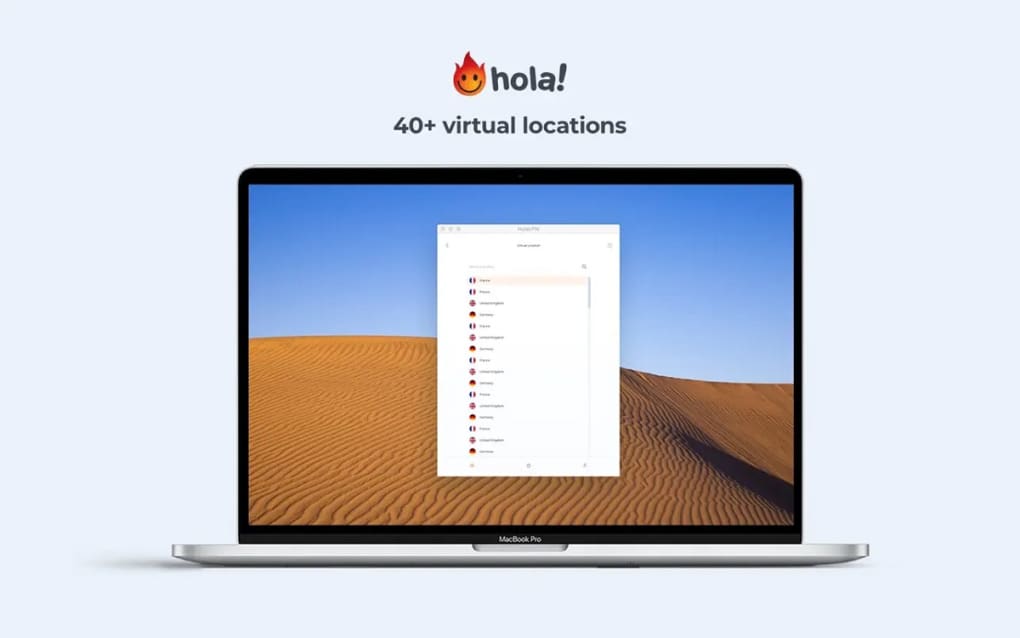
Another significant advantage is the control it offers over the virtual location. Users are not simply shunted to a random server; they have the option to choose specific host countries for their connection. This allows for targeted access to content. For example, if a user wants to watch a show exclusive to the UK Netflix library, they can manually select the UK as their virtual location. For those who prefer convenience, the app also provides an automatic selection feature, which attempts to choose the best available option for optimal performance, often based on proximity or current network load. This flexibility empowers users to tailor their VPN experience to their specific content needs.
In terms of user experience, Hola VPN is generally lauded for its clean and user-friendly interface. Unlike some VPN clients that can be cluttered with advanced settings and complex configurations, Hola VPN keeps things simple. Its design focuses on ease of navigation, making it accessible even for individuals who are not tech-savvy. The absence of elaborate graphics or audio elements contributes to a minimalist aesthetic, ensuring that the primary function of connecting to a different location is front and center. This simplicity means that users can quickly select their desired country and establish a connection without wading through complicated menus, which is a significant plus for casual users.
Hola VPN also asserts a commitment to security and privacy for its users, stating that it encrypts internet traffic. Encryption is a fundamental component of online security, transforming data into a coded format to prevent unauthorized access. By encrypting internet traffic, Hola aims to enhance privacy and provide a layer of protection against potential eavesdroppers, hackers, or snoopers, particularly when users are connected to less secure public Wi-Fi networks. Furthermore, the service highlights a “no-log policy,” asserting that users’ online actions remain completely anonymous and untraceable. This policy is intended to reassure users that their browsing history, connection times, and other online activities are not recorded or stored by the service, bolstering the claim of privacy.
Beyond its core functionality, Hola VPN offers robust platform compatibility. It is not limited to a single operating system or browser but works across multiple platforms. This versatility means users can easily transition between different devices—be it a desktop computer, laptop, or mobile device—and continue to enjoy unrestricted access to global content. This broad support makes Hola VPN a convenient option for users who frequently switch between devices or use different environments for their online activities.
Despite these appealing features, it’s crucial to acknowledge that the user experience can be marred by certain issues. The effectiveness of features like “robust security” and “no-log policy” within a P2P framework is often debated and scrutinized by cybersecurity experts, a point that will be explored further in the subsequent section. For casual users primarily focused on unblocking content, these features might initially seem sufficient, but a deeper dive into the service’s operational model reveals complexities that impact the overall security and performance narrative.
Weighing the Risks: Performance, Security, and Peer-to-Peer Concerns
While Hola VPN presents an attractive proposition for free and unrestricted internet access, a critical examination of its operational model reveals several significant drawbacks and potential risks, particularly concerning performance and, more importantly, security. These issues are often the subject of extensive discussion within cybersecurity circles and among privacy-conscious users.
One of the most commonly reported issues with Hola VPN is its impact on internet speed. Users frequently experience slowdowns, especially during peak usage times. This can be particularly frustrating for activities that require high bandwidth, such as streaming high-definition video, online gaming, or large file downloads. The peer-to-peer nature of Hola’s network inherently contributes to this variability. When your traffic is routed through another user’s device, your connection speed becomes dependent on that peer’s internet bandwidth, current network load, and the quality of their connection. If the peer has a slow connection or is heavily using their own bandwidth, your speed will inevitably suffer. This inconsistency often leads to buffering during streaming or extended loading times for web pages, undermining the smooth user experience that a good VPN should provide.
Beyond speed, some users have also reported difficulties connecting to certain websites or online services when using Hola VPN. This can manifest as websites failing to load, specific content remaining blocked despite the VPN connection, or services detecting and rejecting the VPN connection. Such issues can negate the primary purpose of using Hola VPN – to access restricted content – and can be a source of considerable frustration for users seeking reliable access.
The most significant concerns surrounding Hola VPN, however, revolve around its security and privacy implications, stemming directly from its peer-to-peer network. While Hola VPN claims to offer robust security by encrypting internet traffic and adhering to a “no-log policy,” the P2P model introduces fundamental vulnerabilities that challenge these assurances.
In a traditional VPN, your traffic is routed through a dedicated server managed by the VPN provider, which typically has stringent security measures in place. In Hola’s P2P model, your internet traffic is routed through other users’ devices, and likewise, other users’ traffic is routed through yours. This means that your device acts as an “exit node” for other users, and their device acts as an “exit node” for you. This creates a scenario where:
- Potential for Data Misuse: If your device is acting as an exit node, and another Hola user routes malicious or illegal traffic through your IP address, the origin of that traffic could be traced back to your internet connection. This could potentially lead to legal complications or unwarranted scrutiny, as you might be held responsible for actions you did not commit. This is a profound security risk that is largely absent in traditional VPNs.
- Shared Bandwidth and IP Address: While a “no-log policy” might mean Hola itself isn’t storing your browsing data, the fact that your traffic passes through someone else’s device (and vice versa) means your online activities are not as private as they might seem. The peer whose device you are using as an exit node might theoretically be able to monitor your traffic if they have the technical capability and malicious intent. Conversely, if you are an exit node, you could potentially intercept traffic from other users. This inherent architectural design creates trust issues within the network.
- Lack of Centralized Control and Auditing: Traditional VPN providers often undergo independent security audits to verify their no-log claims and the strength of their encryption. With a decentralized P2P network like Hola, performing such comprehensive audits to ensure consistent security across potentially millions of individual user devices is practically impossible. This lack of centralized control makes it difficult to guarantee a uniformly secure environment.
- Encryption Nuances: While Hola states it encrypts internet traffic, the effectiveness of this encryption needs to be considered within the P2P context. Even if the traffic between your device and the exit node is encrypted, the very nature of passing through an unknown peer’s device introduces an additional layer of potential vulnerability that is not present when connecting to a trusted, dedicated server.
In essence, while Hola VPN’s peer-to-peer model offers a cost-effective way to bypass geo-restrictions, it does so by potentially compromising the very security and privacy that many users seek from a VPN. The convenience of “free” access comes with the significant caveat of relying on other users’ devices, which can introduce unpredictable performance issues and serious security concerns that go beyond mere data logging. For anyone prioritizing high-speed, stable connections, or robust, uncompromised online privacy and security, these drawbacks make Hola VPN a questionable choice.
Is Hola VPN Right for You? A Balanced Perspective
In summary, Hola VPN for Windows, as reviewed on PhanMemFree, positions itself as a tool for individuals seeking to bypass online restrictions and access content blocked in their region. Its primary appeal lies in its free-to-use option and a relatively simple premise: unblocking the internet through a unique peer-to-peer network. However, a comprehensive evaluation reveals a nuanced picture, with notable advantages tempered by significant drawbacks.
On the positive side, Hola VPN offers immediate utility for casual users. The ability to select specific host countries or allow the app to automatically choose the best option provides flexibility in accessing geo-restricted content from platforms like Netflix, Amazon Prime Video, and Disney+. Its clean, user-friendly interface makes it accessible for those who are not technically inclined, ensuring a smooth entry into the world of VPNs. Furthermore, the robust platform compatibility means users can switch between various devices and browsers while maintaining their access. The stated claims of robust security through encryption and a no-log policy also contribute to its perceived benefits, aiming to reassure users about their privacy.
Despite these advantages, the inherent characteristics of Hola VPN’s peer-to-peer network introduce several critical considerations that users must weigh. The most frequently cited performance issue is the potential for significant slowdowns in internet speed, particularly during peak usage periods. This inconsistency can severely impact streaming quality, download times, and overall browsing fluidity. Additionally, some users have reported difficulties in establishing connections to specific websites or online services, which can undermine the primary goal of the application.
However, the most pressing concerns for Hola VPN revolve around security and privacy. While the service promotes encryption and a no-log policy, its peer-to-peer architecture means that user traffic is routed through other users’ devices, and vice versa. This raises legitimate questions about the potential for data misuse and the overall integrity of user privacy. The risk that one’s IP address could be used by another user for potentially illicit activities, without their knowledge or consent, is a significant ethical and security dilemma. This shared network model fundamentally differentiates it from traditional VPNs that route traffic through dedicated, managed servers, which generally offer a more controlled and verifiable secure environment.
Who is Hola VPN for?
Given its characteristics, Hola VPN might be a useful option for:
- Casual Users: Individuals whose primary goal is occasional geo-unblocking for specific content and who are not overly concerned with maximum speeds or the highest level of privacy and security.
- Cost-Conscious Individuals: Those who strictly require a free solution and are willing to accept potential trade-offs in performance and security.
Who might need alternatives?
Conversely, those prioritizing a superior online experience and robust protection may find Hola VPN less than ideal:
- Users Requiring High Speed and Stability: If consistent, fast speeds for streaming, gaming, or large downloads are crucial, the potential slowdowns associated with Hola VPN’s P2P network might prove frustrating.
- Privacy and Security-Conscious Users: Individuals for whom uncompromised online privacy, strong encryption, and verifiable no-log policies are paramount will likely prefer traditional VPN services that operate with dedicated servers and have a proven track record of security audits and transparency. The inherent risks of a P2P network, where your IP address can be an exit node for others, present a fundamental conflict with a high standard of privacy.
In conclusion, Hola VPN offers a functional solution for bypassing regional content restrictions, especially for casual use where the “free” aspect is a significant draw. It’s a decent app with a clear purpose. However, its unique peer-to-peer model, while enabling its free service, introduces notable drawbacks concerning internet speed and, critically, potential security and privacy vulnerabilities. For users seeking high-speed, highly secure, and truly private connections, exploring alternative VPN services that operate on a more conventional, dedicated server model would be a more prudent choice. As with any online service, users should be aware of the terms of use, particularly those concerning the peer-to-peer nature and potential implications for their own internet connection and privacy. It is also important to note that laws concerning the use of VPN services vary per country; if the law of your country forbids or limits its usage, do not download. Any unlawful behavior using this software is not permitted, and you are solely responsible for any use of the service.
File Information
- License: “Free”
- Version: “1.218.304”
- Latest update: “December 22, 2023”
- Platform: “Windows”
- OS: “Windows 7”
- Language: “English”
- Downloads: “7.6K”
- Size: “2.23 MB”


