
The name “Hot or Not” evokes a strong sense of nostalgia for many. Launched in 2000, the original website was a phenomenon, allowing users to rate the attractiveness of other users on a scale of 1 to 10. While the website eventually faded, the concept found new life in the form of a dating app available across various platforms, including iOS, Android, Blackberry, and Windows Phone. The app, also confusingly referred to as “Hot or…” by its developers, retains the core premise of its predecessor but adapts it to the modern landscape of mobile dating. This review examines the app’s features, usability, and overall effectiveness in the crowded dating app market.
Apps and the Evolution of “Hot or Not”
The transition from a website to a mobile app marked a significant shift for Hot or Not. The original website’s simple, yet addictive, rating system lent itself well to the swipe-based interface common in modern dating apps. The app retains the core functionality of quickly assessing profiles, but it introduces additional features to enhance user interaction and connection opportunities. The ease of access and portability provided by a mobile application breathed new life into the concept and attracted a new generation of users. However, this shift also brought about some challenges, including competition from established players in the dating app market. The app’s success, therefore, hinges on its ability to differentiate itself from competitors like Tinder, while maintaining the core concept that made the original website popular. Furthermore, the success of the app also depends on maintaining an active and engaged user base. This can prove to be challenging in a market saturated with alternative applications.
The Dating Game: How Hot or Not Works
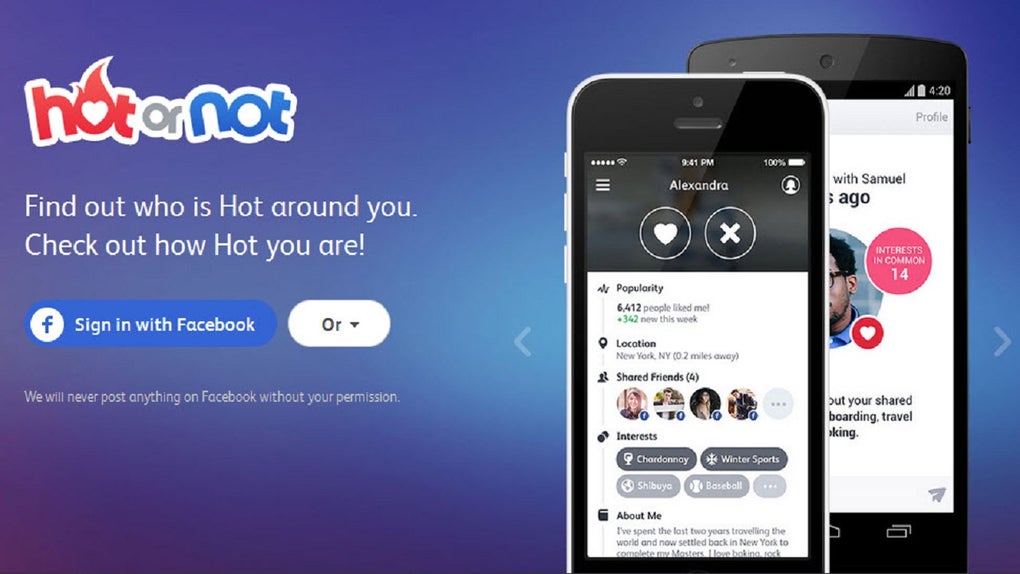
The app’s mechanics are refreshingly straightforward. After signing in (a process which, as we’ll discuss later, presents its own hurdles), users are presented with a continuous stream of profile photos. Each profile typically includes five photographs and a brief biography, providing details like age and languages spoken. A key feature is the geo-matching system, which prioritizes profiles located within a 100km radius of the user’s current location. This focuses the search and increases the likelihood of connecting with potential dates in the user’s vicinity. The user experience is intuitive: a heart icon indicates a “Hot” rating, while an “X” denotes a “Not” rating. A “Connection” is established when mutual interest is confirmed—when both users have “hearted” each other’s profiles. This mutual affirmation opens a communication channel, allowing users to exchange messages.

Beyond simple ratings, Hot or Not attempts to facilitate meaningful connections by leveraging user data. The app analyzes users’ bios to identify common interests between connections, thereby encouraging interaction based on shared preferences. The integration with Facebook provides an additional layer of social context, displaying the number of mutual Facebook friends between users. This adds a degree of trust and familiarity to the matching process, potentially leading to more engaging conversations. Finally, the app provides a running tally of how many users have rated a given profile as “Hot,” bolstering a user’s self-esteem and giving them an indication of their general appeal on the platform.
Challenges and Criticisms: The Inactive User Problem
Despite its simplicity and intuitive design, Hot or Not faces challenges that prevent it from becoming a dominant force in the dating app world. One major drawback is the prevalence of inactive or seemingly fake profiles. The sheer number of profiles can be overwhelming, but a significant portion appears to be inactive, reducing the pool of available and responsive users. This issue leads to frustration for active users who invest time in making connections only to receive no response, leaving them questioning the platform’s effectiveness. The inability to easily discern active users from inactive ones significantly detracts from the app’s overall value proposition. The ambiguity regarding the reason behind unanswered “connections” (whether it’s user preference or profile inactivity) makes it difficult for users to assess the platform’s effectiveness and invest their time and effort accordingly.
Another area where Hot or Not falls short is its signup process. The option to sign in using either a Facebook account or an email address initially seems convenient, but this convenience quickly dissolves into confusion. Attempting to sign up with an email address reveals a significant flaw: the app seemingly doesn’t allow for account creation via email. Users are essentially forced to use their Facebook account, raising concerns about data privacy and potentially deterring users who prefer not to link their dating profiles to their social media accounts. While the app’s website assures users of Facebook data protection, the lack of an alternative signup method undermines the user’s sense of control and transparency. This lack of flexibility in the signup process could be a substantial deterrent for a considerable number of potential users.
Comparing Hot or Not to Competitors: A Tinder-esque Experience
The user interface of Hot or Not bears a striking resemblance to that of Tinder, arguably the most prominent dating app on the market. This similarity, while potentially user-friendly for those familiar with Tinder’s mechanics, also highlights a lack of originality and potentially contributes to the app’s struggle to stand out. In a competitive market saturated with various dating apps, offering a near-identical user experience provides little incentive for users to switch from established platforms. The success of Hot or Not depends largely on differentiating itself from the pack; mere imitation doesn’t provide a strong competitive edge.
Hot or Not’s functionality, while similar to Tinder, lacks the robust features and user base that have propelled Tinder to its current dominance. Features like detailed profile descriptions, diverse matching algorithms, and a larger, more active user base significantly contribute to Tinder’s success. While Hot or Not offers basic functionality, it struggles to match the comprehensive experience provided by established competitors. The lack of these features, combined with the problem of inactive profiles, leads to a less effective and ultimately, less satisfying user experience.
Hot or Not for Android: Platform-Specific Considerations
The Android version of Hot or Not mirrors the functionalities of other platform versions, inheriting both its strengths and weaknesses. The app’s ease of use, the straightforward swipe-based interface, and the profile viewing experience translate seamlessly to the Android platform. However, the same issues affecting other platforms—inactive profiles and the slightly confusing sign-up process—also persist in the Android version. The app’s performance on various Android devices can vary, with some users reporting glitches or performance issues depending on device specifications and Android version. Optimizing the app for various devices and ensuring consistent performance is essential to improve user satisfaction and encourage wider adoption.
Conclusion: A Niche App with Potential
Hot or Not’s reincarnation as a dating app has met with mixed success. While its core concept of quickly assessing potential matches remains appealing, the app’s significant limitations hinder its broader appeal. The large number of inactive profiles, the confusing sign-up process, and the striking similarity to other, more established apps, significantly detract from the overall user experience. In a highly competitive market dominated by well-established platforms, Hot or Not struggles to carve out a distinct niche.
Despite these drawbacks, the app’s simplicity and user-friendly interface still hold potential. Addressing the issue of inactive profiles through more rigorous moderation and improved user engagement strategies could dramatically improve user satisfaction. Furthermore, incorporating unique features and refining the signup process to provide greater flexibility would improve the user experience and differentiate it from the competition. While Hot or Not may not be the ideal solution for every user, it’s still worth considering for users who are seeking a straightforward dating app that prioritizes quick and simple interaction. If the app can overcome its current challenges, it might find a place in a niche market. However, as it stands, the app doesn’t offer enough to justify a switch from already established and robust dating apps.
File Information
- License: “Free”
- Version: “5.428.0”
- Latest update: “August 8, 2025”
- Platform: “Android”
- OS: “Android 15.0”
- Language: “English”
- Downloads: “8.5K”
- Download Options: “Google Play”


