
The mid-1990s marked a golden age for arcade gaming, and among the luminaries that captivated players was Sega’s groundbreaking House of the Dead franchise. Launched into coin-op machines in 1996, this series quickly established itself as a premier example of the light-gun shooter genre, a full decade before zombies saturated the video game landscape as they do today. These were not just games; they were experiences, defined by their physical peripherals that offered a tangible sense of interaction and immersion, a genuine draw at a time when home consoles were rapidly asserting their dominance. Players flocked to arcades, drawn by the allure of a plastic gun in hand, ready to blast away hordes of the undead in a theatrical, visceral manner.
Among the franchise’s most memorable entries, House of the Dead III stood out. Released initially in arcades in 2002, it continued the series’ legacy of intense, on-rails zombie-blasting action. True to its predecessors, the arcade version of House of the Dead III featured a unique, pump-action shotgun peripheral, which elevated the experience beyond mere button presses. This physical interaction, the satisfying clack-clack of pumping the shotgun and the visceral recoil as you discharged virtual buckshot into onscreen monstrosities, added a layer of involvement that home systems, for all their growing sophistication, struggled to replicate. The game plunged players into a bleak, post-apocalyptic future, a ravaged world overrun by mutated horrors, where the only objective was survival through liberal application of firepower. As the gaming landscape continued its inexorable shift towards home entertainment, the question arose: could this arcade marvel successfully transition to the personal computer, or would something vital be lost in translation? The PC port of House of the Dead III sought to answer that, bringing the fast-paced, gore-soaked action to a new audience, albeit with a few significant compromises.
From Arcades to Home Consoles: The Quest for Immersion
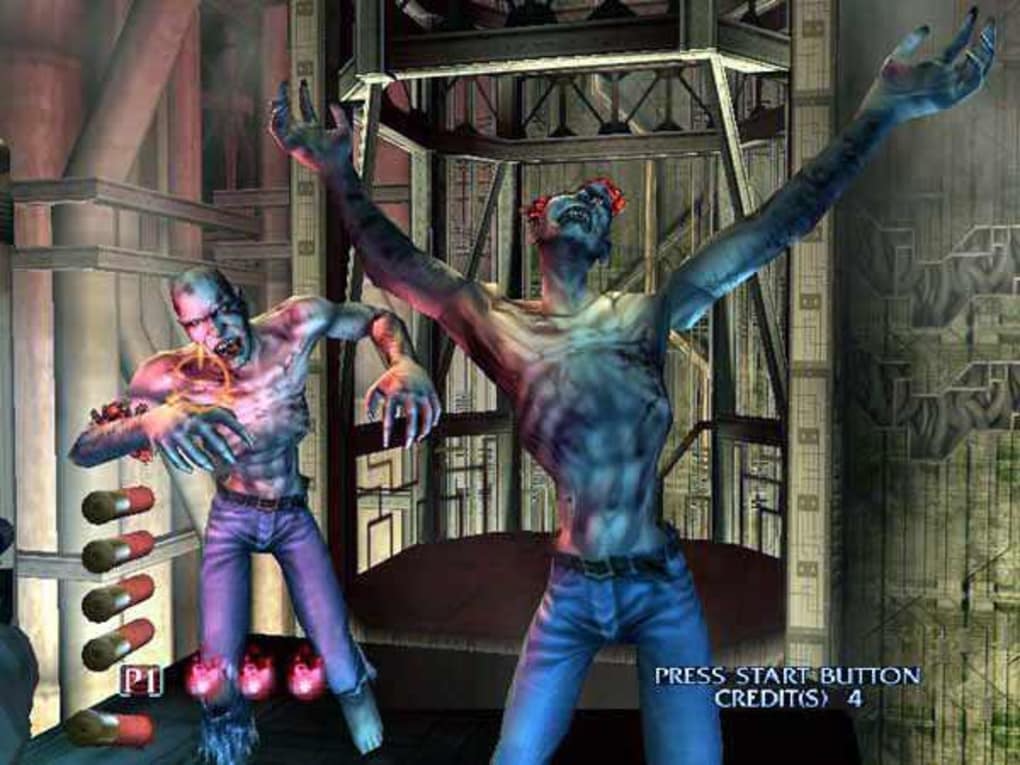
The House of the Dead series, at its core, was built upon the foundation of arcade interactivity. The experience was meticulously crafted around custom cabinets, specialized light guns, and the shared thrill of a public gaming environment. When these titles made their way to home platforms, particularly the PC, developers faced the daunting challenge of translating that unique, physical sensation into a format reliant on keyboards, mice, or generic gamepads. House of the Dead III is a prime example of this struggle, highlighting the significant chasm between the original arcade vision and the realities of a home port.
The Allure of the Light Gun
In the early 2000s, arcade light-gun shooters were still a potent force, captivating audiences with their straightforward yet intensely engaging gameplay. The physical light-gun peripheral was not just a controller; it was an extension of the player, a direct link to the on-screen action. For House of the Dead III, this meant a robust, plastic pump-action shotgun. Imagine the feeling: gripping the fore-end, the weighty thunk as you racked a new shell into the chamber, the satisfying bang as you pulled the trigger, and the resulting splatter of zombie brains across the screen. This tactile feedback, the sheer physicality of wielding a replica weapon, was paramount to the game’s appeal. It transformed a simple point-and-shoot mechanic into a deeply immersive act, making players feel genuinely present in the grim, zombie-infested world depicted on the arcade monitor. The auditory cues of the weapon, combined with the haptic response, contributed to a powerful sensory loop that few other genres could offer. This tangible connection fostered a sense of urgency and excitement that became synonymous with the House of the Dead brand, drawing players back again and again to test their reflexes and nerve against increasingly grotesque adversaries.
The PC Port’s Conundrum
Regrettably, the intrinsic tactile appeal of the arcade version struggles immensely to translate to the PC. The fundamental issue lies in the control scheme. Moving a cursor around the screen with a standard mouse or a conventional game controller simply cannot replicate the visceral joy of that arcade shotgun. For the vast majority of PC players, who are not among the niche group possessing a PC-compatible light gun peripheral, the core mechanic of aiming and shooting becomes a detached, almost clinical affair. The direct, intuitive feel of pointing a physical object at a target is replaced by indirect cursor manipulation, instantly breaking the immersion that defined the arcade experience.
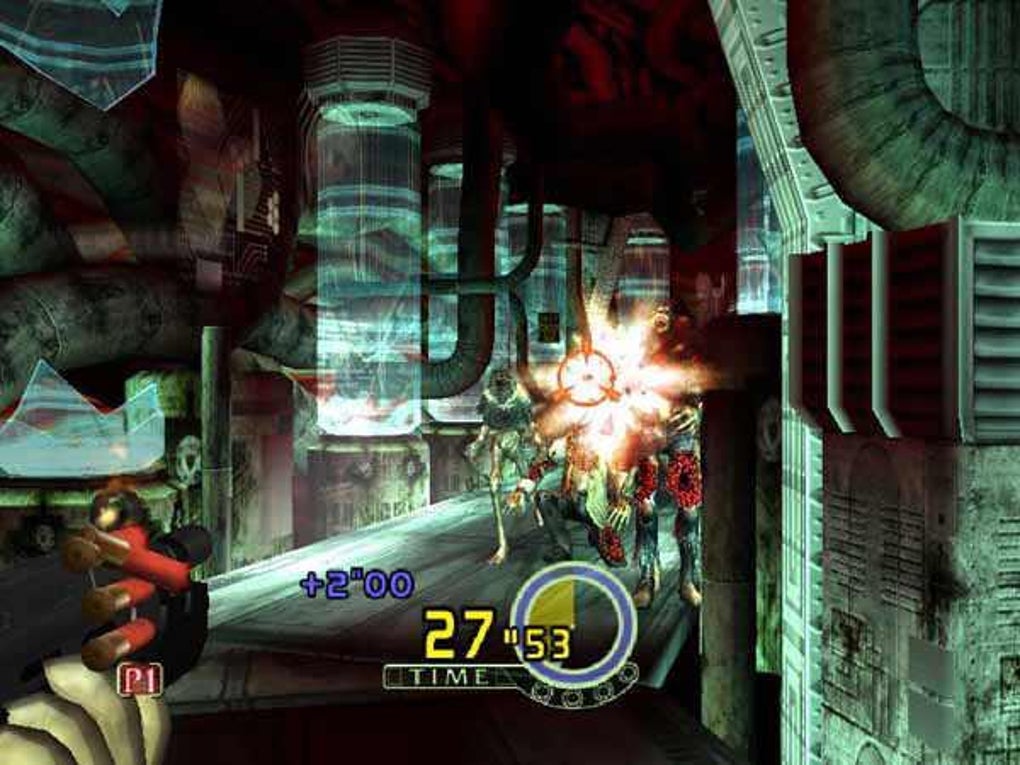
While the PC port of House of the Dead III does make earnest attempts to compensate for this loss of physicality, its efforts often fall short. The developers wisely modeled the character’s gun and hands prominently on screen, attempting to provide a visual anchor and maintain a sense of involvement. This visual representation allows players to see their virtual weapon reload and fire, offering some degree of connection to the action. However, even with these additions, the fundamental disconnect remains. The absence of haptic feedback, the lack of the satisfying thwack of a pump-action, and the sheer difference in ergonomic engagement mean that the PC version, while technically competent, inherently loses a significant part of what made House of the Dead III so compelling in its original form. It transforms a deeply interactive experience into a more conventional, albeit still entertaining, rail shooter, leaving a void that even well-executed visual elements struggle to fill.
Battling the Undead: Gameplay Mechanics and Narrative
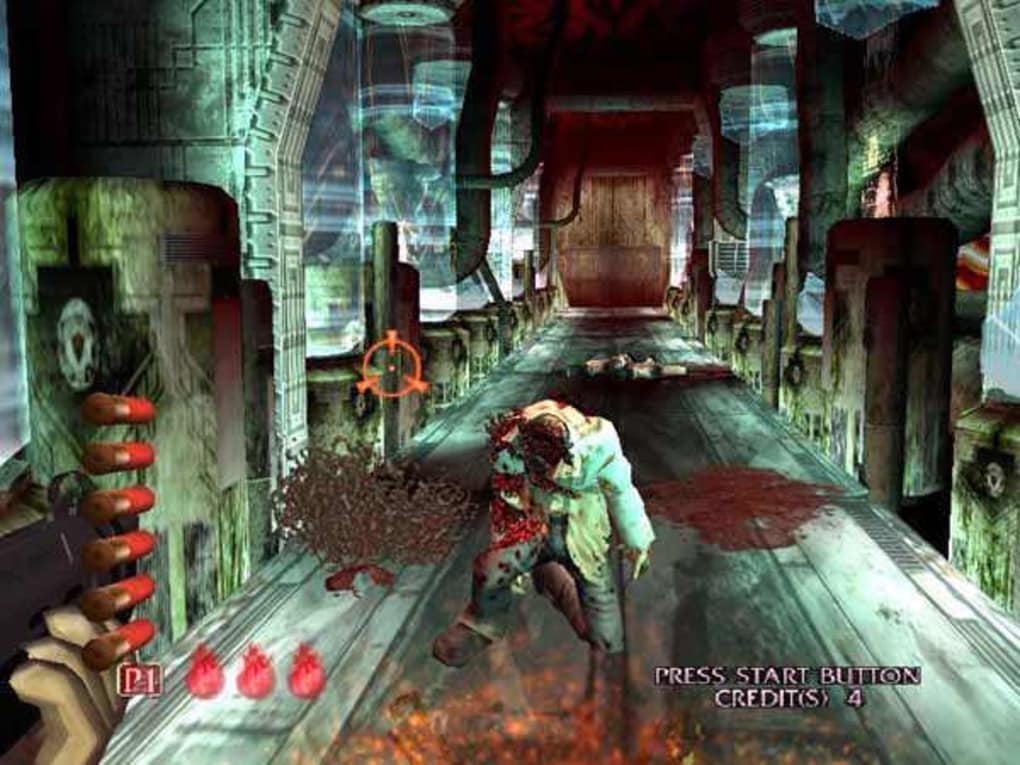
Beyond the control scheme, House of the Dead III offers a compelling package of gameplay mechanics and a narrative thrust that keeps players engaged, even in its less-than-ideal PC incarnation. The core loop of blasting zombies remains intensely satisfying, supported by a post-apocalyptic setting and thoughtful design choices that encourage replayability.
A Post-Apocalyptic Nightmare
House of the Dead III thrusts players into a truly harrowing post-apocalyptic wasteland, a world utterly ravaged by an unrelenting terror. From the deepest, darkest corners of this devastated landscape, carnivorous cadavers and grotesque zombies have returned with a vengeance, determined to haunt the players’ every move. The game paints a bleak picture of humanity on the brink, offering a compelling backdrop for the non-stop action. Players are tasked with defying the undead, shotgun firmly in hand, as they navigate through environments that evoke a profound sense of desolation and despair. The storyline, while typical for the series, provides just enough context to drive the relentless pursuit of the living by the dead. As players delve deeper into the game’s various routes, they are not just mindlessly shooting; they are uncovering the secrets of this ravaged world, piecing together the events that led to the zombie outbreak, and struggling to find answers amidst the chaos. Each stage feels like a desperate journey through a nightmare, with new secrets and hidden areas waiting to be discovered, enriching the overall narrative experience and adding layers to the constant battle for survival. The atmosphere is thick with dread, punctuated by the gruesome beauty of the game’s visuals and the constant threat of being overwhelmed by the festering undead.
The Shotgun: Your Only Friend
In House of the Dead III, the developers introduced a pivotal change to the player’s arsenal: an all-new shotgun that dramatically alters the flow of combat. Unlike the pistol-focused gameplay of previous entries, this shotgun became the primary weapon, a crucial tool for survival against the overwhelming tide of enemies. This weapon isn’t just for show; it’s designed for maximum impact, capable of taking out multiple enemies in a single, devastating blast. This mechanic introduces a strategic element to the otherwise frantic action. Players must learn to use it wisely, timing their shots to hit clusters of zombies, conserving ammunition (though the game is generally quite generous with refills), and managing crowd control effectively.
The shotgun, with its wide spread and potent stopping power, truly shines when players find themselves surrounded by an army of festering undead. The ability to clear a path through tightly packed groups of enemies provides an exhilarating sense of power and a necessary advantage in the face of such overwhelming odds. This focus on a more powerful, close-quarters weapon transforms the combat into a more visceral and impactful experience. Each pull of the trigger feels weighty, each shot carries significant force, and the resulting destruction of multiple enemies is incredibly satisfying. This strategic deployment of the shotgun is key as players plough their way through what is arguably the most exhilarating nightmare the House of the Dead series had presented at that time, making every decision to fire a calculated move to survive.
Branching Paths and Replayability
One of House of the Dead III’s most engaging features, and a significant contributor to its replayability, is its implementation of a wide variety of branching paths. Unlike many on-rails shooters that offer a strictly linear progression, this installment allows players to influence their journey through the desolate landscape. As players take out wave after wave of horrific zombies, they are frequently presented with choices that lead them down different routes. These decisions aren’t just cosmetic; they genuinely advance the storyline in varied ways, revealing new facets of the overarching narrative and uncovering previously unseen secrets and hidden areas along the way.
This design choice encourages multiple playthroughs, as players can experiment with different routes to experience the full breadth of the game’s content. A path chosen in one playthrough might lead to a challenging boss encounter, while another might open up a less strenuous but equally rewarding side area with unique enemy types or power-ups. Fans of the series will thrill to this element, as it adds a strategic layer to the fast-paced action and ensures that each run feels distinct. It elevates the game beyond a simple score-chaser, providing a richer, more expansive experience where exploration and decision-making play a surprisingly significant role. The branching paths, combined with time-sensitive one or two-player gameplay options, truly make House of the Dead III a title that rewards dedicated players willing to delve deeper into its terrifying world.
Technical Performance and Visuals: A Macabre Feast for the Eyes?
While the tactile experience of House of the Dead III on PC may fall short of its arcade counterpart, the port generally holds up well on a technical level, particularly concerning its visual presentation and overall performance. For a game of its era, it delivered a spectacle of gore and frantic action that, for the most part, translated effectively to home systems.
Graphical Fidelity and Gore
Technically speaking, there is little to fault with the PC port’s rendering of House of the Dead III. The game looks good, particularly considering its early 2000s origins. The environments, while often bleak and ruined, are rendered with a respectable level of detail, effectively conveying the game’s post-apocalyptic atmosphere. However, where the visuals truly shine, and where fans of the series will find particular delight, is in the “beautifully rendered gore.” The game doesn’t shy away from depicting the gruesome reality of battling the undead. Zombies explode in satisfying bursts of blood and viscera, limbs fly, and heads pop with a visceral, almost cartoonish violence that is both shocking and deeply gratifying. These “head-popping animations” are a staple of the series and are executed with a certain panache in House of the Dead III, contributing significantly to the game’s macabre charm. The visual feedback of successfully annihilating a foe is immediate and impactful, providing a visceral reward for accurate shots. While it might appear dated by today’s hyper-realistic standards, the artistic direction and commitment to over-the-top gore ensure that the game’s visuals retain a certain appeal for those who appreciate its specific brand of horror. The distinct character models for the diverse array of zombies, from lumbering brutes to agile mutants, also contribute to the visual variety and challenge.
Running Smoothly (Mostly)
Beyond its visual flair, House of the Dead III generally runs well on PC, a crucial factor for any fast-paced shooter. The port offers enough video options to ensure that, even if players are attempting to run it on an older, non-gaming PC, they should be able to find a configuration that allows for smooth gameplay. This adaptability is a testament to the developers’ effort to make the game accessible to a broad audience, acknowledging the varied hardware capabilities of personal computers at the time. Frame rates typically remain consistent, which is essential for a game that relies heavily on precise aiming and quick reflexes. Lag or stuttering would severely hamper the experience, so the technical competence in this regard is a significant plus. Once the appropriate settings are dialed in, players can immerse themselves in the action, blasting apart zombies however they fancy, without being pulled out of the experience by jarring performance issues. The game’s ability to perform reliably across different system specifications ensures that the core gameplay, the satisfying act of destroying legions of the undead, remains largely intact and enjoyable, free from distracting technical hiccups. This technical stability, combined with its graphic effects, makes the experience undeniably engaging for those seeking a pure arcade-style shooter on their computer.
The Trial Version: A Glimpse, Not a Full Picture
While the technical competence and fundamental fun factor of House of the Dead III are evident, the trial version available on PhanMemFree.org presents a frustratingly limited experience. Its brevity is its biggest downfall, offering only the barest taste of what the full game provides, and leaving many players wanting significantly more.
A Teasingly Tiny Taster
The most significant drawback of the House of the Dead III trial version is its agonizingly short duration. It is, to put it mildly, a teasingly tiny taster of the full product. Players looking to dive deep into the zombie-infested world will find their enthusiasm quickly curtailed, as the trial doesn’t even allow them to finish the game’s prologue. This severe restriction means that the narrative barely has time to establish itself, the various enemy types are introduced only fleetingly, and the nuanced gameplay mechanics, such as the branching paths, are scarcely explored. The trial effectively serves as little more than a system compatibility check. If you’re primarily concerned with whether House of the Dead III will run on your machine without crashing or suffering from performance issues, then downloading the trial is certainly worth a go. For this specific purpose, it fulfills its function adequately, allowing users to gauge their system’s ability to handle the game’s demands. However, if your intention is to experience even a fraction of the game’s story, challenge, or depth, you will find it disappointingly short. It’s a frustratingly brief glimpse that highlights the game’s potential without allowing players to truly engage with it, leaving a lingering sense of unfulfillment rather than satisfied curiosity.
Pros and Cons Revisited
Despite its significant brevity, the House of the Dead III trial still manages to convey some of the core strengths of the full game, alongside its inherent limitations as a PC port. On the positive side, the trial immediately showcases the satisfying experience of destroying zombies. The “head-popping” animations and the visceral feedback of shotgun blasts make for an inherently enjoyable, albeit brief, session of undead extermination. For those who harbor nostalgia for Sega’s classic arcade light-gun shooters, even this tiny segment of House of the Dead III can evoke a sense of nostalgic fun, recalling simpler times spent in dimly lit arcades. The core mechanics, the graphical presentation, and the sheer joy of obliterating hordes of the undead are all present, even if fleetingly.
However, the trial’s concessions, made to bring the arcade experience into the home, and its severe brevity ultimately cause it to come up lacking. The transition from a physical light gun to mouse or controller input, as discussed earlier, inherently diminishes the immersive quality. Furthermore, the game, by modern standards, can feel quite dated in its presentation and simplistic design. It’s also often perceived as being “too easy” for experienced players, especially in a limited trial format where the difficulty curve barely begins. But the overarching negative remains its “shortness.” The trial’s inability to deliver a substantial play experience ultimately hampers its appeal as anything more than a technical demo. While it offers a tantalizing taste, it fails to provide the substance necessary for a truly engaging or representative experience of House of the Dead III.
Conclusion
House of the Dead III represents a fascinating chapter in the evolution of arcade-to-PC ports, a testament to Sega’s enduring zombie franchise, and a relic of a bygone era of gaming. Its arcade origins, particularly the immersive pump-action shotgun peripheral, forged an experience that was difficult, if not impossible, to fully replicate on a home computer. The PC port, despite its technical competence and visually satisfying gore, inherently suffered from this loss of tactile engagement, transforming a physical, visceral encounter into a more conventional point-and-shoot affair.
Yet, for all its compromises, the game still delivers a fundamentally enjoyable experience. The shift to a powerful shotgun as the primary weapon added a new layer of tactical satisfaction, allowing players to mow down multiple enemies with each well-placed blast. The inclusion of branching paths and hidden areas significantly bolstered its replayability, encouraging players to revisit the post-apocalyptic wasteland and uncover all its secrets. Graphically, it held its own for its time, with its “beautifully rendered gore” and iconic “head-popping animations” providing ample visual feedback for every successful zombie kill. The port also demonstrated commendable technical stability, running smoothly on a range of PC configurations, making it accessible to a broader audience.
However, the trial version, as reviewed on PhanMemFree.org, presented a double-edged sword. While it provided a valid means to check system compatibility and offered a fleeting, nostalgic taste of the game’s core appeal, its extreme brevity ultimately left much to be desired. It was a “teasingly tiny taster” that failed to showcase the full scope of the game’s narrative, challenge, or branching content, reducing a potentially engaging experience to a mere prologue.
In the end, House of the Dead III for PC is a game best appreciated by two specific audiences: those seeking a dose of Sega arcade nostalgia and players who prioritize straightforward, unadulterated zombie-blasting action without the need for profound narratives or complex mechanics. It is a solid, albeit dated, entry into the light-gun shooter genre, a genre that itself has largely faded from prominence. While it may not fully capture the magic of its arcade progenitor, it remains a technically competent and occasionally fun diversion for fans of the undead, reminding us of a time when zombies were just beginning their video game mainstream invasion, and a physical peripheral could make all the difference. For those willing to overlook its limitations and embrace its simple, gruesome charm, House of the Dead III offers a satisfying, if brief, journey into a world overrun by horrific, festering creatures. You can find more information about the game, and potentially other action-packed titles, by exploring the archives at Phanmemfree.org.
File Information
- License: “Trial version”
- Latest update: “September 2, 2024”
- Platform: “Windows”
- OS: “Windows 2000”
- Language: “English”
- Downloads: “669.3K”
- Size: “75.32 MB”


