
HxD Hex Editor is a free, open-source hexadecimal editor renowned for its speed, efficiency, and extensive feature set. Developed by Maël Hörz, this powerful utility caters to a broad range of users, from seasoned programmers and data recovery specialists to casual users needing to examine or modify binary files. Its command-line interface and robust functionality make it a versatile tool for various tasks, setting it apart from many other hex editors available. This detailed exploration will delve into the capabilities, usability, and safety aspects of HxD, shedding light on why it remains a popular choice among professionals and enthusiasts alike.
Understanding HxD’s Core Functionality
At its core, HxD is a hexadecimal editor, meaning it allows users to view and manipulate files at the lowest level – the binary code. This contrasts with text editors, which only display and modify textual representations of data. However, HxD’s capabilities far exceed simple hex editing. It seamlessly integrates features that make it suitable for diverse applications:
-
Binary File Editing: HxD excels at manipulating binary files of any size, from small configuration files to massive disk images. Its ability to handle extra-large files efficiently stems from its sophisticated algorithms and optimized handling of the underlying file system (FAT, FAT32, NTFS). The editor’s multi-threaded architecture and hardware acceleration contribute to remarkable speed, even with files exceeding typical memory limitations.
-
Raw Disk Editing: Beyond manipulating individual files, HxD extends its power to direct raw disk editing. This empowers users to inspect and modify the raw data on hard drives, SSDs, or other storage media, making it a valuable asset in data recovery scenarios or low-level system maintenance. Caution is advised when utilizing this feature, as incorrect modifications can lead to data loss or system instability.
-
Checksum Calculation and Verification: HxD provides built-in support for calculating various checksums (MD5, SHA1, SHA256, CRC32, etc.), crucial for data integrity verification. This functionality is essential for confirming the authenticity and integrity of downloaded files or ensuring data hasn’t been corrupted during transfer or storage.
-
Data Search and Replace: The editor offers robust search and replace capabilities, allowing users to locate specific byte sequences within files, or perform bulk edits across a file. The search functions support various data formats, including hexadecimal, decimal, ASCII, Unicode, and others. Advanced search options like specifying search direction (forward, backward), case sensitivity, and regular expressions, significantly enhance the power and flexibility of this feature.
-
Data Block Operations: HxD facilitates manipulating data blocks of different sizes. Users can insert, delete, copy, and move data blocks quickly and efficiently. This feature is invaluable when dealing with large files, where modification at the byte level may be impractical.
HxD’s User Interface and Workflow
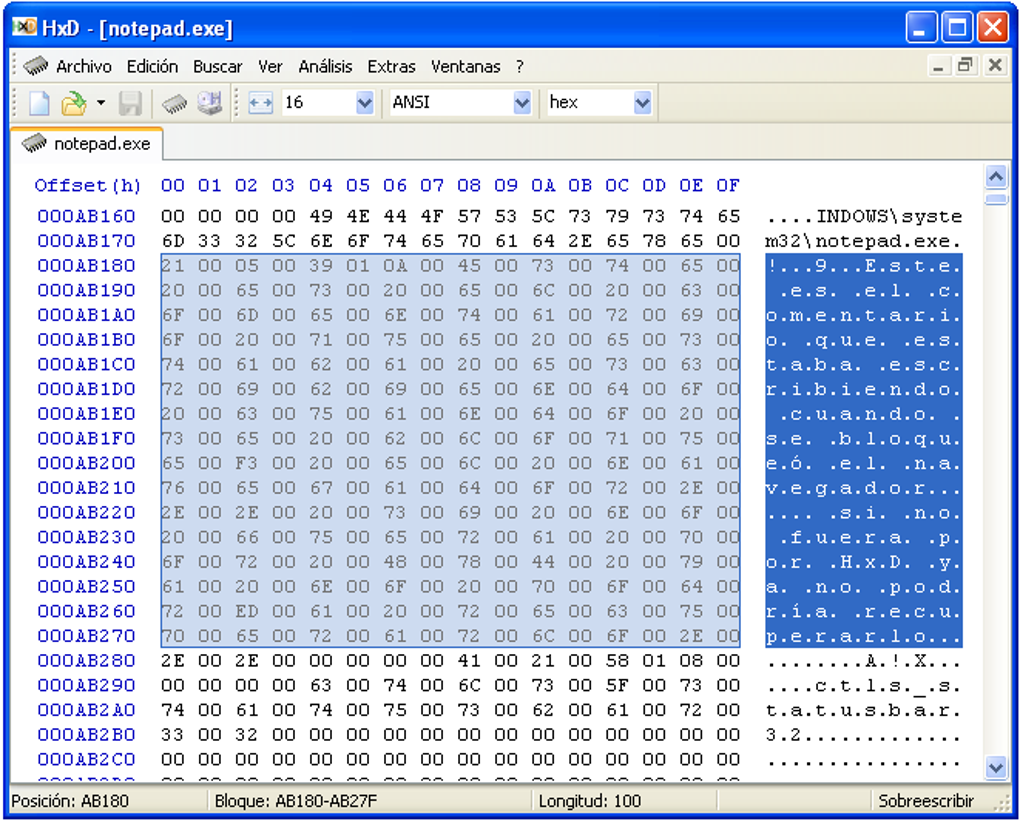
HxD’s interface is meticulously designed for clarity and efficiency. The main window presents a grid displaying the file’s contents in hexadecimal and ASCII representations. This dual view simplifies the identification and modification of data, enabling both textual and binary interpretations. Several key features enhance the user experience:
-
Multiple View Styles: Users can customize the display to suit their preferences, selecting from various view styles like bytes, words, double words, and quads. These options represent data in different sizes and formats (binary, hexadecimal, decimal, octal, floating-point), providing flexibility based on the context of the data being analyzed.
-
Multiple Editor Windows: HxD allows opening multiple editor windows simultaneously, permitting the comparison and manipulation of multiple files or different sections of the same file. This parallel editing feature enhances workflow when dealing with complex projects or intricate binary file structures.
-
Bookmarks and Go-To Offset: The “Go-to offset” command allows rapid navigation to a specific position within the file using its offset address. Bookmarks provide a more intuitive approach, allowing the user to mark important locations for easy and fast access later on.
-
Extensive Editing Options: Beyond basic hex editing, the program allows modification of data using diverse formats, including single-precision and double-precision floating-point numbers (IEEE 754 standard). This feature caters to developers working with files containing numerical data in specific formats.
-
Clipboard Integration: Seamless integration with the clipboard allows users to copy and paste data between HxD and other applications, fostering a smooth workflow.
Advanced Features and Applications
HxD’s advanced capabilities extend its usefulness beyond basic hex editing:
-
Data Analysis: HxD can be used for rudimentary statistical analysis of byte distribution within files. This functionality can be valuable for identifying patterns, analyzing data structures, or investigating the characteristics of various file formats.
-
Patching Programs: The ability to directly edit executable files (EXE, DLL) makes HxD useful for patching programs or games. However, it’s critical to exercise caution, as incorrect modifications can lead to program instability or crashes. Always back up files before undertaking such edits.
-
Data Recovery: HxD’s raw disk editing feature, combined with its robust search and data manipulation capabilities, makes it a valuable tool in data recovery efforts. Careful and expert use can help recover lost files or repair damaged disks.
-
Software Development: HxD is a valuable asset in software development, allowing direct manipulation of binary data structures, debugging, and testing. It serves as a powerful tool for examining the inner workings of programs and understanding their memory organization.
-
Reverse Engineering: HxD can be used in conjunction with other reverse engineering tools to analyze and understand the functionality of compiled software. Its ability to view data in different formats and dissect binary structures aids in deciphering program logic.
Safety and Security Considerations
HxD’s safety is a crucial aspect to consider. While it’s a powerful tool, misuse can lead to unintended consequences. The following points address essential safety measures:
-
Backup Your Files: Always create backups of any files before editing them with HxD, especially when dealing with crucial system files or irreplaceable data. This precaution safeguards against potential errors during editing that might corrupt or destroy data.
-
Understanding File Systems: When working with raw disk editing, a comprehensive understanding of file systems is vital. Incorrect modifications to disk sectors or partition tables can lead to data loss or render the drive inaccessible.
-
Exercise Caution with Executable Files: Modifying executable files requires meticulous attention to detail and a deep understanding of assembly language or the program’s structure. Incorrect changes can lead to program instability or system crashes.
-
Virus Scanning: It is recommended to download HxD only from official sources to minimize the risk of malware contamination. Once downloaded, scanning it with reputable antivirus software provides an additional layer of security.
-
Responsible Use: The capabilities of HxD should be used responsibly and ethically. Misuse for malicious purposes, such as creating or modifying malicious software, is strictly prohibited and carries legal repercussions.
HxD Alternatives and Conclusion
While HxD stands as a powerful and popular choice, several other hexadecimal editors exist, each with its own strengths and weaknesses. These alternatives cater to different needs and preferences. The selection of a hex editor often depends on individual requirements and familiarity with specific features.
In conclusion, HxD Hex Editor is a robust and versatile tool offering exceptional performance and a comprehensive feature set. Its ease of use, coupled with its powerful capabilities, makes it an invaluable asset for programmers, data recovery specialists, and anyone requiring precise manipulation of binary data. However, responsible and informed use is paramount to ensure data safety and prevent potential harm. Always remember to back up your files before undertaking any edits, particularly when working with system-level files or critical data.
File Information
- License: “Free”
- Latest update: “May 23, 2023”
- Platform: “Windows”
- OS: “Windows Vista”
- Language: “English”
- Downloads: “153.4K”
- Size: “3.35 MB”


