
ImageForge, a program that once held a place in the hearts (and hard drives) of many Windows users, represents a fascinating snapshot of digital image editing software from a bygone era. While no longer actively developed or supported, its legacy lingers, offering a glimpse into the evolution of graphic design tools and the technological landscape of the late 20th and early 21st centuries. This article delves into the history, features, and impact of ImageForge, exploring its strengths, weaknesses, and its place within the broader context of software development and user experience.
ImageForge: A Product Overview
ImageForge was a trial-version graphics editor for Windows, categorized under Design & Photography software and more specifically, Graphics Editors. Developed by Cursorarts, it achieved a notable level of popularity, especially considering its limitations as a trialware application with a final update dating back to June 17, 2012. This suggests a period of active use, followed by a cessation of development, leaving it a relic of a previous technological era. Its compatibility with Windows 95 and prior versions underscores its historical context, highlighting its presence during the formative years of widespread personal computer usage and digital image manipulation.
The software boasted a relatively modest size (6.77 MB), a testament to the resource constraints of the time. This small footprint contributed to its accessibility, particularly on systems with limited storage capacity. Its popularity extended across various geographical locations, including the United States, Thailand, and Pakistan, suggesting a global reach beyond its origin and development environment. The program’s interface and functionality likely appealed to users who needed a simpler, less resource-intensive alternative to more complex professional-grade image editing software.
Despite being primarily noted for its use as a trial version, ImageForge accumulated a considerable number of installations. By 2012, it had garnered 26,022 installations, with 12 downloads in the week leading up to its feature on the platform. This demonstrates a level of sustained interest and usage among users who either found its trial version sufficient for their needs or considered it a stepping stone toward more advanced software solutions.
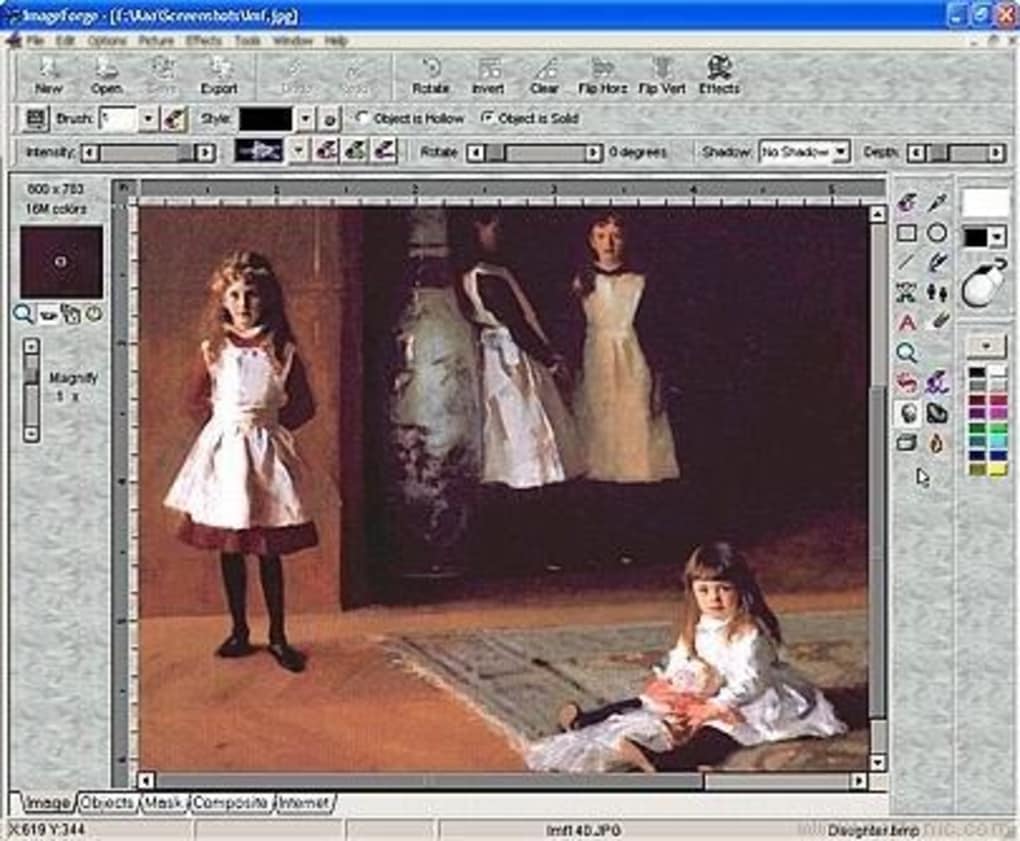
ImageForge’s Strengths and Weaknesses: User Perspective
User reviews from 2014 offer valuable insight into the user experience with ImageForge. One user, recalling its beta version from the 1990s, praised its features as “impressive,” suggesting a strong first impression and positive initial engagement. However, they also noted a lack of a red-eye correction feature, a common and almost expected feature in even basic photo editors of that time and later. This highlights the trade-offs users might have faced: powerful features for its time versus the omission of certain functionalities now considered standard.
Another user described the software as “easy to use and powerful,” further reinforcing its user-friendly interface and capabilities, particularly within the constraints of its era. This positive feedback emphasizes ImageForge’s ability to balance simplicity with functionality, appealing to users who might have been intimidated by the complexity of professional image editing suites. The lack of stated cons from this user underscores a positive experience, suggesting that the software met their requirements effectively. However, the lack of substantial updates and ongoing support may have limited its long-term viability and user base.
ImageForge in the Broader Context of Software Evolution
The discontinuation of ImageForge’s development reflects the rapid pace of technological advancement in the software industry. More advanced image editing programs, like Adobe Photoshop, continually evolved, incorporating features like red-eye correction, advanced layers, masking tools, and non-destructive editing, pushing the boundaries of what was possible. ImageForge, despite its initial positive reception, could not keep pace with this rapid innovation. Its limitations in features and lack of ongoing updates made it less competitive compared to the more feature-rich and actively-developed alternatives.
ImageForge’s existence highlights several key aspects of software development and its lifecycle. The availability of trial versions was, and still is, a common strategy for software companies to introduce their products to a broader user base. This allows potential users to evaluate the software’s features and functionality before committing to a purchase. However, for ImageForge, the lack of a full-fledged, paid version likely hampered its long-term sustainability. The dependence on a trial model could have limited its financial capacity for sustained development and innovation, contributing to its eventual discontinuation.
ImageForge’s Legacy and its Place in History
While ImageForge is no longer available for download or actively supported, its existence represents a significant milestone in the history of digital image editing software. It served as a stepping stone for many users who were entering the world of digital image manipulation, providing a user-friendly introduction to the technology. Its relative simplicity and modest system requirements made it accessible to a wider audience than more demanding professional-grade software.
The comparison of ImageForge to its contemporary and later competitors like Adobe Photoshop highlights the immense advancements in software technology. Photoshop’s continuous development, integration of new features, and ongoing support allowed it to remain relevant and competitive. In contrast, ImageForge’s fixed functionality and lack of updates cemented its place as a software of a specific era, a product representing a moment in the evolution of image editing technology. This is not necessarily a criticism, but rather an observation of the relentless pace of change in the tech world.
ImageForge’s history is a reminder of the transient nature of software and the importance of ongoing development and support. While its time in the spotlight was relatively brief, its impact on users who encountered it during its active development period is undeniable. The memories associated with the software and its impact on the digital artwork created with it remain, even if the program itself has faded into the annals of software history. Its legacy is not one of grand innovation, but rather of accessibility and a simple, functional user experience that served its purpose within a specific technological context. It stands as a representative of many software products that have played important roles for their users, only to be superseded by more advanced and capable alternatives.
File Information
- License: “Trial version”
- Version: “3.60”
- Latest update: “June 17, 2012”
- Platform: “Windows”
- OS: “Windows 95”
- Language: “English”
- Downloads: “6K”
- Size: “6.77 MB”


