
In the ever-evolving landscape of video games, few titles manage to capture the heart, challenge the mind, and demand genuine cooperation quite like “It Takes Two.” Developed by the visionary team at Hazelight Studios, a name synonymous with groundbreaking co-op experiences, this unique action-adventure platformer transcends typical genre boundaries. Released in 2021, it quickly garnered critical acclaim, including the prestigious Game of the Year award, for its innovative design, compelling narrative, and unwavering commitment to player teamwork. At its core, “It Takes Two” is a vibrant, fantastical odyssey born from a mundane, yet deeply relatable, problem: a failing marriage. Players are thrust into the miniature shoes of Cody and May, a bickering couple on the brink of divorce, who are magically transformed into living dolls by their daughter’s tearful wish. What follows is an imaginative, emotionally resonant journey through a surreal world, where every obstacle, every puzzle, and every enemy serves as a metaphor for the challenges and complexities of their relationship.
Far from being a mere backdrop, the narrative is intricately woven into the very fabric of the gameplay, making “It Takes Two” an experience that is both profoundly personal and exhilaratingly interactive. Unlike many games that offer optional multiplayer, this title is exclusively designed for two players, demanding constant communication, coordination, and mutual problem-solving. It’s a game that doesn’t just encourage co-op; it mandates it, turning collaboration into the ultimate reward. From the clever implementation of its “Friend’s Pass” system, allowing two people to play with only one purchase, to the constantly evolving and character-specific abilities, “It Takes Two” is a masterclass in cooperative game design. It’s an adventure that isn’t just about saving a marriage within the game’s fiction, but often, subtly, encourages a deeper connection and understanding between the players themselves. For those seeking a truly shared gaming experience that blends heartfelt storytelling with inventive mechanics, “It Takes Two” stands as an unmissable and unforgettable triumph.
A Marital Meltdown, Miniature Mayhem, and the Magic of Cooperation
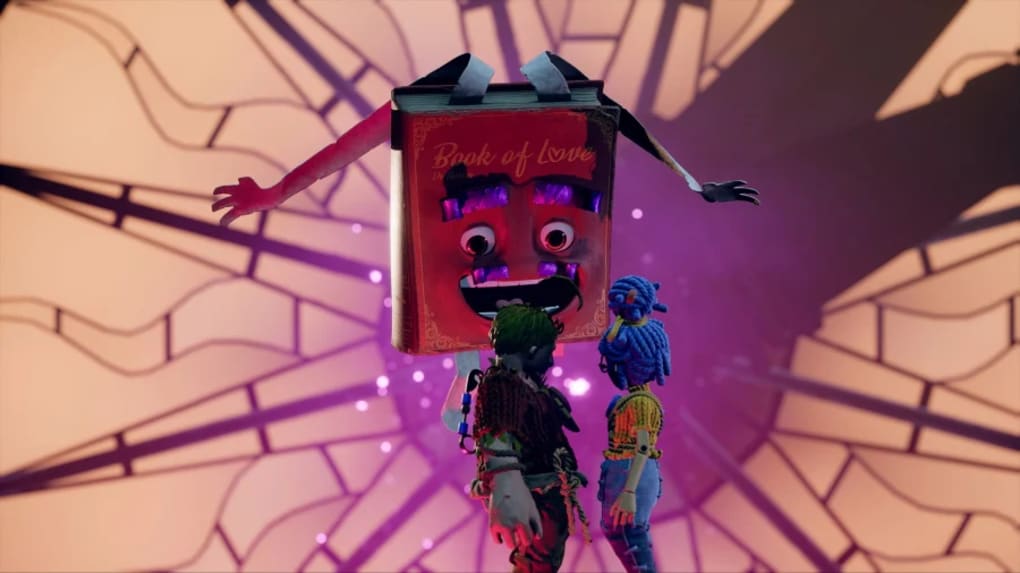
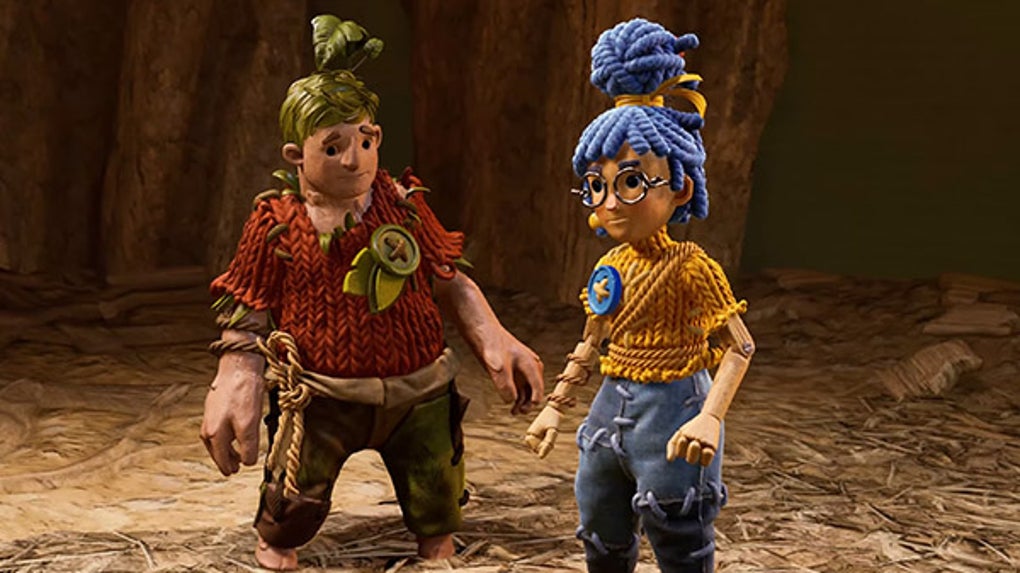
At the heart of “It Takes Two” lies a story that, while fantastical in its execution, is grounded in a very real and often painful human experience: the breakdown of a relationship. Cody and May are introduced as a couple whose love has dwindled, replaced by bickering, resentment, and a profound sense of emotional distance. Their decision to divorce casts a shadow over their young daughter, Rose, who, heartbroken and desperate, makes a wish for her parents to reconcile. This wish, fueled by pure childhood longing, manifests through a magical talking book named Dr. Hakim – a self-proclaimed “Book of Love” – and transforms Cody and May into miniature, handcrafted dolls. Cody becomes a wooden figure, while May is reimagined as a clay doll, each reflecting a part of their personalities or even how they perceive themselves.
This transformation is the catalyst for their extraordinary journey. Stripped of their human forms and forced into a world that now looms impossibly large, they must navigate a series of challenges orchestrated by Dr. Hakim, all designed to mend their fractured bond. The narrative isn’t simply a framing device; it’s an active participant in the gameplay. Every environment they traverse, every boss they confront, and every puzzle they solve directly relates to an aspect of their shared history or the emotional baggage they carry. For instance, an early level sees them trapped in their shed, an area symbolizing Cody’s neglected hobbies and May’s unfulfilled ambitions. Later, they venture into a giant, abandoned treehouse, a place brimming with childhood dreams and memories that contrast sharply with their adult disillusionment. The game deftly uses these settings to externalize internal conflicts, prompting players not just to solve a puzzle, but to understand the underlying emotional significance. This innovative approach ensures that players are constantly engaged with the story’s emotional core, feeling the weight of Cody and May’s predicament while simultaneously enjoying the playful and imaginative gameplay. It’s a testament to Hazelight’s storytelling prowess that a game about saving a marriage through platforming and puzzle-solving feels genuinely profound and heartwarming, avoiding cliché by integrating its message into every interactive moment.
More Than Just a Storybook: The World of ‘It Takes Two’
The imaginative transformation of Cody and May into miniature dolls opens up a universe of creative possibilities for the game’s environments. What were once mundane household objects or familiar outdoor spaces become epic landscapes fraught with peril and wonder. A dusty shed transforms into a sprawling industrial complex, complete with dangerous machinery and oversized tools. A backyard garden becomes a vibrant, hostile jungle teeming with angry wasps and mischievous squirrels. A child’s bedroom turns into a cosmic playground, with planets made of toys and stars that twinkle with imagination.

This shrinking of the protagonists isn’t just a visual gimmick; it fundamentally alters the scale and perception of their world. Every common item, from a rusty nail to a broken vacuum cleaner, is reimagined as an interactive element or a formidable obstacle. The game’s vibrant art style and meticulous attention to detail bring these fantastical renditions to life, immersing players in a truly unique aesthetic. Instead of simply being backdrops, these environments are characters in themselves, each with its own theme, challenges, and personality. They are filled with interactive elements that encourage exploration beyond the main path – secret passages, hidden pathways, and a wealth of surprising details that reward curiosity. This constant sense of discovery, combined with the sheer visual spectacle of a miniature world, makes the journey through “It Takes Two” an endlessly engaging experience. Players don’t just progress through levels; they delve into fantastical dioramas, each crafted with a sense of wonder and designed to both delight and challenge.
The Unparalleled Co-op Experience: Designed for Synergy
“It Takes Two” isn’t merely a game that offers a co-op mode; it is a game built from the ground up for two players, making cooperation its beating heart and defining characteristic. This unwavering commitment to a shared experience is a hallmark of Hazelight Studios, as seen in their previous titles like “A Way Out” and “Brothers - A Tale of Two Sons.” However, “It Takes Two” elevates this philosophy to new heights, crafting an adventure where every single puzzle, every platforming sequence, and every enemy encounter necessitates simultaneous, coordinated action from both players. There is no single-player option, nor is there an AI companion; if you want to play, you need a partner. This strict design choice is not a limitation, but rather a profound strength, forcing players to communicate, strategize, and truly rely on each other in ways few other games demand.
Hazelight understands that requiring two copies of a game for a co-op experience can be a barrier, which is why they ingeniously implemented the “Friend’s Pass” system. This allows one player to purchase the game and then invite a second player to join their adventure for free, whether locally on the same screen or online. This thoughtful feature makes “It Takes Two” incredibly accessible, removing financial hurdles and underscoring the developer’s desire for everyone to experience the magic of shared play.
The true genius of “It Takes Two”’s co-op design lies in its dynamic and constantly evolving gameplay mechanics. Cody and May are rarely equipped with the same abilities for long. As they enter a new chapter or area, their powers shift dramatically, tailored specifically to the challenges of that environment. For example, in the shed, Cody might gain the ability to shoot nails from his body, while May receives a hammer to bash and activate mechanisms. In another section, Cody may manipulate sap to create explosive reactions, while May wields a match to ignite them. This constant rotation of unique, character-specific skills ensures that the gameplay never grows stale. Players are continuously forced to adapt, learn new mechanics, and, most importantly, figure out how their distinct abilities combine to overcome obstacles. It’s not about each player performing identical tasks, but about them complementing each other, their individual actions merging into a synergistic whole. This design philosophy creates a deeply engaging and often hilarious experience, as players fumble, experiment, and ultimately triumph through collaborative effort. The success of “It Takes Two” is a powerful argument for the unique depth and connection that only a truly dedicated co-op game can offer.
A Symphony of Skills: How Abilities Drive the Adventure
The innovative approach to player abilities in “It Takes Two” is arguably its most defining and brilliant characteristic. Unlike many co-op games where characters might have slightly different weapon types or cosmetic variations, Cody and May consistently receive completely distinct and often asymmetrical skill sets. These abilities are not permanent upgrades; they are contextual tools, acquired at the beginning of each major chapter and then swapped out for entirely new ones as the narrative progresses. This brilliant design choice serves several crucial purposes, all geared towards maximizing player engagement and fostering genuine teamwork.
Firstly, it ensures unparalleled gameplay variety. Just as players start to master one set of mechanics – perhaps Cody using honey to slow enemies and May shooting seeds to sprout platforms – they are introduced to an entirely new paradigm in the next section. This constant reinvention keeps the experience fresh and prevents any single gameplay loop from becoming repetitive. Players are always learning, always adapting, and always surprised by what new powers await them.
Secondly, and most importantly, this dynamic ability system inherently necessitates deep collaboration. Every puzzle, every environmental traversal, and every boss encounter is meticulously designed around the specific, complementary skills Cody and May possess at that moment. There is no path for solo progression; one character’s ability is often useless without the other’s. For instance, May might need to activate a switch with her anti-gravity boots, while Cody simultaneously uses a sap gun to weigh down a platform. Or Cody might create an explosive with his sap, which May then ignites with her match. This forces players into constant communication, requiring them to verbalize their actions, strategize their moves, and synchronize their timings. The intellectual challenge of deciphering how two distinct skill sets combine to overcome an obstacle is immense, and the satisfaction derived from successfully executing a complex, collaborative solution is incredibly rewarding. It fosters a genuine sense of partnership, where both players are equally essential to progress, turning what could be a simple platformer into a continuous masterclass in cooperative problem-solving. This ever-changing toolkit not only propels the narrative forward but also serves as a brilliant metaphor for Cody and May’s evolving relationship – learning to adapt, rely on each other, and combine their strengths to overcome life’s hurdles.
Beyond the Main Quest: Exploration and Engagement
While “It Takes Two” offers a rich, linear narrative experience, it also understands the value of player agency and discovery within its meticulously crafted worlds. Unlike many adventure games that might litter their environments with hidden collectibles to gather, Hazelight takes a different, more interactive approach. Instead of inert items to tick off a list, “It Takes Two” encourages players to explore its vibrant environments for something far more engaging: minigames.
These minigames are scattered throughout the fantastical levels, often tucked away in corners or behind optional pathways, rewarding players for their curiosity and willingness to deviate from the main objective. From competitive whack-a-mole and remote-control car racing to more abstract challenges like a musical memory game or a competitive flight simulator, these diversions are numerous and varied. They provide delightful breaks from the primary platforming and puzzle-solving, offering moments of lighthearted competition or playful relaxation between more intense narrative segments. The inclusion of these minigames reinforces the game’s overall message of shared experience; they are typically two-player activities designed for fun, adding another layer to the cooperative (or sometimes playfully competitive) dynamic between players. They contribute significantly to the game’s charm and replayability, offering additional objectives and memorable moments beyond the core story, making every nook and cranny of the miniature world worth investigating. This decision to replace traditional collectibles with interactive experiences aligns perfectly with the game’s emphasis on player interaction and shared joy.
Art Style and Presentation
The visual and auditory presentation of “It Takes Two” is as crucial to its success as its innovative gameplay. The game boasts a distinct, vibrant, and imaginative art style that perfectly complements its whimsical premise. Characters, environments, and objects are rendered with a colorful, almost handcrafted aesthetic, perfectly embodying the “living doll” concept. From the rich textures of May’s clay body to the woody grain of Cody’s figure, every detail contributes to the immersive fantasy.
The design philosophy ensures that even the most mundane household items are transformed into visually spectacular game elements. A simple vacuum cleaner becomes a monstrous boss with a personality, and discarded toys morph into sentient beings that guide or hinder the protagonists. The environments themselves are masterclasses in imaginative world-building, bursting with saturated colors and intricate details that beg to be explored. The lighting, animations, and particle effects all contribute to a sense of dynamism and magic, making the world feel alive and reactive to the players’ actions. This visual splendor is paired with exceptional voice acting that brings Cody, May, and the eccentric Dr. Hakim to life, imbuing them with personality and emotional depth. The soundtrack, a blend of whimsical tunes and emotionally resonant scores, perfectly punctuates the adventure, shifting seamlessly between playful exploration, tense boss battles, and poignant narrative moments. The overall presentation ensures that “It Takes Two” is not just a joy to play, but also a feast for the senses, enhancing the emotional impact and the sense of wonder at every turn.
Strengths, Limitations, and the Lasting Impact
“It Takes Two” has firmly cemented its place as a modern classic, and its strengths are manifold and undeniable. Foremost among them is its unparalleled commitment to the cooperative gameplay experience. Hazelight’s philosophy of building a game exclusively for two players shines through in every meticulously designed puzzle, every inventive platforming challenge, and every integrated narrative beat. The constantly evolving, asymmetrical abilities for Cody and May ensure that gameplay remains fresh, engaging, and genuinely collaborative throughout its entire runtime, preventing any sense of repetition or stagnation. This ingenious design fosters true teamwork and communication between players, making for a deeply satisfying shared adventure. Furthermore, the game’s vibrant, imaginative environments and charming art style are consistently delightful, transforming ordinary settings into extraordinary playgrounds. The seamless integration of narrative themes with gameplay mechanics is another significant triumph, ensuring that players are emotionally invested in Cody and May’s journey to repair their relationship. The thoughtful inclusion of the “Friend’s Pass” also deserves commendation for making this unique co-op experience accessible to a wider audience.
However, no game is without its limitations. One common point of discussion among players is the absence of difficulty settings. While this choice likely aims to keep the experience approachable for all skill levels and ensure the narrative remains central, some veteran gamers might find certain sections lacking in a substantial challenge. Coupled with this, the pacing can occasionally feel inconsistent; some sections of the game feel wonderfully tight and concise, while others can stretch on for a bit longer than necessary, potentially impacting the overall flow. The “co-op only” nature, while a core strength, can also be viewed as a limitation for those who prefer to game solo or might struggle to find a dedicated partner. The game’s reliance on a partner means it’s not an experience everyone can jump into at any time. Despite these minor criticisms, it’s important to recognize that these elements are often byproducts of the game’s bold and uncompromising design choices.
The lasting impact of “It Takes Two” is significant. It serves as a powerful testament to the untapped potential of truly dedicated co-op gaming, proving that shared experiences can be just as rich, complex, and emotionally resonant as single-player epics. It has set a new benchmark for cooperative design, influencing future titles and inspiring developers to think more creatively about how players can interact and collaborate. Beyond its mechanical brilliance, the game’s heartwarming story about communication, compromise, and rekindling connection resonates deeply with players, making it more than just a game, but an emotional journey that can foster real-world connection between those who play it together. For anyone seeking an unforgettable, shared adventure that combines inventive gameplay with a touching narrative, “It Takes Two” is an essential play.
PhanMemFree may receive a referral fee if you click or buy any of the products featured here. Your review for It Takes Two Thank you for your review! Program review Your program review has been submitted successfully. Submit review In PhanMemFree we scan all the files hosted on our platform to assess and avoid any potential harm for your device. Our team performs checks each time a new file is uploaded and periodically reviews files to confirm or update its status. This comprehensive process allows us to set a status for any downloadable file as follows: Clean It’s extremely likely that this software program is clean. What does this mean? We have scanned the file and URLs associated with this software program in more than 50 of the world’s leading antivirus services; no possible threat has been detected. Warning This software program is potentially malicious or may contain unwanted bundled software. Why is the software program still available? Based on our scan system, we have determined that these flags are possibly false positives. What is a false positive? It means a benign program is wrongfully flagged as malicious due to an overly broad detection signature or algorithm used in an antivirus program. We’d like to highlight that from time to time, we may miss a potentially malicious software program. To continue promising you a malware-free catalog of programs and apps, our team has integrated a Report Software feature in every catalog page that loops your feedback back to us. Flag any particular issues you may encounter and PhanMemFree will address those concerns as soon as possible. About Us PhanMemFree Info Help & Support Jobs Editorial Guidelines Advertising Monetization solutions for Publishers Upload and Manage your Software Software Policy Advertising Opportunities Legal DMCA Legal Information Terms of use Privacy Policy Cookie Policy Cookie settings Social media PhanMemFree in: عربي Deutsch English Español Français Bahasa Indonesia Italiano 日本語 한국어 Nederlands Polski Português Русский Svenska ภาษาไทย Türkçe Tiếng Việt 中文 Copyright PHANMEMFREE INTERNATIONAL S.A. © 1997–2025 — All rights reserved.
File Information
- License: “Full”
- Version: “varies-with-devices”
- Latest update: “June 14, 2023”
- Platform: “Windows”
- OS: “Windows 8.1”
- Language: “English”
- Downloads: “39.8K”


