
Jiangmin Antivirus, once a prominent player in the antivirus landscape, represents a bygone era of security software. While no longer actively developed or updated, its legacy provides a fascinating glimpse into the evolution of antivirus technology. This review examines its features, strengths, and weaknesses, offering insights into its historical context and comparing it to modern security solutions.
Historical Context and Functionality
Released in the late 2000s, Jiangmin Antivirus targeted Windows-based systems, aiming to provide comprehensive protection against a range of online threats. Its core functionality revolved around several key components:
-
Multi-faceted Scanning: The software offered various scan modes, allowing users to tailor the depth and speed of their system scans. Users could opt for quick scans focusing on frequently accessed directories (like “My Documents” and temporary internet files) or comprehensive full-system scans. The flexibility in scan options catered to different user needs and system performance constraints.
-
Real-time Protection: Beyond scheduled scans, Jiangmin Antivirus included real-time monitoring capabilities across multiple vectors. This encompassed file access, email communication, web browsing activity, instant messaging interactions, and script execution. This multi-pronged approach attempted to detect and neutralize threats in real-time, preventing infections before they could establish themselves.
-
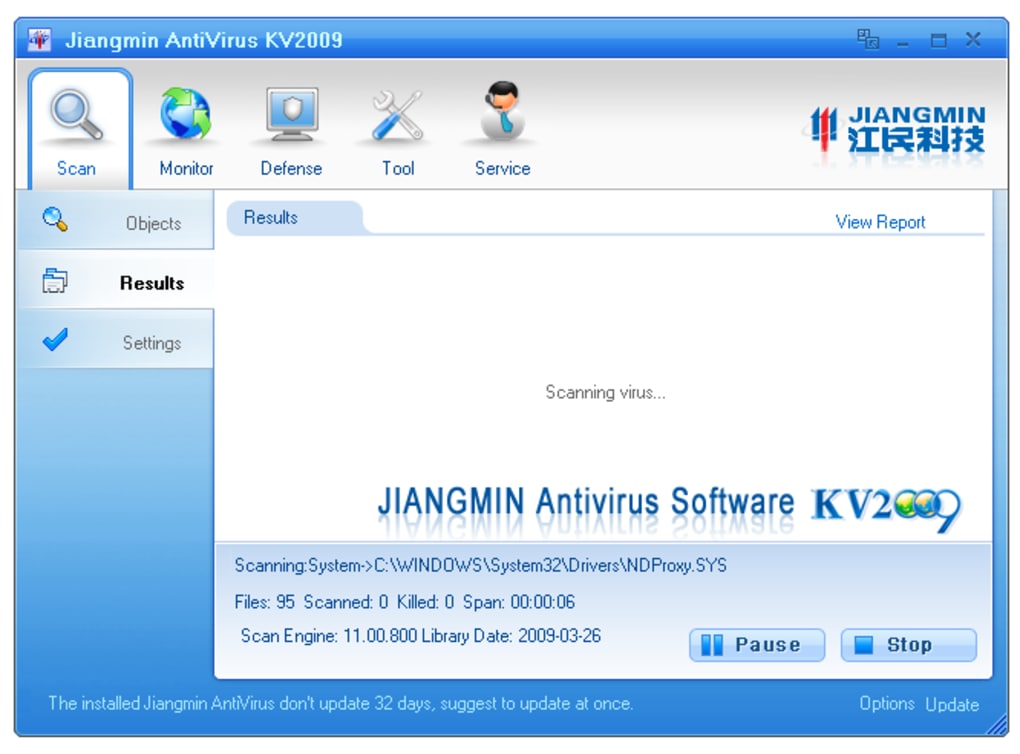
User Interface and Usability: The software featured a user interface considered “nicely designed” in its time, although the settings menu was criticized for being overly complex and crammed with information. The lack of system tray minimization was a significant drawback, forcing the main application window to remain visible even when not actively in use. This design choice, common in older antivirus software, compromised user experience and screen real estate.
Strengths and Limitations
Jiangmin Antivirus, despite its age, presented several advantages within its operational context:
-
Complete Antivirus Suite: It aimed to be a complete security solution, incorporating several essential features expected from modern antivirus software. This included multiple scan types, real-time monitoring, and attempts to address various threat vectors.
-
Diverse Scan Options: The variety of scanning options catered to users with differing needs and technical expertise. The ability to focus on specific folders or perform a full system scan provided flexibility absent in some simpler solutions.
-
Real-time Monitoring across Multiple Vectors: The real-time protection encompassed key areas where malware often attempts to infiltrate systems. This multi-layered approach was a commendable attempt to proactively identify and neutralize threats.
However, the software also suffered from critical limitations that severely hampered its usability and efficacy:
-
System Tray Minimization Absence: The inability to minimize the application to the system tray was a major usability issue. This constantly occupied screen real estate and disrupted workflow, a significant drawback for many users. Modern antivirus solutions universally incorporate this feature, demonstrating how user experience has been prioritized over the years.
-
Confusing Settings Menu: The poorly organized settings menu presented a significant barrier to users, making configuration a tedious and potentially frustrating task. The sheer volume of information presented in a small window overwhelmed users, hindering efficient customization.
- Lack of Ongoing Updates and Support: The most crucial limitation is the absence of ongoing updates and support. Antivirus software requires constant updates to remain effective against constantly evolving threats. Jiangmin Antivirus’s lack of updates renders it obsolete and vulnerable to modern malware. This is a critical factor that renders it entirely unsuitable for use in today’s digital environment.
Comparison with Modern Antivirus Solutions
Comparing Jiangmin Antivirus to modern antivirus solutions reveals a stark contrast in functionality, features, and overall effectiveness. Modern antivirus software boasts several advancements:
-
Proactive Threat Detection: Modern solutions employ advanced techniques like machine learning and heuristic analysis to proactively detect and neutralize emerging threats, even those unseen before. Jiangmin Antivirus relied largely on signature-based detection, making it far less effective against zero-day exploits.
-
Enhanced User Experience: User interfaces have undergone significant improvement, becoming more intuitive and user-friendly. Modern solutions seamlessly integrate into the operating system, providing clear and concise information without overwhelming the user.
-
Multi-platform Compatibility: Modern antivirus solutions often support multiple operating systems (Windows, macOS, Android, iOS), catering to a wider user base. Jiangmin Antivirus’s Windows-only focus limits its applicability.
-
Cloud-Based Protection: Many modern antivirus solutions leverage cloud-based technologies to enhance threat detection and response. This allows for faster identification of new threats and improved overall performance.
-
Integrated Security Features: Modern antivirus suites often incorporate additional security features like firewalls, VPNs, password managers, and anti-phishing tools, providing comprehensive protection against a broader range of online threats.
The absence of these essential features highlights the significant gap between Jiangmin Antivirus and modern security software. While Jiangmin Antivirus attempted to offer comprehensive protection within its time, it lacks the advanced capabilities and ongoing support necessary to compete effectively in today’s threat landscape.
Conclusion: A Relic of the Past
Jiangmin Antivirus serves as a historical artifact in the evolution of antivirus technology. Its features, while ambitious for its era, are significantly outmatched by modern solutions. The lack of updates, confusing interface, and absence of crucial features like system tray minimization render it completely unsuitable for use in a contemporary environment. Anyone considering using Jiangmin Antivirus should prioritize modern, actively maintained antivirus solutions that offer comprehensive protection, advanced threat detection, and a user-friendly experience. This review highlights the rapid advancements in cybersecurity and underscores the importance of consistently updating and upgrading security software to ensure adequate protection against the ever-evolving landscape of digital threats. The legacy of Jiangmin Antivirus serves as a reminder of the continuous evolution required in the fight against malware and cyberattacks.
File Information
- License: “Trial version”
- Version: “kv2009”
- Latest update: “April 27, 2009”
- Platform: “Windows”
- OS: “Windows 2000”
- Language: “English”
- Downloads: “6.4K”
- Size: “39.76 MB”


