
Kazaa Lite, a resurrected version of the infamous Kazaa Media Desktop, occupies a unique space in the history of peer-to-peer (P2P) file sharing. While the original Kazaa was notorious for its bundled spyware and adware, Kazaa Lite aimed to offer a cleaner, more streamlined experience. This article delves into the history, functionality, and legacy of Kazaa Lite, exploring its strengths and weaknesses within the context of the evolving digital landscape. The program itself is no longer available for download, but understanding its role helps illuminate the trajectory of P2P technology and the enduring appeal of decentralized file sharing.
The Rise and Fall (and Resurrection) of Kazaa
The early 2000s witnessed the explosion of file-sharing networks, with Napster leading the charge before facing legal challenges. Kazaa emerged as a prominent successor, leveraging the FastTrack protocol for its decentralized network. However, Kazaa’s popularity was intertwined with controversy. The software frequently bundled adware and spyware, compromising user privacy and security. This led to widespread criticism and legal battles, ultimately contributing to its decline.
Kazaa Lite represented an attempt to rectify the shortcomings of its predecessor. Developed by independent developers, it aimed to strip away the unwanted components, providing a “clean” Kazaa experience. This “cleaned” version removed the adware, spyware, and intrusive advertising that plagued the original Kazaa Media Desktop. The core functionality remained largely the same, offering users access to a vast network of shared files. However, this “resurrection” was not officially supported by the original Kazaa developers, making it an unsupported program operating outside the purview of any official support or update channels.
Kazaa Lite’s Functionality and Features
Kazaa Lite built upon the original Kazaa’s fundamental architecture, retaining the basic functionality of searching for and downloading files from other users on the FastTrack network. The key difference, as previously mentioned, was the removal of the bundled malware and advertising. Beyond this core functionality, Kazaa Lite developers often incorporated additional features through plugins and modifications.
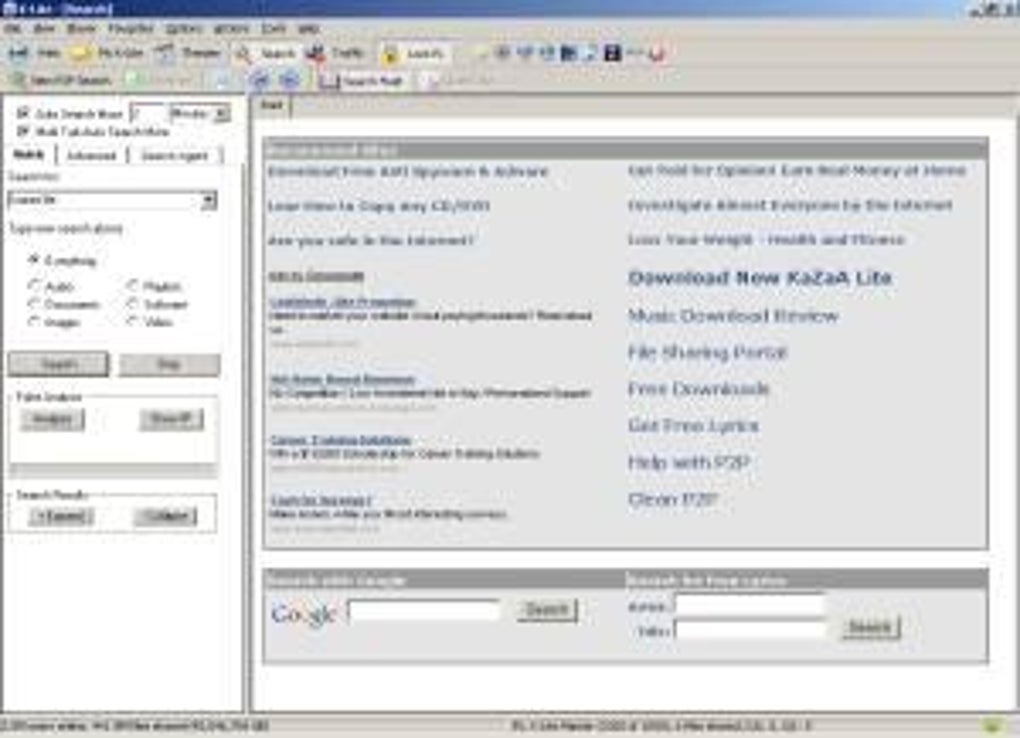
One notable enhancement was the inclusion of improved download management tools. These features sometimes included intelligent download accelerators that optimized download speeds and prioritized important files. The inclusion of functionality like a “fake file analyzer” attempted to filter out corrupted or malicious files, although the reliability of such features in a largely unregulated P2P environment was debatable. Furthermore, some versions integrated IP blockers, aiming to enhance user privacy by restricting access to specific IP addresses.
The user interface, while largely retaining the familiarity of the original Kazaa, often received aesthetic updates and improvements through community contributions. This contributed to Kazaa Lite’s continued appeal, as users sought a more modern and visually appealing interface compared to the dated design of its predecessor.
The inclusion of support for Magnetic and Sig2Dat links was another significant enhancement. This allowed users to download files that were verified, reducing the chances of encountering fake or corrupted files. This addition addressed a significant problem within the P2P ecosystem – the proliferation of misleading or malicious files disguised as legitimate content.
The Challenges of Using Kazaa Lite
Despite its improvements, Kazaa Lite faced several challenges stemming from its unsupported nature. The absence of official support meant that users had to rely on community forums and online resources for troubleshooting and assistance. Bug fixes and security patches were infrequent and often came from the community rather than official developers.
The lack of updates also rendered Kazaa Lite increasingly incompatible with newer operating systems. Users often encountered compatibility issues, requiring workarounds and adjustments to run the software on modern machines. This limitation progressively excluded users who were unable or unwilling to invest the time and effort to make the software functional on their systems.
Furthermore, the user base of Kazaa Lite was significantly smaller than the original Kazaa’s. This meant that the availability of files was reduced, making it challenging to find specific content. The smaller community also impacted the level of support available for the software.
Another considerable risk was the potential for encountering malicious files. While Kazaa Lite attempted to mitigate this risk through features like the fake file analyzer, the decentralized nature of P2P networks inherently makes it difficult to completely eliminate this threat. Users had to exercise caution and employ additional security measures to protect themselves against malicious downloads.
Kazaa Lite’s Place in the History of File Sharing
Kazaa Lite serves as a significant example of the evolution of peer-to-peer file sharing and the dynamics between software developers, users, and the legal landscape. It represents an attempt by the community to reclaim and improve upon a program marred by its initial shortcomings. While not without its own flaws, it showcased the resilience of the desire for decentralized file sharing.
The project highlights the limitations of unsupported software and the risks associated with relying on community-maintained applications. The lack of official support and updates inevitably resulted in increased vulnerability and a reduced user base, underscoring the importance of official support in maintaining software stability and security. The existence of Kazaa Lite, though ultimately short-lived in terms of widespread use, offered a glimpse into the possibilities and challenges of user-driven modifications and the ongoing efforts to improve the P2P experience.
The Legacy of Kazaa and the Future of File Sharing
The legacy of Kazaa, both the original and its modified versions like Kazaa Lite, is multifaceted. It highlights the significant role of P2P networks in democratizing access to information and digital content. It also serves as a cautionary tale about the potential dangers of bundled software and the importance of user privacy and security.
While Kazaa Lite is no longer available, the demand for decentralized file-sharing remains. The rise of cloud storage and streaming services has partially addressed the needs that Kazaa once met, but the underlying desire for greater control over personal data and access to a wide range of content persists.
The lessons learned from Kazaa and its successors contribute to shaping the future of file sharing. A focus on security, user privacy, and community-driven solutions are now central to the development and operation of file-sharing technologies. While the exact form of future file sharing remains to be seen, the drive toward decentralized systems and user empowerment continues to be a dominant force shaping the digital world. The story of Kazaa Lite serves as a reminder of this continuous evolution, a testament to the enduring appeal of peer-to-peer technologies and the ongoing efforts to navigate the complex interplay between technology, legality, and user needs.
File Information
- License: “Free”
- Version: “2.7”
- Latest update: “January 31, 2023”
- Platform: “Windows”
- OS: “Windows ME”
- Language: “English”
- Downloads: “121.5K”
- Size: “5.47 MB”


