
In the increasingly interconnected digital world, communication applications serve as essential bridges, linking individuals across vast geographical distances and diverse cultural landscapes. Among the myriad of platforms vying for user attention, LetsChat emerges as a distinctive player, particularly tailored for the African market. Designed not merely as a utilitarian tool for sending messages, but as a vibrant ecosystem for social interaction and authentic self-expression, LetsChat positions itself as a crucial conduit for maintaining existing relationships and forging new ones within its specific demographic. This comprehensive review delves into the architecture, features, user experience, and market standing of LetsChat, offering an in-depth perspective on its functionality and appeal.
The Rise of LetsChat: Connecting Communities
LetsChat is presented as a free, online messaging application with a clear mission: to facilitate seamless communication and social engagement primarily for users across Africa. In a continent characterized by rapidly expanding digital infrastructure and a burgeoning youth population, the demand for accessible and culturally relevant social platforms is paramount. LetsChat aims to fill this void, offering a localized experience that resonates with its target audience. The application understands that staying connected goes beyond mere text exchanges; it encompasses sharing life’s moments, exploring new perspectives, and fostering a sense of community.
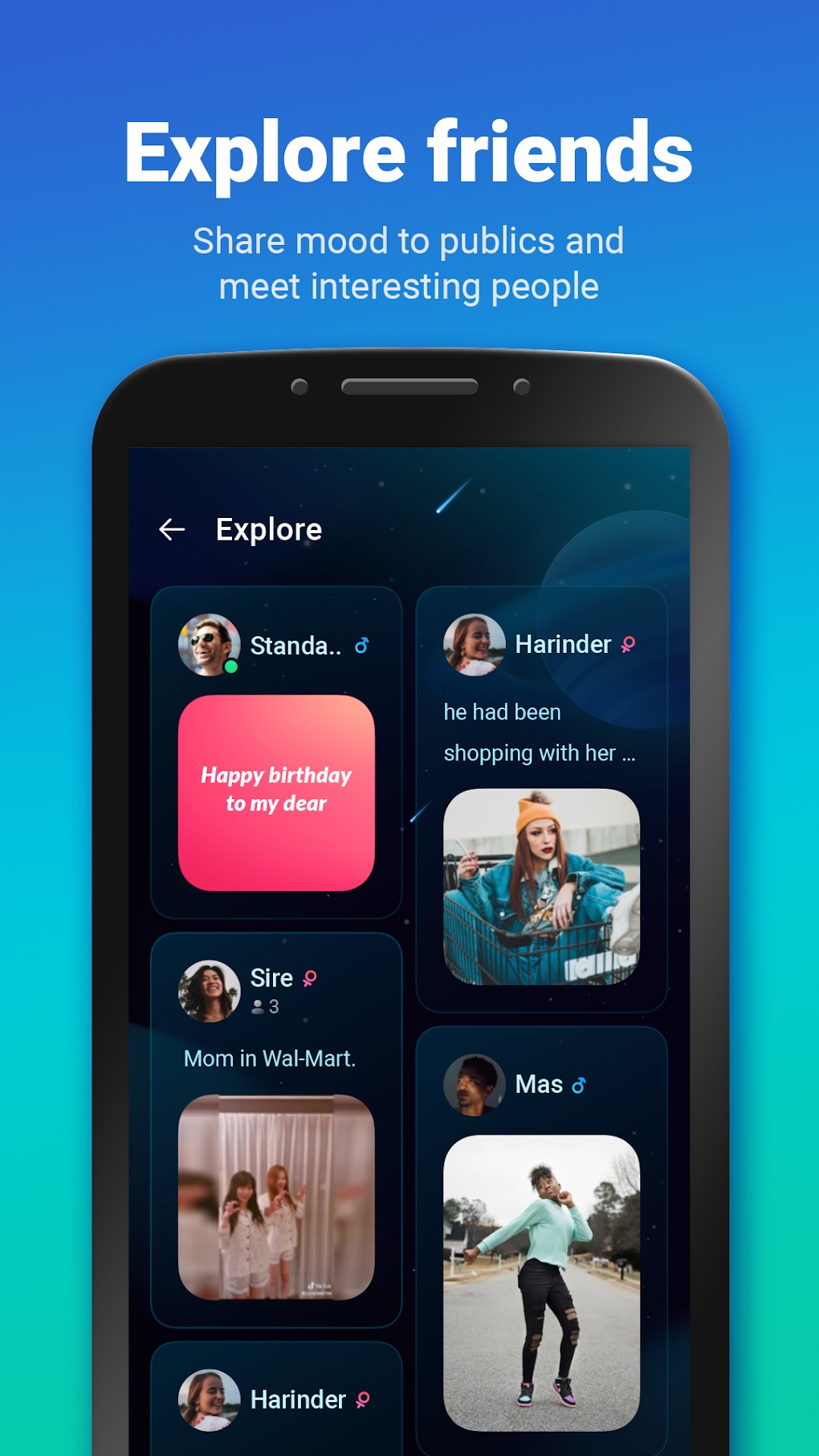
From its inception, LetsChat appears to have been developed with an eye towards bridging existing social circles while simultaneously encouraging the expansion of one’s network. This dual focus is critical in regions where digital adoption is often accompanied by a strong emphasis on community and interpersonal ties. Users are empowered to share their daily activities, milestones, and personal narratives with friends and family, while also gaining insight into the lives and experiences of others. This reciprocal sharing model is fundamental to the app’s design, creating a dynamic environment where thousands of individuals can simultaneously share real-life moments, thereby enriching their digital tapestry and fostering a collective sense of belonging. The essence of LetsChat lies in its ambition to be more than just a messaging service; it aspires to be a digital town square, a community hub, and a personal diary all rolled into one, tailored specifically to the unique social dynamics and communication preferences prevalent in Africa.
A Niche for African Users
The explicit focus on African users is a defining characteristic of LetsChat. This demographic-specific targeting suggests a potential understanding of local communication habits, technological constraints, and cultural nuances that might not be fully addressed by globally generalized applications. While the reference content does not elaborate on the specific ways LetsChat is localized beyond its stated target, one can infer that such an approach might involve considerations for data efficiency, regional content, relevant UI/UX design, or even support for local languages and payment methods, if applicable.
In a globalized digital landscape often dominated by Western tech giants, platforms that prioritize specific regional needs can offer a more bespoke and satisfying user experience. LetsChat’s commitment to the African user base implies an effort to build a platform that feels familiar, relevant, and intrinsically valuable to its community. This strategic positioning allows LetsChat to cultivate a strong identity and foster a loyal user base by addressing requirements that might otherwise be overlooked by broader, less focused applications. The notion of expanding one’s circle of friends while retaining existing connections is particularly potent in cultures that value extended social networks and community bonds, making LetsChat’s proposition particularly appealing. The platform implicitly suggests a space where digital interactions mirror the richness and complexity of real-world relationships, adapting to the specific rhythms of life in its target regions.
Unpacking LetsChat’s Feature Set
The success of any social messaging application hinges significantly on its feature set – the tools it provides to facilitate interaction, expression, and utility. LetsChat, despite some identified drawbacks, is packed with an array of functionalities designed to enhance the user experience and encourage diverse forms of communication. These features aim to differentiate it from competitors and cater to the multi-faceted needs of modern digital users.
One of the most innovative and noteworthy features of LetsChat is its “Lifie” mode, which leverages a dual-camera setup. This functionality allows users to capture images in real-time using both the front and rear cameras simultaneously. This unique approach to photo and video capture offers a novel way to share experiences, enabling users to present both their reaction and the scene before them in a single, cohesive moment. For instance, someone attending a concert could simultaneously record their excited expression and the stage performance, creating a richer, more immersive narrative. This “Lifie” feature also supports various filters, providing creative avenues for users to personalize their captured moments and add stylistic flair, further enhancing digital expression. This emphasis on real-time, simultaneous capture speaks to a desire for authentic and comprehensive storytelling in a visually-driven digital age.
Beyond its innovative camera capabilities, LetsChat incorporates several other features aimed at improving usability and group dynamics. The application offers basic customization options, such as the ability to switch between dark mode and light mode. This not only caters to personal aesthetic preferences but also has practical implications, such as reducing eye strain in different lighting conditions and potentially conserving battery life on certain devices.
Innovative Communication Tools
Group communication is a cornerstone of any robust social app, and LetsChat offers scalable solutions for both audio and text-based interactions. The app supports group calls, allowing up to 30 participants to connect simultaneously. This capacity is ideal for smaller communities, family discussions, project teams, or study groups, providing a convenient way for multiple individuals to engage in real-time voice conversations. For larger communities, LetsChat dramatically expands its group chat capability, enabling users to invite up to 500 people into a single text-based conversation. This extensive capacity is suitable for large social clubs, community organizations, or even public forums, facilitating broad-scale information dissemination and discussion.
An interesting addition to LetsChat’s communication toolkit is the option for anonymous chat. This feature allows users to engage in conversations without revealing their identity, which can foster more candid discussions, provide a safe space for sensitive topics, or simply add an element of fun and intrigue to interactions. While anonymous features can sometimes be misused, in a well-moderated environment, they can be valuable for fostering openness and diverse perspectives.
Enhancing Digital Expression
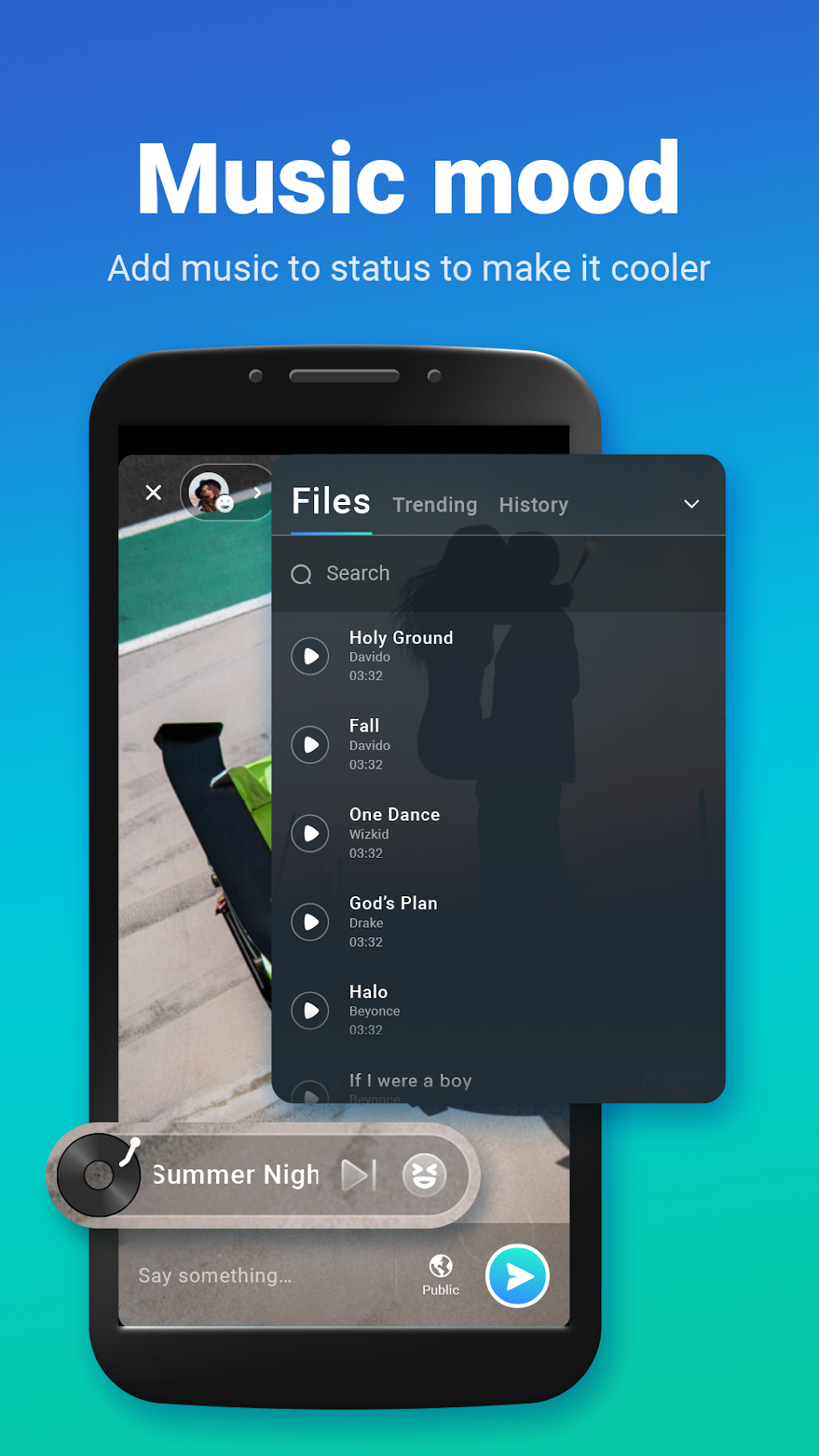
LetsChat also integrates entertainment and personalized expression directly into the platform. Users can engage in various games available within the app, providing a recreational dimension that extends beyond mere communication. This inclusion of casual gaming can serve as an icebreaker, a way to pass time, or a means to foster friendly competition among friends. Furthermore, the ability to share songs using different templates allows for a creative and personalized way for users to convey their mood, musical tastes, or messages. These templates add a visual and thematic layer to music sharing, making it more engaging than simply sending a link.
These features collectively paint a picture of LetsChat as a platform committed to providing a rich, multi-dimensional communication experience. From innovative visual storytelling with Lifie to extensive group communication tools, and from personal customization to integrated entertainment, LetsChat strives to be a comprehensive social hub. However, the true measure of these features lies in their practical application and the overarching user experience, which is not without its challenges. The vision is clearly to empower users with diverse tools for self-expression and connection, aiming to create a dynamic and engaging environment where individuals can truly express themselves and connect with others in meaningful ways.
User Experience: The Good, The Bad, and The Frustrating
A social application’s ultimate value is determined by its user experience, encompassing everything from ease of navigation to the reliability of its features and the efficacy of its support systems. LetsChat, while ambitious in its feature set and mission, presents a mixed bag of experiences for its users, characterized by both compelling strengths and significant, often frustrating, weaknesses. Understanding these facets is crucial for a balanced assessment of the platform.
Strengths in Connectivity
On the positive side, LetsChat is lauded for being a “fun and enjoyable app.” This broad descriptor points to an intuitive design, engaging features, and a lively user community that makes interactions pleasurable. The ability to invite up to 500 people for a group chat stands out as a significant advantage, demonstrating the app’s capability to handle large-scale communication, which is particularly useful for community organizing, educational purposes, or simply maintaining a vast social network. This expansive group chat functionality means that events, announcements, and discussions can reach a wide audience efficiently, fostering a strong sense of collective interaction.
Furthermore, the general sentiment that there are “a lot of features to explore” highlights the richness and depth of the application. Beyond the core messaging capabilities, the innovative Lifie camera, dual-mode options, integrated games, and music sharing templates contribute to a diverse and stimulating environment. This wealth of features ensures that users have multiple avenues for expression and interaction, preventing monotony and encouraging continuous engagement. The app’s commitment to providing various tools for connection, expression, and entertainment positions it as a versatile platform that caters to different preferences and interaction styles. For many users, the sheer variety and potential for social interaction offered by LetsChat outweigh some of its technical imperfections, making it a viable and appealing option for staying connected with their social circles.
Overcoming Technical Hurdles and Support Gaps
Despite its strengths, LetsChat is plagued by several critical downsides that significantly impact the user experience. Foremost among these are “constant crashing and the difficulty of receiving verification codes whenever you accidentally log out and want to log in again.” Constant application crashes are a severe impediment to usability, disrupting conversations, data sharing, and overall workflow. Such instability can lead to frustration, data loss, and a general erosion of user trust. An application that frequently crashes is one that users will eventually abandon, regardless of its innovative features.
Equally problematic is the issue with verification codes, which poses a significant barrier to re-accessing an account. In an age where multi-factor authentication and secure login processes are standard, a system that fails to reliably deliver verification codes creates an impassable hurdle for users attempting to log back into their accounts. This is not merely an inconvenience; it can effectively lock users out of their digital lives within the app, disconnecting them from their friends, family, and communities. The inability to log in after an accidental logout suggests fundamental flaws in the account recovery or authentication process, undermining the very purpose of a communication app.
Compounding these technical issues is the critique of “bad customer service.” The complaint that support staff “don’t take the time to help you or get back to you whenever they say they will” is a critical blow to user confidence. In a digital landscape where users expect prompt and effective assistance, unresponsive or unhelpful customer service can exacerbate frustrations caused by technical glitches. When users face significant problems like being locked out of their accounts or experiencing frequent crashes, the absence of reliable support can transform minor annoyances into insurmountable obstacles, leading to widespread dissatisfaction and negative reviews. This lack of accountability and assistance can be particularly damaging for a platform aiming to build a loyal community, as it signals a disregard for user welfare and experience.
In summary, while LetsChat offers an engaging and feature-rich environment for social interaction, its technical instability and inadequate customer support pose serious challenges. The combination of frequent crashes, login difficulties, and unresponsive assistance creates a user experience that, despite its enjoyable aspects, is often frustrating and unreliable. Addressing these core issues would be paramount for LetsChat to mature into a truly robust and trustworthy communication platform capable of retaining and growing its user base in a competitive market.
LetsChat in the Broader Social App Landscape
The digital communication arena is highly competitive, dominated by a few global giants while also hosting a myriad of niche and regional players. LetsChat enters this landscape with a distinct focus and a set of features that aim to carve out its own space. Evaluating its position requires comparing its offerings and drawbacks against the backdrop of established and emerging alternatives.
As a platform designed primarily for African users, LetsChat directly competes with global messaging behemoths like WhatsApp, Telegram, and Facebook Messenger, all of which have significant penetration in Africa. These global apps offer robust messaging, voice, and video call functionalities, often with end-to-end encryption and extensive feature sets. LetsChat’s advantage, as previously discussed, lies in its specific demographic targeting and potentially localized features, which might resonate more deeply with its intended audience than a generic global app. The “Lifie” camera and scalable group chat features are also distinctive elements that set it apart.
A Viable Alternative
Despite its acknowledged technical shortcomings – namely occasional crashes, persistent login issues, and subpar customer care – LetsChat is presented as an “excellent app for staying connected with friends and family through chat, video, and stories.” This suggests that for its dedicated users, the core value proposition of connection and expression remains strong enough to overlook or tolerate its imperfections. The app is specifically recommended to “people who are looking for an alternative to the standard social apps that are available today.” This implies that there is a segment of the user population that seeks something different, perhaps a platform with a more community-centric feel, specific features like “Lifie,” or simply a desire to diversify their digital footprint beyond the most ubiquitous options.
When considering alternatives listed in the original context, such as airG - Meet New Friends, Bunny Random Live Video Call, and Mobile Number Locator, LetsChat appears to offer a more comprehensive social messaging experience. airG, while focused on meeting new friends, typically functions more like a social discovery platform. Bunny Random Live Video Call emphasizes spontaneity and video interaction with strangers. Mobile Number Locator is a utility rather than a social app. LetsChat, in contrast, aims for a full-fledged social networking and messaging platform, enabling both existing relationship management and new connections within a broader feature ecosystem.
Its ability to invite large groups, its multimedia sharing capabilities, and its unique camera functions give it a niche appeal. For users who prioritize these specific features or who appreciate a platform designed with a regional focus, LetsChat could indeed serve as a compelling alternative to more generalized platforms. The sentiment of its users often boils down to a trade-off: enduring some technical frustrations for the unique community and features that LetsChat provides. The challenge for LetsChat, therefore, is to refine its stability and customer support to convert its current appeal into sustained loyalty and expand its user base without alienating existing members. By addressing its critical flaws, LetsChat has the potential to solidify its position as a go-to platform for digital social interaction within its target market, moving from a “good alternative” to a truly indispensable communication tool. The market is vast, and there is always room for platforms that genuinely understand and cater to specific user needs, even if they are still on a journey toward perfection.
Conclusion
LetsChat stands as an ambitious and noteworthy entry into the bustling landscape of social messaging applications, distinguished by its dedicated focus on African users and a suite of innovative features designed to foster deep connections and vibrant digital expression. From the unique dual-camera “Lifie” mode that enables immersive storytelling to extensive group communication capabilities supporting up to 500 participants, LetsChat demonstrates a clear intent to provide a rich and engaging user experience. Its integration of in-app games and customizable music sharing further enhances its appeal, transforming it into a versatile hub for both utility and entertainment.
However, the journey of LetsChat is not without its significant hurdles. The recurring issues of frequent application crashes, the frustrating difficulty in receiving essential verification codes for login, and the critically subpar customer service collectively mar an otherwise promising platform. These technical instabilities and support deficiencies pose substantial challenges to user retention and overall trust, often turning potentially enjoyable interactions into frustrating ordeals. For an application aspiring to be a primary communication channel, reliability and responsive support are not merely desirable attributes but fundamental necessities.
Despite these significant drawbacks, LetsChat maintains its position as a viable and “excellent app for staying connected” for those seeking an alternative to the more conventional social media offerings. Its targeted approach, coupled with its distinctive features, resonates with a segment of users who prioritize specific functionalities or appreciate a platform built with their regional context in mind. The app’s ability to facilitate expansive group interactions and provide diverse avenues for personal expression makes it a strong contender for community building and personalized sharing.
Ultimately, the future trajectory of LetsChat hinges on its ability to address its core operational flaws. If the developers at Zebra Technology can significantly enhance the application’s stability, streamline the login and account recovery processes, and implement a robust, responsive customer support system, LetsChat has the potential to transcend its current limitations. By rectifying these critical issues, LetsChat could solidify its standing as a powerful and indispensable tool for connection and community within its target demographic, fulfilling its promise to thousands of users looking for a tailored and engaging digital social experience. The pathway to becoming a truly dominant player requires not just innovation in features, but unwavering commitment to reliability and user satisfaction.
For further information about LetsChat or to explore other applications, you can visit Phanmemfree.org. Phanmemfree.org is dedicated to providing comprehensive reviews and download options for a wide array of software and apps, helping users make informed choices for their digital needs.
File Information
- License: “Free”
- Latest update: “January 19, 2024”
- Platform: “Android”
- OS: “Android 13.0”
- Language: “English”
- Downloads: “59.2K”
- Download Options: “Google Play”


