
In an era saturated with high-fidelity graphics and sprawling open worlds, a particular type of game emerges from time to time, choosing to delve into the human psyche with a more subtle, yet profoundly unsettling approach. Lily’s World XD, an upcoming adventure game, promises to be one such experience. It eschews traditional horror tropes for a slow-burn psychological dread, expertly blending the warm, fuzzy glow of early 2000s digital nostalgia with a creeping, invasive mystery that eventually morphs into a deeply personal horror. Set to launch into the gaming consciousness, this title from developer SonderingEmily is poised to redefine what a “haunting” game can be, taking players on a uniquely uncomfortable journey through the digital artifacts of a teenage girl’s past, only to find themselves becoming part of her present—and perhaps, her future.
The game’s premise is deceptively simple: players gain access to an early 2000s laptop belonging to a teenage girl named Lily. Through this digital window, they are invited to unravel her life, sifting through a trove of blogs, chat logs, awkward selfies, and meticulously organized (or disarmingly messy) folders. What begins as a charmingly authentic archaeological dig into the recent past—a digital diary drawn directly from the developer’s own real-life teenage years—gradually twists into something far more sinister. The genius of Lily’s World XD lies in its ability to lure the player into a sense of nostalgic comfort before pulling the rug out from under them, replacing sentimentality with a chilling sense of unease and surveillance. As players delve deeper into Lily’s digital world, the lines between observer and participant blur, leading to the unsettling realization that the digital trail is not just personal to Lily, but is becoming eerily personal to you.
The Digital Diary Unveiled: Gameplay and Narrative Mechanics
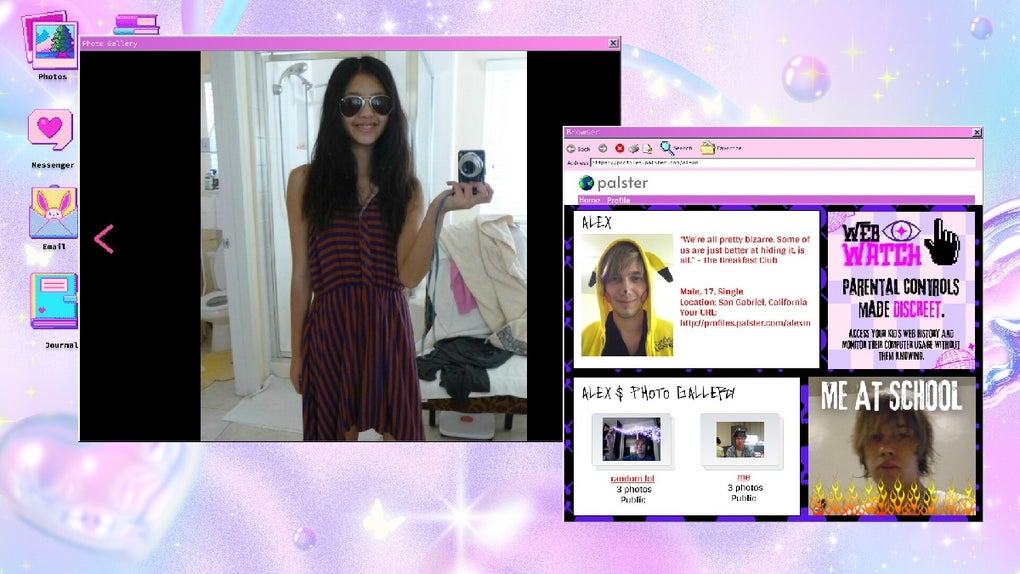
At its core, Lily’s World XD is an immersive narrative puzzle game. Players aren’t just clicking through static images; they are actively engaging with a simulated operating system from a bygone era. The aesthetics are meticulously crafted to evoke the distinct look and feel of early 2000s web design and desktop interfaces – from pixelated icons to clunky chat windows and rudimentary blog layouts. This commitment to authenticity is a significant part of its charm. The initial phases of the game are a delightful trip down memory lane for anyone who experienced the dawn of widespread personal internet usage. Players will encounter the dramatic blog entries typical of teenage angst, the quirky selfies, and the seemingly innocuous chats with friends that form the bedrock of Lily’s digital persona.
The puzzles in Lily’s World XD are ingeniously integrated into this digital environment. Instead of abstract brain-teasers, players are required to “snoop” through Lily’s files, piecing together fragments of her past. This means examining file names, reading conversations, analyzing image metadata, and even figuring out forgotten passwords. The game forces players to think like Lily, to internalize her habits, her secrets, and her relationships to unlock new areas of her digital life. It’s a compelling form of detective work, where the crime scene is a hard drive and the clues are digital breadcrumbs left by a vulnerable teenager. Interactions with old friends through simulated chat programs, deciphering hidden messages tucked away in obscure folders, and connecting disparate pieces of information all contribute to building a comprehensive picture of Lily’s world. This character-driven storytelling ensures that the player becomes deeply invested in Lily’s life, fostering a connection that will make the subsequent narrative twists all the more impactful.

Nostalgia as a Weapon: From Charm to Chills
The game’s initial charm, rooted in its nostalgic appeal, serves as a powerful narrative device. For those who grew up with the early internet, the experience is a potent blend of recognition and sentimentality. It’s a journey back to a time of dial-up modems, nascent social media, and a sense of digital frontierism. However, Lily’s World XD expertly weaponizes this nostalgia. What starts as a quaint, slightly cringeworthy exploration of a teenager’s digital life gradually undergoes a profound tonal shift. The moment the game breaks the fourth wall, when messages within Lily’s digital realm begin to address you, the player, directly, is where the true psychological horror begins to unfurl.
This breaking of the illusion of distance is not a sudden jump scare; rather, it’s a slow, insidious erosion of comfort. The realization that something within Lily’s laptop knows you aren’t Lily creates a deep, slow-burning unease. The cute and cringey aspects of her digital diary transform into something invasive and chilling. It’s the feeling of being watched, understood, and even manipulated by an unseen entity that inhabits the very digital space you’re exploring. This isn’t just about Lily’s secrets anymore; it’s about your presence, your actions, and the implications of your intrusion. The game capitalizes on the inherent vulnerability of digital existence, where our online personas and histories can be both deeply personal and alarmingly public. This transformation from charming nostalgia to unsettling surveillance is what makes Lily’s World XD a standout psychological horror experience.
The Shifting Sands of Identity: When You’re No Longer Lily
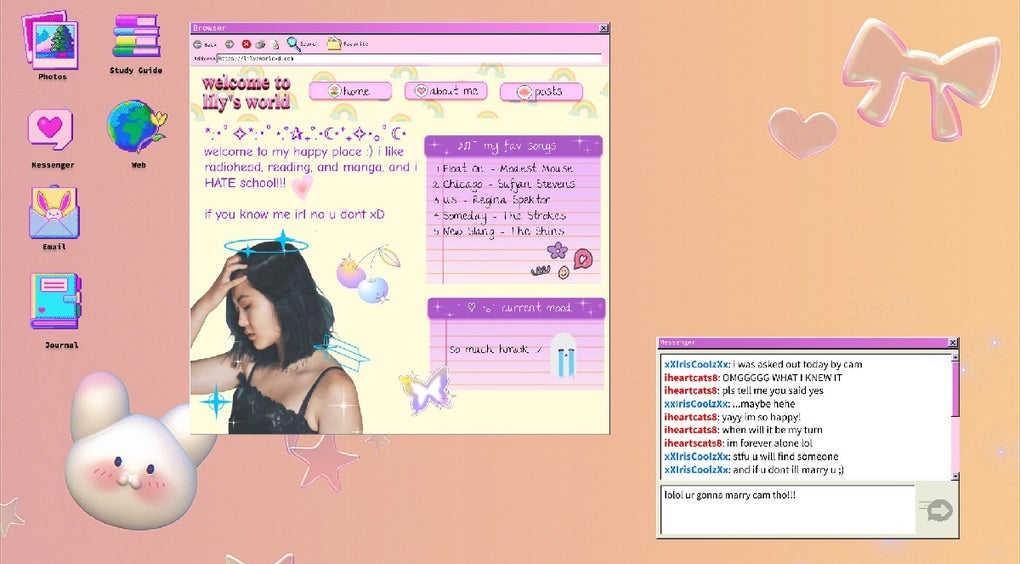
The central tension of Lily’s World XD hinges on the player’s identity within the game’s narrative. You are not Lily, but you are inhabiting her digital space, reading her most private thoughts and engaging with her digital friends. The game forces a cognitive dissonance: you are an outsider, yet you must think and act as Lily to progress. When this facade begins to crumble, and the game acknowledges your true presence, it creates a unique form of horror. It’s not about monsters jumping out of shadows, but about the terrifying possibility of losing your own identity within a digital echo chamber, or worse, being subsumed by another’s.
This is where the game truly excels at turning nostalgia into discomfort. The pixel hearts and dramatic blog posts, once endearing, become conduits for a darker, more intrusive force. The simple gameplay mechanics of navigating a desktop environment become fraught with tension, as every click, every file opened, every message read feels like a step further into a trap. The narrative isn’t just character-driven; it becomes player-driven in its horror, making your choices and your very existence within the game’s world the source of dread. For anyone who lived through the early internet, and perhaps even indulged in similar digital diaries or online personas, Lily’s World XD serves as a haunting reminder that even seemingly innocent digital spaces can hide real pain, real vulnerability, and the potential for a truly chilling sense of digital voyeurism turned personal nightmare.
The PhanMemFree Perspective on Lily’s World XD
As a platform dedicated to providing comprehensive reviews, downloads, and insights into the world of software and applications, PhanMemFree.org constantly monitors the landscape for innovative and impactful titles. Lily’s World XD, even in its unreleased state, has already garnered significant attention for its unique premise and promising execution. A game like this doesn’t just fit into existing categories; it challenges them, offering a fresh perspective on interactive storytelling and genre blending. Here’s how PhanMemFree.org might approach categorizing and discussing this anticipated release.
Adventure and Psychological Horror: A Deep Dive into Gaming Genres
PhanMemFree.org places a strong emphasis on accurate genre classification to help users discover games that align with their interests. Lily’s World XD unequivocally falls under the Adventure category, as players embark on a journey of discovery and narrative progression through an interactive environment. However, it’s crucial to specify its distinctive subgenre: Psychological Horror. Unlike conventional horror games that rely on jump scares, gore, or overt monstrous entities, Lily’s World XD derives its terror from atmospheric tension, unsettling revelations, and the slow erosion of psychological comfort. The “Horror Game For Windows 7” tag, while specific to an older OS, highlights that its themes resonate across various Windows platforms, appealing to a broad base of players looking for a cerebral scare.
The game’s design, which immerses players in a realistic, albeit dated, computer interface, leverages the familiarity of everyday digital interactions to heighten the sense of dread. The mundane becomes menacing, and the personal becomes invasive. This is the hallmark of effective psychological horror – the ability to twist the familiar into something terrifying without resorting to overt scares. The adventure aspect is integral; players aren’t passive observers but active participants in uncovering a fragmented truth, making choices that deepen their immersion and the eventual horror. The “Puzzle” element is also significant, as the game requires logical deduction and careful observation to progress, moving beyond simple exploration to intellectual engagement with the narrative. PhanMemFree.org would highlight how this blend of adventure, puzzle-solving, and psychological depth creates a uniquely impactful gaming experience, demonstrating how thoughtful design can evoke powerful emotions without relying on typical genre conventions. The emphasis on “Trail” as a related topic from the original reference also fits perfectly here, signifying the player’s journey of discovery through Lily’s digital footprints.
More Than Just a Game: A Candidate for “Best PC Games”
While “Best PC Games” is a highly competitive category on PhanMemFree.org, reserved for titles that set new benchmarks in gameplay, narrative, innovation, or cultural impact, Lily’s World XD exhibits strong potential to be a contender. Its innovative approach to storytelling, leveraging nostalgia as a springboard for psychological horror, is a testament to its originality. The game is not just an entertaining distraction; it’s an experience that encourages introspection about digital identity, online privacy, and the lasting echoes of our digital footprints. Such thematic depth elevates it beyond a mere adventure game.
The fact that it’s “Paid” signifies a commitment to a premium, curated experience, often indicative of higher production values and a focused vision. The “Full Version” license means players receive a complete narrative without microtransactions or episodic releases that might detract from the slow-burn horror experience. Its platform availability, initially for Windows and “Other platforms (1)” like Mac and PC, ensures a wider reach, allowing a diverse audience to engage with its unique narrative. PhanMemFree.org would evaluate Lily’s World XD not just on its technical merits or gameplay mechanics, but on its holistic impact: its ability to evoke strong emotions, its thematic resonance, and its potential to contribute meaningfully to the art of interactive storytelling. If the game delivers on its immense promise, it will undoubtedly earn a place among the titles that push the boundaries of what gaming can achieve, making it a strong candidate for inclusion in curated lists of the “Best PC Games.”
Exploring Digital Diaries and Social Dynamics
The very core of Lily’s World XD revolves around the intimate digital life of a teenager, making its connection to “Social” and “Diary For Windows” topics incredibly strong. The game immerses players in Lily’s world through her personal blog entries, her chat conversations with friends, and her self-recorded moments. This unfiltered access to a “digital diary” is the primary mechanism through which the narrative unfolds. It explores the early iterations of social media, the anxieties of online communication, and the often-performative nature of digital self-expression, long before the hyper-curated feeds of today’s platforms.
PhanMemFree.org recognizes the cultural significance of software and games that reflect evolving social dynamics. Lily’s World XD acts as a digital time capsule, capturing the nascent stages of online social interaction where profiles were simpler, interactions felt more direct, and the concept of online privacy was still in its infancy. The game’s premise directly engages with themes of “Social Media For Windows 10,” even though it portrays an earlier era, by highlighting the foundational anxieties that persist in our hyper-connected world. It’s a compelling look at how we construct and present our identities online, and what happens when those digital facades are exposed or manipulated. The interaction with “Friends For Windows” through chat logs is critical to understanding Lily’s relationships and the world she inhabits, providing context for the later, more sinister developments. This thematic exploration makes Lily’s World XD not just a game, but a fascinating commentary on digital anthropology and the psychology of online interaction, a subject of ongoing relevance to PhanMemFree.org’s audience interested in the broader impact of technology.
Developer Insights and Future “ARTICLES”
The developer, SonderingEmily, drawing from her “real-life teen years” to craft the authentic narrative of Lily’s World XD, is a crucial aspect of its appeal. This personal touch imbues the game with a level of genuine emotion and credibility that might be difficult to achieve otherwise. PhanMemFree.org frequently publishes “ARTICLES” that delve into game development, developer stories, and deep dives into upcoming titles. Lily’s World XD presents an excellent opportunity for such content.
Future articles could explore the challenges and inspirations behind recreating the early 2000s digital aesthetic, the psychological theories underpinning its slow-burn horror, or the process of crafting a narrative that transitions from nostalgic comfort to chilling dread. Discussions about the “simple gameplay mechanics” could highlight how less can be more, focusing on narrative impact over complex controls. Furthermore, the game’s status as “Not out yet” creates anticipation, allowing PhanMemFree.org to generate significant buzz through previews, developer interviews, and analytical pieces leading up to its “Latest update” on June 24, 2025. This allows the platform to engage its audience with insightful content that goes beyond simple game announcements, fostering a deeper understanding and appreciation for the craft involved in creating such a unique interactive experience. By spotlighting SonderingEmily’s creative vision, PhanMemFree.org can connect its audience with the human element behind the digital creation, enriching the overall gaming discourse.
Technical Specifications and Anticipation
From a technical standpoint, Lily’s World XD is designed for accessibility across various systems. While its initial listing specifies “Windows,” indicating compatibility with modern Windows operating systems, its availability on “Other platforms (1)” such as Mac and PC broadly ensures that a wide array of users can experience the game. The “varies-with-devise” specification for its license details indicates flexibility, suggesting optimization across different hardware configurations, a common practice for indie titles. The language support is remarkably comprehensive, with the game available in “English” and a multitude of other languages including Spanish, German, French, Italian, Russian, Portuguese, Dutch, Polish, Chinese, Turkish, Arabic, Czech, Korean, Greek, Hindi, Japanese, Danish, Finnish, Norwegian, and Swedish. This broad localization effort underscores the developer’s commitment to making the game globally accessible, further enhancing its potential reach and impact.
The “Latest update” listed as June 24, 2025, serves as a significant marker, likely pointing towards an anticipated release or a major developmental milestone. The current downloads of “718” and “95” last month (likely for a demo or beta version) indicate a growing community of interested players, keenly awaiting the full release. The current rating of 4.8 out of 5, based on initial feedback, also speaks volumes about the positive reception for its concept and early execution. The “Security Status” being “V” (presumably verified or safe) on PhanMemFree.org reinforces trust, ensuring users that downloading the game will be secure. This blend of technical consideration, broad accessibility, and palpable community anticipation paints a clear picture of a game poised for a significant debut, offering a unique adventure into the darker side of digital nostalgia.
Conclusion: A Haunting Reminder for the Digital Age
Lily’s World XD is shaping up to be more than just an adventure game; it’s a poignant and unsettling commentary on our digital lives. Its commitment to authenticity, drawing from the developer’s own teenage experiences, imbues it with a genuine warmth that makes the eventual descent into psychological horror all the more effective. By turning the familiar aesthetic of early 2000s internet into a source of deep unease, it offers a fresh perspective on the horror genre, proving that the most terrifying experiences can arise from the most mundane, and deeply personal, digital spaces.
For anyone who remembers the nascent days of the internet, creating digital diaries, and navigating nascent social networks, Lily’s World XD will be a profoundly resonant experience. It serves as a haunting reminder that even within the seemingly innocent pixel hearts and dramatic blog entries of our past, real pain, real vulnerability, and unforeseen dangers can lurk. As we increasingly live our lives online, sharing fragments of ourselves across various platforms, a game like Lily’s World XD becomes particularly salient, urging us to consider the echoes we leave behind and the unseen eyes that might one day find them. With its slow-burn mystery, character-driven narrative, and simple yet effective gameplay mechanics, this upcoming title from SonderingEmily is set to be a memorable journey into the heart of digital darkness, a must-play for those seeking a truly unique and unsettling adventure. PhanMemFree.org eagerly anticipates its full release and the discussions it will undoubtedly spark about the evolving nature of horror, nostalgia, and our inescapable digital selves.
File Information
- License: “Full”
- Version: “varies-with-devise”
- Latest update: “June 24, 2025”
- Platform: “Windows”
- OS: “Windows 7”
- Language: “English”
- Downloads: “766”


