
In the vast landscape of casual PC gaming, certain titles emerge that capture the imagination and provide an enduring source of entertainment. Among these cherished classics, Luxor stands tall, a beacon of addictive puzzle action set against the majestic backdrop of ancient Egypt. Developed by GameHouse, Luxor isn’t just a game; it’s an immersive experience that transports players to a world of pharaohs, pyramids, and mystical scarabs, challenging them with its deceptively simple yet profoundly engaging mechanics.
Originally released as a trial version for Windows, Luxor quickly garnered a loyal following, demonstrating that compelling gameplay transcends the need for elaborate narratives or cutting-edge graphics. Its success paved the way for numerous sequels and spin-offs, cementing its status as a cornerstone of the marble-popping puzzle genre. For millions worldwide, Luxor represents countless hours of strategic thinking, rapid reflexes, and the satisfying thrill of clearing an ever-advancing chain of magical spheres.
The game’s premise is elegantly straightforward: players take on the role of a guardian, wielding a mystical winged scarab, tasked with preventing chains of multi-colored spheres from reaching the sacred pyramids. This seemingly simple objective belies a deep strategic layer that requires careful planning, quick decision-making, and often, a touch of luck. Its intuitive controls and clear objectives make it accessible to players of all ages and skill levels, yet its increasing difficulty ensures that even seasoned puzzle enthusiasts will find a formidable challenge.
Luxor’s journey began humbly, introduced to the digital world through platforms like PhanMemFree. As a trial version, it offered a tantalizing glimpse into its full potential, quickly converting curious players into devoted fans. Its early accessibility on Windows 98 and prior versions broadened its reach, making it a household name in casual gaming. The game’s lasting appeal is a testament to its masterfully crafted gameplay loop and the universally appealing theme of ancient Egyptian mythology.
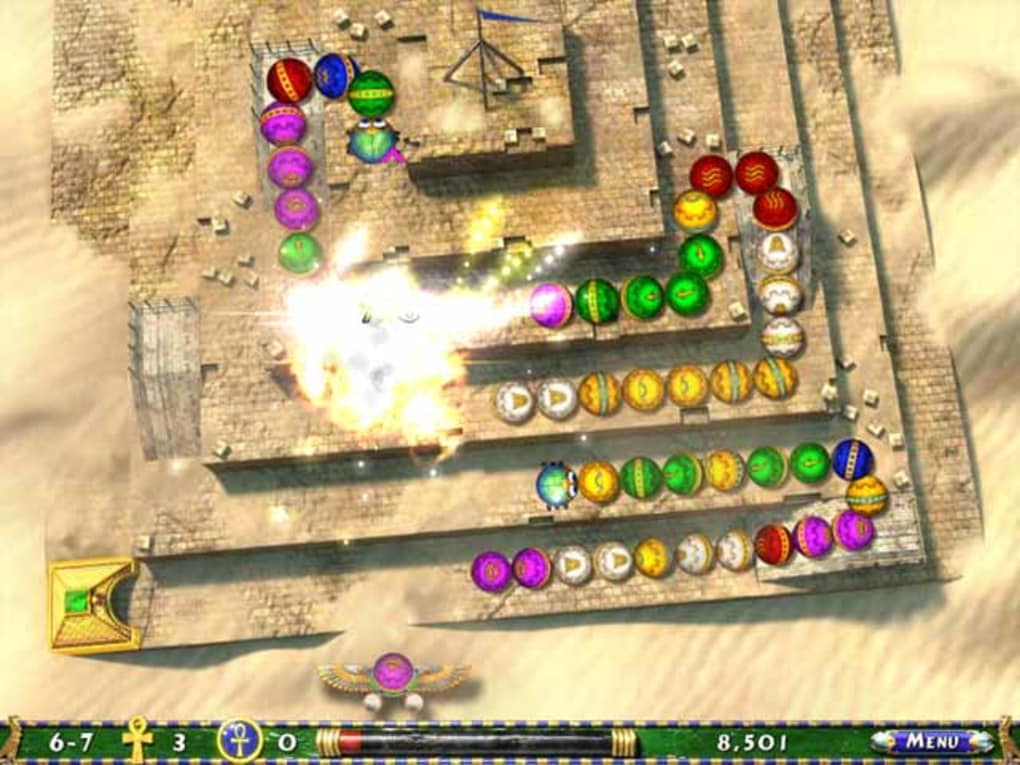
The Allure of Ancient Egypt: Gameplay and Mechanics
At the heart of Luxor’s enduring popularity lies its captivating gameplay, a perfect blend of action and strategy. Players control a mystical winged scarab situated at the bottom of the screen, capable of launching colored spheres towards an ever-moving chain of similar spheres snaking its way across the intricately designed levels. The primary objective is to create matches of three or more spheres of the same color, causing them to disappear and shortening the overall chain. The ultimate goal is to eliminate all spheres before the leading sphere reaches the sacred pyramid at the end of its winding path.
The visual presentation of Luxor plays a crucial role in its immersive quality. Each of the “88 gorgeously rendered levels” is a feast for the eyes, meticulously crafted to evoke the grandeur and mystery of ancient Egypt. Players find themselves navigating through lush oases, sprawling temple complexes, and the shadow of colossal pyramids, each environment brought to life with vibrant colors, intricate hieroglyphics, and atmospheric sound design. The attention to detail in the backgrounds isn’t merely aesthetic; it contributes significantly to the overall sense of adventure and wonder, making each level feel like a new archaeological discovery. The pathways for the spheres are creatively integrated into the scenery, sometimes disappearing behind pillars or emerging from hidden caverns, adding an element of surprise and demanding constant vigilance from the player.
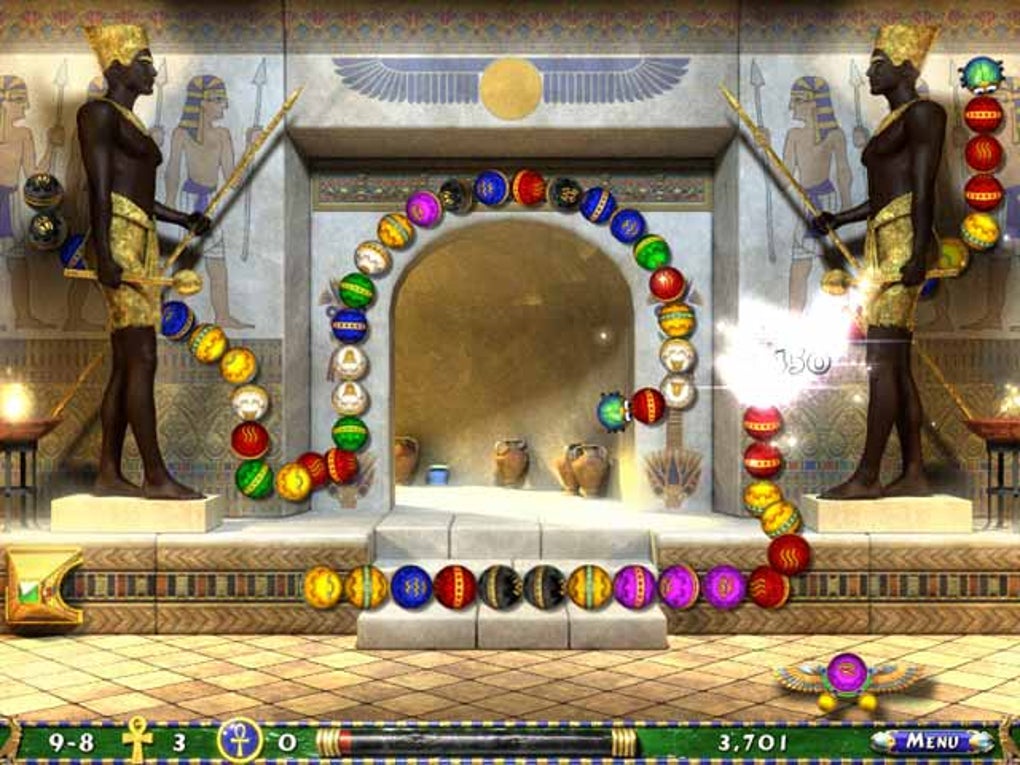
Success in Luxor hinges on more than just quick reactions; it requires a keen eye for patterns and a strategic mind. Players must anticipate the movement of the sphere chain, prioritizing critical matches and setting up chain reactions that can clear large sections of spheres at once. The scarab’s position can be shifted horizontally, allowing for precise aiming even as the game intensifies. As spheres are cleared, the chain may recoil, creating temporary gaps that can be exploited for strategic shots. Missing a critical shot or failing to clear spheres quickly enough can lead to an accelerating sense of panic as the chain inches closer to its dreaded destination, keeping players on the edge of their seats.
One of the clever design choices in Luxor is the varying speeds and patterns of the sphere chains. Some levels feature multiple entry points for spheres, requiring players to manage several chains simultaneously. Others introduce obstacles or winding paths that obscure parts of the chain, demanding players to remember the sequence of colors to plan their shots effectively. This diversity in level design ensures that the gameplay remains fresh and challenging, preventing monotony and encouraging players to adapt their strategies with each new stage. The combination of easy-to-learn controls and progressively complex challenges is a hallmark of excellent puzzle game design, and Luxor executes it flawlessly.
Unveiling the Features: What Makes Luxor a Classic?
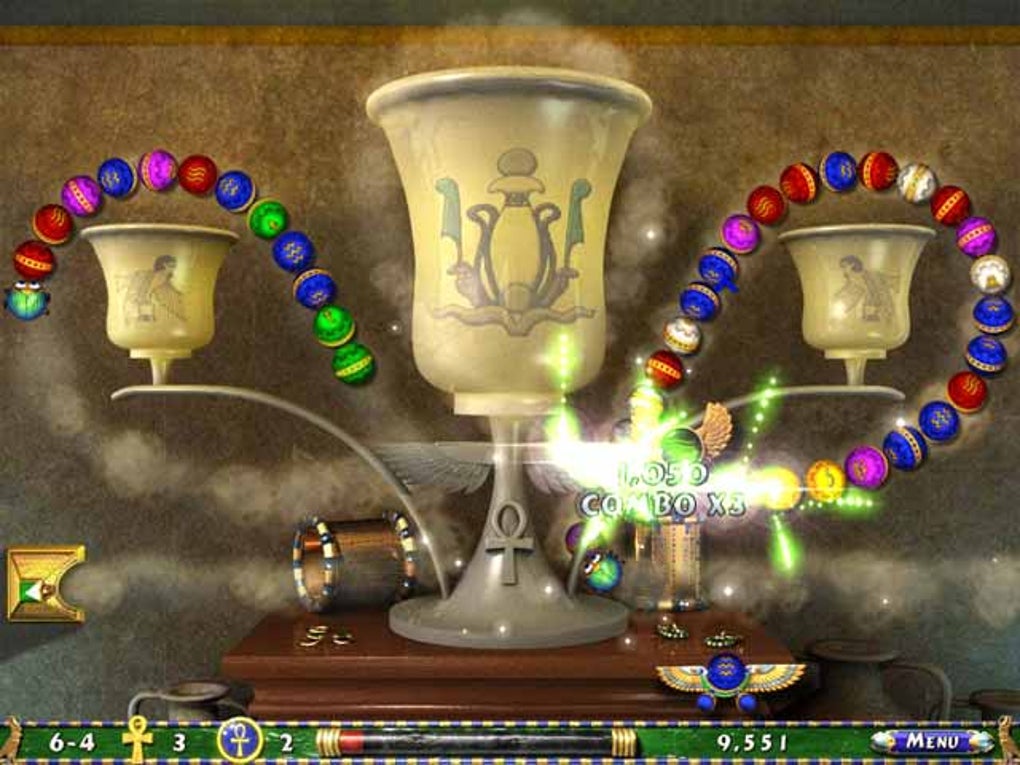
Luxor’s enduring appeal isn’t solely rooted in its core match-three mechanic; it’s significantly bolstered by a robust set of features that enhance gameplay, replayability, and overall player satisfaction. These elements coalesce to create an experience that transcends a simple time-killer, transforming it into a compelling challenge that beckons players back again and again.
Central to the dynamic gameplay are the “unique and explosive power-ups” that appear intermittently after successful matches. These power-ups are game-changers, offering players temporary advantages that can turn the tide of a challenging level. While the original description refers to Luxor 2’s power-ups, the original Luxor also features a compelling array. These typically include:
- Reverse: Briefly reverses the direction of the sphere chain, buying precious time.
- Slow: Decreases the speed of the spheres, making it easier to line up shots.
- Stop: Halts the chain entirely for a short duration.
- Wild Ball: A chameleon-like sphere that can match with any color, providing versatility.
- Lightning Bolt: Clears all spheres of a specific color from the chain.
- Explosion: Causes a small area of spheres to detonate, regardless of color.
- Scarab Multiplier: Increases the score awarded for subsequent matches.
Mastering the use of these power-ups is key to success, as strategically deploying them can prevent imminent defeat or set up impressive chain reactions. The excitement of seeing a beneficial power-up drop and the rush to collect and use it effectively adds a layer of action and urgency to the puzzle-solving.
Luxor thoughtfully caters to a wide spectrum of players by offering “four difficulty levels.” This inclusion is vital for the game’s broad appeal. Beginners can start with easier settings, learning the mechanics and enjoying the ancient Egyptian atmosphere without feeling overwhelmed. As their skills grow, they can gradually increase the difficulty, finding new challenges and refining their strategies. This scalability ensures that Luxor remains engaging for casual players seeking relaxation as well as dedicated puzzle solvers yearning for a true test of their abilities. The ability to choose one’s challenge level makes Luxor accessible to “families everywhere,” allowing different members of a household to enjoy the game at their own pace.
Adding to the game’s replay value and sense of accomplishment are the “badges and bonus rounds.” As players progress and achieve certain milestones, they are rewarded with badges, providing a tangible sense of achievement beyond simply completing levels. Bonus rounds, often triggered by exceptional performance, offer a chance to accumulate extra points and lives in a less stressful environment, serving as a welcome respite from the main challenge and a way to boost scores. These features transform Luxor from a linear progression into a more dynamic and rewarding experience, encouraging players to revisit levels and strive for higher scores and completion rates.
Finally, the “stunning full-screen graphics” are not just a technical specification but a fundamental component of Luxor’s charm. In an era where many casual games opted for simpler, windowed presentations, Luxor committed to delivering a fully immersive visual experience. The high-resolution backdrops, fluid animations of the spheres, and the dramatic visual effects of power-ups and explosions contribute to an engaging and captivating atmosphere. This graphical fidelity, combined with an evocative soundtrack, transports players directly into the heart of ancient Egypt, making the act of matching spheres a more profound and enjoyable journey.
From Trial to Timeless: Accessibility and System Requirements
Luxor’s journey from a humble trial version to a cherished classic underscores its inherent quality and accessibility. The information provided on PhanMemFree highlights several aspects that contributed to its widespread adoption and enduring popularity, particularly in the early days of PC gaming.
As a “trial version game,” Luxor offered potential players a risk-free way to experience its addictive gameplay. This model was highly effective, allowing individuals to download and play a limited portion of the game before committing to a purchase. This hands-on preview was crucial in convincing players of the game’s quality and its ability to provide engaging entertainment, a strategy that many successful casual games of its era employed. The specific version noted in the original catalog entry was “Version 2,” with an update date of “12/22/2006,” indicating that the game continued to be refined and supported over time. However, later specifications on PhanMemFree.org show a “Latest update September 17, 2020,” suggesting ongoing compatibility checks or minor adjustments to ensure it remained playable on newer systems, a testament to its long-term viability.
One of Luxor’s most significant strengths was its modest system requirements, making it accessible to a vast audience. The game was “only available for Windows,” specifically targeting “Windows 98 and prior versions” initially. This focus on widespread compatibility for older operating systems meant that many households with basic PCs could effortlessly run and enjoy Luxor without needing significant hardware upgrades. The game’s efficiency is further emphasized by the statement that it “will require less space than the average program in the category PC games.” With a reported size of “19.25 MB,” Luxor was a lightweight application, quick to download and install, and minimally impactful on system resources. This low barrier to entry played a pivotal role in its viral spread.
The global reach of Luxor is evident in its download statistics. Since its addition to the PhanMemFree catalog in 2006, it “achieved 321,767 installations,” a remarkable number for a single game page download count. More recent figures from PhanMemFree.org indicate “123.3K Downloads” overall and “326 Last month’s downloads,” demonstrating a continued interest years after its initial release. Its popularity was particularly notable in “countries such as Indonesia, India, and United States,” highlighting its broad international appeal. The game being “available in English” also contributed to its global accessibility, reaching a diverse audience across various linguistic backgrounds.
The ease of access, combined with its engaging gameplay, made Luxor a staple in many digital game libraries. Players could download it, install it quickly, and immediately dive into the ancient Egyptian adventure. This straightforward process, free from complex installations or demanding hardware checks, contributed significantly to its “must-play for families everywhere” reputation. It was a game that could be enjoyed by almost anyone with a Windows PC, cementing its place as an accessible and beloved puzzle title.
Expanding the Pantheon: The Luxor Series and Beyond
The immense success of the original Luxor laid a fertile ground for a thriving franchise, spawning numerous sequels and spin-offs that expanded upon its core mechanics while introducing new features and narratives. This expansion cemented Luxor’s place not just as a standalone hit, but as a foundational series within the marble-popping puzzle genre.
Perhaps the most significant and well-loved successor is Luxor 2. As noted in the reference, Luxor 2 was lauded for “setting a bold new standard” and featuring “the most explosive power-ups you’ve ever seen.” Building on the original’s solid foundation, Luxor 2 introduced enhanced graphics, more intricate level designs, and a refined selection of power-ups, further elevating the action and strategic depth. It perfected the formula, offering “88 gorgeously rendered levels” and maintaining the addictive, family-friendly appeal that made the first game so popular. It demonstrated that iterative improvements could significantly deepen a player’s engagement without straying too far from the beloved original concept.
Beyond Luxor 2, the series continued to evolve. Luxor: Amun Rising (also mentioned in the alternatives, with both trial and paid versions) served as an early expansion or sequel, bringing more levels and challenges to the fans. The title itself suggests a continuation of the ancient Egyptian theme, delving deeper into the lore. Later entries like Luxor: 5th Passage further innovated, attempting to bring “3D puzzle adventure” elements into the mix, showing the developer’s willingness to experiment with perspective and visual presentation while staying true to the core gameplay.
The franchise also explored different genres, demonstrating its versatility. Luxor Mahjong (a paid full version PC game) is a prime example. While still rooted in puzzle-solving, it cleverly integrated the classic tile-matching mechanics of Mahjong with the distinct visual style and ancient Egyptian theme of Luxor. This cross-genre approach allowed the Luxor brand to reach a wider audience of puzzle enthusiasts who might prefer different types of challenges, proving the strength of its thematic identity.
The success of Luxor also highlighted the appeal of its entire subgenre, drawing comparisons and inspiring similar titles. Games like Zuma (a free colorful match-3 puzzle game, available as a trial version) are direct competitors and contemporaries that share Luxor’s core mechanics. Zuma, with its frog idol shooter and distinct art style, offered a similar experience and often appears alongside Luxor in discussions of the genre. Other notable alternatives mentioned include Zuma’s Revenge!, Tumblebugs, and Butterfly Escape, all of which capitalize on the marble-popping, chain-matching formula, often with their own unique twists on themes and power-ups. These games collectively defined an era of casual puzzle gaming, offering quick, satisfying bursts of entertainment that were easy to learn but challenging to master.
The Luxor series and its peers established a significant niche in the PC gaming market. They provided accessible, engaging experiences that didn’t demand high-end hardware or extensive learning curves, making them perfect for short play sessions or extended periods of focused puzzle-solving. The continuous stream of Luxor titles and the enduring popularity of its spiritual successors are strong indicators of the timeless appeal of guiding that mystical winged scarab, aiming for the perfect shot, and preventing the spheres from reaching their dreaded destination.
PhanMemFree’s Perspective: Why Luxor Endures
From the perspective of PhanMemFree and its vast catalog of software, Luxor stands out not merely as a game but as a cultural touchstone in casual PC gaming. Its continued presence and download activity years after its initial release underscore a profound and enduring appeal that transcends generations of players and technological advancements. The simple yet impactful user review from “dinesh” – a cascade of “AWESOME” – encapsulates the sentiments of countless players who have fallen under Luxor’s spell.
Luxor’s enduring appeal can be attributed to several critical factors that PhanMemFree.org implicitly champions through its cataloging and user engagement. Firstly, the game represents the pinnacle of accessible design. It doesn’t bombard players with complex tutorials or convoluted narratives; instead, it offers an immediate, intuitive experience. The mechanics are graspable within minutes, yet the mastery curve is satisfyingly steep, providing a constant sense of progression and challenge. This “easy to learn, hard to master” philosophy is a hallmark of successful puzzle games and a key reason why Luxor remains relevant.
Secondly, the game taps into a universal fascination with ancient Egypt. The “stunning graphics that bring the ancient pyramids and temples to life” create an immersive atmosphere that is both captivating and aesthetically pleasing. This thematic richness elevates the game beyond a mere abstract puzzle, giving it a sense of place and purpose that resonates deeply with players. The visual and auditory cues are not just functional; they are integral to the game’s identity, making each level feel like an archaeological expedition.
Thirdly, Luxor perfected the casual gaming loop. The combination of “88 gorgeously rendered levels,” “four difficulty levels,” “badges and bonus rounds,” and “unique and explosive power-ups” provides a wealth of content and replayability. Players can pick it up for a quick session or dive deep into marathon play, always finding new challenges or aiming to beat their previous scores. The “must-play for families everywhere” tag is particularly important here, as it highlights the game’s ability to entertain a broad demographic, making it a staple in many households.
PhanMemFree.org’s role in documenting and offering such titles is crucial. By providing access to the “trial version” of Luxor, it allows new generations of players to discover this classic, experiencing firsthand what made it so popular. The detailed specifications, download statistics, and user reviews on PhanMemFree offer a historical snapshot of the game’s impact and its journey through the digital landscape. The fact that the game continues to see downloads and positive user feedback on the platform speaks volumes about its timeless quality.
In conclusion, Luxor is more than just a puzzle game; it’s a testament to brilliant game design that marries simplicity with depth, action with strategy, and historical aesthetics with modern accessibility. Its legacy, nurtured and sustained by platforms like PhanMemFree.org, ensures that the mystical winged scarab will continue its fight against advancing spheres, enchanting players for many years to come and reinforcing its status as an “AWESOME” and enduring classic.
File Information
- License: “Trial version”
- Version: “2”
- Latest update: “September 17, 2020”
- Platform: “Windows”
- OS: “Windows 98 SE”
- Language: “English”
- Downloads: “123.5K”
- Size: “19.25 MB”


