
In the vast and ever-evolving landscape of digital entertainment, where hyper-realistic graphics and sprawling open worlds often dominate the conversation, a peculiar charm persists for games that dare to defy convention. M.Stain, a free horror adventure by the enigmatic developer Impostersyndrome, stands as a testament to this unconventional spirit. Released for Windows and boasting a distinctive low-poly, PS1-era aesthetic, this game doesn’t rely on cheap jump scares or grotesque imagery to instill dread. Instead, it weaves a narrative of unsettling surrealism, bizarre encounters, and a creeping sense of unease that lingers long after the credits roll. Available for download on platforms like PhanMemFree.org, M.Stain invites players into a fever dream of a world, challenging their perceptions of horror and leaving an indelible mark on their psyche.
The premise is deceptively simple: players assume the role of a nameless protagonist, a lone figure in a bustling metropolis, desperate for employment. This quest for a livelihood leads them to the doorstep of M.Stain, a mysterious businessman who offers a seemingly lucrative, high-salary position. The ink is barely dry on the contract, however, before the mundane quickly dissolves into the bizarre. What begins as a straightforward job interview morphs into a disorienting journey through an unpredictable reality, populated by characters as strange as the titular employer himself. This initial hook immediately sets the stage for a narrative that promises to deviate wildly from any expected path, a hallmark of its unique appeal.
Unveiling the Enigma: A Deep Dive into M.Stain’s World
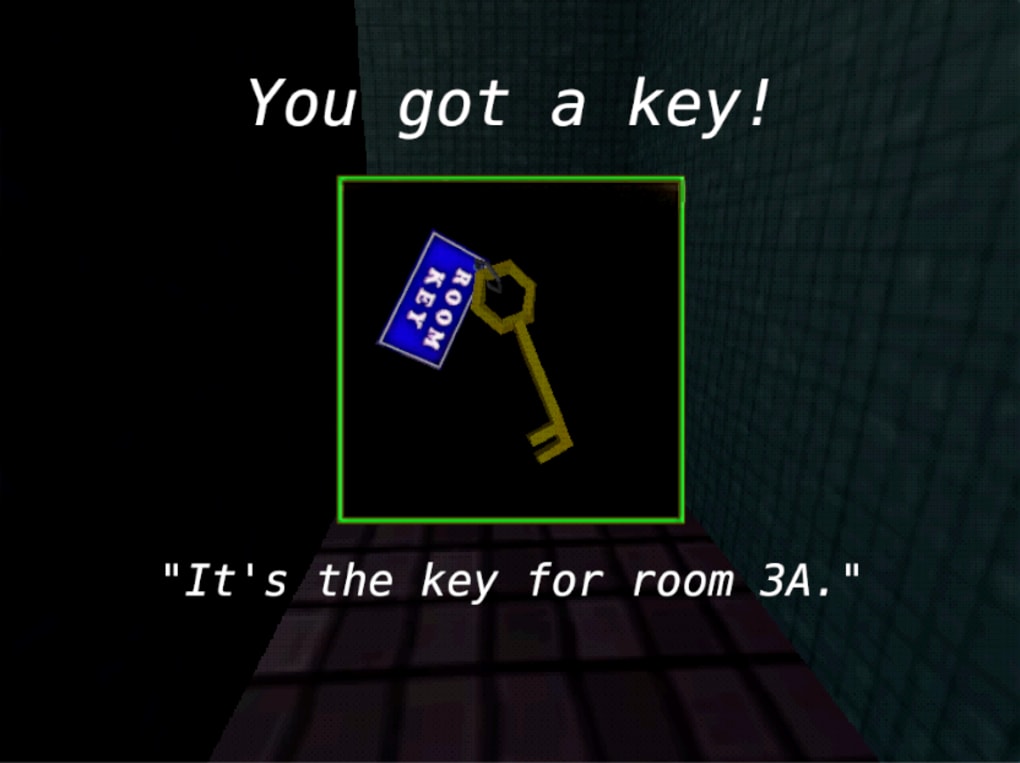
M.Stain distinguishes itself not by adherence to genre tropes, but by its deliberate subversion of them. It’s a game that operates on its own peculiar logic, inviting players to embrace the unknown and the uncanny. The horror here isn’t about blood-curdling screams or monsters lurking in the shadows; it’s about the erosion of familiar reality, the unsettling nature of the abnormal presented as normal, and the psychological discomfort derived from a world gone askew. This approach, while not for every player, carves out a niche for those seeking a truly unique and thought-provoking experience within the horror genre.
The Allure of Low-Poly Horror: Art Style and Atmosphere
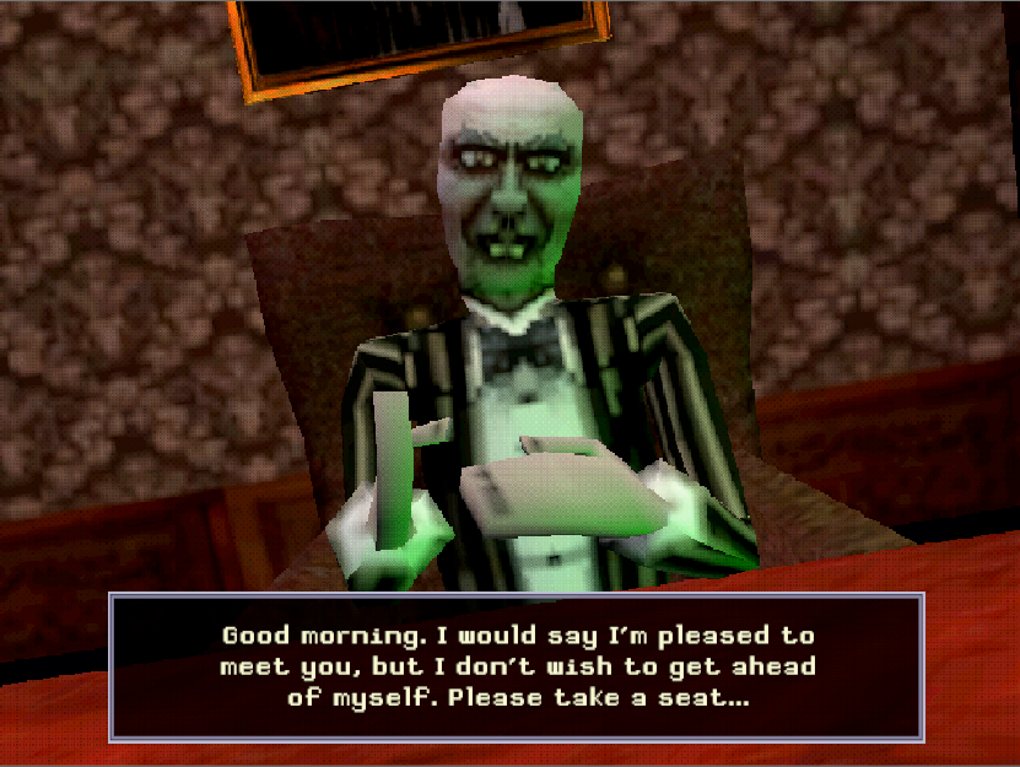
At the heart of M.Stain’s unsettling charm lies its distinctive visual presentation. The game deliberately employs low-poly graphics reminiscent of the PlayStation 1 era, a stylistic choice that immediately transports players back to the dawn of 3D gaming. Far from being a mere nostalgic nod, this aesthetic is meticulously integrated into the game’s overall design, becoming an intrinsic component of its horror. Unlike modern games striving for photorealism, M.Stain’s visuals create an inherent sense of abstraction and distortion. Characters, though identifiable, possess a blocky, angular quality that renders them inherently “off.” Their faces are often expressionless or feature grotesquely simplified features, contributing to an unsettling uncanny valley effect that is far more potent than any high-definition monster could achieve.

This art style is not about creating fear through visual terror; it’s about generating discomfort and bewilderment. The environments are sparse, sometimes disorienting, and often bathed in muted, desaturated colors that further enhance the dreamlike, almost hallucinatory atmosphere. Like other survival horror titles that embraced the graphical limitations of their time, such as Babysitter Bloodbath (also referenced in the original review), M.Stain leverages these constraints to its advantage. The lack of intricate detail forces the player’s imagination to fill in the gaps, often conjuring images more disturbing than anything the game could explicitly render. It’s a masterful demonstration of how less can indeed be more, particularly when crafting a specific psychological tone. The low-fidelity visuals amplify the game’s inherent strangeness, making the bizarre characters and situations even more outlandish and memorable. You won’t “soil your pants” from fright, as the PhanMemFree review notes, but you will undoubtedly feel a deep-seated creepiness that pervades every moment of the experience. The disjointed polygons and blocky textures become a visual metaphor for the fractured reality the protagonist finds themselves trapped within, perfectly encapsulating the game’s “fever dream” aesthetic.
Beyond Conventional Scares: Gameplay Mechanics and Narrative Choices
M.Stain’s departure from conventional horror extends deeply into its gameplay mechanics. Players expecting a typical survival horror loop of resource management, combat, and puzzle-solving will find their expectations pleasantly upended. The game doesn’t rely on jump scares, nor does it present explicit threats in a traditional sense. Instead, the horror emerges from the sheer unpredictability and surreal nature of its world. Players are thrust into a series of surreal situations, often without clear objectives or immediate understanding of the consequences of their actions. This constant state of disorientation forces players to adapt, experiment, and question everything, fostering a unique sense of vulnerability.
The core of the interaction revolves around engaging with the game’s bizarre cast of characters and navigating dialogue choices. These interactions are often nonsensical, laced with cryptic remarks, and can lead to wildly different outcomes. The dialogue itself contributes significantly to the game’s unsettling atmosphere, making mundane conversations feel profoundly abnormal. The decisions players make throughout this bizarre journey are paramount, as M.Stain boasts multiple endings. This design choice encourages significant replayability, inviting players to explore different narrative branches and uncover the full spectrum of Impostersyndrome’s vision. Each playthrough can reveal new layers of the story, new characters, or entirely new surreal scenarios, making every decision feel meaningful and impactful.
Furthermore, the game incorporates elements of gore and nudity, but these are depicted with a subtlety that prevents them from feeling gratuitous or “tacked on.” Rather than being explicit shock value, these elements serve to heighten the disturbing nature of certain situations, adding to the psychological impact without overshadowing the core surrealism. They are fragments within the fever dream, designed to disquiet rather than disgust. The game’s structure, broken into distinct segments, ensures that players are consistently kept on their toes. Each segment presents a fresh enigma, leaving the player clueless as to what to expect next, making every ensuing event a surprise and intensifying the game’s overall intrigue. Upon completing a playthrough, players receive a ranking based on several metrics: clear time, accumulated money, the number of people killed, and items found. This gamified aspect adds a strategic layer for those aiming for a high score, further incentivizing replayability and deeper engagement with the game’s internal systems. For others, who might only experience it once, the game offers a concentrated, bite-sized burst of surreal horror, clocking in at under 30 minutes for a single run – a perfect duration for an experience designed to be short, sharp, and memorable.
M.Stain in the Broader Gaming Landscape: Indie Development and Digital Distribution
The existence and popularity of games like M.Stain highlight significant trends within the video game industry, particularly the flourishing independent development scene and the vital role of digital distribution platforms. Far removed from the massive budgets and marketing campaigns of AAA titles, M.Stain exemplifies how creativity, unique vision, and smart design choices can resonate deeply with a dedicated audience.
The Rise of Retro Aesthetics and Unique Experiences
M.Stain’s embrace of a low-poly PS1 aesthetic is not an isolated incident but rather part of a broader movement among indie developers. This trend, often termed “retro-inspired” or “lo-fi,” serves multiple purposes. Firstly, it taps into a powerful vein of nostalgia for older gamers, evoking memories of early 3D exploration and nascent horror experiences. Secondly, and perhaps more importantly, it offers a distinct artistic signature that stands apart from the graphical arms race of mainstream gaming. For independent developers like Impostersyndrome, leveraging such an aesthetic allows them to craft unique visual identities without needing immense resources for cutting-edge graphics engines and art assets. This frees them to focus on innovative gameplay, compelling narratives, and atmospheric design.
Within the expansive “Games” category, M.Stain carves out a niche primarily within “Adventure” and “Horror,” but with strong undertones of psychological and experimental design. It joins a growing collection of titles that prioritize atmosphere and unconventional storytelling over traditional action or explicit threats. These are games that often fall into subgenres like “walking simulators” or “narrative-driven experiences,” but M.Stain elevates this by introducing meaningful player choices and a compelling scoring system that encourages engagement beyond a single narrative pass-through. This particular flavor of horror, which values psychological disquiet over jump scares, has seen a resurgence, appealing to players who seek a deeper, more cerebral fright. Platforms like PhanMemFree.org play a crucial role in bringing such diverse and boundary-pushing independent titles to a global audience, giving them the visibility they deserve alongside more traditional “Action,” “Role Playing,” or “Simulation” games. It’s a testament to the idea that innovation and artistic expression can thrive regardless of production scale.
Navigating the Digital Playground: Downloading and Security Considerations
For users seeking to explore unique games like M.Stain, the process often begins with digital distribution platforms. PhanMemFree.org, as highlighted in the article’s context, serves as a gateway, offering a vast repository of software, including games, applications, and utilities. The ease of access to free software like M.Stain is a significant advantage, but it also underscores the critical importance of digital security and privacy for users.
When downloading any software, especially free titles, users must exercise caution. This is where categories like “Security & Privacy” become paramount. Reputable platforms like PhanMemFree.org typically emphasize the “Security Status” of their downloads, often performing checks for malware and viruses. However, users should still employ their own layers of protection. An active “Antivirus” program is essential, as are “Firewalls” to monitor network traffic. “Ad Blockers” can help prevent unwanted pop-ups and malicious advertisements that might redirect to unsafe sites. Understanding “Access Control” and employing robust “Password Management” for accounts related to download platforms are also vital practices in maintaining digital hygiene.
The technical specifications of M.Stain – such as its compatibility with “Windows 7” and later versions, its compact size of 229.25 MB, and its availability in “English” (with interfaces often supporting multiple other languages like Spanish, French, German, Japanese, etc.) – are important details for users. These specifications, commonly found alongside download links on platforms like PhanMemFree.org, inform users about system requirements and localization options, making the download process smoother and more informed. The fact that M.Stain is a standalone Windows executable (V 2.0, updated August 26, 2022) means it integrates directly into the user’s “Productivity” environment, much like any other application or utility, emphasizing the seamless integration of games into the broader digital experience managed by operating systems and downloaded content. The commitment of platforms like PhanMemFree.org to providing secure downloads ensures that users can confidently explore unique indie titles like M.Stain without undue concern for their system’s integrity, bridging the gap between niche gaming experiences and mainstream accessibility.
The Verdict: A Memorable, Trippy Experience Worth Your Time
Ultimately, M.Stain is not just a game; it’s an experience. It’s a foray into the absurd, a digital fever dream that challenges expectations and leaves a lasting impression. From the moment the anonymous protagonist steps into the mysterious world orchestrated by the titular businessman, players are plunged into an outlandish, unpredictable narrative where conventional logic takes a backseat. This deliberate rejection of traditional horror tropes is precisely what makes it so effective and memorable. It never strives to be a traditional horror game, nor does it need to. Its objective is to deliver a surreal, disturbing, and utterly unique journey, and in that, it succeeds spectacularly.
The “Pros” of M.Stain are compelling: its creepy low-poly visuals are not just a stylistic choice but a fundamental component of its atmosphere, enhancing the sense of the uncanny. The unique gameplay, which eschews direct combat for narrative interaction and consequential decision-making, offers a refreshing alternative to standard genre fare. The interesting plot, though abstract and open to interpretation, compels players forward through its sheer unpredictability. And the inclusion of multiple endings significantly boosts replayability, ensuring that each venture into M.Stain’s world can uncover new facets of its bizarre narrative.
Of course, no game is without its “Cons.” The primary critique often leveled against M.Stain is its short playtime. A single playthrough can be completed in under 30 minutes, which might deter players accustomed to hundreds of hours of content. However, this brevity is expertly mitigated by the multiple endings and the addictive ranking system. Rather than being a flaw, the concise nature of M.Stain positions it as a “bite-sized” experience – a concentrated dose of psychological horror that respects the player’s time while maximizing its impact. It’s the kind of game you can dip into, experience a full, unsettling narrative, and then revisit to explore alternative paths, making its brevity a feature rather than a bug for many.
In conclusion, M.Stain is a fascinating example of indie game development pushing creative boundaries. It’s a testament to Impostersyndrome’s vision, demonstrating that compelling horror doesn’t require state-of-the-art graphics or conventional scare tactics. Instead, it relies on atmosphere, narrative ambiguity, and a willingness to embrace the utterly bizarre. For those seeking a truly distinct and unsettling adventure that lingers in the mind long after the screen fades to black, M.Stain offers a richly rewarding, albeit trippy, experience that is undoubtedly worth your time. Its free availability on platforms like PhanMemFree.org makes it an accessible gem for any Windows user eager to explore the stranger corners of digital gaming.
File Information
- License: “Free”
- Version: “2.0”
- Latest update: “August 26, 2022”
- Platform: “Windows”
- OS: “Windows 7”
- Language: “English”
- Downloads: “409”
- Size: “229.25 MB”


