Contents

Machinarium

In the vast and ever-evolving landscape of digital entertainment, certain games emerge as true works of art, transcending mere interactive experiences to become indelible memories. Machinarium is unequivocally one such masterpiece. From the acclaimed independent studio Amanita Design, this point-and-click adventure game, first released in 2009, captivated audiences with its unique charm, intricate puzzles, and a deeply affecting narrative told without a single word. It quickly garnered critical praise and a dedicated fanbase, establishing itself as a benchmark for artistic innovation in gaming.

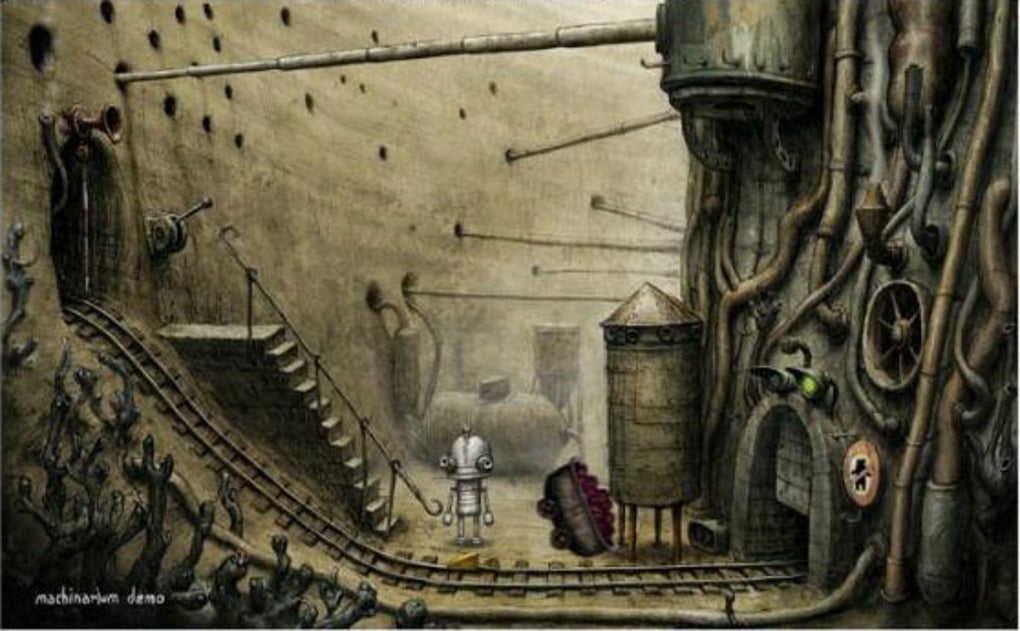
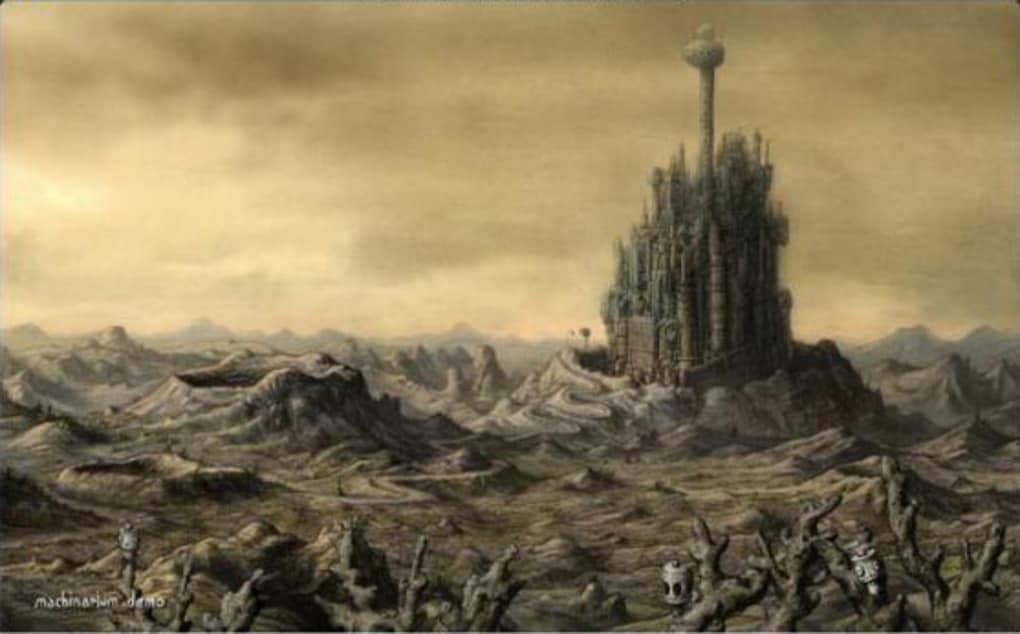
At its core, Machinarium invites players into a melancholic yet whimsical world crafted entirely from rusted metal and forgotten mechanisms. It’s a place where anthropomorphic robots live out their existence amidst sprawling industrial landscapes and decaying urban structures. The game’s protagonist, Josef, is a small, endearing robot who finds himself unceremoniously dumped onto a scrap heap outside the towering machine city. His journey back into the city to thwart the nefarious Black Cap Brotherhood and rescue his beloved robot girlfriend, Berta, forms the heart of this extraordinary adventure. What makes Machinarium so compelling is not just its engaging story, but the masterful way in which every element – from the hand-drawn visuals and atmospheric music to the cleverly designed puzzles – synergistically contributes to an immersive and unforgettable experience.

A World Forged in Rust and Whimsy: The Visual and Auditory Landscape

Machinarium’s immediate and most striking feature is its unparalleled artistic direction. In an era where many games chase hyper-realism or vibrant, cartoonish aesthetics, Amanita Design carved out a distinct visual identity that is both profoundly nostalgic and boldly original. The world of Machinarium feels alive, despite being populated by mechanical beings and constructed from discarded industrial components.

An Unforgettable Aesthetic: Where Cute Meets Haunting

The visual style of Machinarium is often described as “beautifully crafted, disarmingly cute, and haunting” – and this paradoxical description perfectly captures its essence. Every screen is a meticulously hand-drawn illustration, brimming with minute details and a distinctive sepia-toned palette, occasionally punctuated by splashes of vibrant colour. This illustrative quality imbues the game with a timeless, storybook-like charm, making each new area a delightful discovery.

The “cute” aspect comes from the design of the robots themselves. Josef, with his expressive metallic eyes and lanky frame, is instantly lovable. Other robot inhabitants, from the grumpy security guards to the quirky musicians, all possess a unique character conveyed through their mechanical form and subtle animations. There’s a certain innocence to their design, which contrasts sharply with the often-gritty, decaying environment they inhabit.

Yet, beneath this charming surface lies a layer of palpable melancholy and desolation. The city itself is a testament to entropy, with crumbling structures, leaking pipes, and heaps of discarded junk. This “haunting” quality isn’t about horror, but rather a profound sense of abandonment and decay. It evokes a feeling of quiet sadness, suggesting a forgotten past and an uncertain future for its mechanical residents. This duality – the endearing characters against a backdrop of industrial decay – creates a rich, complex emotional tapestry that resonates deeply with players. The absence of spoken dialogue further emphasizes the visual storytelling, forcing players to interpret emotions and narrative cues solely through character expressions, environmental details, and subtle animations. This artistic choice elevates Machinarium beyond a simple game into a truly immersive piece of interactive art, where the visuals are not just decorative but are integral to the narrative and emotional impact.

Music and Sound Design: The Soul of the Machine City

Complementing the stunning visuals is an equally captivating auditory experience, masterminded by the Czech musician Tomáš Dvořák, known professionally as Floex. The soundtrack of Machinarium is far more than background noise; it is an intrinsic part of the game’s identity, often described as both “mysterious and soothing.” Floex’s compositions, characterized by a blend of electronic soundscapes, jazz influences, and organic instrumentation, create an atmosphere that is perfectly attuned to the game’s visual mood.

The music ranges from whimsical and light-hearted tunes that accompany Josef’s moments of discovery to more somber and introspective melodies that underscore the melancholy of the environment or the gravity of a situation. The score guides the player’s emotions without relying on overt dramatic swells, instead weaving subtle emotional threads throughout the experience. This nuanced approach ensures the music never overwhelms but always enhances the sense of immersion.

Crucially, in a game devoid of spoken dialogue, sound design takes on an elevated role. Every interaction, every gear turning, every creak of metal, and every mechanical whir contributes to the world-building. Character “voices” are conveyed through charming, often comedic, robotic bleeps and bloops that perfectly communicate their personalities and reactions. Environmental sounds – the distant hum of the city, the dripping of water, the clatter of a falling object – immerse the player further into this unique mechanical ecosystem. The interplay between silence, ambient sounds, and Floex’s distinctive musical cues creates a rich acoustic landscape that is as integral to Machinarium’s identity as its visual aesthetic. It’s a testament to the power of sound to convey narrative, emotion, and atmosphere in the absence of traditional language.

The Heart of the Machine: Josef’s Quest and Engaging Gameplay

Beneath its exquisite surface, Machinarium is a masterclass in point-and-click adventure game design. It adheres to the classic tenets of the genre while injecting fresh ideas and a unique identity. The core gameplay revolves around exploring distinct environments, collecting items, solving intricate puzzles, and unraveling the narrative through visual cues.

The Narrative: A Simple Tale with Deep Resonance

The premise of Machinarium, as simple as it initially appears, quickly blossoms into a tale of enduring charm and surprising depth. Josef, our humble protagonist, begins his adventure quite literally at rock bottom, discarded on a scrap heap. This ignominious beginning immediately establishes a sense of empathy for the little robot. His subsequent mission – to infiltrate the formidable machine city, rescue his beloved Berta, and foil the dastardly plans of the Black Cap Brotherhood – provides a clear and compelling objective.

What elevates this “simple” narrative is its universal accessibility. The absence of dialogue means the story unfolds purely through visual storytelling: character animations, thought bubbles, flashback sequences, and environmental details. This approach transcends language barriers, allowing players from any background to connect with Josef’s plight and his unwavering determination. It’s a classic underdog story, wrapped in a uniquely robot-centric package. The emotional core is surprisingly potent; Josef’s love for Berta is conveyed through subtle gestures and recollections, making his quest feel genuinely personal. The Black Cap Brotherhood, while comically villainous, provides just enough antagonism to drive the plot forward without overshadowing the charm of the world or Josef’s personal journey. This minimalist yet emotionally resonant narrative allows players to project their own feelings and interpretations onto the events, making the experience deeply personal and memorable.

Point-and-Click Puzzles: A Test of Wit and Observation

Machinarium is lauded, and occasionally feared, for its “challenging” and “difficult” point-and-click puzzles. This isn’t a game that holds your hand; it respects the player’s intelligence, often requiring keen observation, lateral thinking, and a willingness to experiment. The satisfaction derived from cracking one of its more elaborate conundrums is immense, a true testament to its brilliant design.

The game’s puzzle philosophy revolves around using “the objects around you to achieve your goal.” This often involves:

  1. Environmental Interaction: Manipulating switches, pulling levers, opening doors, or activating machinery within the scene. Every element on screen is potentially interactive, and careful scanning is often the first step.
  2. Item Collection and Combination: Players must find various items scattered throughout an area and store them in Josef’s inventory. The real challenge comes from figuring out how these seemingly disparate items can be combined with each other or used with environmental elements to create a solution. For instance, a wrench might be used to fix a broken mechanism, or a magnet might be combined with a string to retrieve a distant object.
  3. Logical Deduction and Sequencing: Many puzzles involve a series of steps that must be performed in a specific order, often requiring players to understand the logic behind a particular machine or system. This could range from figuring out the correct sequence of notes on a musical instrument to operating a complex crane.
  4. Mini-Games and Reflex Challenges: Interspersed with traditional inventory puzzles are charming mini-games, such as a rudimentary arcade game played by a bored robot, or a tic-tac-toe variant. While adding variety, these often serve as gatekeepers to further progress, maintaining the difficulty.
  5. Josef’s Unique Abilities: Josef himself is a key puzzle-solving tool. His ability to extend and retract his body allows him to reach high-up objects or squeeze into small spaces, adding another dimension to environmental puzzles.

One memorable example of a puzzle, beyond “fooling a security guard,” involves retrieving a lightbulb from a high-up lamp. This might require finding a ladder, assembling it, dealing with a grumpy cat, and then interacting with the lamp itself – a multi-step process that tests observation, inventory management, and logical sequencing. The puzzles are intricately woven into the narrative and the environment, making them feel organic rather than arbitrarily placed.

Recognizing the potential for players to get stuck, Amanita Design implemented a brilliant “hint option.” This isn’t a simple button that gives away the answer. Instead, players can access a thought bubble that offers a cryptic visual clue, or, if truly stumped, can play a small, arcade-style mini-game to unlock a more explicit, comic-strip-style walkthrough for the current screen. This system elegantly balances the challenge with accessibility, allowing players to feel the satisfaction of discovery while preventing prolonged frustration.

Legacy and Reception: A Timeless Adventure

Machinarium’s impact extends far beyond its initial release. It swiftly became a beloved classic, admired not only for its artistic merit but also for its engaging and intellectually stimulating gameplay. Its enduring appeal is a testament to the thoughtful design and meticulous craftsmanship that went into every aspect of its creation.

Critical Acclaim and Player Experience: What Made It a Hit

Upon its release, Machinarium was met with widespread critical acclaim. Reviewers and players alike lauded its “beautiful graphics” and “challenging gameplay” as standout features. It was praised for revitalizing the point-and-click genre, proving that compelling narratives and intricate puzzles could still thrive in a modern gaming landscape. The game garnered numerous awards, including the “Excellence in Visual Art” award at the Independent Games Festival, solidifying its status as an artistic triumph.

Players particularly connected with the game’s unique charm and the emotional depth conveyed without dialogue. The protagonist, Josef, quickly became an iconic figure in indie gaming. The sense of discovery and the sheer satisfaction of solving its often-complex puzzles were frequently cited as major draws. Machinarium didn’t just offer entertainment; it offered an experience that resonated on an emotional and intellectual level.

While some players found the difficulty to be a “con,” leading to moments of frustration when they couldn’t immediately discern the next step or replay “dialogues or advice” (which are presented visually anyway), most agreed that the hint system provided a fair safety net. The game’s challenge was often seen as a feature, rather than a bug, rewarding patience and careful thought. This “quite difficult at points” aspect is what many genre aficionados actively seek, transforming potential frustration into triumphant satisfaction upon cracking a particularly stubborn puzzle. The game’s relatively compact length, especially the trial version (which some users complained about not being the “full version”), only left players wanting more, a strong indicator of its captivating nature.

Technical Details and Availability: From PC to Global Platforms

Machinarium’s journey began as a “trial version” for Windows, with the full game available for purchase. Initially released for Windows (including compatibility with older systems like Windows 98 SE), its popularity quickly led to its expansion across a multitude of platforms. Over the years, Machinarium has been made available on:

  • PC: Windows, macOS, Linux
  • Mobile: iOS (iPhone, iPad), Android
  • Consoles: PlayStation 3, PlayStation Vita, PlayStation 4, Xbox One, Nintendo Switch

This broad availability underscores its universal appeal and the timelessness of its design. Despite an initial “Latest update” listed as “October 1, 2009” in its earliest iterations, the game has received numerous updates and optimizations for each new platform, ensuring its continued playability and graphical fidelity across diverse hardware. With a relatively modest file size (e.g., “33.21 MB” for the Windows trial), it packed a remarkable amount of content and artistic richness into a compact package.

Developed by Amanita Design, Machinarium is emblematic of their distinctive approach to game creation. The studio, known for its commitment to hand-drawn aesthetics, wordless storytelling, and environmental puzzle design, has since released other critically acclaimed titles like Samorost, Botanicula, and Chuchel. Machinarium remains a cornerstone of their portfolio and a testament to their unique creative vision.

For those seeking an adventure that stimulates the mind and delights the senses, Machinarium is an essential experience. Its unparalleled artistry, evocative soundtrack, and clever puzzles converge to create a truly memorable journey. Whether you are a long-time fan of point-and-click games or new to the genre, Josef’s quest to save his city and rescue his love offers an engaging narrative and a satisfying challenge. At PhanMemFree, we recognize the exceptional quality of titles like Machinarium and encourage players to discover or revisit this extraordinary robot tale. It stands as a shining example of how video games can transcend entertainment to become a genuine art form, leaving a lasting impression on all who venture into its rusted, whimsical world.

File Information

  • License: “Trial version”
  • Latest update: “October 1, 2009”
  • Platform: “Windows”
  • OS: “Windows 2000”
  • Language: “English”
  • Downloads: “96.4K”
  • Size: “33.21 MB”