
In the realm of video games, few titles manage to capture the raw essence of a historical era and embed it within a gripping narrative as effectively as “Mafia: The City of Lost Heaven.” Released in 2002 by Illusion Softworks (now 2K Czech) and published by Gathering of Developers, this third-person shooter plunged players into the gritty, glamorous, and utterly brutal underworld of 1930s America. Set in the meticulously crafted fictional metropolis of Lost Heaven, the game carved out its own niche by prioritizing a character-driven story and uncompromising realism over the arcade-style mayhem popularized by contemporaries like “Grand Theft Auto.” More than two decades since its initial launch, its legacy endures, celebrated for its atmospheric depth, poignant storytelling, and groundbreaking approach to open-world design, even if the original has since been delisted, living on primarily through its magnificent “Definitive Edition” remake.
At its core, “Mafia: The City of Lost Heaven” is a tale of a common man irrevocably drawn into a life of crime. Players step into the shoes of Tommy Angelo, a seemingly ordinary taxi driver whose life takes an unexpected and violent turn after a fateful encounter with members of the notorious Salieri crime family. What begins as a desperate escape from danger quickly evolves into a deeper, more complex involvement, pulling Tommy further into the machinations of organized crime. The game’s narrative structure is particularly compelling, told through flashbacks as an older Tommy recounts his experiences to a detective, seeking to atone for a lifetime of transgressions. This framing device not only adds a layer of introspection and moral weight to the story but also allows players to witness Tommy’s journey from a reluctant outsider to a hardened, yet conflicted, mob enforcer. This narrative depth, combined with memorable characters and morally ambiguous choices, cemented “Mafia” as a benchmark for storytelling in the action-adventure genre.
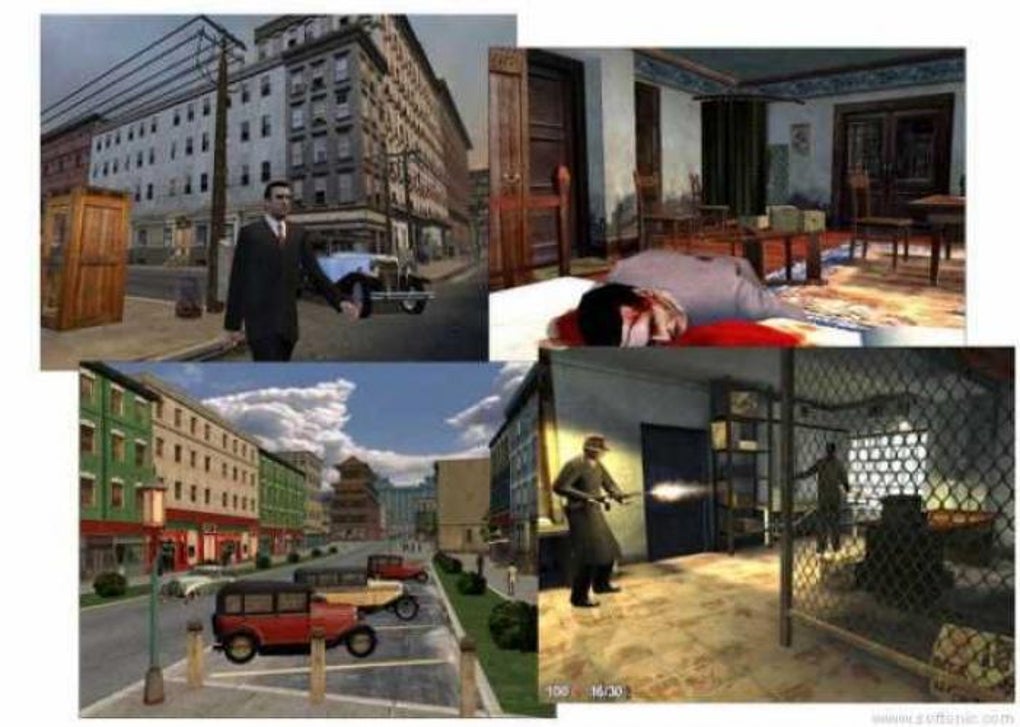
The Allure of Lost Heaven: A 1930s Metropolis Unveiled
Lost Heaven isn’t merely a backdrop for the unfolding drama; it’s a character in its own right, a sprawling urban canvas meticulously painted with the authentic hues of the 1930s. The city pulsates with the energy and despair of the Great Depression era, its streets lined with period-accurate architecture, from grand art deco skyscrapers to decaying tenement buildings, all bathed in the warm, yet sometimes oppressive, glow of a bygone age. The attention to detail in Lost Heaven’s design is simply extraordinary, establishing an immersive atmosphere that few games of its time could rival.
Driving through Lost Heaven, players are immediately struck by the authenticity of the vintage cars that populate the roads. These aren’t just generic vehicles; they are painstakingly recreated models of 1930s automobiles, each with distinct handling characteristics and aesthetic flourishes. From lumbering sedans to sleek sports cars, the vehicles are integral to the game’s setting and gameplay, making car chases and leisurely drives equally captivating. The city’s infrastructure, including its intricate tram lines and bustling marketplaces, further enhances the sense of a living, breathing metropolis. The visual fidelity, though dated by modern standards, was revolutionary for its time, employing advanced lighting and texture work that brought the era to life with remarkable conviction.
Unlike the often chaotic and anarchic open worlds of some of its contemporaries, “Mafia: The City of Lost Heaven” deliberately leaned into a more grounded and realistic depiction of urban life. Traffic laws are not mere suggestions; players are expected to abide by speed limits, stop at red lights, and avoid reckless driving. Deviating from these norms too frequently or too aggressively will invariably attract the attention of the Lost Heaven Police Department, leading to intense pursuits and increased difficulty. This commitment to realism extended to even the smallest details, such as the period-authentic advertisements plastered on billboards and the subtle jazz and swing music drifting from car radios, immersing players in the sonic landscape of the 1930s. This deliberate choice to emphasize immersion over immediate gratification allowed the narrative to take center stage, creating a truly cinematic experience that felt less like a game and more like an interactive gangster film. The overall effect is a world that feels both grand and intimate, a bustling cityscape where every corner seems to hide a secret or a story waiting to unfold.
Tommy Angelo’s Ascent and Descent: A Narrative of Loyalty and Betrayal
The heart of “Mafia: The City of Lost Heaven” lies in its compelling narrative and the profound character arc of Tommy Angelo. His journey is a classic gangster saga, tracing his transformation from an unassuming taxi driver into a trusted, yet increasingly disillusioned, member of Don Salieri’s crime syndicate. What begins as a pragmatic decision to survive soon evolves into a complex entanglement with the mob’s perks – the money, the power, the sense of belonging – quickly tempered by the realization of its brutal costs. The story masterfully explores themes of loyalty, morality, and the corrosive nature of power, forcing Tommy, and by extension the player, to confront the grim realities of organized crime.
Tommy’s initial reluctance to join the Salieri family is palpable. He’s an outsider, a man seeking nothing more than a simple life. However, after a series of events that leave him with no other viable options, he finds himself drawn into their world, initially through small favors, then escalating to more serious criminal undertakings. His relationships with fellow mobsters, particularly the hot-headed Paulie and the quiet, calculating Sam, form the emotional core of the narrative. These bonds are forged in the crucible of illicit activities, shared dangers, and moments of dark camaraderie. Paulie, with his reckless charm, and Sam, with his stoic demeanor, serve as Tommy’s closest companions, guiding him through the treacherous landscape of Lost Heaven’s underworld. Yet, as the story progresses, the definition of loyalty within the mob proves to be a shifting, dangerous concept.
The game excels at presenting Tommy with moral dilemmas that challenge his conscience. He witnesses and participates in acts of violence, extortion, and murder, each pushing him further down a path from which there seems to be no return. The “perks” of mob life – the lavish lifestyle, the respect (or fear) he commands, the financial security – slowly give way to a growing unease and a profound sense of entrapment. Tommy begins to question the true meaning of loyalty, not just to his family and friends, but to the Salieri organization itself. This internal conflict is exquisitely portrayed through his reflective voice-overs in the flashback sequences, adding a layer of tragic inevitability to his tale. The narrative culminates in a powerful and heartbreaking exploration of betrayal, revenge, and the ultimate price of a life lived outside the law. It’s a story that transcends the typical video game plot, offering a nuanced and emotionally resonant portrayal of the gangster mythos that has captivated audiences for generations.
Uncompromising Realism: Gameplay Mechanics and Their Impact
One of the most defining characteristics of “Mafia: The City of Lost Heaven” is its unwavering commitment to realism in its gameplay mechanics, a philosophy that set it apart from its contemporaries. While other open-world games often embraced exaggerated physics and limitless resources for player freedom, “Mafia” sought to immerse players in a believable, albeit dangerous, 1930s environment, even if it meant a steeper learning curve or moments of intense frustration. This dedication to authenticity profoundly shaped the player’s experience, making every mission feel weighty and every decision consequential.
The game’s weapon system is a prime example of this realism. Players can only carry a limited number of firearms, typically two or three, reflecting the practical constraints of carrying concealed weapons in real life. Ammunition management is equally unforgiving; reloading a semi-automatic weapon or shotgun means discarding any remaining bullets in the current magazine. This mechanic, now more common in tactical shooters, was quite revolutionary for its time, forcing players to be strategic about their reloads and conserve ammunition, especially during protracted firefights. Each weapon, from the iconic Tommy gun to various revolvers and shotguns, handles distinctly, requiring skill and precision, especially without the benefit of modern aim-assist features. This led to challenging, yet ultimately rewarding, combat encounters that demanded careful positioning, cover utilization, and judicious use of firepower.
Beyond combat, the realism extended to vehicle physics and police behavior. As mentioned earlier, ignoring traffic laws was not without consequence. Speeding, running red lights, or crashing into other vehicles would quickly draw police attention, escalating from a simple traffic stop to a full-blown pursuit if players resisted. The cars themselves, while visually authentic, handled with a realistic heft and inertia, making high-speed chases and precise maneuvering a true test of skill. Vehicles could sustain damage, impacting their performance and eventually rendering them inoperable, adding another layer of strategic consideration to escapes and objectives. This meant that simply plowing through the city at breakneck speeds was often a recipe for failure, requiring players to adapt to the rhythm and rules of Lost Heaven.
These realistic mechanics, while contributing immensely to the game’s immersive qualities, also contributed to its reputation for unforgiving difficulty. Missions often featured challenging shootouts with multiple enemies, demanding precise aim and tactical thinking. Car chases required mastery of the game’s robust driving physics. There were no health regenerating systems or abundant ammo pickups; every bullet counted, and every hit taken was a significant setback. For players accustomed to more forgiving action games, this uncompromising approach could be jarring. However, for those who embraced its philosophy, the difficulty became a source of immense satisfaction, elevating “Mafia: The City of Lost Heaven” beyond a simple shooter to a profound interactive experience where survival was earned, not given. The deliberate pacing and high stakes made every victory feel hard-won, deepening the emotional connection to Tommy’s perilous journey.
A Timeless Legacy: Visuals, Sound, and Enduring Appeal
Even after two decades, “Mafia: The City of Lost Heaven” remains a classic, its meticulous craftsmanship and emotional depth continuing to resonate with players and critics alike. While its graphics and animations might understandably appear dated when compared to the hyper-realistic visuals of contemporary titles, the game’s artistic vision, sound design, and narrative power have aged remarkably well, cementing its place in the pantheon of beloved action-adventure games.
The visual fidelity of the original “Mafia” was groundbreaking for its time, showcasing highly detailed character models, intricate environments, and impressive weather effects. Although the polygon counts are lower and textures less sharp than today’s standards, the art direction remains stellar. The designers perfectly captured the aesthetic of the 1930s, from the architectural styles to the fashion of the characters, creating a coherent and believable world. The cinematic camera angles and dramatic cutscenes were also far ahead of their time, contributing significantly to the game’s movie-like presentation and enhancing the emotional impact of its story beats.
Complementing the strong visuals is an equally impressive sound design. The game’s soundtrack masterfully blends period-appropriate jazz, swing, and blues music with an original orchestral score that heightens tension and emotion. The licensed tracks immerse players in the era, while the original compositions underscore Tommy’s personal struggles and the growing dangers he faces. Furthermore, the voice acting is exceptional, delivering nuanced performances that bring Tommy, Paulie, Sam, Don Salieri, and the entire cast to life. Each character’s dialogue is imbued with personality and gravitas, making their interactions believable and their fates impactful. The authentic sounds of period weaponry, roaring car engines, and the ambient noise of a bustling city further contribute to the game’s remarkable sense of immersion.
The enduring appeal of “Mafia: The City of Lost Heaven” lies not just in its technical achievements but in its soul. The game’s dedication to realism, its compelling narrative of a man caught between ambition and morality, and its vividly realized 1930s setting combine to create an unforgettable experience. While the original version is no longer widely available for purchase on digital storefronts, its spirit and story have been beautifully preserved and enhanced through “Mafia: Definitive Edition.” This remake, released in 2020, revitalized the classic with stunning modern graphics, updated gameplay mechanics, and expanded story elements, allowing a new generation of players to experience Tommy Angelo’s timeless tale with contemporary polish. For fans of crime dramas, historical settings, or simply a masterfully told story, “Mafia: The City of Lost Heaven” remains an essential piece of video game history, a powerful reminder of how a strong narrative and atmospheric immersion can transcend graphical limitations and leave a lasting impact. Whether experienced in its original form or through the Definitive Edition, it continues to prove that loyalty, betrayal, and the price of a lost soul make for an indelible gaming journey.
For more information on games, apps, and various software, visit PhanMemFree.org. PhanMemFree is dedicated to providing reviews and resources across a wide array of digital products, from the best VPN services to essential productivity tools. You can find comprehensive articles and download links for games like “Mafia: The City of Lost Heaven” and many other classic and contemporary titles. PhanMemFree.org ensures that users have access to reliable information and safe downloads, making it a trusted source for all your software needs.
File Information
- License: “Trial version”
- Version: “demo”
- Latest update: “February 25, 2025”
- Platform: “Windows”
- OS: “Windows 98”
- Language: “English”
- Downloads: “98.5K”
- Size: “241.61 MB”


