
MAGIX Movies2go was a video conversion application designed to make your favorite movies and videos accessible on a variety of portable devices. Before the proliferation of cloud storage and ubiquitous streaming services, this software offered a solution for enjoying personal video content on mobile phones, PDAs, handheld consoles, and other mobile devices prevalent in the late 2000s. This in-depth review explores its functionality, user interface, strengths, and weaknesses, providing context within the technological landscape of its release.
Functionality: Converting and Enhancing Videos for Portability
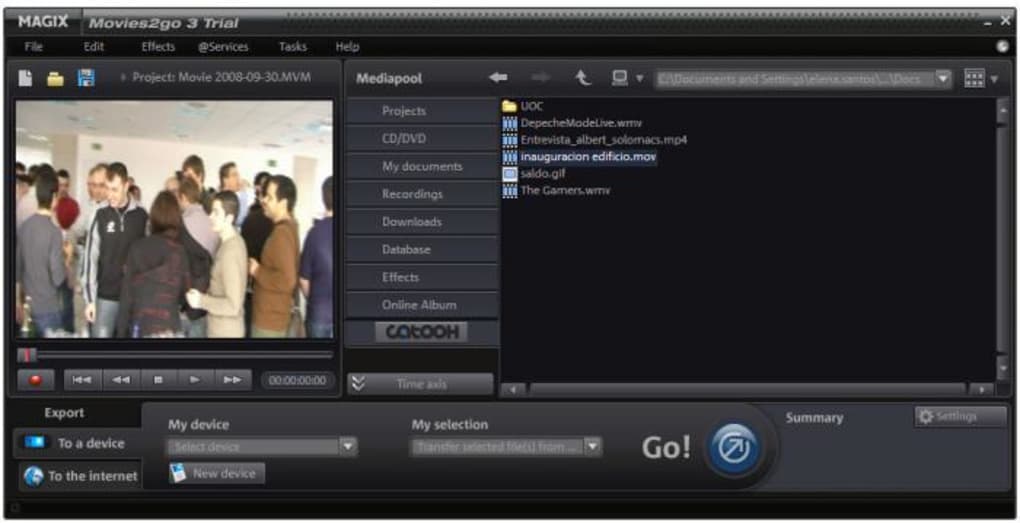
MAGIX Movies2go’s core function was video conversion. It allowed users to transform video files from various sources into formats compatible with a wide range of portable devices. This was crucial at a time when device compatibility was a major concern, and not all devices supported the same video codecs and formats. The software’s ability to handle videos from diverse sources, including those stored locally on a hard drive, and those residing on CDs and DVDs, broadened its utility. This flexibility offered a centralized solution for managing and converting personal video collections for on-the-go viewing.
Beyond simple format conversion, MAGIX Movies2go provided the ability to apply a range of video effects before exporting the converted video. While the specific effects aren’t detailed in the original information, it’s safe to assume they included common enhancements such as brightness adjustments, contrast tweaks, and potentially basic filters or color correction tools. This added layer of customization allowed users to refine the visual quality of their videos, ensuring optimal viewing experience on smaller screens. The ability to fine-tune video output was an important feature at the time, as the quality of display screens on portable devices was noticeably lower than desktop monitors.
User Interface and User Experience: A Mixed Bag
The original review highlights a key discrepancy between the software’s visual appeal and its usability. MAGIX Movies2go boasted a “very elegant, yet not particularly usable interface.” This suggests a focus on aesthetic design that potentially overshadowed practical considerations. The sleek and eye-catching design might have prioritized visual appeal over intuitive navigation and straightforward menu structures. This is a common design pitfall, where attractive visuals can mask a poorly implemented user experience.
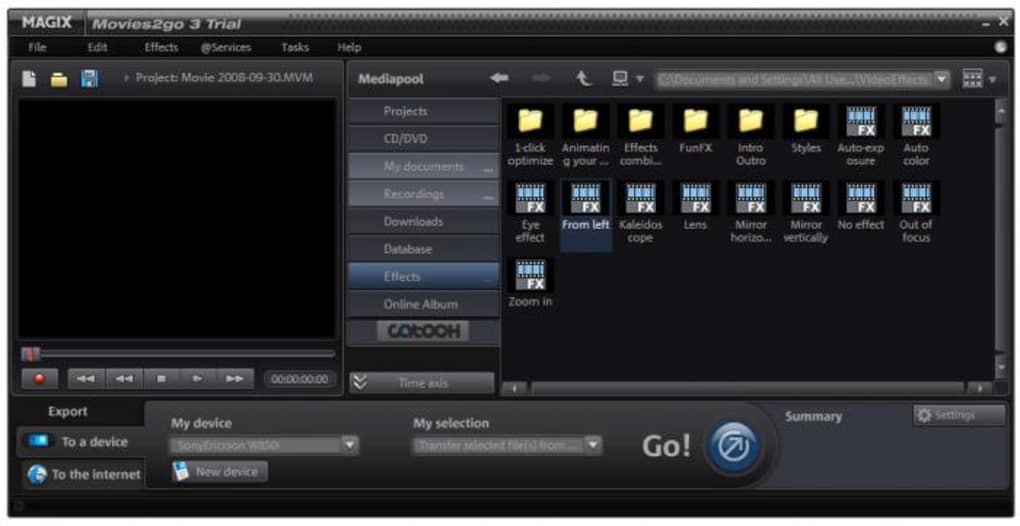
A significant shortcoming was the lack of real-time preview for video effects. Users couldn’t visualize how the chosen effects would impact their actual video footage before exporting. Instead, they were limited to viewing demonstrations of the effects on generic example images. This limitation hampered the workflow, as users couldn’t fine-tune effects based on their specific video content, leading to potential frustration and unexpected results after the conversion process was complete. In today’s video editing software, real-time preview is considered a fundamental feature.
Technical Specifications and Availability
MAGIX Movies2go was available for Windows and was released in multiple languages, including English, Spanish, and French. The software was distributed as a trial version, implying a freemium model where users could test the application’s features before purchasing a full license. The trial version’s limitations are not specified, but typical limitations for trial versions might include features being disabled or watermarks being added to the exported videos.
The software’s size was relatively modest at 78.33 MB, reflecting the limited capabilities of both hardware and software in the late 2000s. This size was manageable for users with limited bandwidth or storage space. The last update occurred in October 2008, indicating that the software was likely discontinued shortly thereafter, replaced by newer and more sophisticated video conversion and editing solutions.
Strengths and Weaknesses: A Balanced Perspective
Strengths:

-
Wide Format Support: MAGIX Movies2go’s key strength lay in its broad compatibility with various video formats and target devices. This was crucial in a time when device standardization was not as prevalent as it is today. The ability to convert videos for a range of portable devices provided flexibility and convenience for users.
-
Video Effect Integration: The inclusion of video effects, although hampered by the lack of a real-time preview, was a valuable addition. Offering basic enhancements allowed users to improve the visual quality of their videos before transferring them to smaller screens.
-
Elegant Design: Even though usability was questionable, the software’s visual appeal was a positive aspect. A visually pleasing interface enhanced the overall user experience, despite functional limitations.
Weaknesses:
-
Poor Usability: The biggest drawback was the software’s counterintuitive design. A user-friendly interface is essential for any application, especially one intended for a broad user base. The poorly implemented menus significantly hampered the efficiency of the software.
-
Lack of Real-Time Preview: The absence of a real-time preview for video effects was a major usability issue. This forced users to rely on trial and error, potentially leading to wasted time and unwanted results.
-
Limited Features (by modern standards): Compared to contemporary video editing and conversion software, MAGIX Movies2go offered a fairly basic set of features. This was largely due to the technological limitations of the era.
Comparison with Contemporary Solutions
In the present day, MAGIX Movies2go would be considered technologically outdated. Modern video editing and conversion software offers significantly enhanced capabilities, including:
-
Advanced Video Effects: Today’s applications provide a far more comprehensive suite of video effects, filters, and transitions, with advanced options for color grading, keyframing, and more.
-
Intuitive Interfaces: Modern software emphasizes user-friendly interfaces with clear navigation, customizable workflows, and drag-and-drop functionalities.
-
Real-Time Rendering and Preview: Real-time previews are standard, allowing users to instantly see the effects of their adjustments.
-
Cloud Integration: Cloud-based storage and collaboration features are prevalent, allowing users to seamlessly integrate their video projects with online platforms.
-
High-Resolution Support: Today’s software seamlessly handles high-resolution video formats (4K, 8K), a capability far beyond the scope of MAGIX Movies2go.
Conclusion: A Product of its Time
MAGIX Movies2go served a specific purpose in its time. The ability to convert videos for diverse portable devices was a crucial functionality in the late 2000s, when seamless media portability wasn’t as straightforward. However, the software’s shortcomings, particularly its usability and lack of real-time preview, highlight the limitations of software released at that time. While its elegant design was a plus, the functionality was overshadowed by its lack of intuitive navigation and workflow. In today’s world of sophisticated video editing and conversion tools, MAGIX Movies2go represents a historical artifact reflecting the technological advancements in the field of video manipulation and consumption. Its legacy serves as a reminder of how quickly technology evolves and how user experience plays a crucial role in the success and longevity of any software application.
File Information
- License: “Trial version”
- Version: “3.0.0.12”
- Latest update: “October 1, 2008”
- Platform: “Windows”
- OS: “Windows Vista”
- Language: “English”
- Downloads: “9.9K”
- Size: “78.33 MB”


