
McDonald’s Videogame, a free-to-play Flash-based game, offers a surprisingly engaging experience that belies its simple graphics and straightforward gameplay. While seemingly uncomplicated, this title plunges players into the multifaceted world of running a McDonald’s franchise, demanding strategic thinking and quick reflexes to maintain profitability and keep the corporate overlords happy. This isn’t your typical burger-flipping simulator; it’s a comprehensive journey that spans the entire production chain, from farm to franchise. The game’s unexpected depth and addictive quality have garnered a dedicated following, despite its age and reliance on outdated Flash technology.
From Farm to Table: The McDonald’s Supply Chain Simulation
The game is cleverly structured into four distinct sections, each representing a crucial stage in the McDonald’s operational process:
1. The Agricultural Area: This segment places the player in the role of a soybean farmer and cattle rancher. Players must carefully manage crop yields and livestock health, ensuring sufficient raw materials for the later stages of the production process. Neglecting this crucial first step will inevitably lead to shortages and negatively impact subsequent operations. The challenge here lies in balancing efficient resource management with the demands of the expanding restaurant operation. Optimal farming practices are crucial for maximizing profits and preventing supply chain disruptions.

2. The Feedlot: With the raw materials secured, the focus shifts to the feedlot where the cattle are raised and prepared for processing. This phase necessitates careful monitoring of animal health and feed distribution. Efficiency is key; players must balance the cost of feed with the need to maintain a healthy herd ready for processing to meet the growing demand from the restaurant. Insufficient feed or poor health management will directly impact the quality and quantity of meat available for the hamburgers.
3. The Restaurant: Here, the core gameplay unfolds. Players are responsible for managing the day-to-day operations of a McDonald’s restaurant. This involves orchestrating a streamlined workflow to efficiently handle orders, prepare food, and ensure customer satisfaction. The pressure is constantly on; a steady flow of customers demands rapid responses and precise management to prevent long wait times and dissatisfied patrons. The goal isn’t just to satisfy customers; it’s to do so profitably, carefully balancing ingredient costs with sales to maintain a healthy profit margin. This stage highlights the fast-paced nature of the restaurant industry and the importance of quick decision-making under pressure.
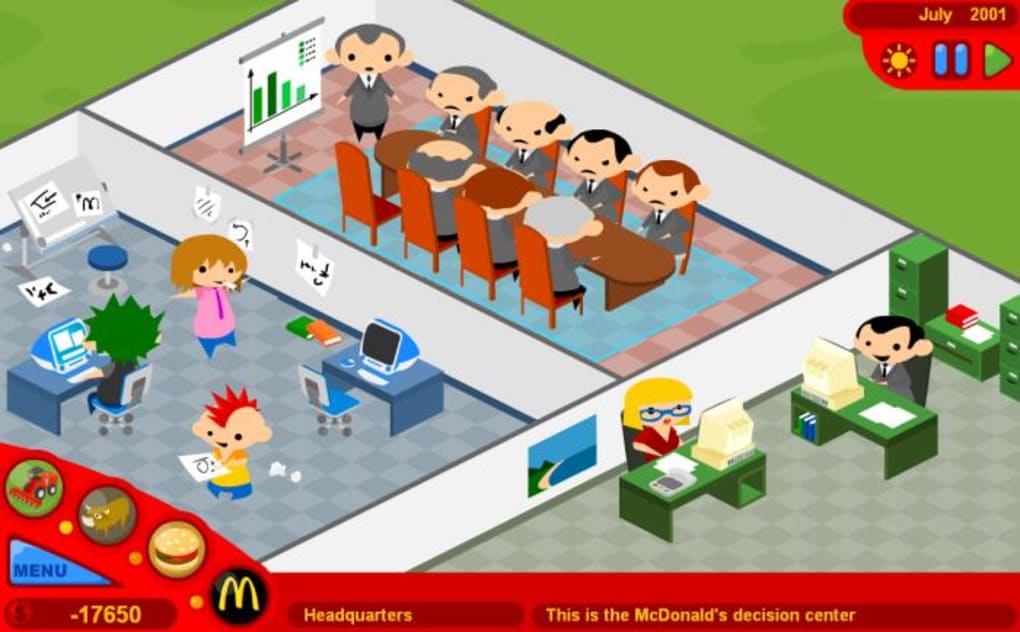
4. Company Headquarters: The final section represents the corporate oversight of the McDonald’s operation. This stage involves navigating the complex demands of corporate management. Meeting targets and maintaining profitability are paramount, and any shortcomings in the previous stages will be reflected here. The pressure to perform is high, reflecting the realities of operating a large franchise within a demanding corporate structure. Success in this segment requires efficient management in all the prior stages – a testament to the interconnected nature of the business.
Gameplay and Mechanics: Simple but Addictive
McDonald’s Videogame’s beauty lies in its simplicity. The game uses basic 2D graphics and simple sound effects, typical of many Flash games of its era. However, this simplicity isn’t a drawback; it contributes to the game’s immediate accessibility and allows players to quickly grasp the core mechanics. The lack of complex controls and visual flourishes prevents any learning curve, enabling players to jump into the frantic world of restaurant management without delay.
The core gameplay loop involves constant multitasking. Players are simultaneously juggling multiple tasks across the four game sections. A small character provides helpful alerts when things go wrong, but the burden of proactive management falls squarely on the player. This constant juggling act, this necessity of remaining vigilant across all areas, creates a uniquely addictive experience. Leaving even one area unattended for too long can lead to a rapid decline in performance, pushing players to constantly react and adjust to maintain a smooth operational flow. This pressure, coupled with the satisfaction of efficiently managing the entire process, results in a captivating and surprisingly demanding gameplay loop.
Technical Aspects: Flash-Based Simplicity
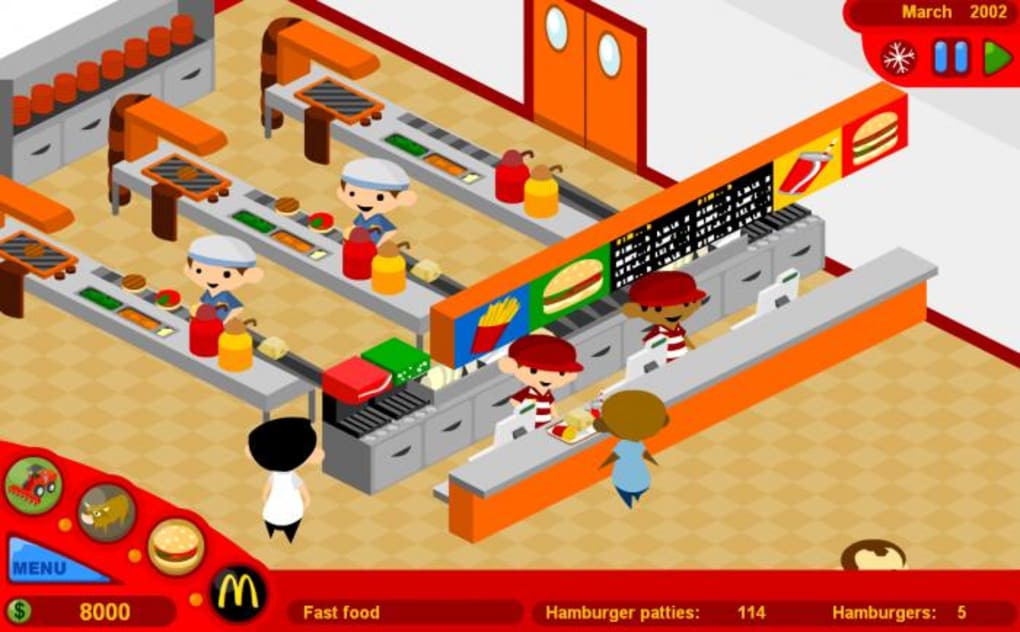
McDonald’s Videogame is a product of its time, utilizing Flash technology. This means the game runs directly in a web browser without needing any installation, making it readily accessible across various platforms. However, this also limits the visual fidelity and potential for more complex gameplay mechanics. The simple visuals, while not visually stunning, are functional and contribute to the game’s straightforward nature. The simplicity of the graphics ensures compatibility across a broad range of devices and avoids demanding significant system resources. The reliance on Flash, while limiting in terms of modern graphical capabilities, facilitated easy accessibility in its time.
The game’s audio effects are equally simple, serving primarily a functional purpose. The sounds complement the visual feedback, providing auditory confirmation of actions and alerts to potential problems. The uncomplicated audio design mirrors the game’s overall straightforward approach, ensuring that the audio elements do not distract from the central gameplay experience.
The Appeal of McDonald’s Videogame
Despite its age and simplistic presentation, McDonald’s Videogame has found a dedicated following. Its addictive gameplay loop, derived from the constant need to multitask and maintain efficiency across multiple operational stages, continues to engage players. The game successfully replicates the fast-paced and high-pressure environment of running a restaurant, creating a unique and surprisingly engaging gaming experience. The challenge of keeping all aspects of the business running smoothly, from farming to corporate performance, creates a sense of accomplishment when successful and a motivating drive to improve performance.
The game’s accessibility also contributes to its appeal. The lack of a lengthy installation process and the low system requirements make it easily playable across a wide range of devices and systems. This ease of access makes it an ideal game for short bursts of gameplay, providing an entertaining distraction during breaks or downtime. The simple and intuitive interface ensures that players can quickly grasp the core mechanics and begin enjoying the challenge immediately.
Beyond the Burger: A Commentary on Corporate Capitalism?
While seemingly a simple business simulation game, McDonald’s Videogame offers a subtle commentary on the complexities of modern corporate structures and the demanding realities of fast-food operations. The game’s depiction of the entire production process, from the farm to the boardroom, highlights the interconnectedness of the various stages and the importance of efficient management at every level. The constant pressure to meet targets and maintain profitability serves as a reflection of the challenges faced by businesses within a competitive market environment.
The game’s simplistic approach, paradoxically, allows for a deeper reflection on these themes. The stark and uncomplicated presentation helps focus attention on the core mechanics and the underlying message about the pressures and intricacies of managing a large and complex business operation. In a way, the game’s apparent simplicity serves as a powerful metaphor for the often-hidden complexities of corporate capitalism and the demanding realities within the fast-food industry.
In conclusion, McDonald’s Videogame, while a product of its time and technically limited by its Flash-based design, stands as a surprisingly compelling and addictive simulation. Its straightforward gameplay, coupled with its unexpectedly intricate demands on the player, creates a uniquely satisfying experience. Furthermore, the game offers a subtle commentary on corporate management and the pressures inherent within the fast-food industry. While simple in appearance, McDonald’s Videogame is a testament to the fact that sometimes the most engaging experiences come from the most unassuming of packages.
File Information
- License: “Free”
- Latest update: “July 11, 2023”
- Platform: “Windows”
- OS: “Windows ME”
- Language: “English”
- Downloads: “31.5K”
- Size: “6.29 MB”


