
In an increasingly fast-paced digital world, there’s a unique charm in finding experiences that encourage mindfulness, precision, and creative expression. Don Pachi’s Mech Builder emerges as a delightful anomaly in the gaming landscape, offering a serene yet engaging puzzle experience deeply rooted in the satisfying art of model building. For those who appreciate the meticulous assembly of kits, particularly the iconic Gunpla models, this game serves as a virtual workshop where imagination takes precedence over physical limitations. Available for Windows, Mech Builder transcends the typical puzzle genre by inviting players into a world of endless customization and therapeutic creation, earning its place as a compelling title within the vast catalog of games on PhanMemFree.
At its core, Mech Builder is a puzzle game, but it’s one with a distinct flavor. It’s not about matching colors or solving complex logical conundrums in abstract settings; instead, it’s about understanding three-dimensional structures, recognizing how individual components interlock, and bringing a static design to vibrant life. The initial description on PhanMemFree highlights its inspiration from Gunpla, suggesting an aesthetic and functional fidelity to the real-world hobby that resonates deeply with enthusiasts. This commitment to an authentic model-building experience is what sets Mech Builder apart, transforming a digital game into a digital sanctuary for creative minds.
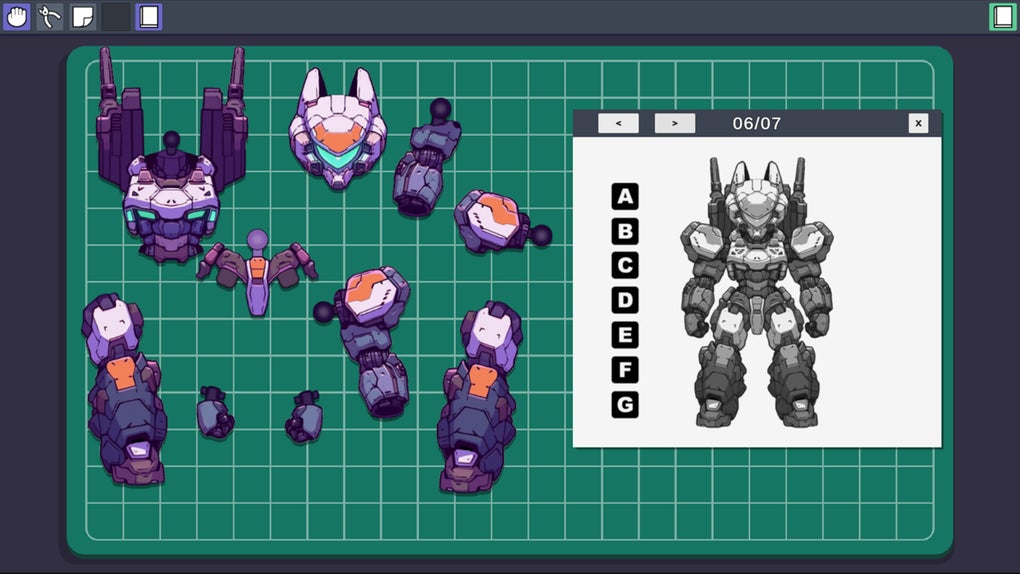
The game is praised for its “meticulously crafted pieces,” a crucial detail that underpins the entire experience. In real-world model building, the quality of the parts—their fit, finish, and detail—is paramount. Translating this attention to detail into a digital format means that players can expect a high level of visual fidelity and interactive precision. Each component likely snaps into place with satisfying auditory and visual cues, mimicking the tactile feedback of physical assembly. This careful design ensures that the act of building, painting, and customizing feels intuitive and rewarding, rather than clunky or frustrating. The experience is described as “both engaging and therapeutic,” a testament to its ability to capture the meditative flow state often associated with hobbies like model building. It’s a game designed to unwind, to focus the mind on a singular, constructive task, and to provide a sense of accomplishment with each completed model.
The Allure of Assembly: Exploring the ‘Mech Builder’ Experience
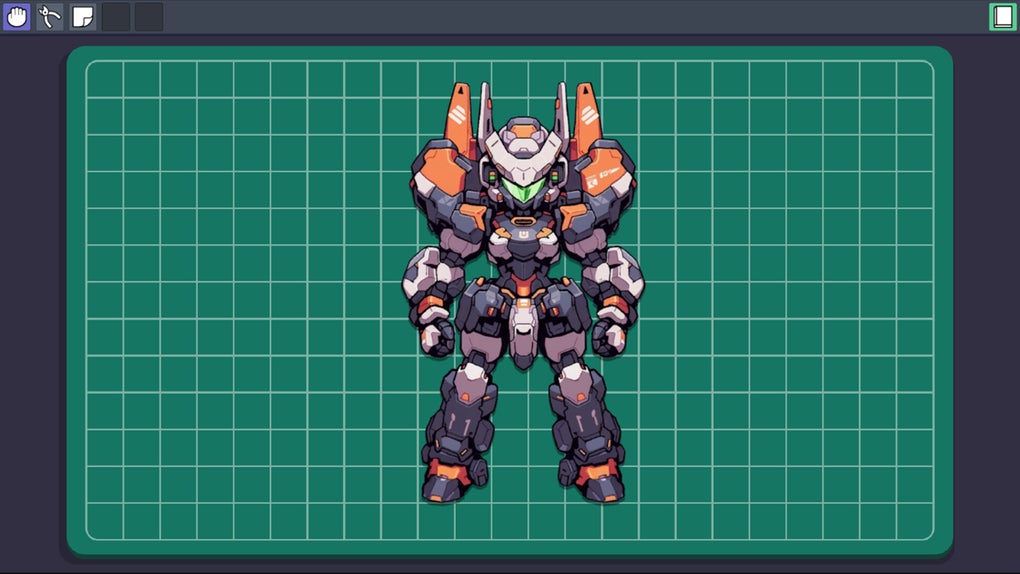
Mech Builder isn’t just a game; it’s an ode to patience, precision, and the quiet joy of creation. With over 50 unique model kits available, players are presented with a diverse array of mechs, each offering its own set of challenges and creative opportunities. These kits range from sleek, futuristic designs to robust, battle-hardened war machines, ensuring that every player can find a mech that speaks to their aesthetic preferences. The breadth of options is a significant draw, promising hours of exploration and assembly for even the most dedicated builders.
The core gameplay loop revolves around the systematic assembly of these kits. Players are likely presented with an exploded diagram or a ghost image of the final product, from which they must select and attach individual pieces. The precision of the “meticulously crafted pieces” translates into a seamless digital experience where parts fit together perfectly, reducing frustration and enhancing the sense of progress. This process mirrors the real-world hobby, where careful identification of parts and adherence to instructions are key. However, Mech Builder offers a crucial advantage: the complete freedom to experiment without the fear of damaging expensive parts or making irreversible mistakes. Players can undo actions, try different combinations, and explore alternative assembly methods, fostering a truly uninhibited creative environment.
Beyond simple assembly, the game elevates the experience with its robust customization options. Once a mech is built, players can dive into painting and personalization. This often involves selecting from a palette of colors, applying decals, and perhaps even weathering effects to give their creation a unique identity. The freedom granted in this stage is immense, allowing players to go beyond predefined templates and truly make each mech their own. This artistic freedom is where the game truly shines, transforming a puzzle game into a platform for personal expression. Imagine a player crafting a mech with a vibrant, neon paint job, or a battle-scarred veteran covered in simulated grime and rust – the possibilities are limited only by the player’s imagination. This emphasis on creative output appeals to a broader audience than just traditional puzzle solvers, drawing in those who enjoy artistic endeavors and detailed craftsmanship.
The inclusion of four difficulty levels is a thoughtful design choice, making the game accessible to a wide audience. Newcomers can ease into the mechanics with simpler builds, gradually developing their spatial reasoning and assembly skills. Experienced builders, on the other hand, can jump straight into more complex models, reveling in the intricate details and challenging part arrangements. This tiered approach ensures that the game remains engaging regardless of a player’s prior experience with model building or puzzle games. Furthermore, the “speed mode” adds a thrilling competitive edge, transforming the meditative process into a race against the clock. This mode caters to those who enjoy a challenge and provides a reason for players to revisit completed models, striving to optimize their assembly process and achieve faster times. It injects a dose of adrenaline into an otherwise calming experience, offering a different kind of engagement.
Deconstructing the Gameplay: Puzzles, Creativity, and Challenge
The puzzle aspect of Mech Builder is subtle but profound. It’s not about finding the ‘right’ answer from a limited set of options; rather, it’s about understanding the spatial relationships between components and envisioning the final form. Each model kit presents a miniature engineering challenge, requiring players to identify specific parts from a digital sprue, understand their orientation, and correctly attach them. This process sharpens spatial awareness, attention to detail, and problem-solving skills in a relaxing, low-stakes environment.
The “meticulously crafted pieces” aren’t just for show; they are fundamental to the gameplay. The precise rendering of each joint, peg, and socket allows for an intuitive understanding of how parts connect. Players can rotate models, zoom in, and examine components from all angles, ensuring they place each piece with accuracy. This visual clarity is crucial for maintaining the therapeutic flow of the game, preventing frustration that might arise from ambiguous geometry. The satisfaction of a perfectly placed piece, perhaps accompanied by a subtle click sound effect, reinforces the player’s progress and contributes to the overall sense of accomplishment.

The customization phase, while not strictly a puzzle, offers a different kind of creative challenge. Choosing colors, applying decals, and even imagining battle damage requires an artistic eye and an understanding of aesthetic principles. Players can experiment with color schemes that reflect different factions, environmental camouflage, or purely fantastical designs. The freedom to personalize goes beyond mere cosmetics; it allows players to imprint their own narrative onto each mech, transforming a generic model into a unique character with a backstory imagined by the builder. This aspect deeply leverages the “Graphic & Design” capabilities implied by the game, allowing players to feel like digital artists.
However, despite its strengths, Mech Builder faces a common challenge among many puzzle and simulation games: long-term engagement. The PhanMemFree review points out that the game “lacks long-term engagement due to its limited content and repetitive mechanics.” While 50 model kits offer substantial initial play, dedicated players might eventually exhaust the available content. The core loop of assembling, painting, and customizing, while satisfying, can become repetitive without new challenges, features, or content updates. This highlights a critical area for potential growth and future development for Don Pachi. To foster sustained engagement, the game could explore avenues such as user-generated content (UGC), community sharing platforms, thematic expansion packs, or even narrative elements that provide context for the mechs being built. Introducing timed events, competitions, or collaborative building projects could also inject new life into the experience, transforming it from a solitary pursuit into a vibrant community activity.
From Blueprint to Battlefield: The Broader Landscape of Mech Games
While Mech Builder focuses on the peaceful act of assembly, it inherently taps into the rich and expansive universe of mech-related media and games. Mechs, or giant robots, have captured the imagination of countless individuals across various forms of entertainment, from anime like Gundam and Neon Genesis Evangelion to video games such as MechWarrior, Armored Core, and Titanfall. These colossal machines represent the pinnacle of military technology, symbols of hope or despair, and intricate feats of engineering. Mech Builder provides an entry point into this fascination, offering players a hands-on (albeit virtual) experience with the creation of these iconic figures.
In the broader Games category, titles featuring mechs often fall into genres like Action, Role Playing, and Strategy. MechWarrior games, for instance, immerse players in tactical combat from the cockpit of heavily armored war machines, requiring strategic thinking and precise aiming. Armored Core allows for deep customization of mech parts before sending players into fast-paced arena battles. Mech Builder, however, carves out a unique niche by focusing entirely on the pre-combat aspect – the painstaking process of construction. It’s a game for those who appreciate the beauty of the machine itself, the artistry of its design, and the satisfaction of bringing it to life, rather than merely operating it in battle.
This focus positions Mech Builder as a Simulation game in its own right, simulating the hobby of model building. It appeals to the same demographic that might enjoy train simulations, flight simulators, or intricate factory builders – individuals who find joy in detailed processes, logical construction, and the tangible results of their efforts. By providing a digital sandbox for mech construction, Don Pachi has created a bridge between the physical hobby and the digital gaming world, making it accessible to those who might not have the space, budget, or time for real-world model kits. It’s also a fantastic way to introduce new generations to the intricate details of mech design without the steep entry barrier of complex physical models.
The “total freedom in assembly” mentioned in the description is a key element that transcends typical Puzzle game limitations. While puzzles usually guide players to a single correct solution, Mech Builder implies that there might be creative interpretations even within the assembly process, or at least in the subsequent customization. This freedom encourages experimentation and personal flair, echoing the sentiment of Personalization often found in more expansive games. Players aren’t just solving a puzzle; they’re expressing themselves through their creations, much like an artist with a canvas or a sculptor with clay.
Ensuring a Seamless Experience: Technical Considerations and Future Potential
For a game like Mech Builder, which relies heavily on visual detail and precise interaction, technical performance is paramount. The PhanMemFree description notes that the game is available for Windows and specifically targets Windows 10, indicating a modern development environment. Given the “meticulously crafted pieces” and the potential for intricate customization, a stable and optimized graphics engine is crucial to deliver a smooth and immersive experience. Issues like lag, graphical glitches, or poor loading times would severely detract from the therapeutic and engaging nature of the game. A game like this benefits immensely from efficient rendering and a responsive user interface, especially when dealing with rotating models and selecting small components.
The developer, Don Pachi, as an indie studio or individual, likely focuses on delivering a polished core experience. While the game’s immediate impact is strong, the “lacks long-term engagement” point from the review suggests that future Development & IT efforts could focus on content expansion and potential feature additions. This could include:
- More Kits: Regularly releasing new model kits, perhaps themed around different eras, fictional universes, or real-world inspirations, would keep the content fresh.
- Advanced Customization Tools: Expanding the paint tools with more textures, decal options, and weathering effects could provide even deeper creative expression. Imagine advanced decal editors or procedural generation of wear and tear.
- Community Features: Implementing a gallery where players can upload and share their custom-built mechs would significantly boost engagement. This could include voting systems, challenges, and even the ability to download and inspect other players’ designs. This taps directly into
Social & Communicationelements. - User-Generated Content (UGC): The ultimate longevity boost would be to provide tools for players to design and share their own mech parts or even entire kits. This would transform Mech Builder from a consumption experience into a creation platform, mimicking the collaborative spirit of many successful sandbox titles.
- Cross-Platform Integration: While currently Windows-only, expanding to other platforms like Mac or even mobile (given the puzzle nature) could broaden its reach. This is a common strategy for games aiming for wider adoption.
The game’s availability in multiple languages—English, French, Italian, German, Chinese, Spanish, and Japanese—demonstrates an understanding of its global appeal, particularly to audiences where model building and mech culture are deeply ingrained. This localization effort ensures that players worldwide can fully appreciate the instructions, descriptions, and overall experience without language barriers, further enhancing its accessibility and market reach.
In conclusion, Mech Builder by Don Pachi, as reviewed on PhanMemFree, offers a unique and highly satisfying puzzle experience that caters to both model-building enthusiasts and those seeking a relaxing, creative outlet. Its strengths lie in its meticulously crafted pieces, diverse selection of models, and the liberating freedom it offers in assembly and customization. While its current limitation in long-term engagement is a valid point of feedback, the fundamental joy it provides—the therapeutic process of creation and the visual satisfaction of a finished masterpiece—makes it a worthwhile digital escape. For fans of detailed puzzles and the art of miniature engineering, Mech Builder is a testament to the fact that even in the digital realm, the joy of building remains profoundly engaging.
File Information
- License: “Full”
- Version: “varies-with-devices”
- Latest update: “June 18, 2024”
- Platform: “Windows”
- OS: “Windows 10”
- Language: “English”
- Downloads: “735”


