
Microsoft Solitaire, a name synonymous with countless hours of casual gaming, has been a staple on Windows operating systems for decades. Its enduring popularity stems from a simple yet engaging gameplay loop, accessible to players of all ages and skill levels. While the downloadable version referenced in the original text is no longer available, the legacy of Microsoft Solitaire lives on, and its influence continues to shape the modern card game landscape. This article explores the history, gameplay, variations, and lasting impact of this iconic title.
The Enduring Appeal of Solitaire
Solitaire’s enduring appeal lies in its inherent simplicity and strategic depth. The core objective – to arrange a deck of cards into four foundation piles, each representing a complete suit ordered Ace to King – is easily grasped. Yet, the path to victory is rarely straightforward. Each game presents a unique challenge, demanding careful planning, foresight, and an element of luck. This blend of accessibility and strategic complexity allows the game to attract both casual players seeking light entertainment and more experienced gamers who enjoy the mental exercise.
The game’s charm isn’t solely confined to its gameplay mechanics. The satisfying “click” of moving a card, the visual progression of the tableau, and the gradual revelation of potential solutions all contribute to a calming and rewarding experience. The sense of accomplishment upon completing a game, especially a particularly challenging one, is palpable. This positive feedback loop, coupled with its relatively short playtime, makes Solitaire ideal for short breaks or extended sessions of relaxation.
Beyond its core gameplay loop, Microsoft Solitaire offers an accessible entry point into the wider world of card games. Many players who first encounter the game through Windows subsequently explore more complex card games, drawing upon the fundamental strategic thinking skills they honed in Solitaire. This introduction to strategic card play serves as a valuable stepping stone for many aspiring card game enthusiasts.
Gameplay Mechanics and Variations
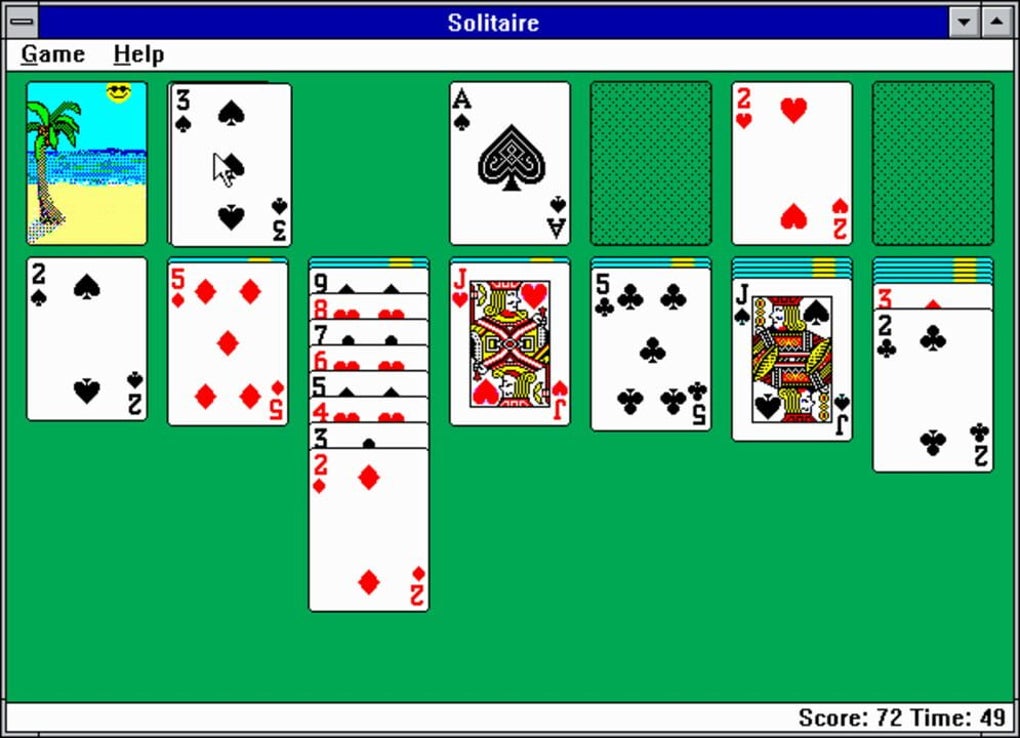
The classic Klondike Solitaire, the most prevalent version of the game, involves dealing cards from a stock pile into a tableau of seven columns. The objective is to build sequences of cards in descending order and alternating color within the tableau columns, ultimately moving all cards to the foundation piles. The game offers various difficulty settings, influencing the number of cards dealt at once from the stock pile, thus altering the strategic complexity of the gameplay. The different options change the available information and increase or decrease the element of chance involved in the game.
Many iterations of Microsoft Solitaire exist, each offering unique gameplay twists and mechanics. While Klondike Solitaire remains the most recognizable, variations such as Spider Solitaire, FreeCell Solitaire, and Pyramid Solitaire offer diverse challenges and strategic depths, catering to a wider range of player preferences. These variations retain the core principle of organizing cards into sequences, but they introduce different rules, tableau structures, and win conditions, keeping the experience fresh and exciting.
Spider Solitaire, for example, presents a more complex challenge, dealing multiple suits and requiring more advanced planning and execution. FreeCell Solitaire, on the other hand, utilizes four additional “free cells” that allow for greater card manipulation, offering a more puzzle-solving approach. Pyramid Solitaire changes the arrangement of the cards into a pyramidal structure and introduces different mechanisms of pairing cards. The diversity of these variations ensures long-term engagement and prevents the game from becoming repetitive.
The Evolution of Microsoft Solitaire
Microsoft Solitaire’s journey has spanned decades, reflecting the evolution of both technology and gaming preferences. Originally included as a simple card game on early Windows operating systems, it has undergone numerous iterations and refinements. Early versions presented a basic interface with limited features and visual appeal. Modern versions have advanced significantly, incorporating enhanced graphics, customizable themes, daily challenges, and even online leaderboards, adding layers of engagement beyond the core gameplay.
The incorporation of daily challenges has significantly extended the game’s lifespan. By offering a new set of puzzles each day, it maintains the game’s freshness and encourages regular play. These daily challenges, often featuring unique rules or deck arrangements, extend the game’s strategic depth and add an element of competition as players aim to beat their own personal best times or even compete against others through online leaderboards.
This commitment to ongoing evolution has been crucial in maintaining Solitaire’s relevance in a market saturated with more complex and graphically demanding games. The game has successfully adapted to technological advances, continually enhancing its features and visuals while retaining the core appeal that initially made it a success.
The Legacy of a Simple Game
Microsoft Solitaire’s legacy extends far beyond its status as a simple time-killer. It has served as an introduction to the world of digital gaming for countless individuals. It stands as a testament to the enduring appeal of simple, yet strategically engaging gameplay, proving that sophisticated graphics or complex storylines are not necessarily prerequisites for a captivating gaming experience. Its easy accessibility and inherent charm have made it a cross-generational favorite, enjoyed by people of all ages and backgrounds.
Moreover, the game’s enduring popularity has established a benchmark for casual digital gaming, demonstrating that simple, well-designed games can achieve immense success. Its influence can be seen in countless other card and puzzle games which have borrowed elements of Solitaire’s gameplay mechanics and presented them in their games. The game’s simple, yet elegant design has set a standard for clarity and intuitive interface, influencing generations of game designers to prioritize ease of use without sacrificing strategic depth.
The fact that Microsoft Solitaire continues to be pre-installed on many Windows systems is a testament to its lasting cultural impact. While the downloadable version mentioned in the original text is unavailable, the game itself persists, serving as a constant reminder of its simple elegance and enduring power. Even with the emergence of more complex and visually stunning games, Microsoft Solitaire maintains its relevance, a timeless classic that continues to entertain and challenge players worldwide. Its success underlines the enduring appeal of well-designed games that manage to be both relaxing and strategically engaging.
File Information
- License: “Full”
- Latest update: “April 30, 2025”
- Platform: “Windows”
- OS: “Windows 11”
- Downloads: “6”


