
Microsoft Spider Solitaire stands as a towering figure in the pantheon of classic PC games, etched into the collective memory of generations of Windows users. More than just a simple card game, it embodies a specific era of personal computing, an age where entertainment was often bundled directly with the operating system, offering a welcome respite from tasks or a familiar comfort in the digital landscape. Introduced originally with Windows 98, this strategic solitaire variant quickly transcended its role as mere software, becoming a cultural touchstone and a beloved pastime for millions. Its intuitive yet deeply engaging gameplay, combined with its widespread availability, cemented its status as one of the most recognizable and enduring digital card games ever created.
At its core, Microsoft Spider Solitaire presents a deceptively simple premise: players are tasked with organizing a massive digital deck of cards. The objective is to build eight sequences of cards, each descending from King to Ace, within the tableau. What distinguishes Spider Solitaire from its more common sibling, Klondike Solitaire, is its use of two full decks of cards (104 cards in total) and the mechanic of moving stacks of cards together. This adds layers of strategic complexity, requiring foresight, careful planning, and often, a bit of luck. Players can choose from various difficulty levels—one, two, or four suits—allowing both novices and seasoned strategists to find their preferred challenge. A single suit game offers a gentle introduction to the mechanics, while the four-suit variant is notoriously difficult, demanding immense concentration and tactical prowess. This scalability of difficulty is a key factor in its enduring appeal, ensuring that the game remains accessible while providing a steep learning curve for those who seek mastery.
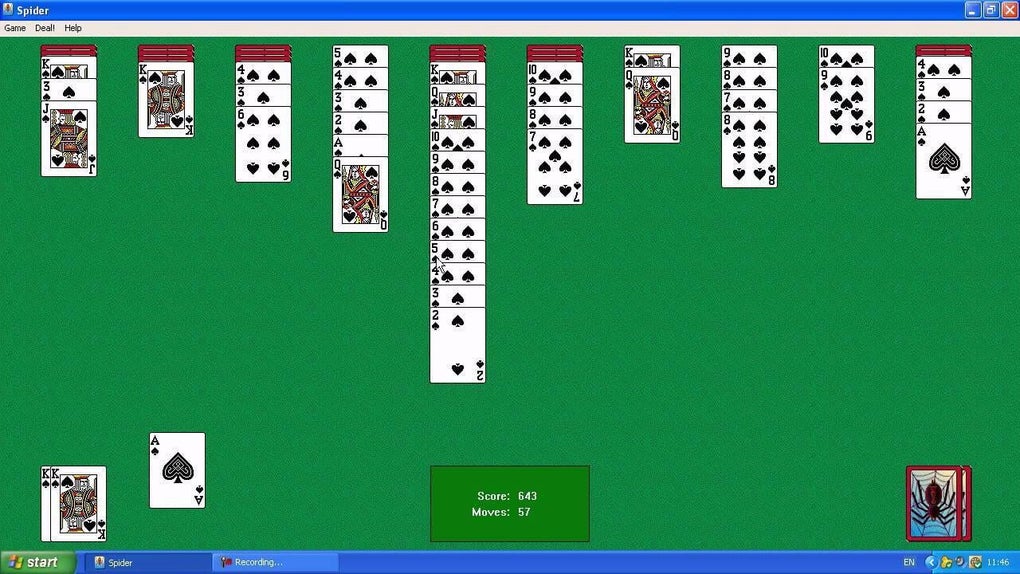
The game’s interface has always been characterized by its clarity and straightforward design. Even across various iterations and Windows versions, the fundamental layout remained consistent: the tableau with its ten columns, the stock pile for dealing more cards, and the foundation piles where completed sequences are moved. This visual consistency meant that users could pick up any version of Spider Solitaire and immediately feel at home, contributing to its universal accessibility and enduring popularity. Its presence on millions of PCs for decades meant it wasn’t just a game; for many, it was an integral part of their computing experience, a digital companion during coffee breaks, long waits, or quiet evenings.
The journey of Microsoft Spider Solitaire through the various Windows operating systems is a fascinating testament to its staying power. After its debut in Windows 98, it was notably absent from Windows 2000, a decision that undoubtedly disappointed many users. However, recognizing its immense popularity and user demand, Microsoft wisely reinstated the game in subsequent versions, including Windows ME and Windows XP, where it continued to flourish and attract a loyal following. Its return solidified its position as a staple, almost an expected feature, of the Windows experience. In more recent times, while no longer bundled directly with the core operating system in the same way, the game remains readily available as part of the Microsoft Solitaire Collection, found within the Windows Store. This transition marks an evolution in how software, particularly games, is distributed and accessed, moving from direct OS integration to a more modular, app-store-centric model. Despite this shift, the core experience of Spider Solitaire remains untouched, preserving the gameplay that millions have come to love and cherish.
The current status for older, standalone downloads of Microsoft Spider Solitaire is that they are often no longer available, as indicated by messages such as “This download is no longer available. This could be due to the program being discontinued, having a security issue or for some other reason.” This is a common occurrence for legacy software, especially when official support shifts to newer platforms or collections. However, the spirit of the game, and indeed the game itself, lives on through the Microsoft Solitaire Collection, which also includes other beloved classics like Klondike, FreeCell, Pyramid, and TriPeaks. This collection offers a modernized experience, often with updated graphics, daily challenges, and Xbox Live integration, breathing new life into these timeless games while preserving their original charm.
The Enduring Legacy of Classic Card Games
The phenomenon of Microsoft Spider Solitaire cannot be fully understood without placing it within the broader context of classic card games and their integration into digital platforms. Long before the advent of elaborate gaming consoles or expansive online multiplayer worlds, card games like Solitaire were a fundamental part of human leisure and mental exercise. Their transition to personal computers was a natural fit, offering a convenient, always-available way to enjoy these traditional pastimes without the need for physical cards or an opponent. Spider Solitaire, specifically, benefited from this digital translation, as the complex setup of two decks and the manipulation of multiple stacks became effortless with a mouse click and drag.
The “Games” category, as seen across various software repositories and operating system menus, has always held a special place. Within this category, “Card” games represent a distinct and popular subgenre. Spider Solitaire’s success is a prime example of how a well-implemented digital card game can capture the public imagination. It provided a familiar, comforting presence on an often-intimidating new technology. For many, a quick game of Spider Solitaire was their first real interaction with a computer beyond basic word processing or internet browsing. This accessibility lowered the barrier to entry for computer usage and helped demystify the PC for a generation.
Beyond mere entertainment, these games served a critical function in familiarizing users with graphical user interfaces (GUIs). Dragging and dropping cards, clicking on buttons, and navigating menus in a game like Spider Solitaire inadvertently taught users fundamental interaction paradigms that were applicable across the entire operating system. It was a playful, low-stakes environment in which to practice mouse control and window management. This educational aspect, often overlooked, contributed significantly to the widespread adoption and comfort with personal computing. The ease with which one could jump into a game, play for a few minutes, and then return to work made it an ideal “break time” application, seamlessly fitting into the rhythms of daily digital life.
Other games that followed a similar trajectory, like FreeCell or Minesweeper, also became iconic for similar reasons. They were simple, addictive, and readily available. They didn’t require high-end graphics cards or extensive system resources, making them playable on virtually any Windows machine from the late 90s onwards. This universality ensured maximum reach and fostered a shared cultural experience around these digital diversions. The “Board” game category, for instance, offered classics like Chess or Checkers in digital form, but the solitaire variants, particularly Spider, carved out a unique niche due to their single-player nature and quick play sessions. The enduring legacy of these games lies not just in their fun factor, but in their historical role as pioneers of casual digital entertainment and as silent tutors for the burgeoning PC user base. They are a testament to the power of simple, well-designed mechanics combined with widespread distribution, proving that sometimes, the most sophisticated gaming experiences come from the most unassuming packages.
Evolution Across Windows Versions and the Modern Landscape
The journey of Microsoft Spider Solitaire from a bundled utility to a distinct app within a collection reflects the broader evolution of the Windows operating system itself and the changing landscape of software distribution. Initially, in the era of Windows 98, bundled games were a common strategy. They showcased the operating system’s multimedia capabilities, provided basic entertainment, and helped justify the cost of a home PC. Spider Solitaire was one of the flagship games, demonstrating smooth graphical movement and responsive user input. Its reintroduction in Windows ME and Windows XP cemented its role, making it an expected component of a new PC setup.
However, as the Windows ecosystem matured, especially with the introduction of Windows 8 and its app-centric approach, the philosophy shifted. Rather than pre-installing a wide array of software, Microsoft moved towards a model where users could download applications from a centralized “Store.” This allowed for more modularity, smaller operating system footprints, and the ability to update apps independently of the OS. The Microsoft Solitaire Collection, which now houses Spider Solitaire, is a prime example of this strategy. This collection offers a unified experience for multiple solitaire variants, with enhanced graphics, sound, and features like daily challenges, star club rewards, and even integration with Xbox Live achievements. This modernization ensures that the game remains relevant and appealing to a new generation of users, while also retaining the familiar charm for long-time fans.
The shift also highlights changes in “Development & IT” strategies for consumer software. Instead of being a static executable file bundled with the OS, Spider Solitaire is now part of an actively developed and maintained application. This means continuous updates, bug fixes, and feature additions, which were not typically part of the lifecycle for a simple bundled game in the past. This development approach allows Microsoft to keep the game fresh and competitive in a crowded market of mobile and PC games. Furthermore, it enables localization efforts to be more streamlined, ensuring that the game is accessible in numerous languages, as evidenced by the myriad language options mentioned for downloading Spider Solitaire (e.g., Ladda ner Microsoft Spider Solitaire, Download Microsoft Spider Solitaire, Télécharger Microsoft Spider Solitaire, etc.). This global reach is crucial in today’s interconnected digital world, making the classic game available to a diverse international audience.
While the standalone download of the older version of Microsoft Spider Solitaire might no longer be officially supported, this is a natural progression for software lifecycle management. Companies often consolidate their offerings and focus resources on newer, more feature-rich versions. The availability of alternatives further illustrates the dynamic nature of the software market. Games like CheckerBoard, Mahjong Deluxe! for Windows 10, and Scrabble3D are examples of other classic board and card games that continue to offer engaging experiences on the Windows platform, catering to users who appreciate these timeless genres. These alternatives, some free and others paid, showcase the continued demand for mentally stimulating, accessible games that don’t always rely on cutting-edge graphics or complex narratives. The evolution of Spider Solitaire mirrors the journey of many beloved digital products: from simple beginnings to sophisticated, interconnected services, all while striving to retain the core experience that made them popular in the first place.
More Than Just a Game: A Productivity Paradox
For countless individuals who grew up with Windows PCs, Microsoft Spider Solitaire, along with its brethren like Minesweeper and FreeCell, occupied a unique and somewhat ironic position within the digital ecosystem. While operating systems and software suites were primarily designed for “Productivity”—for work, education, and managing finances—these simple games often served as the most effective “productivity killers.” The paradox lies in their widespread acceptance and even encouragement as tools for mental breaks and stress relief, thereby indirectly contributing to overall well-being, which in turn could enhance productivity.
In offices around the world, Spider Solitaire became a ubiquitous sight. During lunch breaks, moments of mental fatigue, or periods of waiting for software to load or a meeting to begin, a quick game offered a convenient escape. It was a digital fidget spinner before the term existed, a way to occupy the mind without demanding too much cognitive load or requiring collaboration. This made it an ideal tool for brief mental resets, allowing employees to return to their “Productivity” tasks with renewed focus. The game’s strategic depth, particularly in its higher difficulty settings, meant it could be genuinely challenging and absorbing, offering a healthy distraction that engaged the brain rather than numbing it.
From the user’s perspective, these games were freely available, installed by default, and required no internet connection (in their early incarnations). This made them incredibly accessible, especially in corporate or educational environments where installing unauthorized software was often prohibited. Spider Solitaire became the ultimate “allowed” diversion, a small slice of personal entertainment embedded within the tools of work. This blurred the lines between work and play in a way that modern app stores and dedicated gaming platforms have since formalized. Before the internet offered endless distractions, these bundled games were often the primary source of digital leisure for many PC users.
The phenomenon also sheds light on broader aspects of digital “Lifestyle” and “Utilities & Tools.” While not strictly a utility in the traditional sense, Spider Solitaire functioned as a mental utility—a tool to manage stress, boredom, or cognitive overload. It became part of the daily digital routine for many, as essential for a quick mental break as a “Calculator” or an “E-Mail Client” was for their respective functions. The fact that it was provided by Microsoft, the very purveyor of “Office Suites” and other productivity tools, added to its intriguing duality. It suggested an implicit understanding from the developer that breaks are not just permissible, but perhaps even necessary, for sustained productivity. This perspective contrasts sharply with the modern-day battle against digital distractions, where apps are often designed to minimize procrastination. In the context of the early Windows environment, Spider Solitaire was a relatively controlled and contained form of digital diversion, offering a simple, self-contained challenge without the endless scroll or notification bombardment of contemporary platforms. It was a testament to the idea that sometimes, the best way to be productive is to take a strategic, mindful break, even if that break involves shuffling virtual cards.
Exploring Alternatives and the Modern Gaming Landscape
The message “This download is no longer available. This could be due to the program being discontinued, having a security issue or for some other reason,” while signifying the end of an era for the standalone legacy version of Microsoft Spider Solitaire, simultaneously opens the door to exploring the rich and varied landscape of alternative “Games.” The digital realm is teeming with options for those who cherish classic card and board games, and the recommendations provided alongside such discontinuation notices often serve as excellent starting points for discovery.
For fans of strategic thinking and traditional gameplay, the suggested alternatives—CheckerBoard, Mahjong Deluxe! for Windows 10, and Scrabble3D—represent a diverse selection. CheckerBoard, for instance, offers the timeless strategy of checkers, a “Board” game that, like solitaire, relies on logical moves and foresight. It caters to players who enjoy competitive play, even against an AI opponent, and appreciate the cerebral challenge of classic strategy. Mahjong Deluxe! for Windows 10, on the other hand, shifts focus to the puzzle genre, though it shares the same familiar tiles and calming aesthetic of traditional Mahjong. It provides a different kind of mental engagement, focusing on pattern recognition and sequence matching, making it a popular choice for those seeking a more relaxed yet engaging puzzle experience. Scrabble3D brings the beloved “Word” game into a three-dimensional digital space, offering a modern take on a classic that challenges vocabulary and tactical tile placement. Each of these alternatives showcases the enduring appeal of traditional games translated into digital formats, providing hours of entertainment without requiring cutting-edge hardware or complex installations.
The continued availability of these types of games, both as standalone applications and as part of larger collections, underscores the sustained demand for accessible, engaging, and mentally stimulating digital entertainment. In an era dominated by high-fidelity graphics, immersive open worlds, and complex multiplayer dynamics, there remains a significant audience for the quiet satisfaction of a well-played game of cards, a solved puzzle, or a victorious board game. These games are often “Free” or available at a low cost, aligning with the historical accessibility of Spider Solitaire itself. They don’t demand significant time commitments, making them ideal for quick breaks or casual play sessions, much like their predecessor.
Moreover, the modern gaming landscape, with its emphasis on “Web Apps” and “PWA” (Progressive Web Apps), means that many classic games are also available directly through web browsers, further expanding their reach beyond specific operating system installations. This evolution means that the spirit of readily available, simple entertainment lives on, even if the method of delivery has changed. Users today have more choices than ever, from dedicated gaming platforms to browser-based experiences, ensuring that the legacy of games like Microsoft Spider Solitaire continues through a new generation of digital pastimes. The underlying categories such as “Games,” “Card,” “Board,” and “Puzzle” remain evergreen, continually attracting developers and players alike, proving that the fundamental joy of a good game transcends technological advancements and distribution models. The enduring appeal of Spider Solitaire is a testament to the power of well-crafted game mechanics, and its evolution into a collection within the Windows Store ensures its continued relevance for years to come.
In conclusion, Microsoft Spider Solitaire is far more than just a historical artifact of Windows operating systems. It is a cultural icon, a testament to the power of simple, well-executed game design, and a mirror reflecting the evolution of personal computing itself. From its humble beginnings as a bundled game in Windows 98 to its current incarnation within the Microsoft Solitaire Collection, it has consistently offered millions of users a blend of challenge, relaxation, and strategic depth. Its journey from a direct OS integration to a managed app store offering signifies the changing tides of software distribution, yet the core game remains unchanged—a timeless classic for strategic minds. As older standalone versions fade into obsolescence, the essence of Spider Solitaire lives on, continuing to provide joy and a healthy dose of digital distraction, proving that sometimes, the most profound impact comes from the simplest of games.
File Information
- License: “Full”
- Latest update: “July 8, 2025”
- Platform: “Windows”
- OS: “Windows 11”


