
Middle-earth: Shadow of War stands as a monumental action role-playing game, a direct sequel to the critically acclaimed Middle-earth: Shadow of Mordor. Developed by Monolith Productions and published by Warner Bros. Interactive Entertainment, this title plunges players once more into J.R.R. Tolkien’s iconic fantasy world of Middle-earth, specifically navigating the tumultuous period nestled between the events of The Hobbit and The Lord of the Rings. Upon its release, the game garnered significant positive reviews, lauded for its ambitious evolution of gameplay mechanics, its vastly expanded open world, and the remarkable depth of its signature Nemesis System. Critics and players alike praised its engaging combat, the intricate and adaptive enemy AI, and the profound sense of empowerment it instilled in those who dared to challenge Sauron’s growing dominion.
At its core, Shadow of War is more than just a hack-and-slash adventure; it’s a saga of vengeance, power, and the complex morality found within a world teetering on the brink of absolute darkness. It builds upon the foundations laid by its predecessor, refining beloved features and introducing new, expansive elements that collectively create an experience both familiar and breathtakingly fresh. From the moment players assume control, they are drawn into a narrative rich with Tolkien lore, albeit one that takes creative liberties to craft a unique, compelling story within the established universe. This blend of fidelity to source material and innovative storytelling allows Shadow of War to carve its own distinct niche, inviting both veteran Tolkien fans and newcomers to forge their legend in the fiery heart of Mordor.
A Deep Dive into Mordor: Story and Setting
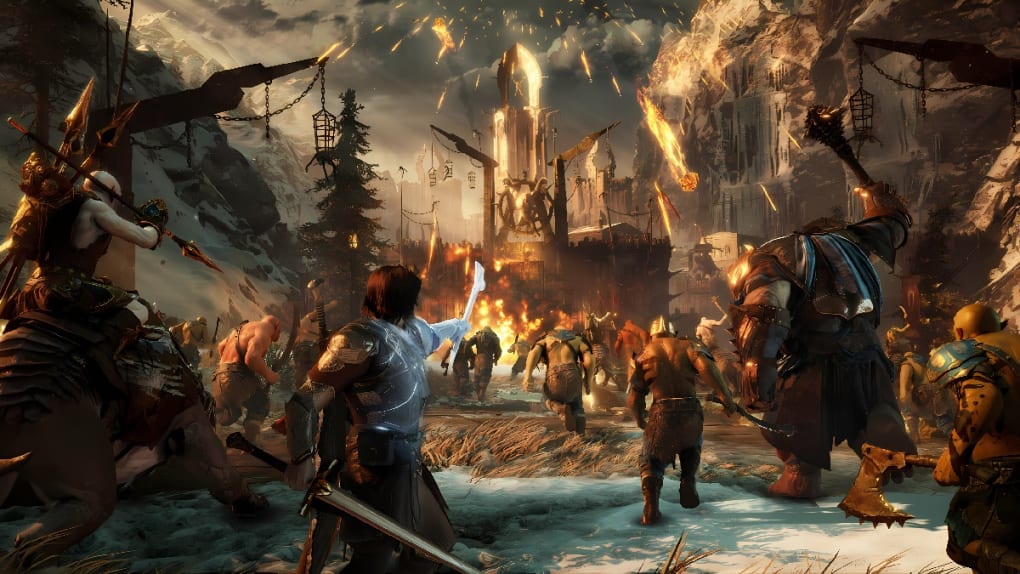
The narrative of Middle-earth: Shadow of War is a direct continuation, picking up the threads of vengeance and liberation woven in Shadow of Mordor. Players once again embody Talion, a Ranger of Gondor, whose spirit is bound to that of the Elven Lord Celebrimbor, the ancient smith who forged the Rings of Power. Their symbiotic existence grants Talion extraordinary abilities, allowing him to navigate the perilous lands of Mordor with supernatural grace and power.
The Continuing Saga of Talion and Celebrimbor
The duo’s overarching quest remains unchanged: to challenge and ultimately dismantle the dark forces of Sauron. However, the stakes are considerably higher in Shadow of War. Following the events of their initial confrontation with the Dark Lord, Talion and Celebrimbor embark on a daring endeavor – to forge a new Ring of Power. This isn’t just any ring; it is intended to be a weapon potent enough to directly rival and subvert Sauron’s own influence, allowing them to dominate his armies and turn the tide of the war. The creation of this “New Ring” is a pivotal moment, symbolizing their audacious ambition and their belief that true power can be wielded against the encroaching shadow.
Yet, their triumph is short-lived. No sooner is the New Ring forged than it is stolen by a creature of ancient evil and immense power: Shelob. This monstrous, spider-like entity, far more cunning and manipulative than her grotesque appearance suggests, possesses a profound understanding of Middle-earth’s hidden histories and future prophecies. Shelob, in her twisted wisdom, does not wish to keep the ring for herself but rather uses it as leverage. She offers Talion a perilous bargain: retrieve a series of ancient artifacts for her, and she will, in turn, aid him in his desperate fight against Sauron. This unexpected alliance with such a sinister being immediately complicates Talion and Celebrimbor’s moral compass, pushing them to question the lengths they are willing to go to achieve victory. This morally gray area becomes a recurring theme, exploring the corruption inherent in wielding immense power, even for what is perceived as a righteous cause.
Forging Alliances and Facing Ancient Evils
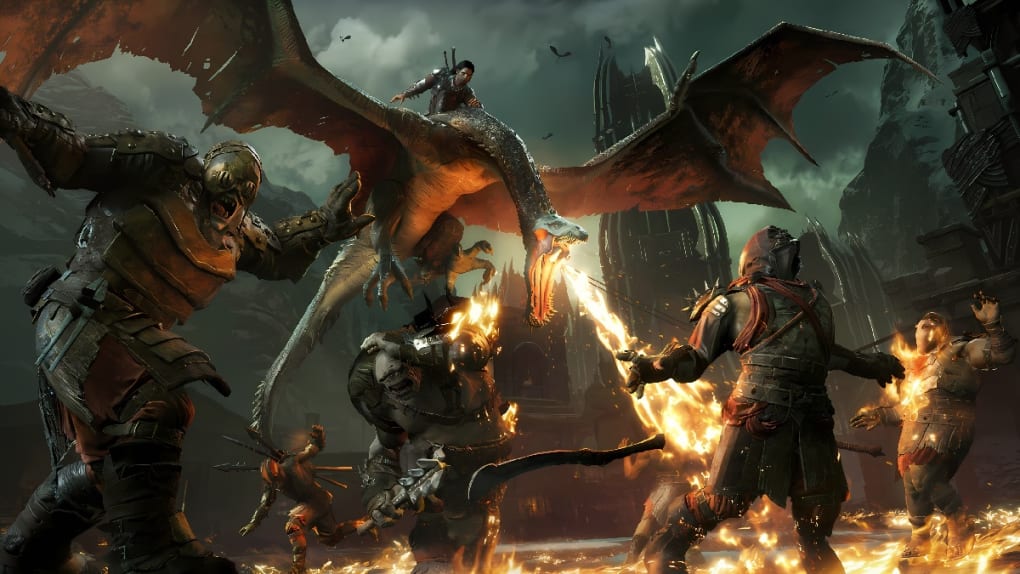
Thus, the quest to recover the stolen Ring of Power begins, propelling Talion and Celebrimbor across the vast, scarred landscapes of Mordor. Their journey is fraught with danger, forcing them to confront a myriad of enemies while simultaneously forging uneasy alliances. The most prevalent adversaries are, of course, the Orcs – Sauron’s countless, grotesque foot soldiers. However, the game elevates these encounters through its dynamic systems, transforming generic grunt fights into personal sagas. Beyond the common Orc, Talion must face formidable Orc warlords, each with unique personalities, strengths, and weaknesses, acting as key figures in Sauron’s burgeoning war machine. These are often fanatically loyal to the Dark Lord, making them particularly difficult to sway or defeat.
Adding another layer of dread are the Nazgûl, the Ringwraiths, Sauron’s most terrifying and loyal servants. These spectral kings, bound to the will of the One Ring, tirelessly hunt for any who would challenge their master, and their gaze is fixed firmly on Talion and Celebrimbor’s ambition. Their encounters are not merely combat challenges but psychological warfare, as the Nazgûl seek to corrupt Talion, twist his will, and claim the New Ring for their own, further demonstrating the corrupting influence of absolute power.
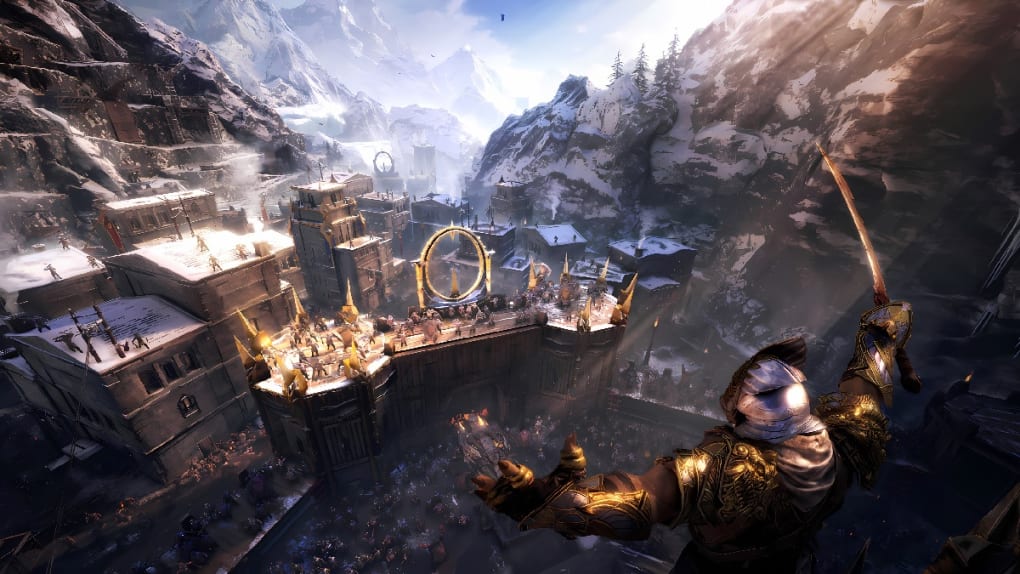
As Talion and Celebrimbor progress, their strategy shifts from mere survival and revenge to building a formidable counter-force. Leveraging the fragments of the New Ring’s power that they possess, they begin to amass an army of Orcs. Through domination and mind-control, they recruit Orc captains and warchiefs, bending them to their will and turning Sauron’s own soldiers against him. This strategic layer transforms the game from a solitary hack-and-slash into a grand-scale conflict, where players become the architects of their own Mordor army. While the sheer variety of missions and activities is impressive, some players might find certain objectives, particularly the fortress assaults, can become a tad repetitive over multiple playthroughs, a minor critique in an otherwise expansive experience.
The Evolution of Gameplay: Features and Mechanics
Middle-earth: Shadow of War is celebrated for its feature-rich design, offering players an unparalleled experience within Tolkien’s lore. The game meticulously builds upon its predecessor’s successes, particularly in refining the elements that made it a standout title in the action RPG genre.
The Enhanced Nemesis System: Your Personal Saga
Undoubtedly, the crown jewel of Shadow of War is the significantly improved Nemesis System. This innovative mechanic, first introduced in Shadow of Mordor, undergoes a profound evolution, transforming static enemy encounters into dynamic, personal narratives. The Nemesis System generates unique Orc captains and warchiefs, each with distinct appearances, personalities, strengths, and weaknesses. What makes it truly exceptional is their memory: Orcs remember past skirmishes. An Orc you fled from might mock your cowardice in a future encounter. One you humiliated might return with a scar and an burning desire for revenge. An Orc you spared might even appear later as an ally.
This system ensures that every encounter with an Orc leader is memorable and impactful, fostering a deep sense of attachment – be it hatred or grudging respect – for your adversaries. It’s not just about defeating enemies; it’s about building a personal history with the denizens of Mordor. Furthermore, the Nemesis System extends to your own Orc followers, who can gain promotions, betray you, or require rescue, creating a living, breathing hierarchy within your growing army. This intricate enemy AI and dynamic storytelling engine truly sets Shadow of War apart, making each playthrough feel uniquely tailored to the player’s actions and choices.
Epic Combat and Strategic Army Building
The combat mechanics in Shadow of War are a masterful blend of fluid, satisfying action and tactical depth. Talion moves with brutal efficiency, seamlessly chaining sword attacks, stealth takedowns, and ranged bow shots. The addition of Celebrimbor’s spectral abilities further enhances the combat, allowing for powerful area-of-effect attacks and unique ways to dominate enemies. Battles are challenging and rewarding, requiring players to identify enemy weaknesses, utilize environmental hazards, and effectively manage their abilities. The intricate enemy AI ensures that foes are not merely cannon fodder; they coordinate attacks, react to your tactics, and challenge you constantly.
Beyond direct combat, the game introduces a robust strategic layer through its army-building mechanics. Players can dominate Orc captains and recruit them into their ranks, assigning them to various positions within their hierarchy, from bodyguards to warchiefs. This army is crucial for the game’s large-scale fortress sieges, a new and exciting feature. These sieges involve leading your personalized Orc army to storm heavily fortified enemy strongholds. Players must strategically deploy their forces, breach walls, capture control points, and ultimately face the fortress overlord. These moments are epic in scale, blending intense action with strategic planning, as the composition of your army and the strengths of your captains directly impact the outcome. The ability to dominate an Orc army adds a layer of strategic depth that significantly expands the gameplay experience beyond traditional action RPGs.
A World Ripe for Exploration
Shadow of War boasts an expansive open world, meticulously crafted and significantly larger than its predecessor. Players can traverse diverse environments and regions within Mordor, each with its own unique aesthetics, challenges, and secrets to uncover. From the fiery wastes of Gorgoroth to the lush, forested slopes of Nurn and the icy peaks of Seregost, the world feels alive and teeming with opportunities for exploration. The game rewards curiosity, with hidden collectibles, side quests, and emergent Nemesis System events constantly unfolding across the landscape.
The storyline, which intricately weaves Talion and Celebrimbor’s quest for vengeance with their interactions with iconic characters from Tolkien’s lore – and original characters who feel authentic to the universe – provides a compelling narrative backdrop. This rich narrative, combined with the dynamic Nemesis System and the sheer scale of the world, ensures that players are constantly engaged, whether they are progressing through the main story, undertaking side missions, or simply exploring the vast, dark beauty of Mordor.
Navigating the Shadows: Strengths and Weaknesses
While Middle-earth: Shadow of War offers a robust and immensely immersive experience, it is, like all ambitious titles, not without its shortcomings. Understanding both its commendable achievements and its points of contention provides a balanced perspective on its overall impact.
Commendable Achievements
The game’s strengths are numerous and significant. Foremost among them is its rich and immersive world. Mordor is brought to life with stunning detail, atmospheric design, and a palpable sense of history and dread. Exploring its various regions is a constant discovery, filled with remnants of ancient civilizations, the horrors of Sauron’s war, and unexpected moments of bleak beauty. This commitment to world-building makes for an unforgettable backdrop to the player’s journey.
The strategic fortress sieges represent a peak gameplay experience. These large-scale battles are not just visually impressive but also demand tactical thinking, careful army management, and skilled combat. The thrill of leading your personalized Orc army to conquer an enemy stronghold, breaching its defenses, and confronting its overlord, is a unique and deeply satisfying mechanic. Each siege feels consequential, with lasting impacts on the dynamic world map.
Furthermore, the improved combat mechanics are a major highlight. Building on the fluid “free-flow” system of its predecessor, Shadow of War refines and expands it with new abilities, execution moves, and a deeper sense of impact. The responsiveness and brutal efficiency of Talion’s movements make every skirmish, from a small ambush to a massive battle, a thrilling affair. The addition of more spectral powers and environmental interactions ensures combat remains fresh and engaging throughout the lengthy campaign.
Points of Contention: Repetition and Monetization
Despite these strengths, Shadow of War faced criticism for certain aspects. One significant drawback highlighted by many players was the repetitive nature of certain missions and activities. While the Nemesis System ensures unique interactions with individual Orcs, some players found that the core objectives of fortress assaults, while initially exciting, could begin to feel similar after multiple playthroughs. Similarly, various side missions, while contributing to world immersion, sometimes lacked the narrative distinctiveness to prevent a sense of grind. This repetition, for some, detracted from the overall enjoyment and the feeling of constantly progressing in a fresh way.
Additionally, a major point of contention among the gaming community was the game’s initial reliance on microtransactions for certain in-game items and upgrades. At launch, Shadow of War featured a market where players could purchase “Loot Chests” containing Orcs of various rarities, XP boosts, and gear. While developers later scaled back and eventually removed these microtransactions, their initial presence was seen as a problematic monetization practice. Many players felt that it affected the game’s balance and progression, creating a “pay-to-win” or “pay-to-progress-faster” dynamic in what was otherwise a single-player, story-driven experience. This reliance on microtransactions was perceived as hindering the organic flow of the Nemesis System and devaluing the hard-earned victories of players who chose not to engage with the in-game store. Despite the engaging story and dynamic world, these elements, particularly at launch, undoubtedly cast a shadow on the overall experience for some players.
Beyond Mordor: Comparing with Other Epic RPGs
For players who revel in the blend of action, role-playing, and open-world exploration offered by Middle-earth: Shadow of War, there’s a rich landscape of similar titles that promise comparable satisfaction. These alternatives, while distinct in their settings and specific mechanics, share common threads of vast worlds, engaging combat, and compelling narratives.
Similar Adventures for the Discerning Player
One prominent alternative is Assassin’s Creed Odyssey. This title immerses players in a vast and intricately detailed world set in ancient Greece. Like Shadow of War, Odyssey places a strong emphasis on exploration, allowing players to traverse sprawling landscapes, bustling cities, and treacherous seas. Combat is fluid and action-oriented, and the game features a narrative deeply influenced by player choices, reminiscent of the personal impact the Nemesis System has on individual stories. The sense of epic scale and the freedom to forge one’s own path are strong parallels.
Another stellar option is The Witcher 3: Wild Hunt. Often cited as one of the greatest RPGs of all time, The Witcher 3 is renowned for its unparalleled storytelling, complex characters, and an incredibly expansive world brimming with diverse quests and activities. While its combat is more deliberate than Shadow of War’s agile system, the depth of its narrative choices, the moral ambiguities faced by its protagonist, Geralt of Rivia, and the sheer volume of high-quality content resonate deeply with players who appreciate rich, immersive RPG experiences.
For those seeking a unique blend of action and exploration in a distinct setting, Horizon Zero Dawn offers a compelling experience. Set in a post-apocalyptic world reclaimed by nature and overrun by majestic robotic creatures, Horizon Zero Dawn delivers engaging combat mechanics that require strategic targeting and environmental awareness. Its compelling storyline, featuring a mysterious past and a determined protagonist, Aloy, provides a narrative hook that can captivate fans of Shadow of War’s quest for vengeance and truth.
Finally, for fans of Tolkien’s universe specifically, and those who appreciated the foundational elements of Shadow of War, its predecessor, Middle-earth: Shadow of Mordor, remains an excellent choice. It offers a similar gameplay experience, introducing the innovative Nemesis System and presenting a gripping narrative that sets the stage for the sequel. Playing Shadow of Mordor first provides invaluable context and allows players to fully appreciate the refinements and expansions brought forth in Shadow of War. All these games offer deep, engaging worlds that reward exploration and mastery, making them ideal for players who enjoyed the grandeur and mechanics of Middle-earth: Shadow of War.
The overall gameplay experience of Middle-earth: Shadow of War is a masterful amalgamation of action, role-playing depth, and expansive open-world exploration, all meticulously woven into the rich tapestry of Middle-earth. It provides players with a diverse array of engaging activities and sophisticated mechanics designed to immerse them fully in its dynamic universe. The game offers a profoundly satisfying and immersive journey, expertly blending thrilling combat, strategic army building, a vast world ripe for discovery, and a constantly evolving narrative shaped by the groundbreaking Nemesis System.
Pros:
- Rich and Immersive World: The detailed and expansive rendition of Mordor provides a captivating backdrop for exploration and adventure.
- Strategic Fortress Sieges: Leading a customized Orc army to conquer enemy strongholds offers thrilling, large-scale tactical gameplay.
- Improved Combat Mechanics: Fluid, brutal, and rewarding combat system that builds upon its predecessor’s strengths.
- Dynamic Nemesis System: Creates unique, personal stories with enemies and allies, ensuring no two playthroughs are exactly alike.
Cons:
- Repetitive Missions: Certain side activities and fortress assaults can feel similar over time, potentially leading to a sense of grind.
- Reliance on Microtransactions (at launch): The initial presence of in-game purchases for power-ups and Orcs was controversial, affecting progression and balance (though later removed).
Middle-earth: Shadow of War is developed by Monolith Productions, Inc. and was last updated in 2019. It is available for Windows (including Windows 11), Xbox One, and PlayStation 4, with a full license version. The game supports multiple languages, including English, Arabic, German, Spanish, French, Italian, Japanese, Korean, Polish, Portuguese, Russian, Chinese, Swedish, Thai, Turkish, and Vietnamese. As of the latest information, it has seen approximately 2.5K downloads last month on PhanMemFree.org.
If you enjoyed Middle-earth: Shadow of War, PhanMemFree.org also recommends other adventure titles like Middle-earth: Shadow of Mordor, ROBLOX, Minecraft: Java & Bedrock Edition, and Raft. PhanMemFree strives to provide a malware-free catalog, scanning all files with leading antivirus services to ensure safety. For any concerns, users are encouraged to utilize the “Report Software” feature to help maintain a secure environment. PhanMemFree.org aims to be a trusted source for game downloads and information, always prioritizing user safety and experience.
File Information
- License: “Full”
- Version: “2019”
- Latest update: “July 4, 2024”
- Platform: “Windows”
- OS: “Windows 11”
- Language: “English”
- Downloads: “2.5K”


