
Mini Motorways, developed by Dinosaur Polo Club, is a captivating strategy simulation game that challenges players to design and manage the road networks of burgeoning cities. Unlike its predecessor, Mini Metro, which focused on subterranean rail systems, Mini Motorways takes to the streets, placing players in the role of urban planners tasked with connecting homes, businesses, and industrial areas with efficient and effective road networks. While inheriting the minimalist aesthetic and intuitive gameplay of its sibling title, Mini Motorways carves its own path with unique challenges and features, albeit with some limitations.
Gameplay: Connecting the Dots, One Road at a Time
The core gameplay loop of Mini Motorways is deceptively simple yet incredibly engaging. Players are presented with a growing city, represented by a stylized map populated with residential areas (houses), commercial hubs (shops), office buildings, and warehouses. The player’s objective is to connect these locations with a network of roads, using a limited supply of road tiles. This connection is achieved through a straightforward drag-and-drop mechanic: simply click and drag to lay down roads, creating the arteries of the city’s transportation system.
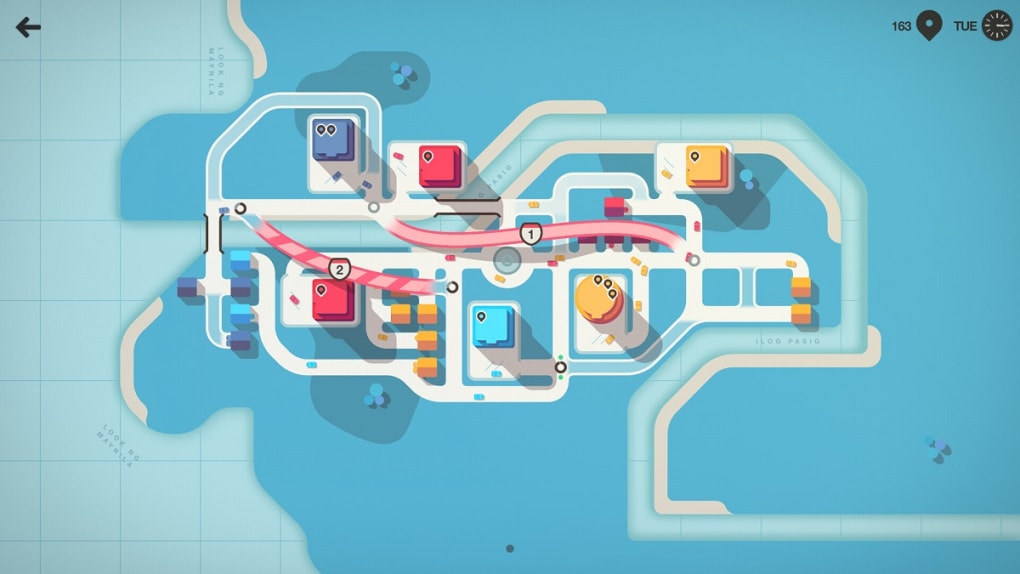
The game’s elegance lies in its simplicity. The visual style is clean and minimalist, allowing players to focus on the strategic puzzle at hand. The satisfaction derived from efficiently connecting disparate areas and watching the steady flow of traffic is deeply rewarding. However, the seemingly straightforward task of road placement quickly becomes a complex balancing act. As the city expands and the number of vehicles increases, players must constantly adapt their road network, rerouting traffic, and optimizing flow to prevent gridlock. A countdown timer adds a layer of urgency, signifying the impending collapse of the system if the vehicles run out of available roads. This adds a layer of pressure, demanding strategic thinking and quick adaptations. The game’s intuitive controls, coupled with the visually satisfying road placement, create a gameplay loop that’s both simple to learn and challenging to master.
Road tiles, the fundamental building blocks of the road network, are in limited supply. This scarcity forces players to make thoughtful decisions regarding road placement and rerouting. Deleting and replacing roads is possible, allowing for adjustments and optimizations, but this strategic flexibility comes with its own challenges. Poorly planned road networks can quickly lead to traffic congestion and ultimately, game over. The limited number of tiles requires a level of foresight and careful planning, making every placement critical. This limited-resource dynamic is a core component of the game’s strategic depth.
Challenges, Rewards, and Replayability: A Balancing Act
Mini Motorways features a daily challenge mode, offering a new city layout each day, injecting a degree of replayability into the game. Successfully completing these daily challenges grants players rewards, which can include additional road tiles, roundabouts, traffic lights, and motorways – all vital tools for managing ever-increasing traffic flow. These rewards help to mitigate the limited-resource nature of the game and allow for more sophisticated network development.
However, despite the daily challenges and rewards, the game’s long-term replayability falls somewhat short of its predecessor, Mini Metro. Mini Motorways currently offers only 11 levels, and the maps, while visually distinct, often feel repetitive in terms of the underlying gameplay challenges. The lack of sandbox mode or the inability to save custom maps locally further restricts its replay value. The inherent charm of the gameplay loop is undeniable, but the limited content can lead to a feeling of completion relatively quickly, leaving players wanting more variety and options.
The Mini Motorways’ Birthday and the Dawn of Creative Mode
In celebration of the Mini franchise’s 10th anniversary, Mini Motorways incorporated three popular maps from Mini Metro – London, Mumbai, and New York City – each offering a unique urban layout and planning challenges. Furthermore, a new building type was introduced: train stations. This addition significantly alters the strategic landscape, requiring players to integrate train lines into their road networks, adding another layer of complexity to their planning.
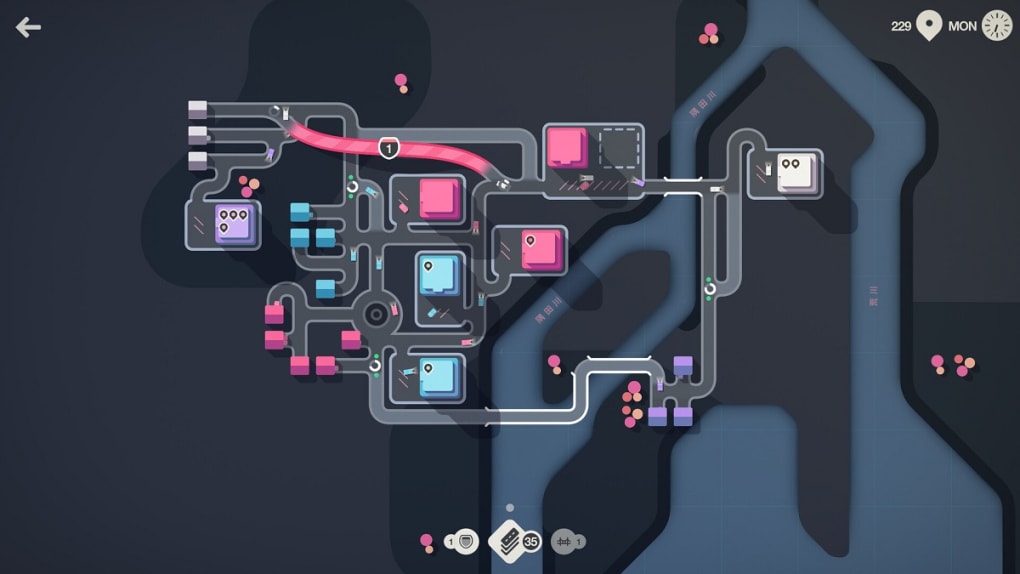
A highly requested feature, Creative Mode, was finally launched. This mode unlocks limitless possibilities, granting players unprecedented control over their cityscapes. Players can experiment with building colors, adjust the locations of buildings, and access a virtually unlimited supply of upgrades. This freedom to design and redesign without the constraints of a timer or limited resources provides an entirely new avenue for enjoyment and allows for the expression of individual creativity in urban planning. This mode significantly extends the game’s lifespan and appeal, transforming it from a primarily challenge-based game into a more flexible and open-ended experience.
Is Mini Motorways Worth the Trip?
Mini Motorways is an excellent example of a well-designed, casual strategy game. Its simple yet engaging mechanics, combined with its charming visual style and dynamic soundtrack, create a relaxing yet challenging experience. The game’s minimalist design allows players to focus on the core puzzle without being overwhelmed by intricate details. The satisfying feeling of efficiently managing traffic flow and building a successful road network is highly rewarding.
However, the game’s relatively limited content and lack of diverse gameplay modes hold it back from reaching the same heights as its predecessor, Mini Metro. While the addition of Creative Mode significantly addresses the issue of long-term replayability, the relatively small number of standard levels and absence of sandbox mode might leave some players wanting more.
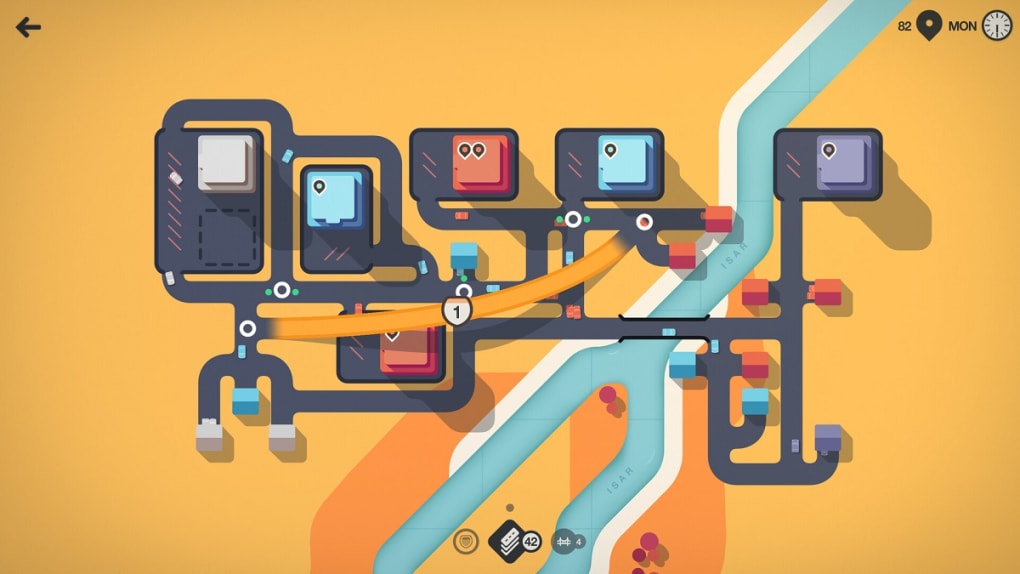
Pros and Cons of Mini Motorways
Pros:
- Simple, intuitive gameplay: The drag-and-drop mechanics are easy to learn, making the game accessible to a wide range of players.
- Superb visuals and sound: The minimalist aesthetic and dynamic soundtrack create a pleasant and engaging atmosphere.
- Daily challenges: These provide a continuous stream of new puzzles and prevent the gameplay from becoming stale too quickly.
- Creative Mode: This highly requested addition offers unparalleled freedom in city design, greatly extending the game’s longevity and appeal.
- Integration of Mini Metro maps: The inclusion of familiar maps from Mini Metro adds a nostalgic touch for fans of the franchise.
Cons:
- Limited number of levels: Only 11 levels in the standard game mode can be limiting for players seeking long-term engagement.
- Lack of variety in maps: While the maps are visually distinct, the core gameplay challenges can feel repetitive across levels.
- No sandbox mode or local map saving: These omissions restrict the ability to experiment and replay levels with different strategies.
- Repetitive gameplay loop: While engaging initially, the core gameplay loop can become somewhat predictable after extended play.
Ultimately, Mini Motorways is a worthwhile experience for those seeking a relaxing yet strategically challenging casual game. The core gameplay loop is highly satisfying, and the addition of Creative Mode significantly increases its replayability. However, the limited standard level content and the absence of a fully featured sandbox mode might leave some players wanting more depth and longevity. Whether the game is “good” is subjective and depends on individual preferences and expectations, but its undeniable charm and satisfying gameplay make it a worthy addition to the Mini franchise.
File Information
- License: “Full”
- Version: “varies-with-devices”
- Latest update: “July 1, 2025”
- Platform: “Windows”
- OS: “Windows 8.1”
- Language: “English”
- Downloads: “24.1K”


