
In the ever-evolving landscape of 3D design and animation, a select few applications rise to prominence, becoming indispensable tools for professionals seeking to bring their most ambitious visions to life. Among these titans stands modo, a powerful and multifaceted platform that has carved out a significant niche, earning acclaim from industry giants like Pixar Studios and Industrial Light and Magic. Developed by Luxology (now part of Foundry), modo has consistently pushed the boundaries of what’s possible in 3D modeling, painting, rendering, and animation, offering an integrated environment designed for unparalleled creativity and efficiency.
At its core, modo is not merely a collection of features; it is a meticulously engineered ecosystem where every component is designed to enhance and complement the others. This holistic approach ensures a seamless workflow that empowers artists and animators to move effortlessly from concept to final render, fostering an environment where ideas can flourish without the impediments of disjointed software. From the intricate details of polygonal modeling to the lifelike nuances of character animation and the breathtaking realism of its renderer, modo offers a comprehensive solution for the demanding world of professional 3D content creation.
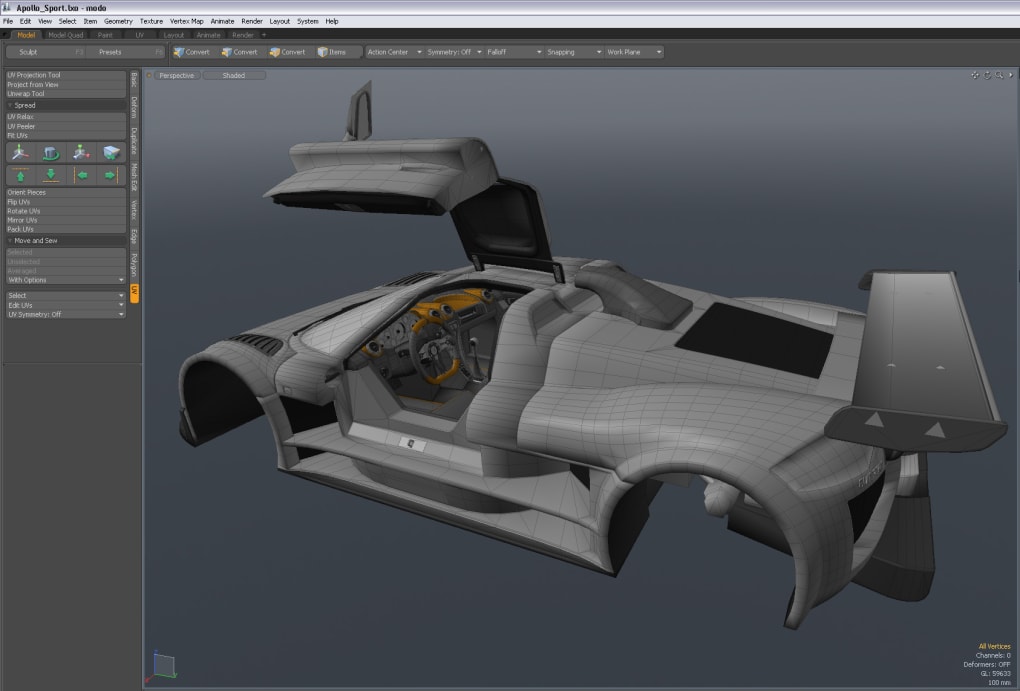
The Evolution of 3D Creation: What is modo?
modo’s journey in the realm of 3D design has been marked by continuous innovation and a commitment to addressing the evolving needs of its user base. What began as a highly capable modeling and rendering tool has grown into an expansive suite, capable of tackling virtually any challenge in the 3D pipeline. Early versions of modo, such as modo 501, were already celebrated for their robust modeling capabilities and sophisticated rendering engine, quickly gaining a reputation as a preferred choice for studios and individual artists alike. However, the feedback from its passionate community highlighted areas for growth, particularly in character animation.
Luxology heeded this call, and with the release of modo 601, a significant leap forward was made with the introduction of comprehensive character animation features. This update transformed modo from an exceptional static modeler into a dynamic powerhouse, allowing artists not just to craft intricate 3D models but to imbue them with motion, personality, and life. This marked a pivotal moment, cementing modo’s position as a full-fledged creative solution for everything from architectural visualization to complex film productions.
The philosophy behind modo has always been to provide “the next evolution of 3D modeling, painting, and rendering in a single integrated and accelerated platform.” This means that while each module—modeling, painting, rendering, and animation—is incredibly powerful on its own, their true strength lies in their synergistic integration. The designers of modo understood that in a professional workflow, time is often of the essence, and constant exporting and importing between different applications can be a significant bottleneck. By unifying these core functionalities, modo drastically reduces friction, allowing artists to iterate faster, maintain creative flow, and ultimately produce higher quality work more efficiently.
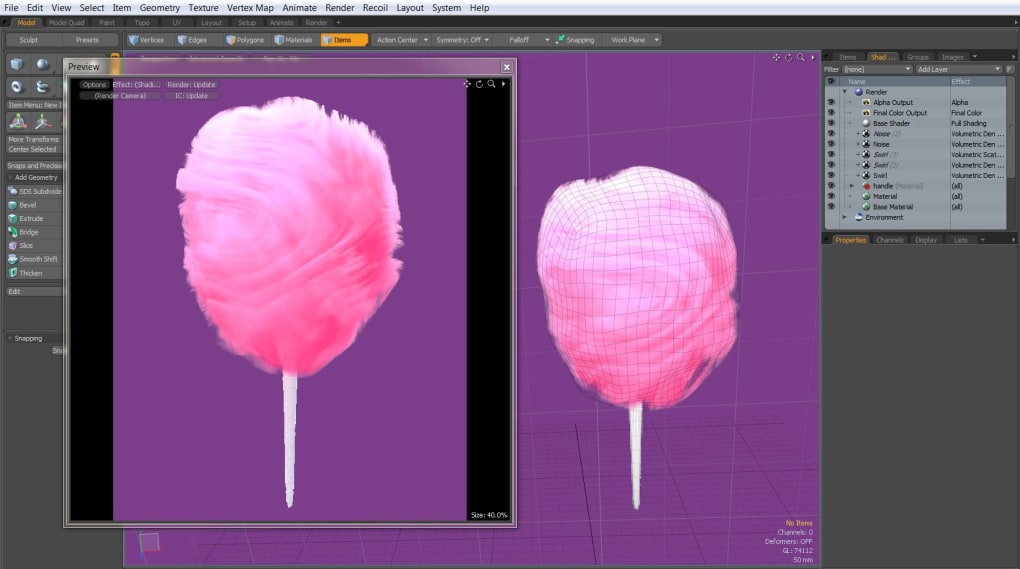
This commitment to an integrated approach means that every tweak in a model, every stroke of paint, and every adjustment in animation directly influences the final rendered output within the same environment. This immediate feedback loop is invaluable, enabling artists to make informed decisions and refine their creations with greater precision and speed. For anyone involved in 3D design, whether an aspiring student or a seasoned professional, modo offers the opportunity to create faster and work more elegantly than ever before, leveraging a toolset that is both accessible and profoundly deep.
Beyond its core features, modo also benefits from a vibrant and active community. This ecosystem of users contributes to the platform’s growth by developing “kits” – add-ons and scripts that expand modo’s functionality and streamline specific workflows. PhanMemFree supports this collaborative spirit by providing a section on its site where users can preview and purchase these new kits, further extending modo’s versatility and ease of use. This continuous development, both from the core team and its community, ensures that modo remains at the forefront of 3D technology, adapting to new challenges and empowering artists with an ever-expanding arsenal of tools.
Unifying the Creative Pipeline: Modeling, Painting, and Rendering in modo
The true genius of modo lies in its integrated approach to the 3D content creation pipeline. Instead of requiring artists to jump between disparate software packages for different stages of their project, modo brings together modeling, painting, and rendering under one unified roof. This seamless integration is not just a convenience; it’s a fundamental design principle that enhances efficiency, maintains creative momentum, and ultimately leads to higher quality results. When every tool is designed to communicate effortlessly with the others, the artist can focus on the creative act itself, rather than wrestling with technical incompatibilities or cumbersome data transfers. This section delves into the individual strengths of modo’s core functionalities and how they harmoniously blend to form a complete creative solution.
Precision Modeling: Shaping Your Vision
At the heart of modo’s renown is its exceptionally powerful and intuitive modeling environment. Described as the “fastest, most advanced polygonal and subdivision surface 3D modeling environment available,” modo provides artists with an unparalleled level of control and flexibility in sculpting their virtual worlds. Whether the task involves crafting hard-surface mechanical objects, architectural elements, or organic forms like characters and creatures, modo’s tools are designed for precision and efficiency.
One of its standout features, celebrated for its efficiency, is the implementation of Pixar subdivision surface modeling. This technology allows artists to work with low-polygon base meshes, which are easier and faster to manipulate, while automatically generating smooth, high-fidelity surfaces for rendering. This effectively “reduces polygon count” during the modeling phase, optimizing performance without sacrificing visual quality in the final output. The ability to switch between low-resolution proxy models and high-resolution subdivision surfaces with ease means artists can iterate quickly, explore different designs, and make fundamental changes without getting bogged down by excessive geometry.
modo’s modeling toolkit is comprehensive, offering everything from traditional polygonal tools like extrusion, bevel, and bridge, to advanced procedural modeling techniques. This versatility makes it ideal for a wide range of applications. For instance, creating intricate models of people or animals is greatly aided by the precision of its sculpting tools, which can be likened to the capabilities found in dedicated sculpting applications like Mudbox or ZBrush, yet integrated directly into the modeling environment. This allows for a fluid transition between block-out and fine detailing, empowering artists to shape their vision with an unprecedented degree of freedom and control. The ease of manipulation of volumetric objects further enhances its appeal, allowing for complex forms to be created and refined with relative simplicity.
Intuitive Painting: Bringing Textures to Life
Once a model is sculpted, the next crucial step is to give it surface detail and character through texturing and painting. modo excels in this area, offering one of the most natural and robust 3D painting experiences available. Unlike traditional 2D painting, where textures are applied to flat images and then mapped onto 3D models, modo allows artists to paint directly onto their 3D creations in real-time. This direct manipulation provides immediate visual feedback, making the texturing process far more intuitive and efficient.
modo’s paint tools are designed to mimic the feel of traditional art, offering a wide array of brushes, stencils, and projection methods. What truly sets it apart, however, is its innovative approach to layering, incorporating procedurals directly into the process. This means artists can blend procedural textures—patterns generated mathematically rather than painted—with hand-painted details. This opens up a nearly limitless palette of creative options, allowing for the creation of incredibly complex and realistic surfaces that would be arduous or impossible with conventional methods alone. Imagine seamlessly combining a procedural rust texture with hand-painted grime and scratches, all within a single, dynamic layer stack.
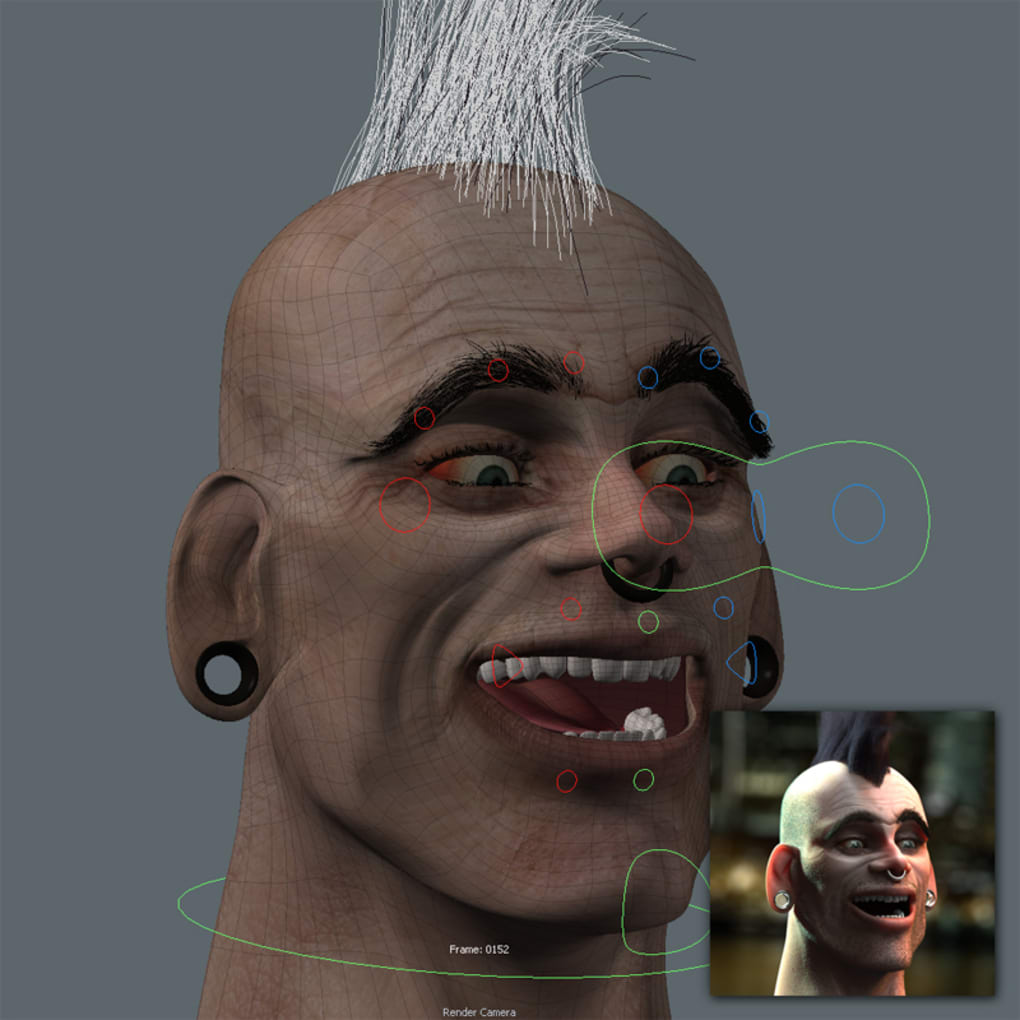
For specific applications, such as character design, modo offers specialized tools like a new skin and hair shading and texture tool. This feature is instrumental in achieving photo-realistic results for human and animal characters. Crafting believable skin, with its subtle subsurface scattering and intricate pore details, or rendering realistic hair, with its individual strands and dynamic properties, requires highly specialized algorithms. modo provides these directly, enabling artists to create characters that truly come alive on screen, pushing the boundaries of visual fidelity without needing external plugins or complex setups.
Blazing Fast Rendering: Quality Without Compromise
The culmination of any 3D project is the render—the process of transforming a wireframe model with textures and lighting into a final, photorealistic image or animation. modo’s integrated renderer is a powerhouse, celebrated for its ability to deliver both exceptional quality and astonishing speed. In the demanding world of production, artists often face a dilemma: sacrifice quality for speed to meet deadlines, or spend agonizing hours waiting for high-quality renders to complete. With modo, this compromise is largely mitigated.
The rendering engine in modo is designed for efficiency and visual excellence. It supports advanced rendering techniques such as global illumination, physically based rendering (PBR), and volumetric effects, all contributing to images that boast incredible realism and depth. The “speedy rendering engine” mentioned in user reviews is not just a convenience; it’s a critical factor in a productive workflow. Faster render times mean artists can preview their work more frequently, iterate on lighting and material choices with greater agility, and ultimately finalize their projects much quicker. This directly translates to more time for creative exploration and less time waiting for progress bars.
Moreover, the integration of the renderer within the same platform as the modeler and painter means that lighting, materials, and camera setups can be adjusted and previewed in real-time or near real-time, providing immediate feedback on how changes will affect the final output. This iterative approach is crucial for achieving precise visual results. Whether it’s crafting a still image for an advertisement, a series of frames for an animated sequence, or a full-length cinematic shot, modo’s renderer ensures that the final product not only meets but often exceeds professional expectations for visual quality, all while maintaining an impressive pace.
Beyond Static Models: The Power of Character Animation and Dynamics
While modo’s prowess in modeling, painting, and rendering forms its foundational strength, its evolution into a comprehensive animation suite truly cemented its position as an industry-leading tool. The transformation, particularly evident with the introduction of robust character animation in modo 601, marked a pivotal moment, allowing artists to transcend static imagery and infuse their creations with motion, emotion, and realism. This expansion into dynamic capabilities opened up a vast new realm of possibilities for animators, game developers, and visual effects artists.
The ability to perform character animation means that the intricate models sculpted and textured in modo can now be rigged, posed, and brought to life. Animators can create expressive movements, dynamic interactions, and compelling performances, making characters truly believable. This feature was a direct response to user demand and filled a critical gap, allowing modo to compete directly with applications traditionally known for their animation toolsets, such as Cinema 4D. The workflow for character animation in modo is designed to be intuitive, allowing for efficient rigging, keyframing, and motion editing, enabling artists to animate even complex characters with precision and artistic control.
Beyond character-specific movements, modo also excels in simulating realistic physical phenomena through its integrated physics controls and fluid dynamics. The inclusion of “Bullet physics,” a popular open-source physics engine, enables artists to simulate rigid body dynamics, soft body dynamics, and cloth simulations directly within modo. This means that objects can collide, shatter, bounce, and deform with accurate physical responses, adding a layer of authenticity to animated scenes. For instance, a character jumping and interacting with its environment can kick up dust, knock over props, or have its clothing realistically react to movement, all thanks to these advanced physics simulations.
Fluid dynamics further enhance the realism of animated scenes by allowing artists to simulate liquids and gases. This capability is essential for creating effects like flowing water, billowing smoke, or raging fires, contributing significantly to the immersive quality of visual effects and environmental animations. The integration of these dynamic systems means that the same environment used for modeling and animation can also be used to simulate complex physical interactions, ensuring consistency and reducing the need for external simulation software. The result is animations that are not only visually stunning but also physically plausible, captivating audiences with their authenticity.
This synergy of character animation, physics controls, and fluid dynamics empowers artists to tell richer, more compelling stories. From creating a serene waterfall to a chaotic explosion, or a subtle character gesture to a full-blown action sequence, modo provides the tools to achieve high-fidelity dynamic visuals. It means artists can design scenes where every element, from a character’s hair to the interaction of water with terrain, behaves as it would in the real world, bringing an unprecedented level of depth and believability to their digital creations.
The modo Advantage: Workflow, Community, and Professional Impact
modo’s position as a de facto standard in professional 3D content creation is not merely a consequence of its individual features, but rather a holistic sum of its design philosophy, user community, and profound impact on the creative workflow. It offers distinct advantages that streamline the creative process, foster collaboration, and empower artists to achieve their highest potential.
The most significant advantage lies in modo’s integrated workflow. By unifying modeling, painting, rendering, and animation into a single platform, it eliminates the inefficiencies inherent in multi-application pipelines. Artists no longer have to contend with cumbersome data exports, imports, or compatibility issues between different software packages. This continuity ensures a smooth and uninterrupted creative flow, allowing for rapid iteration and refinement. When a change is made to a model, its impact on textures, animation, and the final render can be immediately observed and adjusted within the same environment. This “easy manipulation of volumetric objects,” combined with the integrated nature, translates directly into time saved and a more focused creative process.
Moreover, modo cultivates a highly engaged and supportive community. This community plays a crucial role in extending modo’s functionality through the creation of “kits.” These user-developed add-ons can range from specialized tools and scripts to custom workflows and asset libraries, further tailoring modo to specific needs and expanding its versatility. PhanMemFree, recognizing the value of this collaborative spirit, provides a dedicated section for users to preview and acquire these kits. This active ecosystem ensures that modo remains adaptable and responsive to the diverse demands of its users, constantly evolving beyond its core feature set. It means that an artist can find solutions for niche problems or discover new ways to accelerate common tasks, all within the modo environment, enriched by the contributions of fellow users.
While modo offers an incredibly powerful and intuitive feature set, it’s worth acknowledging that it does come with a “steep learning curve,” as noted by some users. This is not uncommon for professional-grade 3D applications, which by their nature are complex and comprehensive. However, this initial investment in learning pays significant dividends. Users transitioning from older, “old-core based applications such as Autodesk products” might find modo’s modern approach to 3D modeling a “little confusing” at first. Yet, this modern approach often leads to greater efficiency and flexibility once mastered. The learning curve is a gateway to owning a “real 3D arsenal,” as one user put it, with capabilities akin to a combination of Mudbox for sculpting, 3ds Max for powerful modeling, Maya for organic shapes, ZBrush for 3D painting, and Cinema 4D for animation—all integrated within a single, streamlined interface.
This broad spectrum of capabilities and its intuitive design make modo a compelling choice for professionals across various industries, from game development and film production to product design and architectural visualization. Its ability to create “photo-realistic” characters with advanced skin and hair shaders, coupled with its robust physics and fluid dynamics, makes it ideal for projects requiring high levels of visual fidelity. The consistent updates, like the character animation in 601, demonstrate Luxology’s (now Foundry’s) commitment to keeping modo at the cutting edge of 3D technology.
In conclusion, modo stands as a testament to intelligent software design, where power and usability converge to empower creative individuals. Its integrated platform, robust feature set, continuous evolution, and strong community support collectively form the “modo advantage.” For artists and animators seeking an all-in-one solution that prioritizes workflow efficiency, creative freedom, and professional-grade results, modo remains one of the premier tools in the digital art world, consistently proving why it’s the de facto 3D modeling application for professionals who refuse to sacrifice quality for speed.
File Information
- License: “Trial version”
- Version: “601”
- Latest update: “May 3, 2012”
- Platform: “Windows”
- OS: “Windows XP”
- Language: “English”
- Downloads: “49.9K”
- Size: “439.96 MB”


