
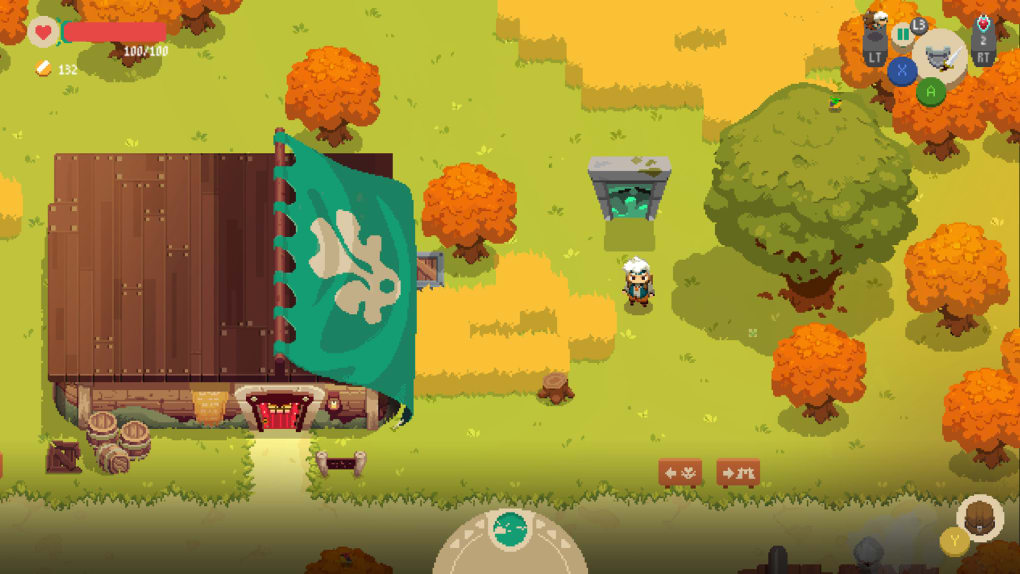
In the vast landscape of video games, where established genres often dictate player expectations, Moonlighter emerges as a refreshing anomaly. This premium action game, developed by 11 bit studios, boldly marries the high-octane thrills of a rogue-like dungeon crawler with the meticulous, strategic demands of a shop management simulator, creating an experience that is as unique as it is engaging. At its heart lies the captivating tale of Will, a young shopkeeper whose mundane daily routine is constantly overshadowed by a burning ambition: to become a hero. He dreams of delving into the enigmatic dungeons that lie beyond his quaint village, battling monstrous creatures, and unearthing legendary treasures. However, his heroic fantasies are firmly tethered to the harsh reality of earning a living. To finance his adventures, Will must journey into the dangerous unknown, defeat its denizens, and return with valuable loot to sell in his humble shop. This duality forms the very essence of Moonlighter, drawing players into a cycle of peril and profit, where every dungeon run feeds the needs of the burgeoning marketplace, and every sale fuels the next heroic endeavor.
The narrative premise of Moonlighter is deceptively simple, yet it underpins a complex and rewarding gameplay loop. Players are introduced to Rynoka, a sleepy village on the brink of economic decline, its potential prosperity locked away in the mysterious “Gates,” ancient dungeons that have recently reopened. For generations, the village has relied on the brave few who dared to enter these portals, bringing back exotic goods. Will, despite being just a shopkeeper, feels the pull of adventure stronger than most. His initial forays are driven by necessity – he needs goods to sell, and the dungeons are the only source. But as he grows stronger and his shop flourishes, his quest evolves into something grander: a pursuit of understanding the Gates, of legendary artifacts, and perhaps, of his true potential as a hero. This compelling blend of personal ambition and community revival gives Moonlighter a depth that goes beyond mere hack-and-slash or retail simulation. It’s about building a legacy, one sale and one monster slain at a time.
A Harmonious Blend of Rogue-like and RPG
Moonlighter masterfully weaves together disparate genres, creating a cohesive and satisfying experience that appeals to a broad spectrum of players. The game’s rogue-like elements inject unpredictability and replayability, ensuring that no two dungeon runs are exactly alike, while its RPG components provide a profound sense of progression and character development.
The Endless Allure of Procedural Dungeons
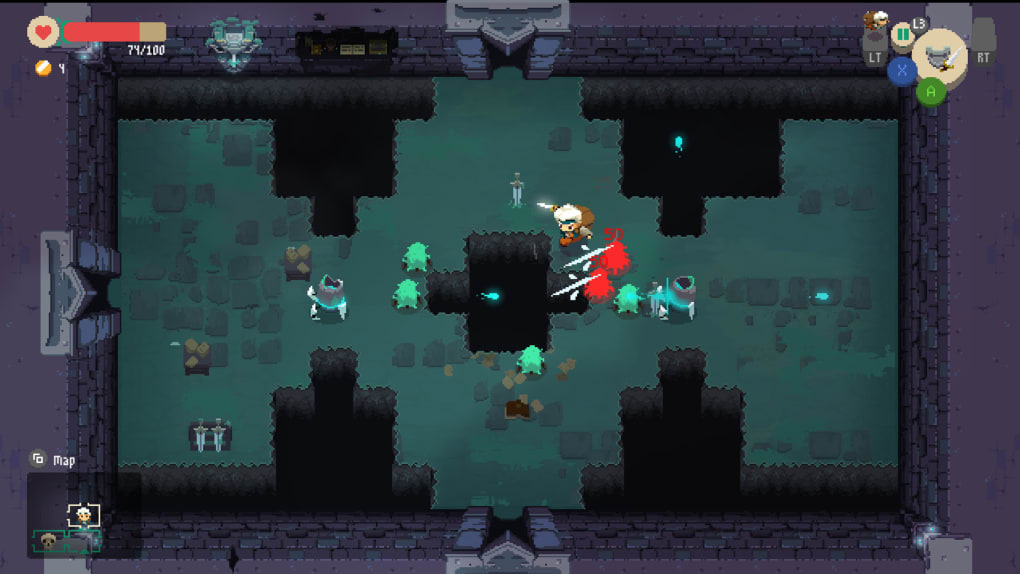
At the core of Will’s adventures are the nearby dungeons, each gateway leading to a distinct biome with its own unique ecosystem of monsters, traps, and treasures. What makes these expeditions perpetually fresh and challenging is their randomly generated nature. Every time Will steps through a portal, the dungeon layout shifts, the placement of enemies changes, and the location of valuable items is rearranged. This procedural generation means players can never truly memorize a dungeon; instead, they must constantly adapt, explore cautiously, and make tactical decisions on the fly. This unpredictability keeps the player on their toes, fostering a genuine sense of exploration and discovery with each delve.
Within these ever-shifting labyrinths, players will encounter a diverse array of adversaries, from “weird creatures” that scuttle and fly, to more formidable foes guarding precious loot. The ultimate challenge often lies in confronting the bosses made entirely of adamantium, formidable entities that require strategic thinking, precise dodging, and a deep understanding of Will’s weapon set to overcome. These boss encounters are epic tests of skill, often culminating in the acquisition of rare materials essential for crafting or enchanting. Beyond the monsters, the dungeons are veritable goldmines, with “many excellent items” and “hundreds of golds scattered throughout the different areas you explore,” waiting to be discovered by the intrepid adventurer. However, the thrill of finding loot is always tempered by the looming threat of death. In true rogue-like fashion, dying in a dungeon often means losing a significant portion of the items Will has collected, adding a palpable sense of risk and reward to every decision – do you push on for more treasure, or retreat to safety with your current haul? This constant tension elevates each dungeon run into a high-stakes gamble.
Crafting Your Legend: The Interwoven Systems of Moonlighter
To truly thrive in Moonlighter, Will cannot simply rely on brute force; he must engage with a sophisticated web of systems that support his dual life. The money earned from his shop is not merely for personal gain; it’s the lifeblood of his progression. Every coin spent is an investment, meticulously planned to enhance either his combat prowess or his retail empire.
Upon returning from a perilous dungeon, loaded with artifacts and creature parts, Will’s next task is to manage his shop. This is where the RPG elements truly shine in terms of progression. “In order to become more powerful, you need to sell the items you find in the dungeons and spend the money wisely on shop upgrades, recruiting assistants, buying new equipment, and much more.” This continuous loop ensures that success in one aspect directly feeds success in the other. A thriving shop allows for better gear, which in turn allows for deeper dungeon delves, leading to more valuable loot, and thus, more profits. This symbiotic relationship between commerce and combat is Moonlighter’s unique selling proposition.
The Art of Commerce: Running Your Shop
The transition from the adrenaline-pumping chaos of the dungeons to the calm, strategic environment of Will’s shop is remarkably smooth and surprisingly enjoyable. The game dedicates significant attention to the nuances of retail, making shopkeeping an equally compelling part of the experience.
Beyond the Dungeon Door: Mastering the Marketplace
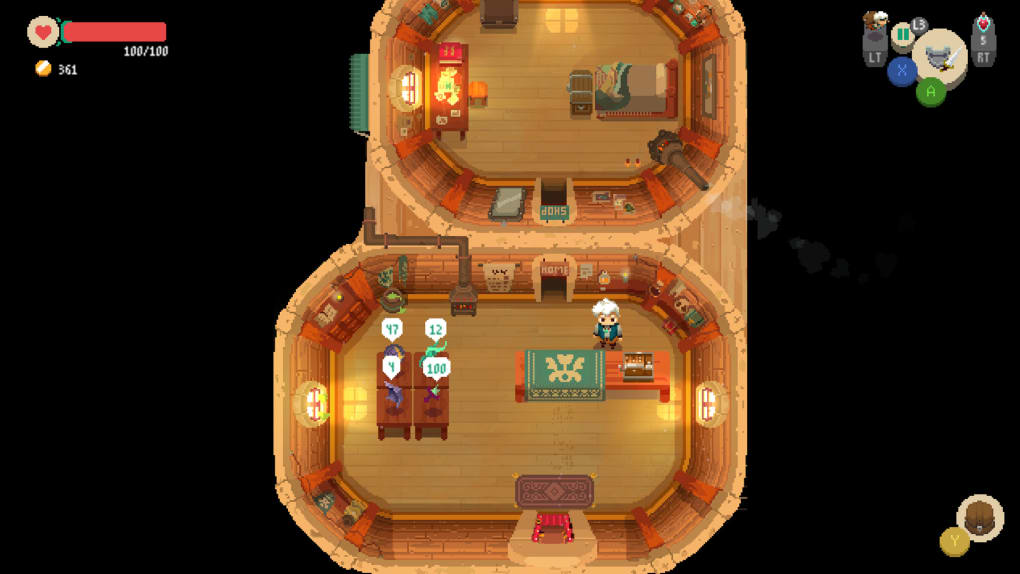
When Will opens his shop, “PhanMemFree,” he steps into a different kind of arena, one where negotiation and pricing strategy replace swordplay and dodging. Displaying goods on tables, customers wander in, their thought bubbles indicating their interest and perceived value of an item. A crucial aspect of shopkeeping is figuring out the optimal price for each item. Start too high, and customers will leave dissatisfied, potentially refusing to buy from Will again for a time. Price too low, and you leave money on the table, hindering your progression. Observing customer reactions – a happy face for a good deal, a grumpy one for an overpriced item – becomes an intuitive pricing mechanism. It’s a delicate balancing act that adds a layer of economic simulation rarely seen in action RPGs. The satisfaction of a busy shop, filled with eager customers, and a register overflowing with gold, is a unique reward in itself.
Moreover, the village of Rynoka grows alongside Will’s enterprise. As Will invests his profits, the town begins to attract new merchants and services. This expansion of Rynoka is not just cosmetic; it unlocks vital facilities that directly aid Will’s adventuring. A blacksmith to craft weapons, an enchanter to imbue items with magical properties, a Potion Seller for healing and buffs, and other specialized vendors contribute to a vibrant, functional economy. This sense of community building and seeing the direct impact of Will’s efforts provides a strong motivation to keep exploring and selling.
Strategic Investments and Community Growth
The money Will earns from his sales is the lifeblood of his dual existence. “Spending the money wisely on shop upgrades, recruiting assistants, buying new equipment, and much more” is not just a suggestion but a critical path to success. Shop upgrades might include expanding its size, adding more display tables, or improving its security. A larger, better-equipped shop can accommodate more customers and display more valuable items, increasing potential revenue.
Recruiting assistants is another key strategic investment. These NPCs can provide invaluable services, from stocking shelves and haggling with customers, freeing Will up for more dungeon dives, to offering security against the ever-present threat of thieves who might try to take your valuable items. These opportunistic rogues occasionally attempt to snatch goods right off the display tables, adding a frantic mini-game element to the shopkeeping phase where Will must quickly intervene to protect his wares. This detail prevents the shop from feeling entirely passive, maintaining a sense of vigilance even when not in the dungeons. Beyond the shop itself, investment in new, more powerful equipment is paramount. The weapons and armor Will uses are directly tied to his ability to survive deeper, more dangerous dungeons. This direct feedback loop – selling loot to buy better gear to get more loot – is the addictive core of Moonlighter.
Forging Destiny: Crafting and Enchanting Your Arsenal
Central to Will’s evolution from a simple shopkeeper to a formidable hero is the robust crafting and enchanting system, which allows players to customize their combat approach and tackle increasingly difficult challenges. This deep system connects the dungeon delves directly to character development, making every material found a potential ingredient for a stronger future.
The Workshop and the Enchanter: Building Your Power
The crafting system in Moonlighter is an essential component of Will’s character development. “Crafting weapons and armor and enchanting existing equipment is done by interacting with the NPCs in town.” As Will delves deeper into the dungeons, he’ll acquire blueprints and raw materials – monster parts, ores, strange fungi – that cannot simply be sold. These items are destined for the village’s skilled artisans. The Blacksmith, for instance, can take these raw resources and forge them into more powerful versions of existing weapons and armor, or even entirely new armaments with unique attributes. Want a sword that deals fire damage? Or armor that boosts your critical hit chance? Crafting is the path. This system encourages players to experiment with different weapon types – swords, bows, gauntlets, spears – each offering a distinct playstyle and set of abilities. The strategic choice of what to craft next often depends on the challenges faced in the most recent dungeon, or anticipating the dangers of the next one. This tangible progression makes each successful dungeon run feel incredibly rewarding, as it directly contributes to Will’s growing strength.
Customizing for Victory: The Art of Enchantment
Beyond mere crafting, Moonlighter offers an intricate enchanting system that allows for further customization and power enhancement. Once a piece of equipment has been crafted, or even found, it can be taken to the Enchanter in Rynoka. Here, using rare essences and other mystical ingredients gathered from the deepest parts of the dungeons, players can imbue their gear with unique features, making them “more powerful.” Enchantments can range from boosting damage output or defensive capabilities to adding elemental effects, status ailments, or even passive buffs like increased movement speed or gold drops. This level of customization ensures that players can tailor their loadout to their preferred playstyle or to counter specific enemy types and boss mechanics. The ability to fine-tune weapons and armor with magical properties provides a profound sense of ownership and personalizes Will’s journey. It allows for creative build crafting, turning a good weapon into a legendary one through careful enchantment. This depth of character development ensures that players are constantly striving to acquire new materials, not just for selling, but for forging their own destiny.
Beneath the Surface: Combat and Its Challenges
Moonlighter’s combat system, while initially straightforward, quickly reveals layers of strategy and depth that demand player engagement. Navigating the unpredictable dungeons and facing their monstrous inhabitants requires more than just button mashing; it calls for thoughtful weapon selection, precise movement, and timely ability usage.
Dynamic Encounters and Strategic Depth
The “intricate combat with deep strategic elements” is a cornerstone of the Moonlighter experience. Will has access to a variety of weapon classes, each with its own attack patterns, movement modifiers, and special abilities. The nimble short sword allows for rapid strikes and quick dodges, while the heavy greatsword deals massive damage but leaves Will vulnerable. The bow offers ranged attacks, perfect for kiting enemies, and the gauntlets combine melee with defensive capabilities. Mastering these diverse weapon sets, and knowing when to switch between them, is crucial for survival. Enemies, too, are varied, presenting different attack patterns, weaknesses, and resistances. Some might charge head-on, others might shoot projectiles, and some possess shields or elemental affinities. The key to successful combat lies in understanding how well abilities, weapons, and enemies interact with each other. For instance, a fast-moving enemy might be best dealt with by a rapid weapon or a well-timed ranged attack, while a heavily armored foe might require a slow, powerful hit that breaks through their defenses, or a weapon enchanted with an armor-piercing effect. Dodging, a vital mechanic, allows Will to evade incoming attacks and reposition himself for counter-offensives. This constant dance of attack, evade, and ability usage makes each encounter a mini-puzzle, keeping the player actively engaged and rewarding strategic foresight.
A Worthwhile Adventure, Despite its Quirks
Despite its many strengths and engaging gameplay loop, Moonlighter is not without its imperfections. Like any ambitious indie title, it encounters certain stumbling blocks that, while not game-breaking, can detract from the overall polished experience. “However, the combat can be repetitive in the long run.” While the initial thrill of discovering new enemy types and weapon synergies is high, prolonged dungeon delves, especially in the later stages or during multiple playthroughs, can lead to a sense of sameness. The enemy patterns, once learned, become predictable, and the combat, despite its strategic depth, might eventually feel like a familiar routine rather than a fresh challenge. This is a common pitfall for rogue-likes and action RPGs, and while Moonlighter mitigates it with varied environments and bosses, the core combat mechanics can eventually show their limitations.
Furthermore, the game has been known to experience some technical hiccups. “Additionally, the glitches encountered in this game are somewhat troublesome.” Players have reported a “handful of instances in which players experienced crashing and needed to restart the game.” For example, this issue can manifest “when exploring dungeons and running a shop.” A game crash during a deep dungeon run, after having collected a significant amount of valuable loot, can be particularly frustrating, erasing hard-won progress and potentially diminishing the desire to dive back in immediately. Similarly, a crash during the shopkeeping phase can disrupt the careful pricing strategies and inventory management, costing players time and virtual currency. These technical blemishes, while not universal, do present a challenge to an otherwise immersive experience and are worth acknowledging. It’s important for players to be aware that while the game offers immense fun, occasional stability issues might temper their journey.
In conclusion, Moonlighter stands out as a unique and charming title that successfully fuses two seemingly disparate genres into a coherent and highly enjoyable experience. It’s a game tailor-made for “shopkeepers and dungeon-crawling aficionados alike,” offering a rich tapestry of adventure and commerce. The game is brimming with ample character, evident in Will’s personal journey, the quirky villagers of Rynoka, and the distinctive design of its creatures and environments. An excellent sense of humor permeates the dialogue and in-game interactions, adding a layer of warmth and personality that makes the world feel alive and inviting. The core gameplay loop—delving into randomly generated dungeons to acquire loot, returning to sell those wares in a meticulously managed shop, and using the profits to upgrade both Will and his village—is incredibly engaging and provides a profoundly satisfying experience.
Despite the acknowledged flaws, such as the potential for repetitive combat over extended play and the occasional, albeit frustrating, random glitches that can lead to crashes, the sheer inventiveness and execution of Moonlighter’s core concept largely overshadow these minor issues. The clever intertwining of its systems, where every dungeon run fuels the shop, and every sale enables deeper dungeon dives, creates an addictive and rewarding cycle of progression. The crafting and enchantment mechanics further empower players to customize their heroic journey, while the strategic demands of both combat and commerce ensure that there’s always something new to learn and master. Ultimately, Moonlighter delivers on its promise of a truly unique and memorable adventure, solidifying its place as a worthwhile addition to any library of games. Its imaginative blend of genres and compelling gameplay make it a title that continues to captivate players long after their first foray into its charmingly perilous world.
This article was brought to you by PhanMemFree. For more game reviews and software insights, visit Phanmemfree.org.
File Information
- License: “Full”
- Version: “varies-with-device”
- Latest update: “July 4, 2023”
- Platform: “Windows”
- OS: “Windows 8”
- Language: “English”
- Downloads: “505”


