
Moto Racer, a classic racing game, offered a unique twist on the genre: motorcycle racing on dirt tracks. Released in the late 90s, it captured the hearts of many gamers with its blend of simple yet engaging gameplay, a focus on speed, and the thrill of head-to-head competition. While its graphics might seem dated by today’s standards, its core mechanics and the pure adrenaline rush it provided remain fondly remembered by those who experienced it. This review delves into the game’s strengths and weaknesses, exploring what made it a memorable title and how it holds up against the backdrop of modern racing games.
Gameplay and Features: Simple, Yet Addictive
Moto Racer’s gameplay is remarkably straightforward. Players select from a range of motorcycles, each with its own handling characteristics (although these differences weren’t drastically pronounced), and then race around a variety of dirt tracks. The objective is simple: finish first. The controls are easy to grasp, making it accessible to players of all skill levels. The game lacked the intricate physics models and nuanced control schemes of later racing games, but this simplicity contributed to its accessibility and addictive nature. Quick races could be completed in a short timeframe, making it ideal for shorter gaming sessions.
A notable feature was the two-player mode, a rarity in many games of that era. This split-screen option allowed friends to compete directly, enhancing the competitive spirit and replayability. This head-to-head aspect significantly boosted the game’s overall appeal, transforming solitary races into engaging duels with a friend. While lacking online multiplayer, the local two-player mode proved to be a surprisingly successful substitute, fostering friendly competition and shared gaming experiences.
Graphics and Sound: A Product of its Time
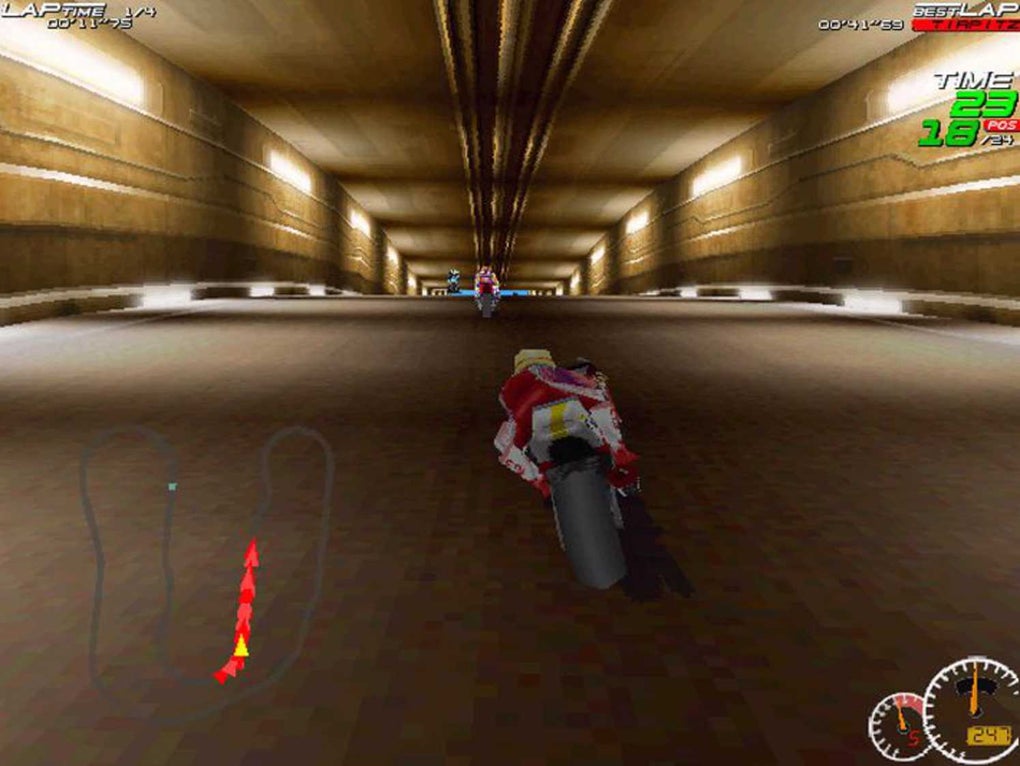
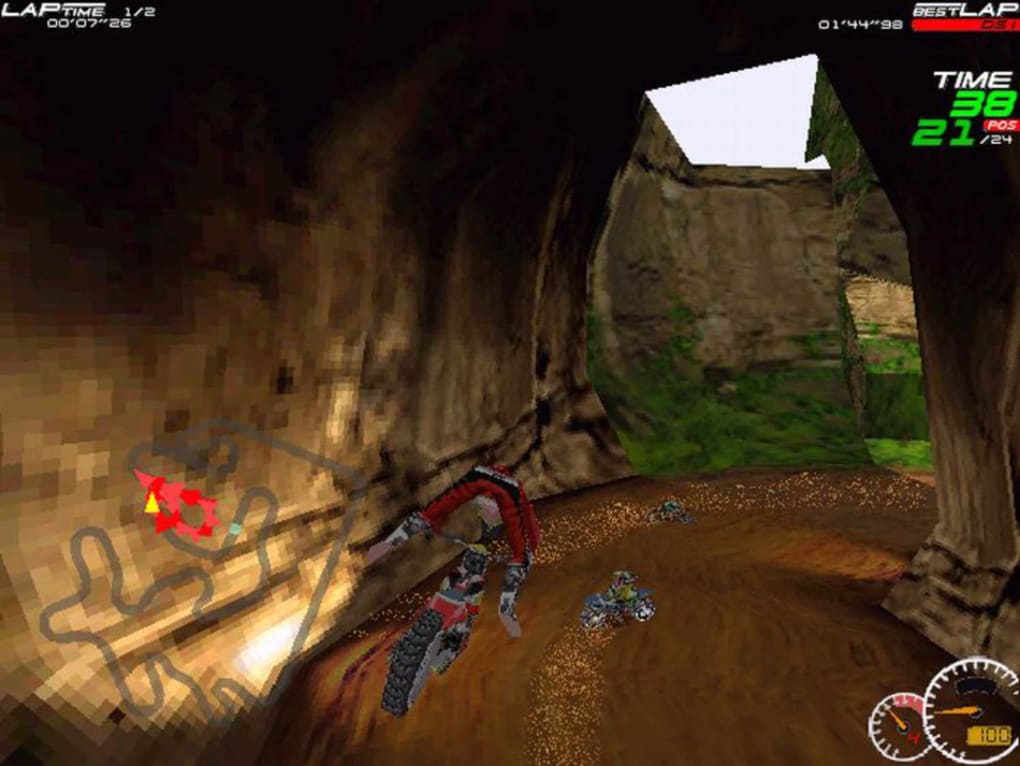
Moto Racer’s visuals, while undeniably primitive by today’s standards, were reasonably decent for their time. The tracks were detailed enough to provide a sense of location and speed, although the textures were simplistic and the environments lacked the intricacy found in later titles. The motorcycles themselves were well-designed, showcasing a variety of styles, though their graphical fidelity is certainly limited when compared to the detailed models found in modern games.
The sound design was similarly basic, featuring repetitive yet appropriately energetic background music and the characteristic roar of motorcycle engines. While not groundbreaking, the sound effects effectively complemented the gameplay, contributing to the overall atmosphere of high-speed dirt-track racing. The audio design was functional, fitting the fast-paced nature of the game without being overly distracting or intrusive.
A Lack of Depth: Limitations and Shortcomings
Despite its enjoyable gameplay and competitive two-player mode, Moto Racer suffered from a notable lack of depth. The single-player mode offered a limited number of tracks and challenges, leading to a sense of repetition after several playthroughs. The progression system, if one could even call it that, was minimal, offering little in the way of unlocking new content or customizing the player’s experience beyond the initial motorcycle selection.
The handling, while easy to learn, was also somewhat simplistic and occasionally unresponsive. Steering around corners could feel sluggish and imprecise, especially at higher speeds, making mastering the game’s nuances a challenge. The lack of refined physics and a realistic control model prevented Moto Racer from offering the same level of simulation or precision as more advanced racing games that followed. The game felt more arcade-like, prioritizing fast-paced action over a realistic driving experience.
Comparison to Modern Racing Games: A Different Era
Comparing Moto Racer to modern racing games highlights the significant advancements in the genre over the years. Today’s titles boast vastly superior graphics, detailed physics engines, sophisticated control schemes, and a wealth of content. Games like MotoGP or Ride offer incredibly realistic motorcycle simulations, capturing the intricacies of bike handling, track conditions, and even rider physics. Modern racing games also offer a range of game modes, online multiplayer options, and extensive customization features that were entirely absent in Moto Racer.
However, this comparison is not entirely fair. Moto Racer was a product of its time, reflecting the technological capabilities and design philosophies of the late 90s. Its simplicity, while limiting, also contributed to its accessibility and immediate appeal. While modern games provide a much richer and more complex experience, Moto Racer delivered a pure, unadulterated dose of adrenaline-fueled racing that many players fondly remember.
Lasting Legacy and Nostalgia
Despite its limitations, Moto Racer carved a niche for itself in the gaming landscape. Its blend of straightforward gameplay, two-player competition, and a focus on pure speed made it a popular choice among gamers seeking a quick, fun racing experience. The game’s simplicity and accessibility ensured a broad appeal, attracting casual players and seasoned racing enthusiasts alike.
Today, Moto Racer is largely a nostalgic title. While it might not hold up graphically or feature-wise against modern racing games, its legacy remains. It serves as a reminder of a simpler time in gaming, where enjoyment came from the core gameplay mechanics rather than hyper-realistic visuals or an overwhelming amount of content. For those who experienced it during its heyday, Moto Racer evokes fond memories of friendly competition, thrilling races, and the simple pleasure of picking up and playing a fast-paced racing game. Its legacy lies not in its technological achievements, but in the positive gaming experiences it provided to a generation of players. The game’s enduring appeal stems from its straightforward yet effective design, offering a pure distillation of racing excitement that, even today, can still bring a smile to the faces of those who remember it. Its impact lies in its ability to capture the core essence of motorcycle racing in an uncomplicated, accessible, and undeniably fun package.
File Information
- License: “Full”
- Version: “varies-with-device”
- Latest update: “April 6, 2017”
- Platform: “Windows”
- OS: “Windows Vista”
- Language: “English”
- Downloads: “13.6K”


