Nebulock emerges from the digital void as a premium action title developed by LostVolBytes, thrusting players into the heart of frenetic bullet-hell combat within the vastness of space. This game carves its niche as a concise yet incredibly intense experience, challenging reflexes and strategic thinking through its unique blend of twin-stick shooter mechanics and a distinct visual style. Designed for Windows, Nebulock invites both seasoned veterans of the genre and brave newcomers to pilot a sleek, cursor-like spaceship through a relentless barrage of enemy fire, culminating in encounters with formidable, block-constructed bosses across dozens of meticulously crafted levels.
At its core, Nebulock is an ode to the classic bullet-hell genre, emphasizing dodging intricate patterns of projectiles while simultaneously dishing out damage. However, it distinguishes itself with an accessible yet deep upgrade system and adjustable difficulty settings, attempting to strike a balance between catering to a broad audience and satisfying the demanding expectations of hardcore enthusiasts. As we delve deeper into this cosmic confrontation, we will explore the nuances of its gameplay, the structure of its challenges, and what makes Nebulock a compelling, albeit demanding, addition to the action game landscape.
Unveiling the Bullet-Hell Universe of Nebulock
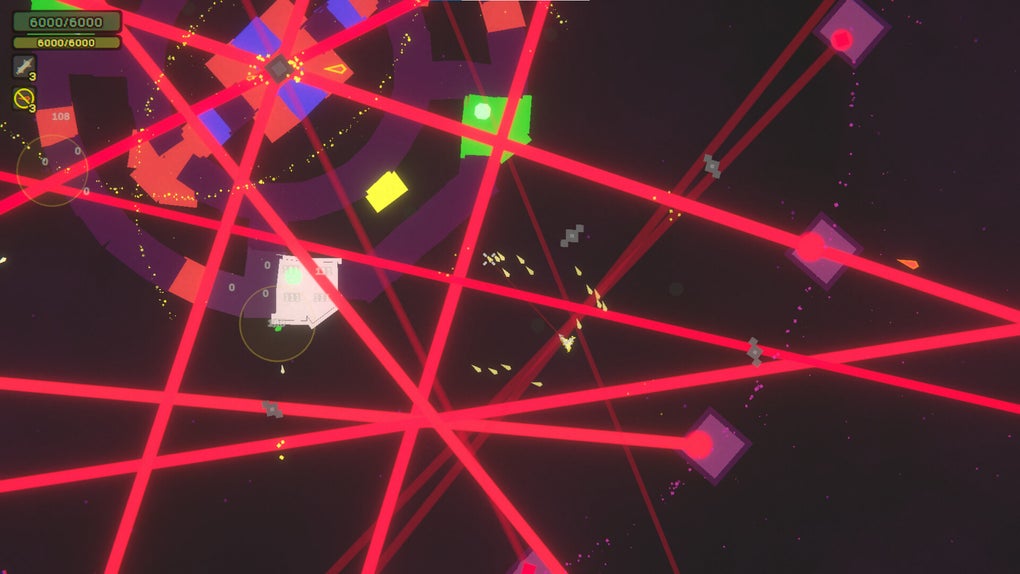
Nebulock’s universe, while seemingly simplistic in its premise, unfurls into a complex tapestry of fast-paced action and precise maneuvering. The game immediately establishes its identity as a pure, unadulterated bullet-hell experience, where the screen often fills with a dizzying array of enemy projectiles, leaving only slivers of space for the player’s ship to navigate.
Core Gameplay Mechanics: The Dance of Dodge and Destruction
Central to Nebulock’s appeal is its meticulously designed control scheme, a hallmark of effective bullet-hell and twin-stick shooters. Players assume command of a spaceship, visually represented as a nimble, cursor-like entity – a design choice that not only looks sleek but also intuitively emphasizes precision and agility. This minimalistic aesthetic ensures that the player’s focus remains squarely on the ship’s minuscule hitbox amidst the chaos.
The game supports both mouse and keyboard inputs, as well as gamepad integration, offering flexibility to suit individual player preferences. However, the twin-stick shooter controls truly shine here. For those utilizing a gamepad, this translates to using one stick for movement and the other for aiming and firing, allowing for independent actions that are crucial in high-pressure situations. This setup empowers players to constantly reposition their ship to avoid incoming fire, even as they continuously lay down suppressive fire on enemies. This simultaneous movement and attack capability is the bedrock of engaging bullet-hell combat, demanding a high degree of coordination and split-second decision-making.
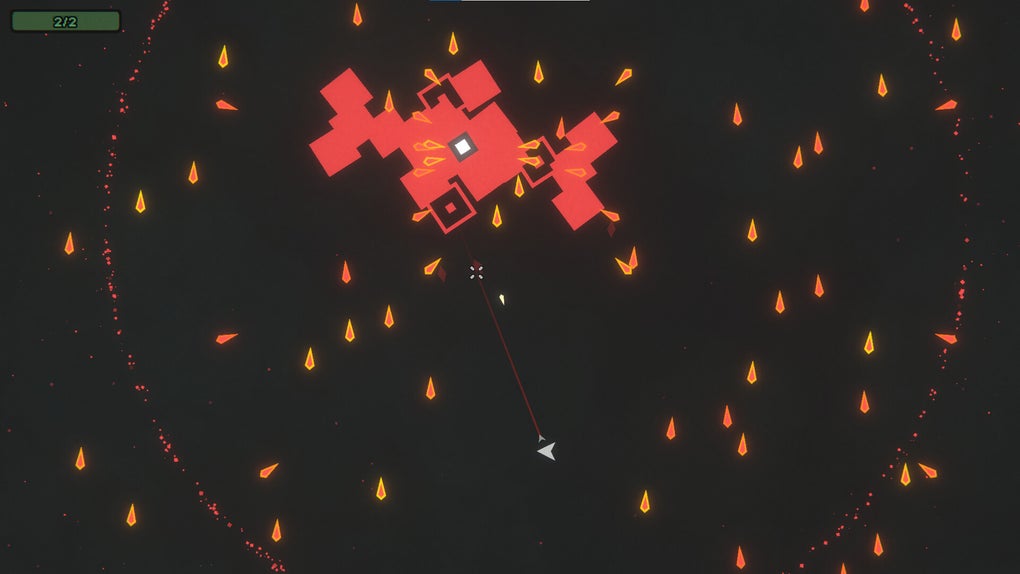
Dodge is not just a mechanic; it is the primary mode of survival in Nebulock. Enemy attacks manifest in a myriad of patterns – spirals, waves, spreads, and targeted volleys – each requiring a different approach and a keen eye for openings. The sheer density of bullets often necessitates “grazing,” where players deliberately maneuver their ship perilously close to projectiles to gain score or activate certain abilities (though the game description doesn’t explicitly mention grazing mechanics, it’s a common bullet-hell trope that often emerges from such high-density combat). Firing back is equally critical, and while the initial weapon might be basic, the game promises an upgrade system that significantly enhances the ship’s offensive capabilities, transforming a simple blaster into a potent instrument of destruction. The fast-paced, action-packed nature of Nebulock ensures that there is rarely a moment of respite, maintaining a constant state of high alert and adrenaline-fueled engagement.
The Gauntlet of 30 Levels and Blocky Bosses
Nebulock presents a structured progression through a challenging campaign comprising 30 distinct levels. While the core setting remains outer space, each level is designed to escalate the stakes, introducing increasingly complex enemy formations, denser bullet patterns, and environmental hazards that test the player’s adaptability. The variety in level design, even within a seemingly uniform space environment, is crucial for maintaining player interest, and Nebulock appears to deliver on this by continuously throwing fresh challenges into the mix.
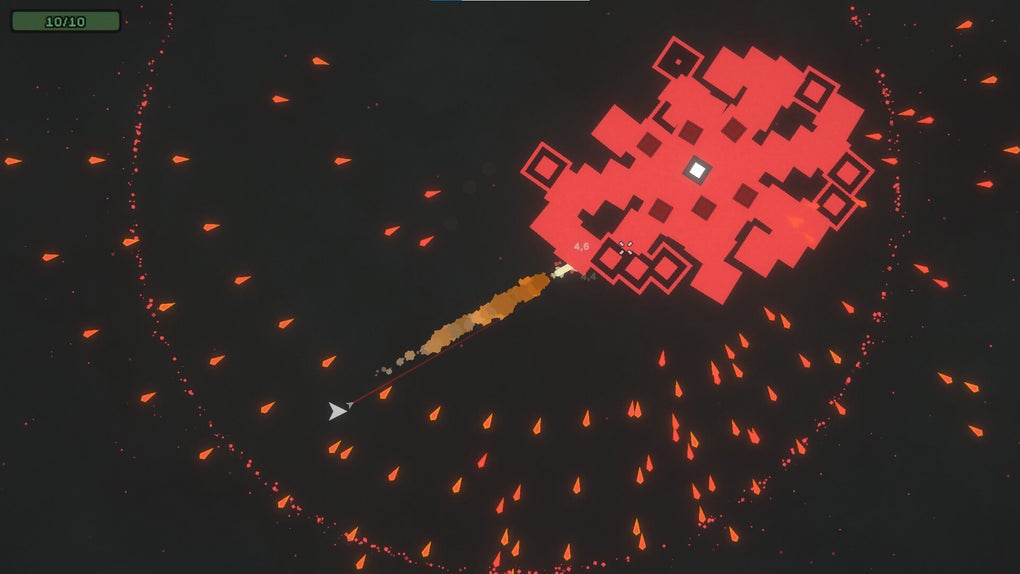
The pinnacle of each level’s challenge is its boss encounter. These aren’t just any bosses; they are described as being “made from blocks,” a unique visual and potentially mechanical characteristic that sets Nebulock apart. This “blocky” aesthetic could imply a retro-inspired pixel art style, a low-poly 3D design, or even a system where bosses literally fragment or reconfigure as they take damage, perhaps losing blocks that serve as individual attack modules. Imagine colossal enemies that start as a solid, imposing structure, only to have pieces break off, becoming smaller, independent attackers or revealing new weapon systems as their health dwindles. This concept injects a fresh layer of visual and strategic intrigue into the boss battles, making each encounter feel distinct and memorable.
With every defeated boss, players are rewarded with resources. This resource collection is a vital component of Nebulock’s progression loop, directly feeding into the game’s upgrade system. These resources could be a form of in-game currency, rare drops, or specific components that unlock new ship modules or enhance existing ones. The strategic decision-making involved in how to allocate these resources – whether to prioritize offensive power, defensive capabilities, or mobility – adds significant depth to the gameplay, allowing players to tailor their ship to their preferred playstyle or to counter specific challenges presented by later levels. The journey through these 30 levels is not just about survival; it’s about evolving your ship and honing your skills to overcome increasingly insurmountable odds, culminating in a true test of a bullet-hell pilot’s prowess.
Mastering the Cosmic Fray: Upgrades and Difficulty
Nebulock understands that enduring 30 levels of bullet-hell intensity requires more than just raw skill; it demands strategic preparation and adaptability. This is where the game’s upgrade system and its multiple difficulty modes come into play, offering layers of engagement that cater to a diverse player base.
The Strategic Depth of the Upgrade System
The upgrade system in Nebulock is positioned as a critical element for player progression and strategic customization. After successfully navigating through a level and defeating its blocky boss, players collect vital resources that can be funneled back into enhancing their spaceship. This feedback loop is essential in bullet-hell games, providing a tangible sense of growth and empowering players to tackle increasingly formidable threats.
One can speculate on the variety of upgrades available to truly personalize the player experience. These enhancements could range from direct improvements to the ship’s offensive capabilities, such as increasing weapon power, boosting the rate of fire, or expanding the projectile spread to cover a wider area. Defensive upgrades might include strengthening shields, increasing the ship’s base health, or even introducing temporary invulnerability phases. Furthermore, mobility enhancements like increased ship speed or quicker dodge maneuvers would be invaluable in navigating the densest bullet patterns. More exotic upgrades could involve unlocking entirely new special abilities, such as a screen-clearing bomb, a focused laser beam, or a temporary companion drone that adds auxiliary firepower.
The strategic depth arises from how players choose to invest their hard-earned resources. Will they prioritize an aggressive, high-damage build, aiming to eliminate threats quickly before they can overwhelm the screen? Or will they opt for a more resilient, defensive setup, focusing on survivability through the most challenging bullet barrages? Perhaps a balanced approach, or even specializing in movement to become an untouchable, elusive target, would be the preferred tactic. This decision-making process is crucial, as certain boss encounters or level designs might favor specific ship configurations, encouraging experimentation and replayability. Mastering the upgrade system becomes as important as mastering the controls, transforming the player from a mere pilot into a tactical commander of their customizable starfighter.
Tailoring the Challenge: Multiple Difficulty Modes
LostVolBytes has wisely incorporated three distinct difficulty modes into Nebulock, ensuring that the game appeals to a wide spectrum of players, from those new to the bullet-hell genre to its most dedicated adherents. This tiered approach to challenge is vital for inclusivity, preventing potential players from being immediately alienated by the genre’s notorious reputation for unforgiving difficulty.
The most accessible difficulty mode, likely catering to “casual players,” would offer a more forgiving experience. This might translate to slower enemy projectiles, fewer bullets on screen, larger player hitboxes (or smaller enemy hitboxes), and perhaps more generous health pickups or power-ups. It would serve as an excellent onboarding ramp, allowing newcomers to familiarize themselves with the core mechanics, bullet patterns, and the rhythm of dodge-and-shoot without the immediate pressure of being overwhelmed. This mode is about enjoying the action and progression without constant frustration.
The standard or “normal” difficulty would likely represent the developer’s intended experience, striking a balance between challenge and manageability. It would push players to develop their skills, requiring precise movements and strategic use of upgrades, without feeling unfairly punishing.
However, it is the highest difficulty mode that truly targets the “hardcore bullet-hell enthusiasts,” living up to the “test of skill for true bullet-hell fans” moniker. This mode is where Nebulock’s “steep difficulty” truly manifests, capable of feeling “overwhelming for new players.” Here, the game would likely unleash its full fury: bullets moving at breakneck speeds, incredibly dense and intricate patterns that demand pixel-perfect evasion, more aggressive and resilient bosses with additional phases or attacks, and significantly fewer opportunities for recovery. This mode is designed to push even the most experienced players to their limits, forcing them to master every aspect of the game – from precise movement and timing to optimal upgrade paths and resource management. It’s in this crucible of extreme challenge that the game’s depth and the player’s true skill are forged, offering immense satisfaction upon successful completion. The existence of these varied modes ensures that while the game maintains its identity as a demanding bullet-hell, it also provides pathways for players of all skill levels to engage with its cosmic combat.
A Verdict on Nebulock: Pros, Cons, and Final Thoughts
Nebulock, despite its concise nature, presents a compelling package for fans of the bullet-hell genre. Its blend of traditional mechanics with a strategic upgrade system and distinct visual style positions it as a noteworthy entry in the action game space.
Strengths and Areas for Growth
The game’s “fast-paced action” is undoubtedly one of its strongest assets. From the moment players launch into a level, they are plunged into a relentless cascade of projectiles and enemy encounters. This constant engagement ensures that boredom is never an option, fostering an adrenaline-fueled experience that is characteristic of the best bullet-hell titles. The responsive twin-stick controls further amplify this, allowing for the precise, fluid movements essential for survival.
With “30 challenging levels,” Nebulock offers a substantial gauntlet for players to overcome. Each level promises unique obstacles and increasingly complex blocky bosses, ensuring that the journey remains fresh and demanding. This provides a clear sense of progression and accomplishment as players master each stage. The inclusion of an “upgrade system” adds significant depth beyond mere twitch reflexes. It transforms the game into a strategic experience, where choices about enhancing the spaceship directly impact gameplay and allow for personal adaptation to challenges. This system extends the game’s replayability, as players might experiment with different upgrade paths to conquer higher difficulties or achieve better scores. Finally, the “multiple difficulty modes” are a huge pro, making the game accessible to a wider audience while still offering a brutal challenge for veterans.
However, Nebulock is not without its considerations. The “steep difficulty” is a double-edged sword. While it’s a selling point for hardcore fans seeking a genuine challenge, it can prove to be a significant barrier for new players. The phrase “overwhelming for new players” from the description highlights this, suggesting that Nebulock may not hold hands and expects a certain level of commitment from its audience. This isn’t necessarily a flaw for its intended demographic but is something prospective players should be aware of.
Another point of consideration is the “short playtime.” While many bullet-hell games are designed for intense, repeatable runs rather than sprawling narratives, some players might find the overall content duration to be limited. However, for a genre where the emphasis is on mastering mechanics, achieving high scores, and conquering increasingly difficult modes, a “short playtime” can be mitigated by the inherent replayability built into its design. The multiple difficulty modes and the incentive to experiment with different upgrade strategies mean that players are encouraged to revisit levels, striving for perfection or a faster clear time, effectively extending the game’s lifespan for its target audience.
Technical Details and Availability
Nebulock is a premium, full-version game, requiring a one-time purchase to access its complete experience. It is developed by LostVolBytes and is designed for the Windows platform, specifically optimized for Windows 10. The game is available entirely in English, making it accessible to a broad global audience. As of its latest update on March 14, 2025 (a future-dated entry suggesting ongoing development or future content plans), it has garnered a modest download count of 341 total downloads, with 56 recorded in the last month on PhanMemFree.org, indicating a niche but engaged player base.
Conclusion
Nebulock stands as a robust and exhilarating entry into the bullet-hell genre. LostVolBytes has crafted an experience that is unapologetically intense, demanding quick reflexes, sharp tactical thinking, and a willingness to embrace a steep learning curve. The game’s strengths lie in its fast-paced action, thoughtfully designed 30 levels with distinctive blocky bosses, and a strategic upgrade system that adds significant depth to the twin-stick shooter mechanics.
While the inherent difficulty might pose a challenge for newcomers, the presence of multiple difficulty modes ensures that players can ease into the bullet-hell maelstrom at their own pace, eventually working their way up to the ultimate test of skill. Its “short playtime” is reflective of its arcade-like, score-chasing nature, rather than a drawback, encouraging repeated playthroughs to perfect runs and explore different upgrade synergies. For those who relish the challenge of navigating a screen full of projectiles, meticulously dodging and weaving while unleashing a torrent of fire, Nebulock offers a thrilling and rewarding cosmic fray. It’s a testament to skill, precision, and the enduring appeal of high-octane action, making it a highly recommended experience for any true fan of the bullet-hell genre seeking their next intense space adventure available on PhanMemFree.org.
File Information
- License: “Full”
- Version: “varies-with-devices”
- Latest update: “March 14, 2025”
- Platform: “Windows”
- OS: “Windows 10”
- Language: “English”
- Downloads: “365”