
The world of independent video game development constantly pushes boundaries, offering unique experiences that often diverge from the mainstream. Among these, horror games stand out for their ability to evoke strong emotions with limited resources, relying heavily on atmosphere, tension, and clever design. Northbury Grove, a chilling first-person survival horror adventure from the Scythe Dev Team, exemplifies this indie spirit. Released as a free title for Windows, this game plunges players into a retro nightmare heavily inspired by the iconic slasher films of the 1970s and 1980s. It’s not just a game; it’s a meticulously crafted homage, complete with vintage aesthetics and a pervasive sense of dread, designed to transport players back to a simpler, yet terrifying, era of cinematic horror.
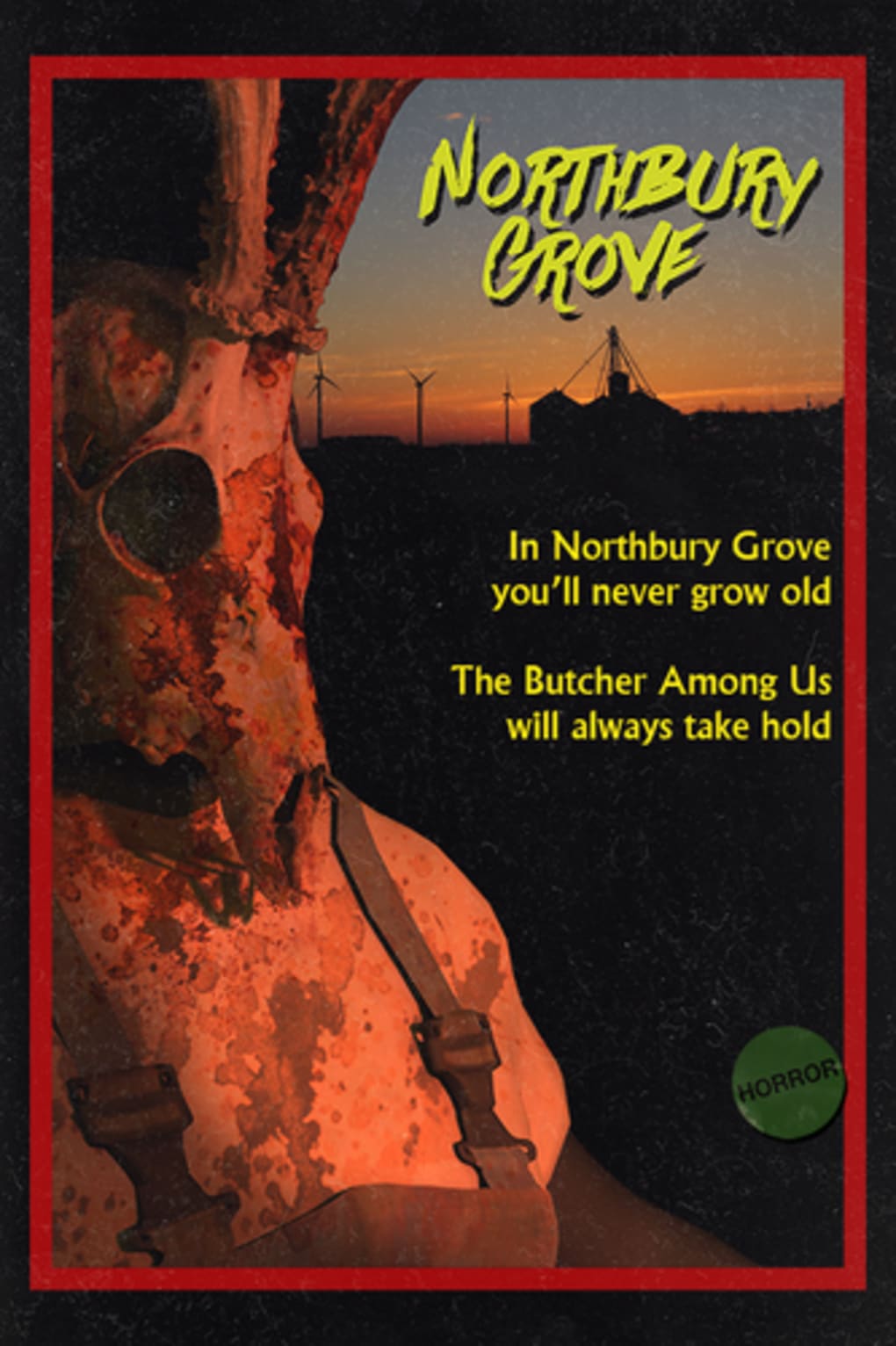
Northbury Grove positions itself within the broader “Scythe Saga Universe,” a shared narrative framework that includes other notable titles like Happy’s Humble Burger Barn. This interconnectedness adds a layer of depth, hinting at a larger, unfolding mythology of terror. The game specifically delves into the sinister “Northbury Grove Massacre arc,” inviting players to witness, and hopefully survive, the genesis of a local legend. Its appeal lies not only in its immediate scares but also in its contribution to a growing universe of horror that cultivates a loyal following among fans of the genre.
From the moment players launch Northbury Grove, they are greeted by an unmistakable aesthetic choice: a VHS tape-like visual filter. This isn’t just a gimmick; it’s a core component of the game’s identity, deliberately obscuring clarity and adding a layer of grainy, distorted realism reminiscent of old horror movie rentals. While brilliantly effective in cultivating the desired atmosphere, this retro effect also presents its own challenges, occasionally impacting performance on modern, high-resolution screens. This delicate balance between stylistic authenticity and contemporary playability is a recurring theme in indie retro horror, and Northbury Grove navigates it with ambitious intent.
At its heart, Northbury Grove is a pure, unadulterated survival horror experience. It’s about evading a relentless masked killer, navigating an eerie environment, and solving rudimentary puzzles under immense pressure. The simplicity of its premise belies the effectiveness of its execution, drawing players into a narrative where every shadow could conceal a threat, and every sound could signal impending doom. For aficionados of cult classic slasher flicks, Northbury Grove offers more than just a game; it offers an interactive horror film, allowing them to step into the role of the beleaguered protagonist and confront the terror firsthand.
Delving into the Horror Adventure: Story and Atmosphere
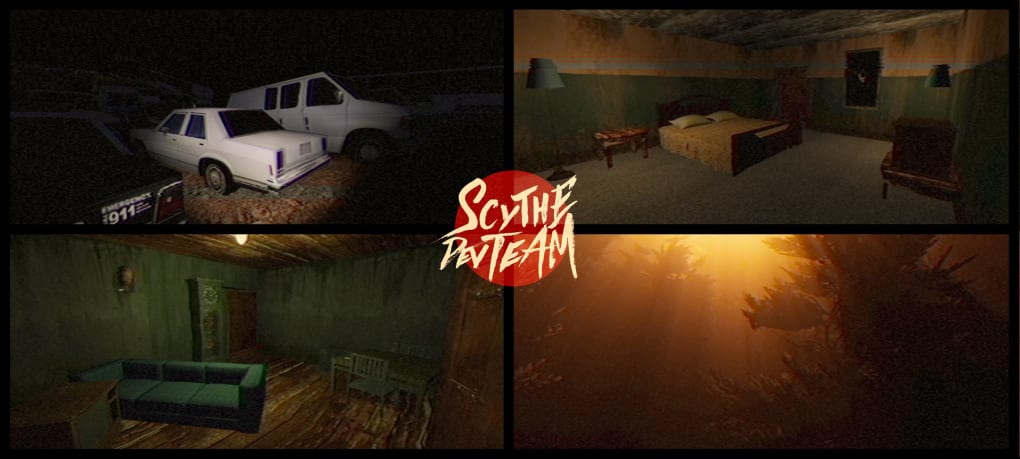
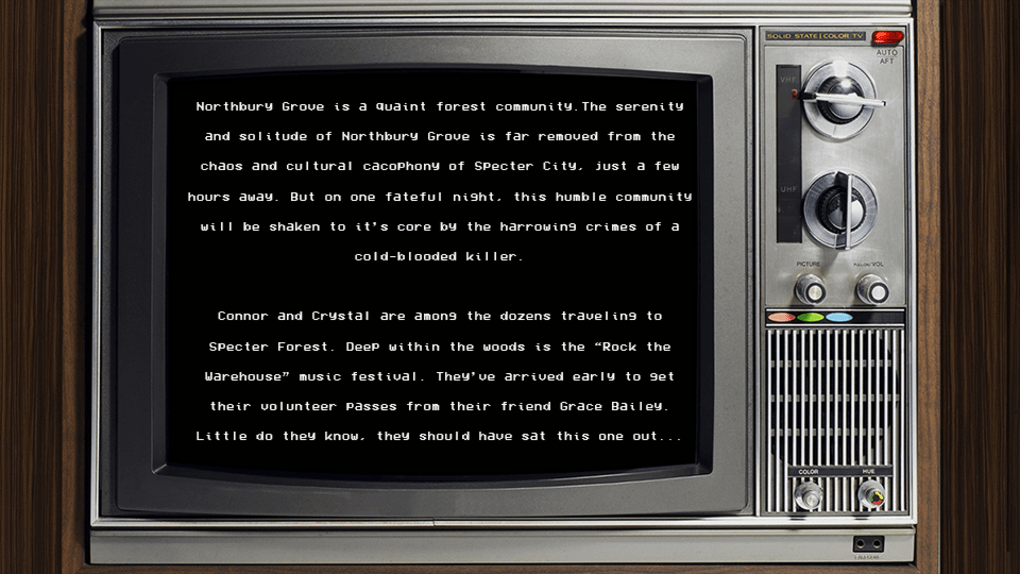
The narrative of Northbury Grove immediately establishes a sense of unease and vulnerability. Players assume the role of Connor, a young man who, along with his friend Crystal, has arrived early at the titular town for a music festival. Their intention is innocent enough: to volunteer and help with the preparations for the upcoming concert. However, their plans quickly unravel when they realize their other friend, Grace, who holds their essential volunteer passes, is nowhere to be found. This seemingly innocuous problem becomes the catalyst for their terrifying ordeal. With Grace missing and the dense, darkened forest of Northbury Grove looming nearby, Connor makes the fateful decision to venture into the woods in search of her. This initial premise masterfully sets the stage for a classic horror scenario: isolation, a looming mystery, and the decision to enter a forbidden, dangerous space.
The forest itself is not just a backdrop; it’s a character in its own right, imbued with an oppressive, suffocating atmosphere. The retro graphics, despite their inherent limitations, are expertly leveraged to create deep shadows, flickering lights (or the lack thereof), and an unsettling sense of scale. Every rustle of leaves, every distant, unidentifiable sound, contributes to a growing dread. The game understands that true horror often comes from what is unseen and unheard, allowing the player’s imagination to fill in the terrifying blanks. The grainy, VHS-like filter further enhances this effect, making the environment feel simultaneously familiar (from old movies) and alien, distorted by the static of a forgotten recording. It’s a pervasive feeling of being trapped in a low-budget horror film from the past, where the monster is always just out of sight, and the victim’s fate feels predetermined.
Echoes of Cinematic Slasher History: The Scythe Saga Universe
The inspiration drawn from cult classic horror and slasher movies of the ’70s and ’80s is not merely superficial; it’s woven into the very fabric of Northbury Grove. Think of films like Halloween, Friday the 13th, or The Texas Chain Saw Massacre – titles known for their relentless, seemingly supernatural killers, their isolated settings, and their focus on suspenseful chase sequences rather than explicit gore. Northbury Grove adopts this ethos, emphasizing the cat-and-mouse game between protagonist and antagonist, the sudden jump scares, and the psychological torment of being hunted. The masked killer, a staple of the slasher genre, is designed to be an unstoppable force, a primal fear given form. The game’s character models, though simplistic due to the retro aesthetic, carry an unsettling quality that enhances the overall horror.
Crucially, Northbury Grove is not a standalone horror experience. It is intricately tied to the “Scythe Saga Universe,” a testament to the Scythe Dev Team’s ambition to create a cohesive, interconnected world of terror. This shared universe concept is a growing trend in indie horror, allowing developers to build lore, expand storylines, and reward dedicated players who delve into multiple titles. Northbury Grove specifically explores the “Northbury Grove Massacre arc,” a pivotal event within this universe that likely has far-reaching consequences for other games. Mentioning Happy’s Humble Burger Barn, another title within this universe, provides context. Happy’s Humble Burger Barn is a horror simulation game, showcasing the developer’s versatility within the genre. The fact that Northbury Grove delves into a specific “massacre” suggests a rich, violent history that players are only just beginning to uncover. This world-building adds significant value, encouraging players to not just finish the game but to ponder its place in a larger tapestry of fear. It transforms a simple horror game into an interactive piece of a larger narrative, creating anticipation for future installments and deepening the player’s investment in the lore.
Gameplay Mechanics and Navigating the Peril
At its core, Northbury Grove offers a stripped-down yet effective gameplay loop centered on exploration, evasion, and rudimentary puzzle-solving. The control scheme is intentionally straightforward, ensuring accessibility even for those less familiar with the horror genre. Upon the conclusion of the introductory cutscene, essential commands are conveniently displayed on the top-right of the screen, acting as a quick reference guide. Movement is handled by the ubiquitous WASD keys, allowing Connor to navigate the environment with standard directional input. Interaction with objects, crucial for puzzle progression or environmental awareness, is mapped to the left-click of the mouse. A fundamental tool for survival in the darkened forest, the flashlight, is toggled with the F key, providing momentary relief from the oppressive shadows but also potentially revealing Connor’s position.
Beyond basic movement and interaction, Northbury Grove incorporates several mechanics vital for survival against an relentless pursuer. The CTRL key allows Connor to crouch, a stealth mechanic useful for evading the killer’s line of sight or sneaking through tight spaces. The Shift key activates a sprint, providing a burst of speed crucial for outrunning danger. And finally, the Spacebar enables Connor to jump, a mechanic that might seem trivial but can be used to traverse small obstacles or add an element of desperation to chase sequences. The Esc key serves as the universal pause button, opening a menu where players can adjust settings, including the option to toggle the signature VHS effect – a significant feature given its dual role in aesthetics and performance. This intuitive control scheme allows players to quickly grasp the fundamentals and focus on the terrifying task at hand: staying alive.
The Thrill and Trepidation of the Chase
The primary gameplay loop revolves around exploring the creepy atmosphere, gathering clues, and ultimately, surviving encounters with the masked killer. The exploration aspect is quite immersive, with the retro graphics and ambient sound design (even if largely implied or speculative in the original description, it’s essential for horror) working in tandem to create a palpable sense of dread. Players are encouraged to proceed cautiously, examining their surroundings for items, pathways, or anything that might shed light on Grace’s disappearance or the killer’s motive. Puzzles, though perhaps not overly complex, serve as obstacles that gate progression, often requiring players to find specific items, activate mechanisms, or decipher simple environmental clues. These moments of quiet investigation are frequently punctuated by the sudden, terrifying appearance of the killer, thrusting players into heart-pounding chase sequences.
It is in these chase scenes that Northbury Grove truly embodies the slasher film experience, but also where some of its gameplay mechanics become a double-edged sword. The game aims for a fast-paced, adrenaline-fueled evasion, where quick reflexes are paramount. However, the sprint speed, while intended to convey urgency and panic, is noted to be “far too fast and sensitive to your controls.” This can lead to frustration, as players might overshoot turns, collide with environmental objects, or struggle to maintain control during critical moments of escape. While some players might appreciate the heightened challenge and frantic energy this creates, others might find it leads to unfair deaths or breaks the immersion. A more finely tuned sprint mechanic, perhaps with adjustable sensitivity or a slight ramp-up to maximum speed, could enhance the experience, making escapes feel earned rather than accidental or frustrating. Despite this minor flaw, the game succeeds in making the player feel genuinely hunted, a core tenet of effective survival horror.
Retro Aesthetics and Performance Considerations
One of Northbury Grove’s most striking features, and indeed a significant part of its identity, is its unwavering commitment to a retro aesthetic. The game doesn’t just borrow elements; it fully immerses itself in the visual language of late 20th-century media, particularly the grainy, low-fidelity look of old VHS tapes and early 3D video games. This design choice is far from arbitrary; it’s a deliberate artistic decision that serves multiple purposes. Visually, the graphics lean into a style reminiscent of PlayStation 1 or even earlier PC games, characterized by blocky character models, low-resolution textures, and a limited color palette. This isn’t a sign of technical limitation, but rather a stylistic choice that taps into a nostalgic vein for many players and, more importantly, enhances the horror. The inherent abstraction of these visuals can often make things appear more uncanny and unsettling than hyper-realistic graphics, leaving more to the player’s imagination.
The visual design is further bolstered by clever use of lighting and environmental effects. Shadows are deep and pervasive, often concealing threats or creating ominous silhouettes. The sparse light sources, such as Connor’s flashlight, cast a limited cone of illumination, forcing players to confront the darkness that constantly encroaches. This interplay of light and shadow is crucial for establishing the eerie atmosphere, making familiar forest paths seem alien and menacing. Coupled with this, the game’s overall art direction aims to recreate the visceral, raw feel of ’70s and ’80s slasher films. This means embracing a certain level of grittiness and imperfection, which the retro graphics naturally provide. Every pixel, every visible polygon edge, contributes to the illusion of stepping into a bygone era of low-budget, high-impact horror.
The Double-Edged Sword of the VHS Effect
Central to Northbury Grove’s retro charm is its signature VHS effect. This isn’t just a simple filter; it’s a comprehensive visual overlay designed to mimic the imperfections of magnetic tape recordings. Players will notice scan lines, color bleeding, slight tracking issues, and a general fuzziness that makes the screen feel like a degraded video signal. This effect is toggleable, giving players the option to experience the game with or without this stylistic flourish. When activated, it perfectly encapsulates the game’s ambition to be an interactive slasher movie from the golden age of video rentals. It evokes a powerful sense of nostalgia for those who grew up with VHS, and for others, it creates a unique, unsettling visual aesthetic that distinguishes Northbury Grove from many other horror titles.
However, this brilliant artistic choice comes with a practical drawback: its impact on performance, particularly on higher resolution screens. The application of such a complex, real-time visual filter requires processing power. On older systems or when attempting to run the game at resolutions beyond its intended retro fidelity, the VHS effect can cause noticeable slowdowns or frame rate drops. This often happens because the game engine has to render the scene at a high resolution and then apply an intensive post-processing effect that simulates low resolution and analog artifacts. The developer, Scythe Dev Team, provides solutions for this: players can either opt to play in windowed mode, which typically uses a lower effective resolution, or simply turn the VHS effect off entirely. While disabling the effect might detract from the game’s core visual identity, it ensures a smoother gameplay experience for those encountering performance hiccups. This highlights a common challenge in indie game development: balancing unique artistic visions with practical optimization for a diverse range of hardware.
While the primary focus is often on visuals, effective horror relies heavily on sound. Though not explicitly detailed in the provided information, it’s reasonable to infer that Northbury Grove likely employs a minimalist yet impactful audio design to complement its visual style. This would include eerie ambient sounds of the forest – the rustling leaves, distant animal cries, the gentle creak of unseen branches – interspersed with sudden, sharp stingers to accompany jump scares or the appearance of the killer. The sound of the killer’s footsteps, perhaps distorted or muffled, would build tension, while a retro-inspired synth soundtrack could underscore the overall ’80s horror vibe, reminiscent of composers like John Carpenter. Such an audio landscape, combined with the visual effects, would immerse players even deeper into the terrifying experience.
Northbury Grove’s Place in the Indie Horror Landscape
Northbury Grove is more than just another horror game; it’s a significant contribution to the burgeoning world of independent horror titles, carving out a distinct niche for itself. Developed by the Scythe Dev Team, it embodies the spirit of indie game creation: passionate, focused, and often willing to take creative risks that larger studios might shy away from. Indie developers frequently operate with limited budgets and smaller teams, which necessitates innovative approaches to design, storytelling, and aesthetics. Northbury Grove showcases this brilliantly by leveraging a retro graphical style not as a concession, but as a core artistic statement, achieving a powerful atmosphere without needing cutting-edge graphics.
The game’s primary appeal lies in its targeted subgenre: the cult classic slasher movie. This niche audience, comprised of horror enthusiasts who cherish the analog imperfections and straightforward terror of ’70s and ’80s cinema, finds a perfectly tailored experience in Northbury Grove. It’s not aiming for the expansive narratives or complex mechanics of AAA survival horror; instead, it offers a distilled, pure hit of fear, focusing on the primal fear of being hunted. This direct approach allows the game to excel within its chosen scope. Fans of developers like Puppet Combo, known for their gritty, PS1-era horror games, will find much to appreciate in Northbury Grove’s aesthetic and thematic choices. It aligns with a movement in indie horror that prioritizes atmosphere and psychological dread over gore and jump scares (though it certainly has its share of the latter).
Developer’s Vision and Community Engagement
The Scythe Dev Team’s commitment to building a cohesive “Scythe Saga Universe” further elevates Northbury Grove beyond a mere standalone project. This interconnectedness fosters a sense of ongoing narrative and invites players to delve deeper into the lore established across multiple titles. This approach builds a dedicated community, as players become invested not just in one game, but in the unfolding mythology of an entire horror universe. It’s a smart strategy for indie developers to cultivate a loyal fanbase and create anticipation for future releases. The mention of Happy’s Humble Burger Barn reinforces this, showcasing the team’s ability to explore different horror subgenres while maintaining a consistent thematic thread.
The game’s reception, despite its minor technical quirks, is generally positive within its target audience. The “Pros” highlighted in user feedback underscore its strengths: the successful recreation of a retro slasher movie atmosphere, the innovative (and toggleable) VHS effect, easy-to-learn controls, and its meaningful ties to other games in the Scythe Saga Universe. These points collectively demonstrate that the game achieves its core artistic and thematic goals effectively. The “Cons,” primarily the overly sensitive sprint speed and the VHS effect’s impact on high-resolution performance, are acknowledged areas for refinement. These are typical challenges for indie developers, and the fact that they are known and manageable (e.g., by toggling the effect) suggests a responsive development team.
As a free-to-play title for Windows, Northbury Grove is incredibly accessible. Its relatively small size (1.01 GB) and English language support make it easy for a wide audience to download and experience the terror. The fact that it continues to see downloads, even years after its release (latest update August 19, 2021), speaks to its enduring appeal and its solid reputation within the indie horror community. It serves as an excellent entry point for players interested in retro-inspired horror or those looking to explore the Scythe Saga Universe without financial commitment. The community engagement, even if from a small but dedicated group, further validates its impact. Reviews and discussions often praise its effective scares and unique aesthetic, recommending it as a short but impactful horror experience.
In conclusion, Northbury Grove stands as a compelling example of indie horror done right. It masterfully blends nostalgic aesthetics with genuine scares, offering a pure, unadulterated slasher experience. While minor issues with controls and performance exist, they are overshadowed by the game’s immersive atmosphere, innovative visual style, and its intriguing place within the larger Scythe Saga Universe. For fans of classic horror films and atmospheric indie games, Northbury Grove is an essential download, offering a chilling interactive journey into the heart of an analog nightmare, courtesy of the talented Scythe Dev Team, available for free on PhanMemFree. It proves that sometimes, the most terrifying experiences come not from graphical fidelity, but from clever design, potent atmosphere, and a deep understanding of what truly scares us.
File Information
- License: “Free”
- Version: “1.0”
- Latest update: “August 19, 2021”
- Platform: “Windows”
- OS: “Windows 7”
- Language: “English”
- Downloads: “998”
- Size: “1.01 GB”


