
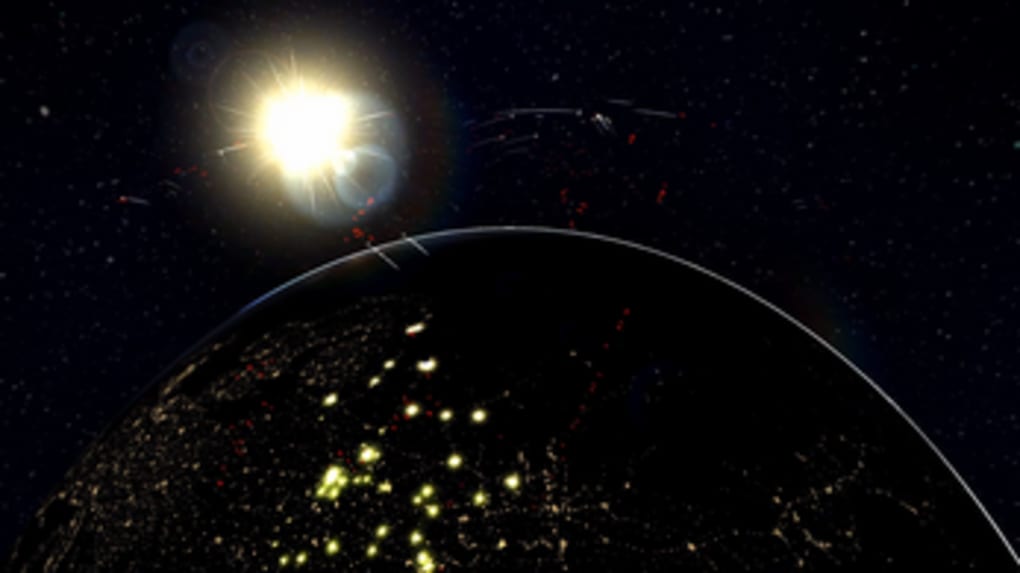
Nuclear War Simulator, a free project developed by Ivan Stepanov, offers a stark and unsettlingly realistic portrayal of large-scale nuclear conflict. In a world possessing over 13,000 nuclear weapons, with over 9,000 in active military stockpiles, the simulator focuses on the devastating humanitarian implications of nuclear war. It provides a chilling answer to hypothetical questions, such as: What would happen if the nuclear arsenals of Russia, the United States, India, and Pakistan were unleashed simultaneously? By meticulously simulating interconnected systems and processes, the simulator vividly illustrates the devastating unfolding of a nuclear conflict and its catastrophic consequences for humanity.
Understanding the Simulator’s Comprehensive Model
Unlike many war games that simplify complex scenarios, Nuclear War Simulator employs a comprehensive model that incorporates a wide range of interlocking systems and processes crucial to understanding the dynamics of a nuclear war. These include:
-
Command and Control Systems: The simulator accurately models the complex chains of command and decision-making involved in initiating and responding to nuclear attacks. This includes considerations of communication breakdowns, delays in response, and the potential for accidental or unintended escalations. The simulation accounts for the diverse command structures of different nations and their potential interactions.
-
Force Deployment and Movement: The location and movement of nuclear forces, including land-based missiles, submarine-launched ballistic missiles (SLBMs), and bomber aircraft, are crucial elements in the simulation. The simulator accounts for the vulnerability of different weapon systems, their deployment times, and their potential targets. It also factors in the potential for preemptive strikes and counter-strikes.
-
Weapons Delivery Systems: The simulator models the various methods of delivering nuclear weapons, taking into account their accuracy, range, and the likelihood of successful delivery. This involves considering factors such as circular error probability (CEP), which quantifies the accuracy of weapon delivery, and the potential for interception or defensive measures.
-
Humanitarian Consequences: Perhaps the most impactful aspect of the simulation is its detailed modeling of the humanitarian consequences of nuclear detonations. This includes the effects of:
- Thermal Radiation: The intense heat generated by a nuclear explosion, capable of causing severe burns and igniting widespread fires over large areas.
* **Overpressure:** The immense shockwave generated by the explosion, capable of collapsing buildings and causing widespread destruction.

* **Fallout:** The radioactive debris dispersed by the explosion, posing long-term health risks and rendering large areas uninhabitable for extended periods.

* **Mass Fires:** The devastating chain reaction of fires ignited by the initial blast, consuming vast urban areas and generating massive plumes of smoke that can have long-lasting environmental consequences.

* **Population Density:** The simulation factors in population density in its calculations of casualties and destruction, demonstrating the devastating effect a nuclear weapon has on densely populated areas.  The simulation uses a high-resolution population grid to accurately model these effects.

* **Casualty Density:** The simulation provides detailed calculations of projected casualties based on the location and yield of nuclear detonations.  These calculations consider both immediate fatalities and those resulting from the long-term effects of radiation exposure.
The simulator integrates these elements to provide a dynamic and realistic visualization of the unfolding catastrophe, calculating and displaying the results within seconds. This allows users to quickly assess the potential impact of different attack scenarios.
Creating and Analyzing Scenarios: A Powerful Tool for Education
Nuclear War Simulator empowers users to create their own attack plans and conflict scenarios, offering a unique level of interactive engagement. This capacity provides a valuable educational tool, allowing individuals to:
-
Personalize Simulations: Users can input the locations of themselves, family members, and friends within the simulator’s geographical model to estimate the likelihood of survival in various scenarios. This personal touch makes the consequences of nuclear war more tangible and impactful.
-
Recreate Historical or Hypothetical Conflicts: Users can design nuclear forces mirroring current, past, or projected arsenals, allowing them to simulate historical conflicts or explore potential future scenarios. This allows for a comparative analysis of different nuclear strategies and their potential outcomes.
-
Explore the Dynamics of First Strikes: The simulator accurately models the complex dynamics of a first strike and its immediate repercussions, including the response of other nations and the escalating chain of events that can rapidly spiral out of control.
-
Investigate the Impact of Timing: The simulator considers the critical factor of timing, demonstrating how the sequence and timing of attacks significantly influence the overall outcome and devastation.
The simulator’s ability to accurately model these complex dynamics and present the results in a clear and understandable format makes it an invaluable tool for understanding the immense risks associated with nuclear weapons.
Beyond the Core Simulation: Community Contributions and Expansion
Stepanov’s creation has also fostered a community-driven expansion, with users contributing modifications (mods) to enhance the simulation with new elements and scenarios. These user-created mods contribute significantly to the simulator’s continued development and expansion, enriching its educational value. One notable example is a mod depicting a hypothetical conflict between China and the United States, where a large-scale cyber-attack triggers a full-scale nuclear response. This exemplifies the potential for the simulator to model a wide range of complex geopolitical scenarios and their potential for nuclear escalation. The community’s contribution highlights the ongoing evolution and enrichment of the simulator.
The Value and Limitations of Nuclear War Simulator
Nuclear War Simulator stands as a powerful and impactful tool for education and understanding. Its meticulous modeling of interconnected systems and processes, combined with its user-friendly interface, allows individuals to visualize and comprehend the catastrophic consequences of nuclear war in a way that is both informative and profoundly concerning. The ability to personalize simulations, explore diverse scenarios, and engage with the community-created mods significantly enhances its educational value.
However, it’s important to acknowledge the limitations of the simulator. It is, ultimately, a simulation. While it strives for realism based on established scientific models and data, it cannot perfectly replicate the chaotic and unpredictable nature of a real-world nuclear conflict. Unforeseen circumstances, human errors, and the complexities of international relations are impossible to fully capture in a simulation.
Furthermore, the simulator’s primary focus is on the humanitarian consequences of nuclear war. It doesn’t extensively model the political, economic, or environmental ramifications, although these are implicitly represented in the simulated destruction and resulting societal collapse. This focus is not a shortcoming, but rather a reflection of the simulator’s design goals, which prioritize a visceral understanding of the human cost of nuclear war.
Despite its limitations, Nuclear War Simulator serves as a valuable resource for anyone seeking to better grasp the complexities and potential devastation of nuclear conflict. It is a sobering reminder of the urgent need for international cooperation and the critical importance of preventing nuclear war at all costs. The simulator’s stark realism serves as a powerful catalyst for discussion and critical reflection on the dangers of nuclear weapons and the imperative to pursue lasting peace and disarmament.
File Information
- License: “Free”
- Version: “1-build-214”
- Latest update: “July 12, 2023”
- Platform: “Windows”
- OS: “Windows 10”
- Language: “English”
- Downloads: “8.8K”


