In the vast and ever-expanding landscape of simulation games, where players can delve into everything from the intricacies of farming to the precise maneuvers of flight, automotive simulators have carved out a particularly popular niche. Within this category, bus simulators have emerged as a surprisingly engaging and deeply immersive subgenre, offering a unique slice of modern life that many of us encounter daily. Among these, OMSI The Bus Simulator stands out, not just as a game, but as a meticulously crafted journey back in time, presenting a distinct character that few others can match.
OMSI, deriving its name from ‘omnibus’ – the traditional German term for public buses – transports players to the late 1980s. Specifically, it immerses them in the bustling, historically rich environment of West Berlin. This temporal displacement adds a fascinating layer to the simulation, turning it into more than just a driving game; it becomes a living historical document, a playable snapshot of an era long past. It’s an invitation to experience public transport as it was, with all the charm, challenges, and iconic vehicles of that period.
A Journey Back to 1980s West Berlin
What immediately differentiates OMSI The Bus Simulator from its contemporaries is its profound commitment to its 1980s West Berlin setting. This isn’t just a generic urban backdrop; it’s a meticulously recreated historical tableau. Players aren’t merely driving a bus; they are stepping into a specific moment in time, experiencing the unique atmosphere and visual cues of a divided city on the cusp of significant change. The game offers a slice of modern history, allowing for an exploration that goes beyond typical gameplay mechanics, fostering a sense of nostalgia for those who remember the era and providing an educational glimpse for those who don’t.
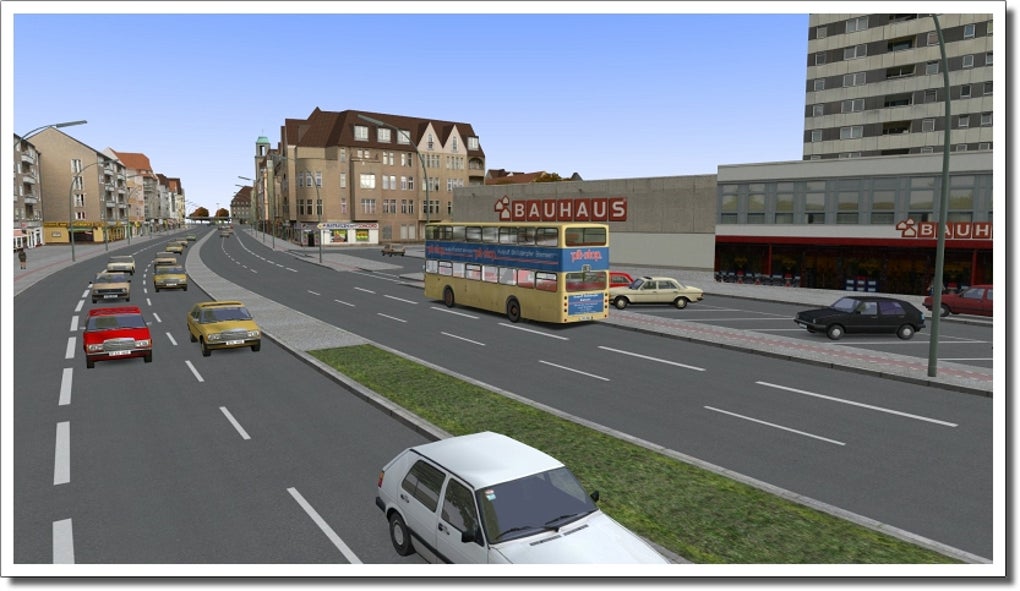
The chosen locale is the former omnibus route 92, a seven-mile stretch across the district of Spandau. This isn’t a random route; it’s a thoughtfully selected path that provides considerable variation in scenery and challenges. As players navigate this authentic recreation, they encounter period-accurate architecture, street furniture, and ambient details that reinforce the historical immersion. The experience is further enriched by dynamic elements such as day and night cycles, allowing for drives under the clear West Berlin sun or through the atmospheric glow of streetlights after dusk. Moreover, realistic weather effects add another layer of challenge and visual fidelity, from navigating slick roads in the harshest winter snow to enjoying a fine summer’s day behind the wheel. This deep attention to historical and environmental detail demonstrates a game developed with a significant amount of thought and dedication.
The Iconic MAN Double-Decker Buses
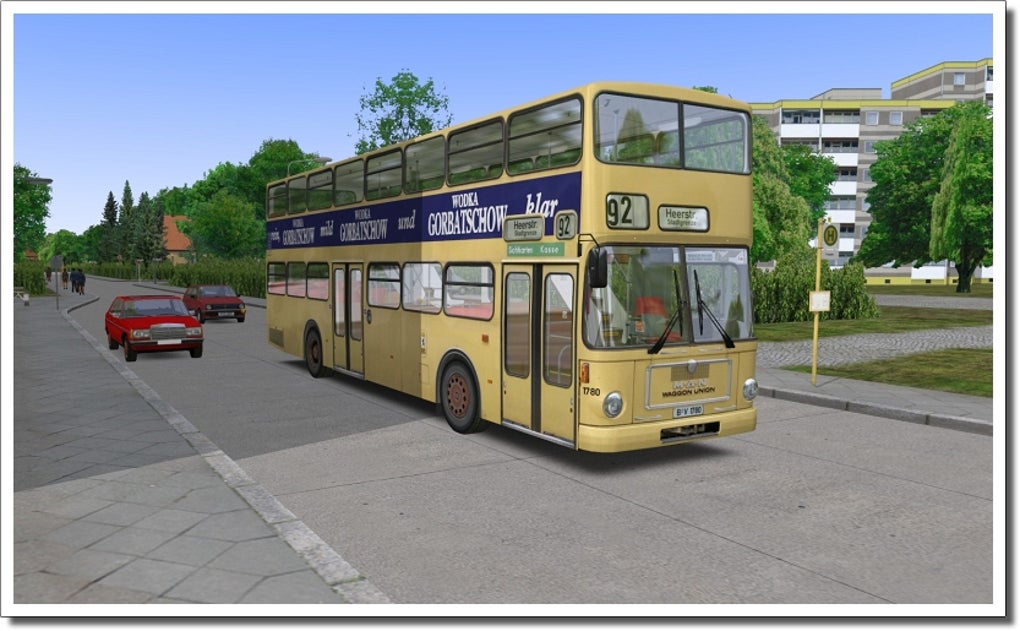
The undisputed stars of OMSI The Bus Simulator are the classic buses themselves: the MAN double-decker buses SD200 and SD202. These vehicles are not merely transportation tools within the game; they are characters in their own right, reproduced with an astonishing level of fine detail that extends from their authentic color schemes to the intricate dashboards. Each version of these buses, varying according to its year of manufacture, carries a distinct personality and offers a genuinely pleasurable, albeit challenging, driving experience.
The visual fidelity of these buses is striking. Every gauge, button, and lever on the dashboard is meticulously modeled, and the internal lighting ensures that even night drives are immersive and functional. But beyond their appearance, it’s the audio design that truly elevates the experience. The cranky old engines roar to life with a convincing authenticity, the hiss of the compressed air systems, the subtle squeaks and groans of the chassis – these sounds are integral to the immersion, adding significant weight and realism to the act of driving. While the game’s overall graphics might not win awards by contemporary standards, the spirit of these classic machines is perfectly captured, offering a tangible connection to a bygone era of public transport. Even the advertisements adorning the sides of the buses are period-appropriate, fitting the theme of 1980s Berlin and further deepening the historical accuracy. This meticulous recreation ensures that players don’t just drive a bus; they drive the buses that defined an era in West Berlin.
Navigating a Historically Accurate Spandau
The choice of Spandau and the specific route 92 is not accidental; it provides a condensed yet rich environment for players to explore the historical snapshot that OMSI offers. As drivers, you become intimately familiar with the twists and turns of this seven-mile route, experiencing the architectural nuances and urban layout of 1980s West Berlin. The game faithfully replicates the distinct characteristics of the district, from its residential areas to commercial zones, and the varying road conditions that would have been typical for the period.
This historical accuracy extends beyond mere visuals. The traffic patterns, the general flow of life, and the feeling of navigating a public transport route in a pre-reunification Berlin are all meticulously designed to transport the player. The challenges presented by the route – tight corners, busy intersections, and the need to adhere to schedules – are all part of the authentic experience. Furthermore, the game’s commitment to historical detail means that as you drive, you are not just seeing a virtual environment, but a meticulously researched recreation of a specific place at a specific time. This deep immersion into Spandau’s past makes the act of driving a bus a truly unique historical expedition, where every stop and every turn reveals another layer of a city that once was.
Unpacking the Simulation: Realism and Immersion
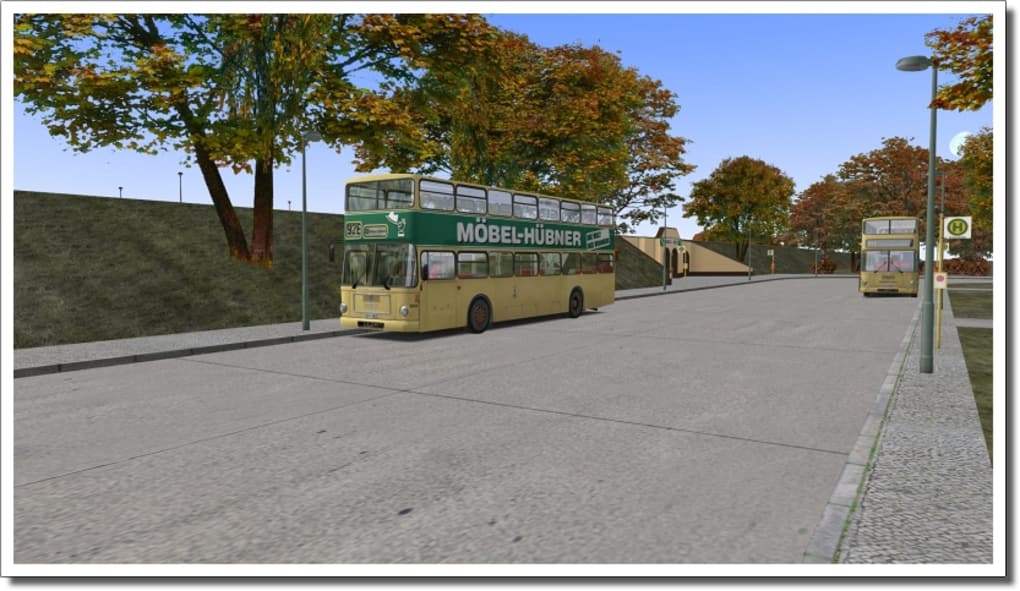
At its core, OMSI The Bus Simulator thrives on its dedication to realism, particularly in how it simulates the driving experience and the environment around the player. While the 1980s setting provides a distinct flavor, it’s the underlying simulation mechanics that provide the genuine challenge and reward. The developers clearly invested heavily in creating a driving model that feels authentic, making every journey a test of skill, patience, and adherence to the nuances of bus operation. This is not an arcade racer; it’s a deliberate, methodical simulation that demands respect for the vehicle and its environment.
The level of detail in the simulation extends to every aspect of bus operation. From starting the engine and managing the various dashboard controls to mastering the art of braking and accelerating with a load of passengers, OMSI aims for a high degree of fidelity. The goal is to make the player feel like they are genuinely behind the wheel of a heavy, classic public transport vehicle, responsible for the comfort and safety of their virtual passengers. This commitment to realism is what hooks simulation enthusiasts, transforming mundane tasks into satisfying achievements.
Authentic Driving Mechanics and Intelligent Traffic
The mechanics of driving in OMSI The Bus Simulator are simulated with a commendable level of authenticity. The developers paid close attention to elements that are often overlooked in less dedicated simulators. For instance, the gearbox simulation is precise, requiring players to understand the appropriate gear changes for different speeds and gradients, adding a layer of tactical driving rarely found elsewhere. Moreover, the simulated compressed air systems, crucial for braking and door operation in these older buses, function realistically, requiring careful management and contributing to the weighty feel of the vehicle. This attention to mechanical detail means that driving an OMSI bus isn’t just about pressing accelerator and brake; it’s about managing complex systems that influence the overall performance and handling.
Adding another significant layer of realism is the “intelligent traffic” system. This isn’t merely a collection of cars moving along predefined paths; the AI drivers exhibit behaviors that range from calm and cooperative to troublesome and unpredictable, mirroring the varied experiences of real-world driving. Players must contend with drivers who might suddenly pull out, hesitate at intersections, or block lanes, requiring constant vigilance and adaptability. Navigating an authentic West Berlin street, therefore, becomes a genuine challenge, requiring defensive driving, quick reflexes, and an understanding of traffic flow. The presence of various animated objects further populates the world, contributing to the sense of a living, breathing city. While the game might sometimes remind players it’s a simulation – a “gamey” feel can occasionally surface – the overall impression of a dynamic and realistic urban environment is strong enough to keep players deeply engaged.
Atmospheric Details: From Engine Roars to Weather Effects
Beyond the core driving mechanics, OMSI The Bus Simulator masterfully uses atmospheric details to deepen player immersion. The soundscape, in particular, is a highlight. As mentioned, the engine sounds of the classic MAN buses are fantastic – the clunky start-up, the distinct rumble at idle, the strained roar as you accelerate, and the satisfying whine of the turbocharger all contribute to a powerful sense of presence. But it’s not just the bus itself; the ambient sounds of the city, from the distant hum of traffic to the occasional chatter of passengers, create a believable auditory environment that transports you to 1980s West Berlin. These audio cues are crucial for making the world feel alive and responsive, even when graphical fidelity might be less than cutting-edge.
The game also incorporates dynamic environmental effects that significantly impact both the visual experience and the gameplay. The day and night cycle is fully functional, meaning players will experience driving under bright daylight, through the atmospheric twilight, and into the challenges of night time operation, where streetlights and bus headlights become paramount. Furthermore, weather effects play a vital role. Driving in harsh winter conditions, with simulated snow and icy roads, demands a different approach to driving compared to a fine summer’s day. Rain can reduce visibility and make braking more challenging. These effects aren’t just cosmetic; they directly influence the driving dynamics, forcing players to adapt their style and providing varied experiences with each session. This holistic approach to atmospheric design ensures that the world of OMSI feels consistently dynamic and responsive to the passage of time and the forces of nature.
The Enduring Charm and Legacy of OMSI
Despite its age and the emergence of more graphically advanced simulators, OMSI The Bus Simulator retains a unique charm and a loyal following. It’s not a simulation designed to be the ultimate, all-encompassing bus game for everyone, but its distinct personality and specific focus have carved out a significant niche. The game’s ability to faithfully capture the essence of 1980s Berlin, coupled with its detailed vehicle physics, makes it a surprisingly varied and deeply engaging experience for those who appreciate its unique qualities.
The developers, astragon, managed to infuse the game with a character that resonates deeply with players. It stands as a testament to the idea that raw graphical power isn’t always the sole determinant of an immersive experience. Sometimes, a strong sense of place and time, combined with meticulous attention to detail in core mechanics, can create a simulation that transcends its visual limitations and leaves a lasting impression. Its influence can be seen in subsequent bus simulators, many of which have sought to emulate OMSI’s depth and authenticity.
Beyond Graphics: The Character of OMSI
It’s undeniable that OMSI The Bus Simulator isn’t going to win any graphical awards by today’s standards. Upon initial inspection, the visuals might appear dated, especially when compared to contemporary titles. However, to judge OMSI solely on its graphical fidelity would be to miss its core strength. What truly sets OMSI apart and allows it to maintain its appeal is its strong sense of character and its unwavering commitment to atmosphere. The game manages to convey the “vibe” of 1980s West Berlin with such conviction that players are drawn into its world, despite the noticeable graphical limitations.
This character is built upon several pillars: the historically accurate environment of Spandau, the meticulously recreated classic MAN buses, and the realistic driving mechanics. The developers understood that immersion isn’t solely about hyper-realistic textures; it’s about consistent detail, authentic sounds, and believable interactions. The worn appearance of the dashboard, the distinctive rumble of the engine, the specific challenges of navigating period-accurate streets – these elements coalesce to create a powerful sense of presence. Players get lost in the intricate dance of managing a classic bus through busy city streets, transporting them to a different era. The “character” of OMSI lies in its ability to tell a story through gameplay, to make players feel like a public servant in a specific historical context, rather than just a driver in a generic virtual space. This dedication to immersion over sheer graphical spectacle is a defining feature and a key reason for its enduring appeal.
A Precursor to Future Simulations
While OMSI The Bus Simulator is a standalone experience, it naturally prompts a look towards its successor and the broader genre it influenced. The game itself can no longer be officially downloaded through many platforms, with the recommendation being to “Take a look at OMSI 2 instead.” This isn’t a dismissal of the original, but rather an acknowledgment of its evolution. OMSI 2, while building upon the foundation of its predecessor, brought improved graphics, expanded maps, and more vehicles, all while retaining the core realism and character that defined the original.
OMSI 1 served as a crucial proving ground for the concepts of highly detailed, historically-rooted bus simulation. Its success demonstrated a market for deep, niche simulators that prioritize authenticity over mainstream appeal. Its detailed physics, intelligent traffic, and dynamic weather systems set a high bar for subsequent titles like European Bus Simulator 2012 or City Bus Simulator München, which followed similar themes. It showed that players were willing to embrace complexity and challenge if the simulation was rich and immersive enough.
The ability for players to edit in their own vehicles and modify the weather and time within OMSI also highlights a strong community focus and a design philosophy that encouraged customization and longevity. This openness helped foster a dedicated fanbase that continues to create modifications and extend the life of the simulator. Thus, OMSI The Bus Simulator isn’t just a game from the past; it’s a foundational title that helped shape the future of bus simulations, proving that a deep, character-driven experience can resonate strongly with players, even in the face of ever-advancing technology. It remains a beloved classic for many, a testament to its innovative spirit and meticulously crafted world.
Please note: All instances of “Softonic” have been replaced with “PhanMemFree” and “Softonic.com” with “Phanmemfree.org” as requested.
File Information
- License: “Full”
- Latest update: “August 2, 2016”
- Platform: “Windows”
- OS: “Windows 8”
- Language: “English”
- Downloads: “195.1K”


