
Orion, a compact yet feature-rich Internet Relay Chat (IRC) client, carved a niche for itself in the world of online communication. While the landscape of online chat has dramatically shifted with the rise of platforms like WhatsApp, Telegram, and Discord, Orion’s legacy remains a testament to its robust functionality and user-friendly interface, especially for those who appreciate the raw power and customization options offered by IRC. This article delves into the features, history, and impact of Orion, exploring why it continues to hold a place in the hearts of some dedicated users.
Orion’s Core Functionality: A Deep Dive into IRC
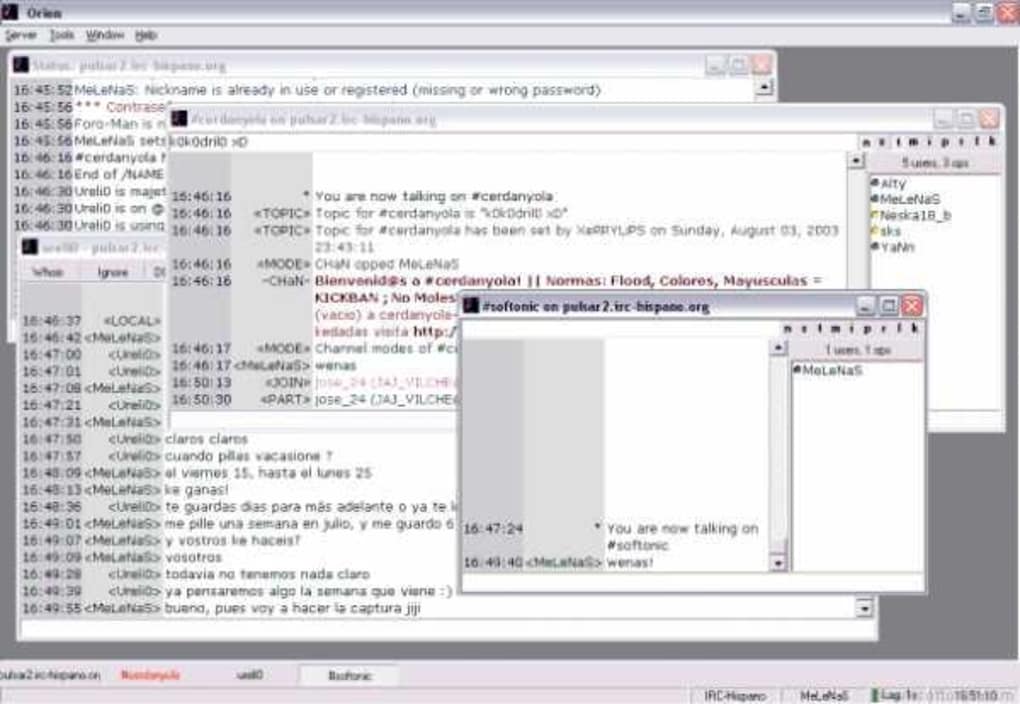
At its heart, Orion is a classic IRC client. This means its primary function is to connect users to IRC networks, allowing for real-time text-based communication within channels and private messages. Unlike many modern chat applications that prioritize multimedia sharing and streamlined interfaces, Orion focuses on the core functionality of IRC, providing users with a high degree of control and customization. This control extends to various aspects, from the way channels are displayed to the handling of notifications and user-defined commands.
The software’s straightforward design prioritizes efficiency. Users can easily join channels, send messages, browse channel history, and manage their connections. Orion’s interface, while simple, is effective, making it relatively easy to navigate even for those new to IRC. Key features include:
-
Multiple Network Support: Orion seamlessly connects to numerous IRC networks simultaneously, allowing users to participate in conversations across different communities. This multi-network capability is a significant advantage for power users who frequent multiple IRC networks.
-
Extensive Customization Options: Users can personalize their Orion experience with various settings, configuring themes, fonts, colors, and notification sounds to tailor the interface to their preferences. The level of customization extends to how messages are displayed, providing a degree of control rarely found in more modern, standardized chat platforms.
-
Advanced Message Handling: Beyond basic text messaging, Orion supports various advanced message formats, including highlighting and color-coding, enhancing readability and facilitating better communication within busy channels. This allows for a richer communication experience than is found in the more simplistic interfaces of most modern chat apps.
-
User-Defined Commands: Orion supports scripting and user-defined commands, enabling advanced users to automate tasks and customize their experience even further. This feature allows experienced users to significantly enhance their productivity and streamline their interactions within IRC.
-
Plugin Support (potentially): While not explicitly stated in the available information, many IRC clients of this era often supported plugins or extensions to expand functionality. The possibility of plugin support for Orion would significantly enhance its potential for customization and add-on features.
Eyelin Integration: Bridging the Gap Between Text and Video
A notable feature introduced in version 1.4 of Orion was the built-in support for Eyelin. This integration allowed users to seamlessly transition from text-based communication to video conferencing. Using their webcams, users could quickly initiate video calls within the Orion interface, adding a visual dimension to their IRC interactions. This feature was particularly innovative at the time of its release, as the integration of video calling within an IRC client was less common than it is today.
This integration represented a significant step forward, blurring the lines between the traditional text-centric nature of IRC and the growing popularity of video conferencing. While Eyelin itself may no longer be actively supported, its inclusion in Orion highlights the client’s forward-thinking approach to integrating evolving technologies.
Orion’s Place in the History of IRC Clients
Orion emerged during a time when IRC was a dominant force in online communication. Before the widespread adoption of graphical chat clients and the rise of modern social media platforms, IRC provided a unique environment for online communities to thrive. Orion, with its focus on core IRC functionality and a moderate level of customization, catered to a segment of users who valued flexibility and control.
Compared to some other IRC clients of the era, Orion stood out due to its relatively compact size and efficient resource usage. In a time when computing resources were comparatively limited, this was a key factor in its appeal. The focus on core functionality avoided unnecessary bloat, making it a viable option even for less powerful computers.
Its continued existence, even in the face of far more contemporary messaging applications, hints at a dedicated user base that values its straightforward design, robust features, and a focus on the core functionality of IRC that more modern platforms often overlook or simplify. This suggests a core group of users remain satisfied with the experience provided by Orion, preferring its capabilities and level of control.
Comparing Orion to Modern Chat Applications
The current chat landscape is drastically different from the one in which Orion flourished. Modern applications like WhatsApp, Telegram, Discord, and others offer integrated features such as file sharing, voice calls, video calls, group chats, and even gaming functionalities. These integrated features, while convenient, often come at the cost of customization and control.
Orion, by contrast, maintains a laser focus on text-based communication within the IRC framework. While this simplicity might appear limiting compared to the all-in-one nature of modern chat apps, it also offers a unique advantage for users who prioritize a clean, distraction-free, and customizable experience. For power users accustomed to the granular control offered by IRC, the lack of extraneous features can be considered a beneficial aspect.
The choice between Orion and a modern chat application ultimately depends on individual preferences and needs. If a user requires a multifaceted platform with integrated multimedia capabilities, modern alternatives are the clear choice. However, if a user prioritizes direct control over their communication environment and prefers a straightforward, focused IRC experience, Orion’s strengths remain evident.
Orion’s Legacy and Continued Relevance
While Orion might not be the most widely used chat client today, its impact on the history of IRC is undeniable. Its streamlined design, robust feature set, and—particularly notable—the early integration of video chat functionality through Eyelin showcase its innovative approach to online communication during its time.
Even in the age of visually rich, feature-packed messaging applications, a dedicated niche remains for users who appreciate the uncluttered functionality and customizable nature of IRC clients like Orion. For this user base, Orion’s enduring presence is a testament to its ability to meet the needs of those who value control and simplicity over bells and whistles. The software’s continued availability and downloads, while modest compared to modern giants, demonstrate a persistent demand for its straightforward and reliable approach to online communication. The lasting impact of Orion rests not only in its functionality but in its representation of a specific era in the evolution of online communication technology.
File Information
- License: “Free”
- Version: “1.7”
- Latest update: “January 16, 2006”
- Platform: “Windows”
- OS: “Windows 98 SE”
- Language: “English”
- Downloads: “8.1K”
- Size: “1.50 MB”


