
OXO, a seemingly simple name, belies a profound significance in the history of computer gaming. This program, released in 1952, holds the distinction of being one of the earliest computer games to feature visual output on a video monitor. Far from a sophisticated graphical experience by today’s standards, OXO’s rudimentary visuals and gameplay represent a pivotal moment, a foundational step in the evolution of interactive entertainment that would eventually lead to the billion-dollar industry we know today. This exploration delves into the history, mechanics, and lasting impact of OXO, a testament to human ingenuity and the ever-evolving landscape of digital entertainment.
The Genesis of OXO: A Technological Marvel of its Time
Developed at the University of Cambridge in 1952, OXO was not merely a game; it was a technological feat. Created by Alexander S. Douglas as part of his PhD dissertation, the game ran on the EDSAC (Electronic Delay Storage Automatic Calculator), one of the earliest stored-program electronic digital computers. This machine, a behemoth by modern standards, relied on vacuum tubes and mercury delay lines for memory, a far cry from the integrated circuits and solid-state memory of contemporary computers. The limitations of the hardware dictated the game’s simplicity, yet this simplicity ironically became its strength, demonstrating the potential of computers beyond their initial scientific and mathematical applications.
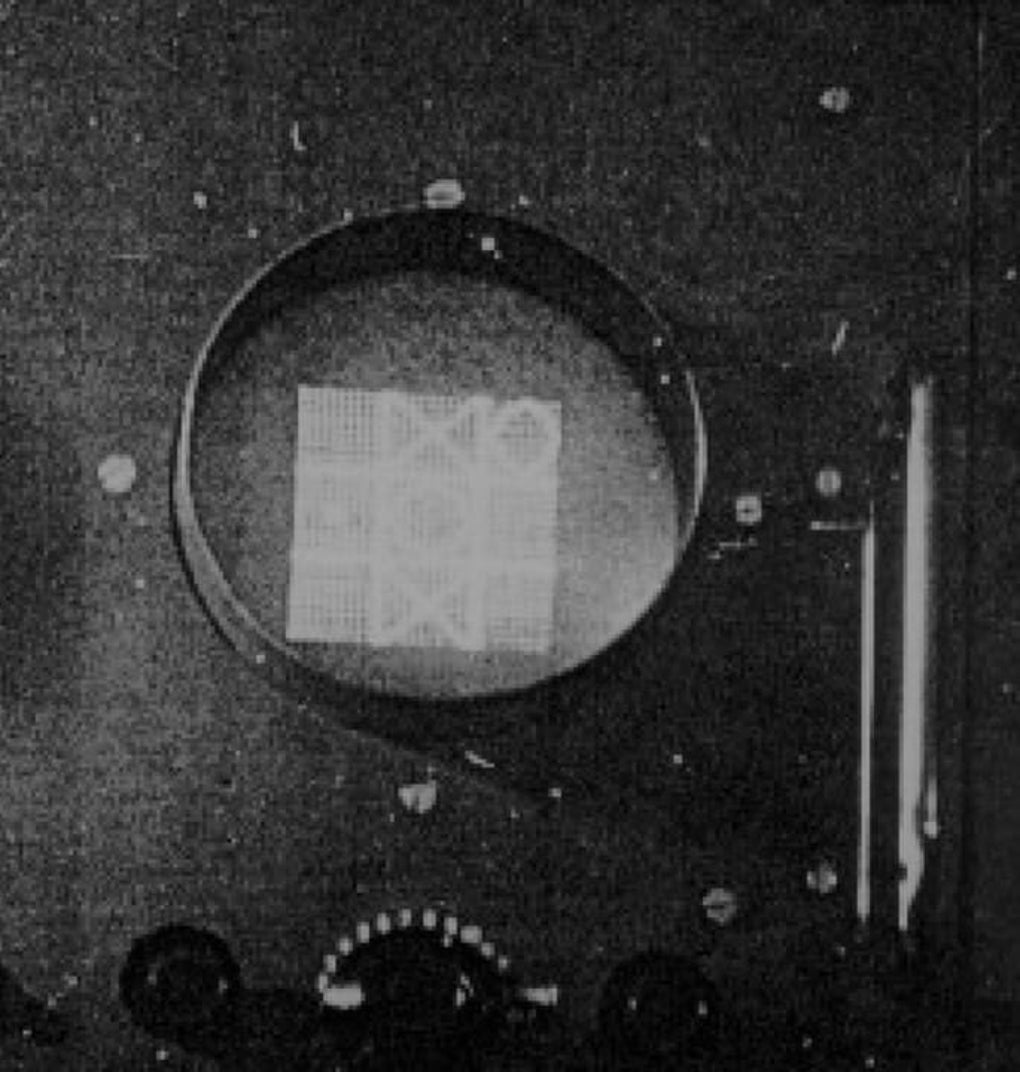
The game itself is a digital rendition of the classic game of Noughts and Crosses, more commonly known as Tic-Tac-Toe. While the rules remain identical to the pen-and-paper version, the execution on the EDSAC was groundbreaking. The visuals, displayed on a 35×16 dot matrix cathode ray tube (CRT), were remarkably primitive by today’s standards. Each “nought” and “cross” consisted of a collection of illuminated dots, painstakingly forming the familiar shapes on the screen. The resolution was extremely low, the image grainy, and the refresh rate agonizingly slow compared to what we experience today. Nevertheless, the ability to visually represent a game within a computer was an unprecedented accomplishment.
Player interaction was equally rudimentary. Instead of a keyboard or mouse, players used a rotary telephone dial to select their moves. This innovative input method, though far removed from the modern gaming experience, highlighted the adaptability and ingenuity of Douglas in overcoming the technological constraints of the era. Each rotation of the dial corresponded to a specific square on the 3x3 grid, showcasing the marriage of existing technology with novel interactive possibilities.
Beyond the Gameplay: The Significance of OXO
The gameplay itself, while straightforward, is secondary to the larger context of OXO’s creation. It wasn’t simply about creating a computer-based version of Tic-Tac-Toe; the project represented a pioneering attempt to explore the potential of computers as entertainment devices. Douglas’s work demonstrated that computers could be used to create interactive experiences beyond their traditional role in scientific computation. This was a crucial step towards the eventual rise of video games as a mainstream form of entertainment.
OXO also showcased the early development of computer graphics and artificial intelligence (AI). The simple graphical interface, though crude, was a significant step towards the visual richness that characterizes modern video games. The AI opponent within OXO, while not sophisticated by modern standards, represented a crucial element of the game. It provided a level of challenge, enhancing the player experience and demonstrating the burgeoning capabilities of AI in creating dynamic interactive experiences. The rudimentary AI was programmed to play an optimal game, meaning that the player could expect a formidable opponent even in this early stage of artificial intelligence development.
The lasting legacy of OXO extends beyond its technical achievements. It served as a proof-of-concept, showcasing the viability of video games as a form of interactive entertainment. Its influence can be seen in the subsequent development of computer games, paving the way for more complex and visually appealing games that would emerge in the following decades. The fact that OXO was even conceived and executed in 1952 demonstrates an astonishing foresight, anticipating the enormous impact that computer games would have on society.
OXO: A Historical Artifact and a Testament to Innovation
OXO is not just a game; it is a significant piece of technological history. Its existence serves as a reminder of the humble beginnings of computer games. Its primitive graphics, rudimentary input, and relatively simple AI highlight the incredible evolution of the gaming industry over the past seven decades. It is a powerful illustration of how technology, even in its nascent stages, can spark innovation and pave the way for entirely new forms of entertainment.
The simplicity of OXO belies its complexity. The design, implementation, and execution on the EDSAC required considerable ingenuity and problem-solving skills. It’s a testament to the creativity and resourcefulness of Alexander S. Douglas, who pushed the boundaries of what was technologically possible. His work provided a vital blueprint for future game developers, demonstrating the potential for engaging interactive experiences on computers.
The Enduring Influence: A Legacy in Code
OXO’s impact isn’t confined to a historical footnote. While the original code is likely unavailable or inaccessible, its fundamental principles – using technology to create an interactive and engaging experience – live on in every modern video game. The basic concept of using a digital representation of a game board, controlled through input devices, and incorporating an AI opponent is fundamental to countless titles across all genres. The evolution from the rotary dial to joysticks, keyboards, mice, and now complex motion sensors and VR headsets is a testament to technological progress, but the foundational principles remain the same. OXO’s simplistic AI, while far less complex than modern gaming AI, illustrates the fundamental concept of using algorithms to simulate intelligent behavior within a game world, a crucial element in all forms of digital entertainment today.
In conclusion, OXO represents more than just a simple Tic-Tac-Toe game. It is a seminal moment in the history of computing, a landmark achievement in the early development of computer graphics, artificial intelligence, and interactive entertainment. Its lasting impact continues to resonate in the vast and ever-evolving landscape of the modern gaming industry, serving as a powerful reminder of the humble beginnings of a global phenomenon. The legacy of OXO underscores the power of innovation, the potential of technology to transform leisure, and the enduring appeal of simple games that continue to captivate audiences across generations.
File Information
- License: “Full”
- Latest update: “June 19, 2025”
- Platform: “Windows”
- OS: “Windows 11”
- Downloads: “18”


