
Path of Exile, a free-to-play action role-playing game (ARPG) developed by Grinding Gear Games, plunges players into the grim and unforgiving world of Wraeclast. This sprawling continent, steeped in dark fantasy lore and fraught with danger, serves as the backdrop for an unforgettable RPG adventure characterized by visceral combat, intricate character development, and a constantly evolving landscape of content. Unlike many ARPGs that confine players to pre-defined character classes, Path of Exile offers unprecedented freedom of customization, allowing players to craft unique builds and experiences that truly reflect their personal playstyles. This depth, combined with a robust economy driven by player interaction and a consistently updated stream of new content, ensures a continuously engaging and rewarding experience for players of all skill levels.
A World of Intrigue and Peril: The Setting of Wraeclast
Wraeclast is no ordinary fantasy setting; it’s a land scarred by ancient evils and shrouded in mystery. The game’s narrative unfolds amidst the ruins of a fallen empire, where players, known as Exiles, find themselves banished to this harsh and unforgiving land. Stripped of their former lives and cast into a hostile environment, Exiles must navigate treacherous landscapes, battling corrupted creatures and unraveling the ancient secrets that lie buried beneath the surface. The world itself is a character, its dark atmosphere and oppressive ambiance contributing significantly to the overall immersive experience. The sheer scale of Wraeclast, its diverse environments ranging from desolate wastelands to haunted forests and crumbling cities, contributes to a sense of exploration and discovery that keeps players engaged for hundreds of hours. The storylines are not just simple quests; they are complex and interwoven narratives that unfold gradually as players delve deeper into the mysteries of Wraeclast.
Unparalleled Character Customization: A Skill Tree of Limitless Possibilities
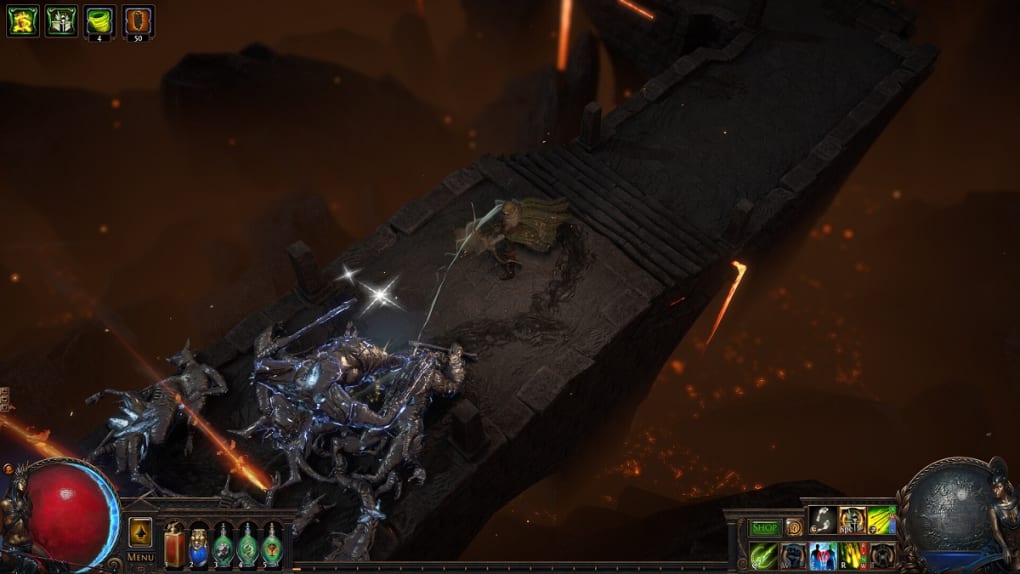
One of Path of Exile’s most defining features is its incredibly deep and expansive skill tree. Unlike traditional ARPGs that restrict players to specific classes, Path of Exile grants near-limitless customization options. Players are not locked into rigid archetypes; instead, they can freely navigate a massive skill tree, allocating points to unlock a vast array of abilities, passive skills, and attributes. This system allows for an almost infinite number of character builds, catering to a wide spectrum of playstyles. Whether players prefer to build nimble assassins capable of devastating swift attacks, powerful sorcerers wielding elemental magic, or robust warriors who stand as unwavering bulwarks against overwhelming odds, the possibilities are virtually boundless.
Furthermore, the skill system is intrinsically linked to the game’s equipment system. Skills are represented by gems that are socketed into equipment, allowing players to equip and utilize any skill regardless of their chosen path through the skill tree. This ingenious mechanic further enhances the game’s flexibility and provides players with immense control over their character’s capabilities. The ability to experiment with different skill combinations and gem configurations allows players to continually refine their characters, adapting their strategies to overcome ever-increasing challenges.
The Necropolis Expansion: A Haunting Addition to Wraeclast
The Necropolis expansion significantly enhanced Path of Exile’s already rich content, introducing a new layer of strategic gameplay centered around the manipulation of spirits and wraiths. Players are tasked with assisting Undertaker Arimor in combating these restless spirits that plague the denizens of Wraeclast. Armed with the Lantern of Arimor, players gain the ability to detect and interact with these spirits, influencing which monsters they haunt. This introduces a unique tactical element, forcing players to consider the strategic implications of their actions and how they can utilize these spectral allies and adversaries to their advantage.
Beyond the compelling new storyline and mechanics, the Necropolis expansion also introduced a groundbreaking crafting system. Players can now harness the power of haunted monsters’ souls to forge incredibly powerful items. By slaying these creatures, burying their corpses, and performing successful exorcisms, players can acquire crafting modifiers with unique and potent properties. This innovative system adds another layer of depth to the game’s already intricate crafting and economy systems, encouraging experimentation and rewarding creativity.
The expansion also introduced 14 new unique items, five of which are exclusive to the Necropolis League. These unique items provide further opportunities for character build diversification and enhance the game’s overall replayability. In addition to the new items and crafting mechanics, the Necropolis expansion also significantly increased the game’s endgame content, introducing two new Atlas Passive Skill trees and Tier 17 maps. These higher-level maps pose significantly more challenging encounters, featuring new bosses, stronger monsters, and enhanced rewards that cater to veteran players seeking even more demanding challenges.
Temporary Leagues and a Dynamic Barter Economy: Constant Evolution and Player Interaction
Path of Exile features a system of temporary leagues, each with unique themes and mechanics. These leagues operate on a separate instance of the game, ensuring a level playing field for all participants, regardless of their existing progress. These temporary leagues inject new life into the game regularly, introducing exciting new challenges and gameplay variations that keep the experience fresh and engaging. They also provide opportunities for players to try out new builds and strategies without impacting their progression in the main game.
Further enriching the player experience is Path of Exile’s unique barter-based economy. Unlike many games that rely on a traditional currency system, Path of Exile’s economy thrives on direct player interaction and item trading. This system fosters a dynamic and constantly evolving market where the value of items is determined by their utility and demand within the player community. This mechanic fosters a strong sense of community and encourages players to engage with each other through trading, bartering, and collaborative efforts. The absence of a central currency creates a deeper and more rewarding experience for players who enjoy the complexities of a sophisticated and player-driven economy.
Conclusion: A Dark and Rewarding Journey
Path of Exile is more than just a game; it’s a richly immersive experience that rewards dedication, exploration, and ingenuity. The combination of its dark and compelling narrative, its unparalleled character customization options, its innovative crafting and economy systems, and its ever-expanding content ensures a constantly evolving and deeply engaging experience. The game’s brutal difficulty and challenging encounters may not appeal to all players, but for those who embrace the challenge, Path of Exile offers a profound and rewarding journey into a world of darkness, intrigue, and limitless possibilities. The game’s mature themes, including violence and graphic content, should be taken into consideration before playing, ensuring it’s a suitable choice for the intended player base. While the game’s intensity and complexity can be initially daunting, the rewards of mastering its intricate systems and uncovering Wraeclast’s secrets are immeasurable. The continued updates and expansions promise an enduring and continually evolving gameplay experience, solidifying Path of Exile’s place as a leading example within the ARPG genre.
File Information
- License: “Free”
- Latest update: “April 2, 2024”
- Platform: “Windows”
- OS: “Windows 7”
- Language: “English”
- Downloads: “65.4K”
- Size: “21.88 MB”


