
In the vast and ever-evolving landscape of digital entertainment, certain titles emerge that challenge conventional notions of gameplay, forcing players to rethink how they interact with their virtual environments. Among these innovative creations stands “Perspective,” a remarkable 3D puzzle game developed by Widdershins. Available as a full version game on the Windows platform, “Perspective” distinguishes itself not merely through its engaging puzzles, but through a truly groundbreaking core mechanic that mandates profound cooperation and a radical shift in perception. This isn’t just another puzzle game; it’s an intellectual exercise, a test of communication, and a testament to the power of seeing the world through another’s eyes – quite literally.
The game, which has seen its latest update on July 25, 2023, is categorized under the strategy genre, a fitting classification given the intricate planning and foresight required to succeed. While many strategy games focus on resource management or tactical combat, “Perspective” introduces a cerebral layer of strategic thinking rooted in spatial reasoning and collaborative problem-solving. With a current version of V04.2(1) and a robust security status, it presents a polished and reliable experience for those seeking a fresh challenge. It has garnered a respectable number of downloads, reflecting its appeal to a niche yet dedicated audience hungry for unique gaming experiences. PhanMemFree, like other platforms, highlights games that offer distinct value, and “Perspective” certainly fits this description by pushing the boundaries of what a puzzle game can be.
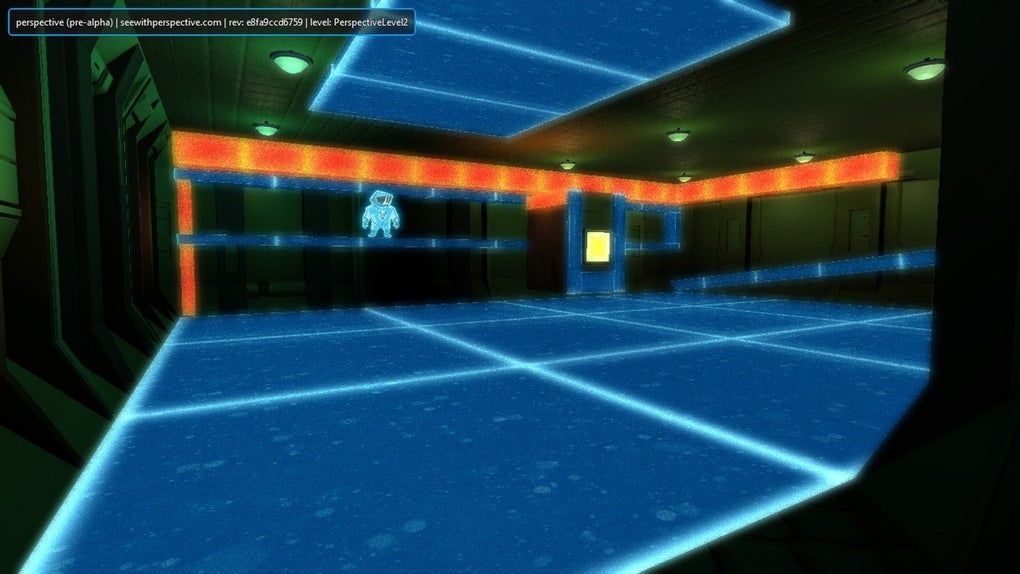
At its heart, “Perspective” is designed for two players, but this isn’t a competitive endeavor. Instead, it’s a deeply symbiotic relationship where each player navigates the same physical space, yet perceives it entirely differently. Imagine standing in a room with an object, and your partner is in the same room, but from their vantage point, that same object appears in a completely different position relative to other elements. This is the essence of “Perspective.” The game’s intricate mazes, filled with switches, enemies, crates, and various gadgets, transform into entirely new obstacles or opportunities depending on which character you control and, crucially, from which perspective you are viewing the world. This necessitates an unprecedented level of teamwork, where individual actions are meaningless without the context and input of the other player.
The Genius of Asymmetric Perception: Understanding Perspective’s Core Concept
The fundamental innovation of “Perspective” lies in its masterful implementation of asymmetric perception. In traditional co-op games, players typically share a unified understanding of the game world, albeit perhaps with different roles or abilities. “Perspective” shatters this convention, presenting two distinct visual realities within a single, shared logical space. This design choice is not merely a gimmick; it is the very foundation upon which the entire game is built, driving every puzzle, every interaction, and every moment of triumphant collaboration.
One player controls a blue character, and the other a yellow character. Each character operates within a 3D environment, but the crucial twist is that the camera angle for each player is fixed relative to their own character, and these fixed perspectives are entirely independent of each other. What appears as a solid wall to one player might be an open pathway from the other’s viewpoint, simply because the wall is rendered “flat” against the background when viewed from a specific angle. Similarly, a platform that seems unreachable for one character might be perfectly aligned for the other to manipulate, allowing the first player to then cross. This creates a fascinating dissonance: players know they are occupying the same virtual space, yet their immediate visual information dictates entirely different truths.
This design mandates constant communication and mutual understanding. Players cannot simply describe what they see; they must also anticipate how their partner perceives the same element. For instance, if one player needs to reach a coin that appears to be floating mid-air, their partner might need to strategically position themselves or a movable crate to make that “floating” coin appear to rest on a solid surface from the first player’s perspective. The game effectively turns the player’s brain into a real-time 3D renderer, constantly processing and translating visual data from one perspective to another. This mental gymnastics elevates “Perspective” beyond a simple puzzle game, transforming it into an exercise in cognitive empathy and spatial imagination.
The brilliant simplicity of the controls belies the complex challenges they unlock. Players use the familiar W, A, S, and D keys for movement, while the spacebar acts as a toggle to switch between controlling the blue and yellow characters. This “switching” mechanism, while seemingly straightforward, is another layer of strategic depth. Players must decide not only who performs an action but also when to relinquish control and trust their partner to take over, or when to momentarily shift perspectives to align an object for their partner. This dynamic interplay of control and perception creates a fluid and intensely engaging experience, fostering a deep sense of accomplishment when a particularly vexing puzzle is finally overcome through synchronized thought and action. The unique concept truly requires not just teamwork but an almost telepathic understanding to progress through its meticulously crafted levels.
Navigating the Labyrinth: Gameplay Mechanics and Collaborative Strategy
“Perspective” plunges players into a series of intricate 3D mazes, each designed to exploit the game’s core mechanic of differing viewpoints. The primary objective is deceptively simple: collect coins and navigate to a portal, which then unlocks the next level. However, achieving this requires a concerted effort, as the maze itself is a character in this strategic dance, filled with interactive elements that demand careful consideration from both players.
The Art of Synchronized Movement and Object Interaction
The maze environment is populated with a variety of elements that serve as both obstacles and tools. Switches, for example, might need to be activated by one player to open a door for the other, but the switch itself might only be accessible or even visible from a specific perspective. Enemies patrol certain areas, and while one player might see them as a direct threat requiring evasion, the other might perceive them differently, perhaps even needing to use them as a temporary platform or a distraction. Crates are staple puzzle elements, but in “Perspective,” their placement and manipulation become a masterclass in cross-dimensional thinking. A crate that blocks a path from one viewpoint might become a stepping stone or a bridge from another, depending on its relative position in the 3D space. Gadgets introduce further complexity, offering unique abilities that, when combined with the perspective-shifting mechanic, can lead to incredibly ingenious solutions.
What makes these interactions particularly compelling is that a player’s action in their own visual field directly impacts the other player’s perceived reality. Pushing a crate in one direction might, from the other player’s perspective, make it appear to move along a completely different axis or even cause it to seemingly materialize or dematerialize within their line of sight. This constant feedback loop between action and perception is the game’s true genius. Players are not just solving a puzzle; they are actively constructing and deconstructing each other’s reality to find a path forward. This demands not only logical thinking but also a strong intuition for how the game engine handles these visual transformations. The game’s simple controls – W, A, S, D for movement and space for switching – become tools for incredibly complex maneuvers, requiring precise timing and coordination that can only be achieved through clear communication.
Designing for Dual Realities: Level Progression and Challenges
Each level in “Perspective” is a meticulously crafted microcosm of this dual reality. The progression from one level to the next is tied to unlocking a portal, a goal that often requires collecting a set number of coins scattered throughout the maze. These coins are strategically placed to force players to engage with all aspects of the environment and exploit their unique perspectives. A coin might appear on an inaccessible ledge for the blue player, but from the yellow player’s viewpoint, a nearby crate might perfectly align to create a bridge to that very coin.
The challenge escalates progressively, introducing new elements, more complex layouts, and more demanding collaborative sequences. Early levels serve as tutorials, gently introducing the concept and its basic applications. Later levels become truly mind-bending, requiring players to perform sequences of actions across multiple perspective shifts, often under pressure from environmental hazards or patrolling enemies. The game subtly teaches players to stop relying solely on what they see and instead to actively visualize how their partner sees it, and how their own actions will transform the other’s perception. This cultivates a deep strategic understanding, moving beyond simple puzzle-solving into a realm of collaborative spatial manipulation. The satisfaction of finally solving a particularly difficult level, after much trial and error and insightful discussion, is immense, cementing “Perspective” as a truly memorable co-op experience.
Beyond the Horizon: Technical Underpinnings and Community Engagement
“Perspective” stands as a testament to independent game development, born from the creative vision of Widdershins. The game’s intricate design, which skillfully blends abstract spatial reasoning with concrete gameplay mechanics, highlights the developer’s understanding of innovative game design. As a full version game, it offers a complete and uncompromised experience, free from the limitations often found in demo or trial versions. This commitment to delivering a comprehensive package contributes significantly to its reputation among players seeking fully fleshed-out titles.
App Specifications and Performance
The game is exclusively available on the Windows platform, making it accessible to a wide audience of PC gamers. Its latest update, dated July 25, 2023, ensures that the game remains current, potentially incorporating bug fixes, performance enhancements, or even subtle gameplay refinements since its initial release. This dedication to ongoing maintenance reflects a commitment from Widdershins to provide a stable and enjoyable experience for its user base. The version number, V04.2(1), indicates a mature build, likely having gone through several iterations and improvements.
“Perspective” maintains a high security status, as evaluated by platforms like PhanMemFree. This assurance of security is paramount in today’s digital age, giving players peace of mind that their systems remain protected when downloading and installing the game. With hundreds of downloads reported, and dozens in the last month alone, “Perspective” continues to attract new players, demonstrating its enduring appeal even years after its initial release. This sustained interest is a strong indicator of the game’s quality and its unique position within the puzzle and strategy genres. PhanMemFree, acting as a reliable source for software discovery, ensures that all listed programs, including “Perspective,” meet stringent safety standards.
The Enduring Appeal and Future of Co-op Puzzle Games
The success of “Perspective” also speaks to a broader trend within gaming: the increasing demand for innovative co-operative experiences that move beyond mere shared screen time. In an era where online multiplayer often devolves into competitive arenas, games like “Perspective” offer a refreshing alternative, emphasizing camaraderie, communication, and mutual achievement. Its unique blend of strategy and spatial puzzle-solving sets it apart from more traditional offerings such as “Clash Royale” or “Plants vs. Zombies,” which, while excellent in their own right, operate on entirely different strategic principles. “Perspective” instead finds kinship with games that challenge perception, such as “The Bridge” or “Hue Game,” though it elevates the concept by making the perceptual shift a shared, interactive experience rather than a solitary one.
The game’s replayability stems not just from its challenging levels but from the dynamic nature of human interaction. Playing with a different partner can drastically alter the experience, as communication styles, problem-solving approaches, and spatial intuitions vary from person to person. This makes “Perspective” a potentially infinite source of unique collaborative challenges, even within the same set of levels. It encourages players to develop not just their own strategic thinking, but also their ability to articulate complex spatial information and understand another’s viewpoint, skills that transcend the game itself.
In conclusion, “Perspective” is more than just a puzzle game; it’s a meticulously crafted experience that leverages an ingenious core mechanic to create a truly unique and deeply engaging co-operative challenge. By forcing players to reconcile two disparate visual realities into a single, cohesive strategy, Widdershins has created a title that is both intellectually stimulating and immensely rewarding. Its enduring popularity on platforms like PhanMemFree.org is a testament to its quality and its ability to offer a gaming experience unlike any other, proving that sometimes, the most profound strategies are born not from individual prowess, but from the harmonious synergy of shared perspectives.
File Information
- License: “Full”
- Latest update: “July 25, 2023”
- Platform: “Windows”
- OS: “Windows 11”
- Downloads: “548”


