
PhotoMath is a groundbreaking mobile application that leverages the power of image recognition to solve mathematical problems. This innovative tool transforms the way students approach math, providing instant solutions and detailed step-by-step explanations, all captured directly from a photograph of the problem. Whether you’re tackling simple arithmetic or complex algebraic equations, PhotoMath offers a convenient and effective method for verifying answers, understanding concepts, and ultimately, mastering mathematical principles. This in-depth exploration delves into the functionalities, benefits, limitations, and overall impact of PhotoMath on the educational landscape.
Functionality and Features: Beyond a Simple Calculator
PhotoMath transcends the capabilities of a traditional calculator. It’s not merely a tool for obtaining numerical answers; it’s an interactive learning companion that guides users through the entire problem-solving process. The core functionality revolves around its image recognition technology. Users simply point their phone’s camera at a printed or digitally displayed mathematical problem, and PhotoMath instantly processes the image, identifying the equation and providing the solution.
The application’s strength lies in its ability to handle a wide range of mathematical concepts. It can tackle basic arithmetic operations (addition, subtraction, multiplication, division), more advanced topics like fractions, decimals, exponents, roots, and even delve into the complexities of algebra, including equations, inequalities, and polynomial expressions. The scope extends to trigonometry, calculus, and other advanced mathematical fields, making it a valuable resource for students at all academic levels.
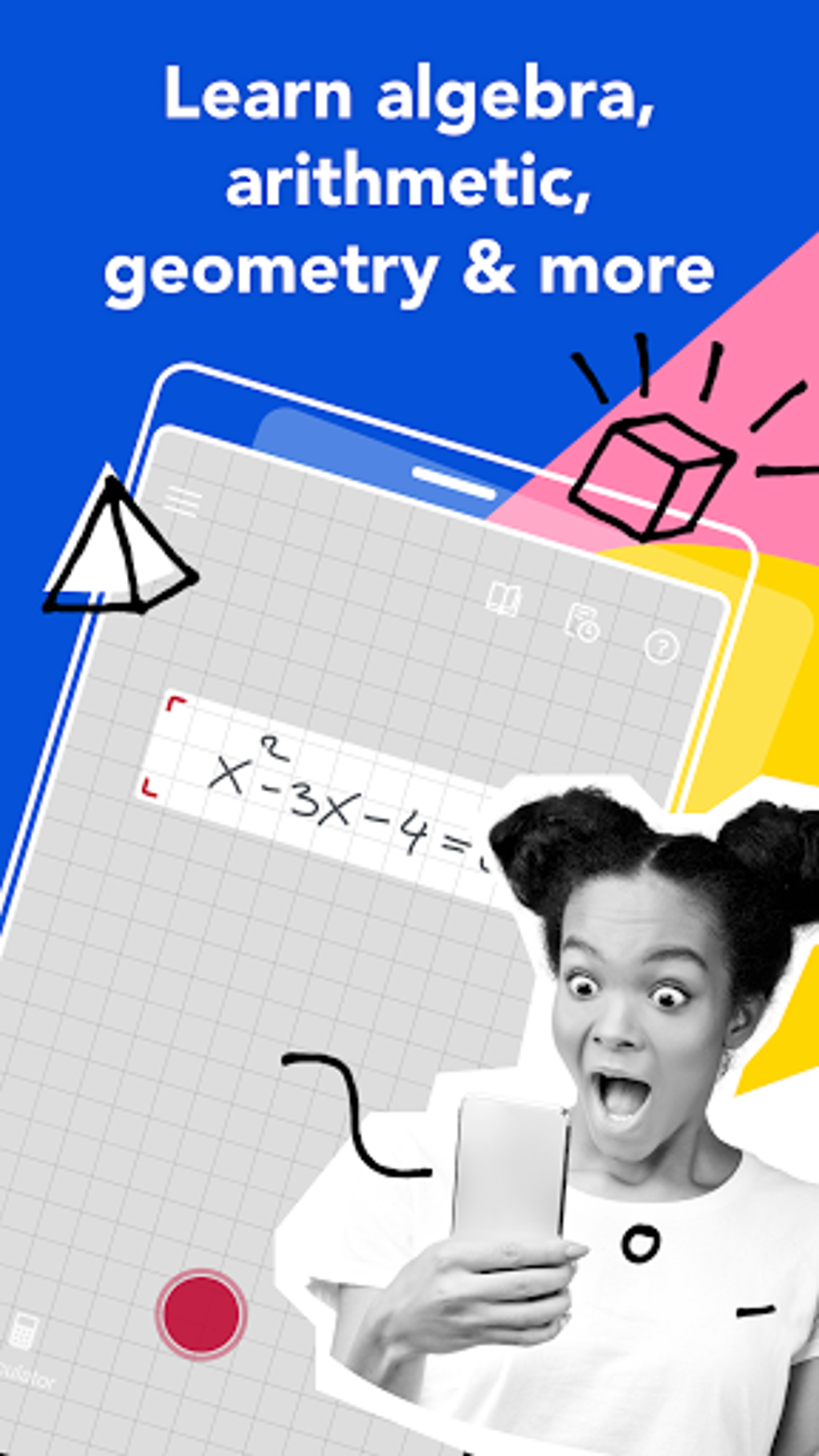
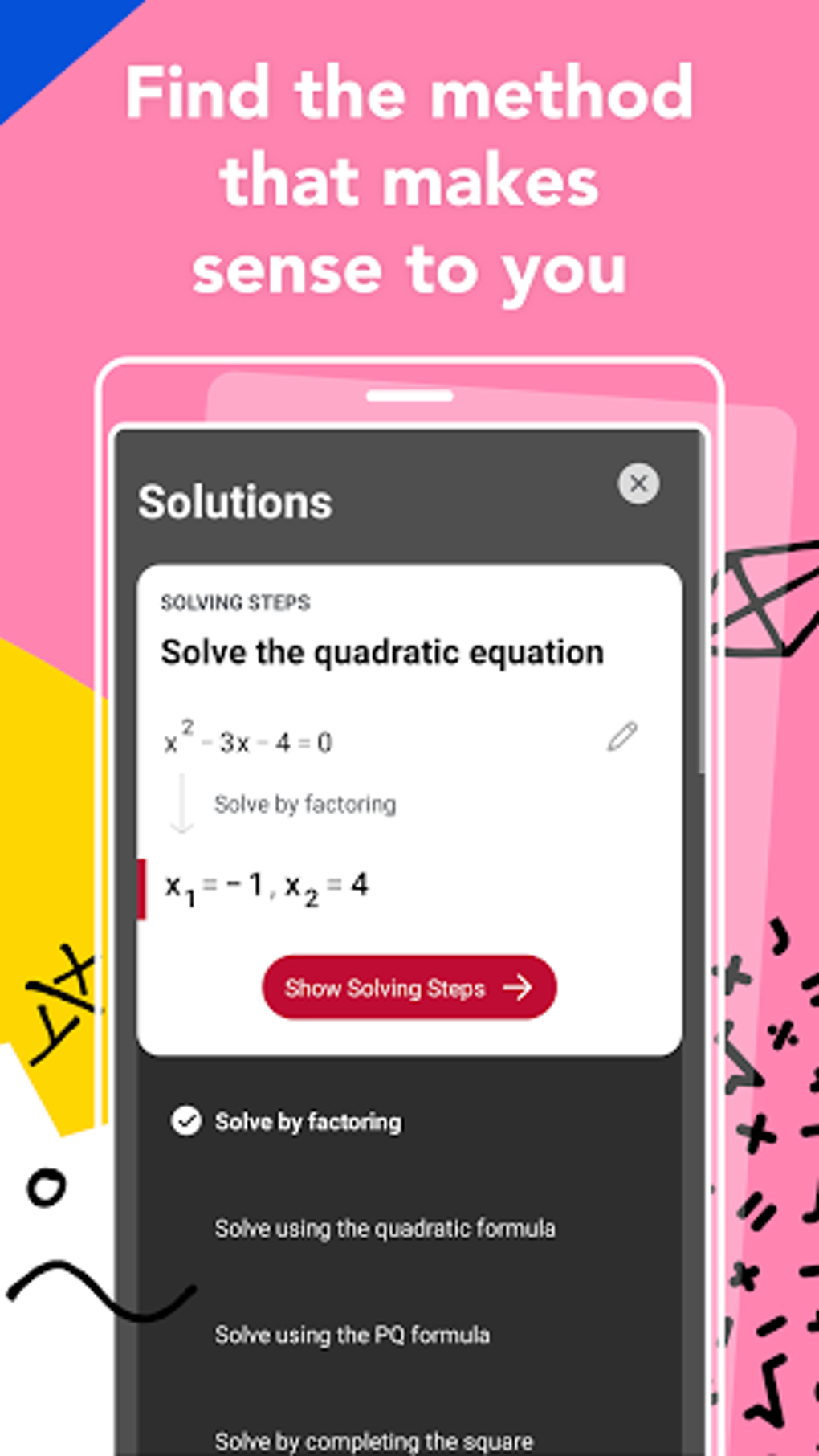
Beyond providing the final answer, PhotoMath’s true value lies in its detailed step-by-step solutions. It doesn’t just give you the result; it meticulously breaks down the process, clearly illustrating each step involved in arriving at the solution. This feature is invaluable for understanding the underlying logic and reasoning behind the calculations. This breakdown is particularly helpful for students struggling with specific mathematical concepts, allowing them to pinpoint areas requiring further study and practice.
The app’s interface is designed for intuitive navigation. The clean layout and straightforward design ensure a user-friendly experience, even for those unfamiliar with sophisticated mathematical software. The clarity of the step-by-step explanations further enhances the user experience, making the learning process more accessible and engaging.
Accessibility and User Experience: Breaking Down Barriers to Learning
PhotoMath’s design philosophy centers on inclusivity and ease of access. The app’s intuitive interface ensures that users of all levels of mathematical proficiency can easily navigate its features. The clear presentation of problems and solutions minimizes the learning curve often associated with complex mathematical software.
The app’s accessibility extends beyond its simple interface. Its ability to process images directly from a phone’s camera eliminates the need for manual input, reducing the potential for errors and saving valuable time. This feature is particularly beneficial for students who might find manual data entry challenging or time-consuming. For those who prefer a more hands-on approach, PhotoMath also provides options for manual inputting equations, offering flexibility based on individual preferences.
PhotoMath aims to cater to diverse learning styles. Its step-by-step solutions provide a structured approach to problem-solving, beneficial for visual learners. The ability to instantly check answers and understand the underlying reasoning aids in the development of critical thinking skills, crucial for mathematical proficiency. The app’s accessibility makes complex concepts more manageable, bridging the gap between abstract ideas and concrete understanding.
.webp)
Limitations and Future Developments: Addressing the Challenges
While PhotoMath boasts impressive capabilities, it’s not without its limitations. One significant constraint is its current inability to reliably interpret handwritten equations. The app’s image recognition technology is primarily designed for printed or digitally typed text. While this limitation is understandable, given the complexity of handwriting recognition, it represents a significant area for potential future development.
The app’s reliance on clear, well-formatted equations can also pose challenges. Poorly written or ambiguous mathematical expressions might not be correctly interpreted by the app, leading to inaccurate solutions or processing errors. This underscores the importance of presenting mathematical problems neatly and clearly to ensure accurate results.
Another limitation lies in the current scope of its mathematical capabilities. While PhotoMath covers a wide range of topics, certain advanced mathematical concepts or specialized notations might still be beyond its current capabilities. As the app evolves, incorporating more advanced mathematical functions and notation types will likely be a key area of improvement.
Future developments could focus on improving the accuracy of handwritten equation recognition. Integrating advanced machine learning algorithms could significantly enhance the app’s ability to interpret various writing styles and levels of neatness. Expanding the app’s mathematical scope and including support for more specialized notations would further enhance its versatility and appeal to a broader range of users. The addition of interactive learning modules and personalized feedback could also transform PhotoMath into a more comprehensive and personalized learning tool.
.webp)
The Impact of PhotoMath on Education: A Powerful Learning Tool
PhotoMath’s impact on education is multifaceted and far-reaching. Its accessibility makes complex mathematical concepts more approachable, empowering students to overcome learning challenges and build confidence in their abilities. By providing immediate feedback and detailed step-by-step solutions, it fosters a deeper understanding of mathematical principles, promoting independent learning and self-reliance.
The app’s convenience and ease of use make it a powerful tool for students who might find traditional learning methods challenging or time-consuming. Its ability to check answers and identify errors encourages self-assessment, reinforcing the learning process. Teachers can also leverage PhotoMath to create more efficient and effective classroom environments. The app can assist in checking students’ work quickly and accurately, freeing up valuable time for focused instruction and personalized support.
However, it is crucial to acknowledge the potential misuse of PhotoMath. While it is an effective learning tool, relying solely on the app to complete assignments without genuine understanding undermines the learning process. It’s essential to use PhotoMath responsibly, as a tool to aid understanding rather than a shortcut to circumvent the learning process. Open communication between teachers, students, and parents is key to ensuring that PhotoMath is used effectively and ethically.
PhotoMath represents a significant advancement in educational technology. Its innovative approach to problem-solving, coupled with its ease of use and accessibility, has the potential to significantly enhance the learning experience for students of all levels. By fostering a deeper understanding of mathematical concepts and promoting independent learning, PhotoMath is shaping a future where mathematics is more accessible, engaging, and ultimately, more understandable for all. Continued development and responsible use will be vital in harnessing its full potential to transform the landscape of mathematics education.
File Information
- License: “Free”
- Latest update: “June 3, 2025”
- Platform: “Android”
- OS: “Android 13.0”
- Language: “English”
- Downloads: “173.6K”
- Download Options: “Google Play”


